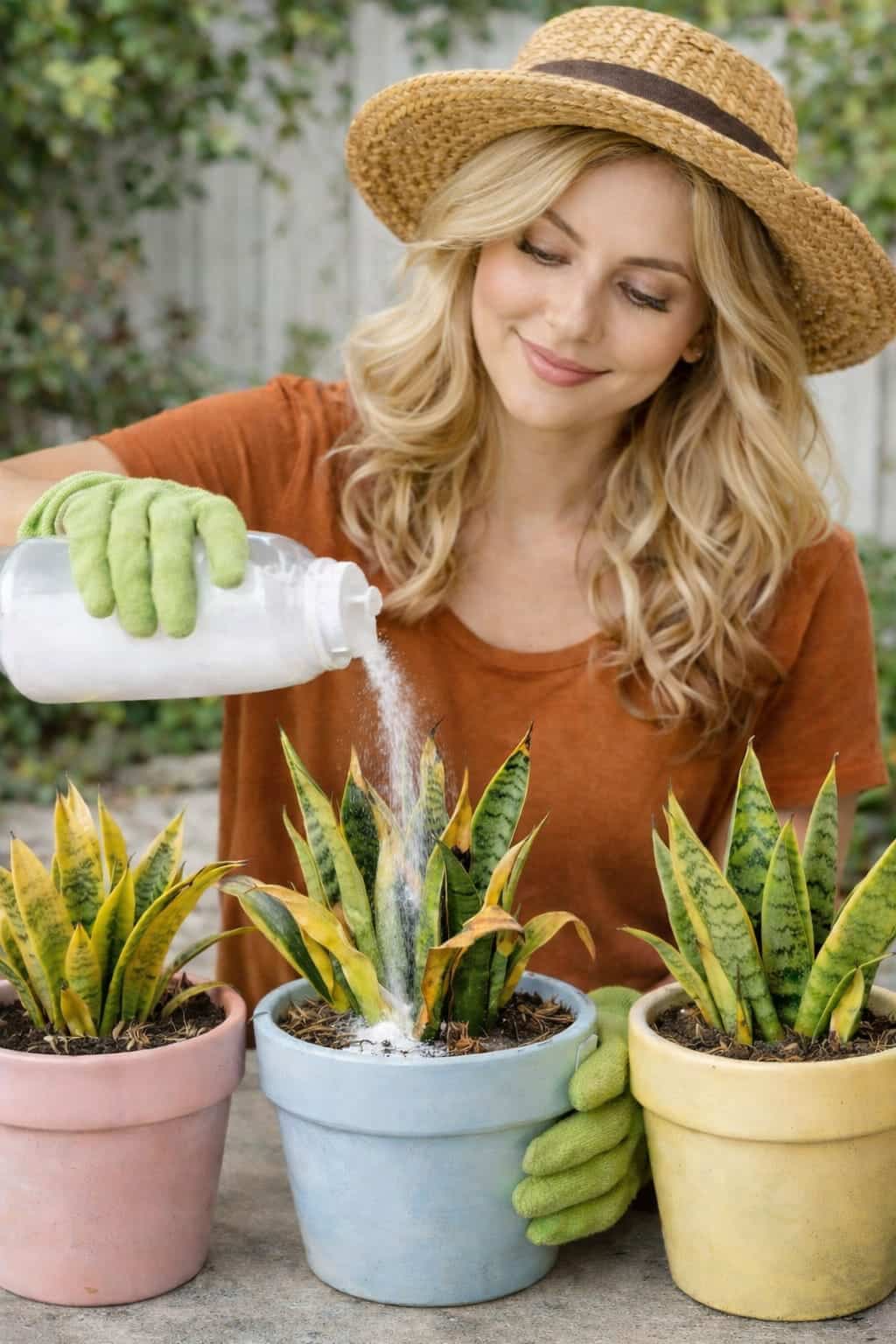
Snake plants are already known as some of the toughest houseplants you can grow. They survive low light, dry air, missed waterings, and long stretches of neglect better than almost anything else. But when a snake plant starts yellowing, looking dull, or slowing down, people immediately start looking for one easy trick to bring it back.
That is exactly why videos showing a mysterious white powder being sprinkled into the pot spread so fast.
A tired snake plant. A handful of powder. A promise of greener leaves and stronger growth. It looks simple. It looks harmless. And it makes people curious.
But what actually happens when you put white powder on a snake plant? The answer depends entirely on what the powder really is — and whether the plant actually needs it.
In this guide, we will break down the most common white powders used on snake plants, what they actually do, when they help, when they harm, and — most importantly — the real care routine that turns a struggling snake plant into a thriving, bushy centerpiece.
Why These White‑Powder Plant Tricks Get So Much Attention
Snake plants are dramatic in a subtle way. They often stay alive while slowly declining, so when they finally improve, the change looks big. A plant that was yellowing, weak, droopy, pale, or slow‑growing can start looking better once its care improves. If powder was added right before that improvement, the powder gets all the credit.
But in real life, snake plants usually improve because of a full reset: less water, better soil, more light, healthier roots, and better drainage. That is the part most short videos never explain.
The appeal of a one‑ingredient miracle is strong. It promises instant results without effort. But snake plants are not magic — they are living things that respond to consistent, appropriate care. A powder can sometimes be a small part of that care, but it is never the whole story.
What the White Powder Usually Is
In viral videos and social media posts, the white powder is often one of these:
· Powdered fertilizer – Balanced houseplant food, slow‑release or water‑soluble.
· Epsom salt – Magnesium sulfate, often overused as a “miracle” treatment.
· Cinnamon – Tan to light brown, used as an antifungal on cut wounds.
· Baking soda – Sodium bicarbonate, used for pH adjustment or mildew.
· Diatomaceous earth – Fine white powder for pest control (fungus gnats, etc.).
· Crushed mineral product – Like lime or gypsum, for specific soil deficiencies.
· Just something used for visual effect – Flour, cornstarch, or nothing beneficial.
Each of these does something very different. That means the big question is not, “Does white powder work?” It is, “Which powder is it, and what problem is it supposed to solve?”
What Each Type Might Actually Do (Realistic Breakdown)
Let us look at each common white powder and its realistic effect on snake plants.
Powdered Fertilizer
A balanced, slow‑release or water‑soluble fertilizer (like 10‑10‑10 or 20‑20‑20) can sometimes help a snake plant that has been in tired soil for a long time. A mild nutrient boost during active growth (spring and summer) may support greener leaves and stronger new growth.
How to use: Sprinkle a very small amount (follow label directions for houseplants) on the soil surface, then water in. Do not overdo — snake plants are light feeders.
When it helps: If the plant has not been repotted in over a year and shows signs of nutrient deficiency (pale leaves, very slow growth).
When it does not help: If the plant is overwatered, root‑bound, or in low light. Fix those issues first.
Epsom Salt (Magnesium Sulfate)
Epsom salt is sometimes used to provide magnesium. Magnesium is a component of chlorophyll, so a deficiency can cause yellowing between leaf veins. However, snake plants rarely need Epsom salt unless your soil or water is extremely deficient.
How to use: Dissolve 1 teaspoon per gallon of water. Use once a month for 2–3 months only if you see signs of magnesium deficiency.
When it helps: Only when a true deficiency exists. Otherwise, it adds unnecessary salt to the soil.
When it harms: Overuse leads to salt buildup, crust on the soil surface, and potential root burn.
Cinnamon
Cinnamon is a natural antifungal. It is often used as a dry treatment on trimmed cuts (after pruning roots or leaves) or on minor surface mold. It is not a fertilizer and does not stimulate growth.
How to use: Lightly dust cut wounds with a small brush or cotton swab. Do not sprinkle heavily over the entire soil surface.
When it helps: After trimming rotten roots or removing damaged leaves. It helps keep cut surfaces dry and discourages rot.
When it harms: Too much cinnamon can dry out healthy tissue and create a crust on the soil that blocks water.
Baking Soda
Baking soda is sometimes mentioned for plant care, but it is rarely useful for snake plants. It can raise soil pH, and snake plants prefer slightly acidic to neutral soil (6.0–7.0). Overuse can harm roots.
How to use: Generally not recommended. If you have a specific mildew issue on leaves, a diluted spray (1 teaspoon per quart of water) can be used, but this is for leaves, not soil.
When it helps: Almost never for snake plants.
When it harms: Alters soil pH, can burn roots, and leaves a white residue.
Diatomaceous Earth (DE)
Diatomaceous earth is a fine, powdery substance made from fossilized algae. It is used for pest control — it kills soft‑bodied insects like fungus gnats, thrips, and mealybugs by dehydrating them. It has no nutritional value.
How to use: Lightly dust the soil surface where pests are present. Do not breathe it in. Keep it dry to remain effective.
When it helps: If your snake plant has fungus gnats or other soil‑dwelling pests.
When it does not help: It does not feed the plant or stimulate growth. It is purely a pest treatment.
Crushed Mineral Products (Lime, Gypsum)
These are used to adjust soil pH or add calcium. Snake plants rarely need them in a standard potting mix. Only use if a soil test indicates a deficiency.
When it helps: Very rarely for indoor snake plants.
When it harms: Over‑application can lock out other nutrients.
What Snake Plants Usually Need More Than Powder
This is the part that matters most. If a snake plant looks unhealthy, the real issue is usually one of these:
· Overwatering – The #1 killer. Soggy soil leads to root rot.
· Poor drainage – A pot without holes or a saucer full of water.
· Soil staying wet too long – Heavy, compacted soil without perlite or sand.
· Too little bright light – Snake plants survive low light but do not thrive.
· Exhausted potting mix – Old soil becomes compacted and nutrient‑poor.
· Root stress or rot – Mushy, black roots cannot support the plant.
If those issues stay the same, white powder will not create a miracle. A snake plant gets stronger when the roots can breathe, the soil dries properly, the pot drains well, the plant gets brighter indirect light, and feeding is light and sensible. That is what really changes growth.
What Actually Happens When the Plant “Reacts”
When the setup is right — good light, proper watering, fast‑draining soil — and you add an appropriate amendment, a snake plant may respond with:
· Firmer leaves – No more soft or wrinkled foliage.
· Deeper green color – Rich, healthy hue, not pale or yellow.
· Stronger upright growth – Leaves stand tall, not flopping.
· New center leaves – Fresh growth emerging from the middle.
· More pups over time – Baby shoots around the base.
But if the wrong powder is used, or too much is added, the plant may react in the opposite way:
· Salt buildup – White crust on the soil surface.
· Stressed roots – Yellowing or browning leaves.
· Crust on the soil surface – Blocks water and air.
· Slower growth – The plant stalls instead of improving.
· Continued yellowing – The underlying problem remains.
So yes, something may happen. That does not automatically mean it is good. Always observe your plant closely after any treatment.
The Biggest Mistake People Make
The biggest mistake is copying a plant trick without knowing:
· What the powder is – Is it fertilizer, Epsom salt, cinnamon, or something else?
· How much was used – A pinch vs. a tablespoon makes a huge difference.
· Why it was used – What problem is it supposed to solve?
· Whether the plant had another problem first – Did you check for root rot? Light issues? Overwatering?
Snake plants do not need aggressive treatment. They do much better with gentle, boring, consistent care. That is usually less exciting than viral hacks, but it works far more reliably.
Continue to Page 2
Continue to page 2 for more details about this article and the key points many readers miss on the first page.