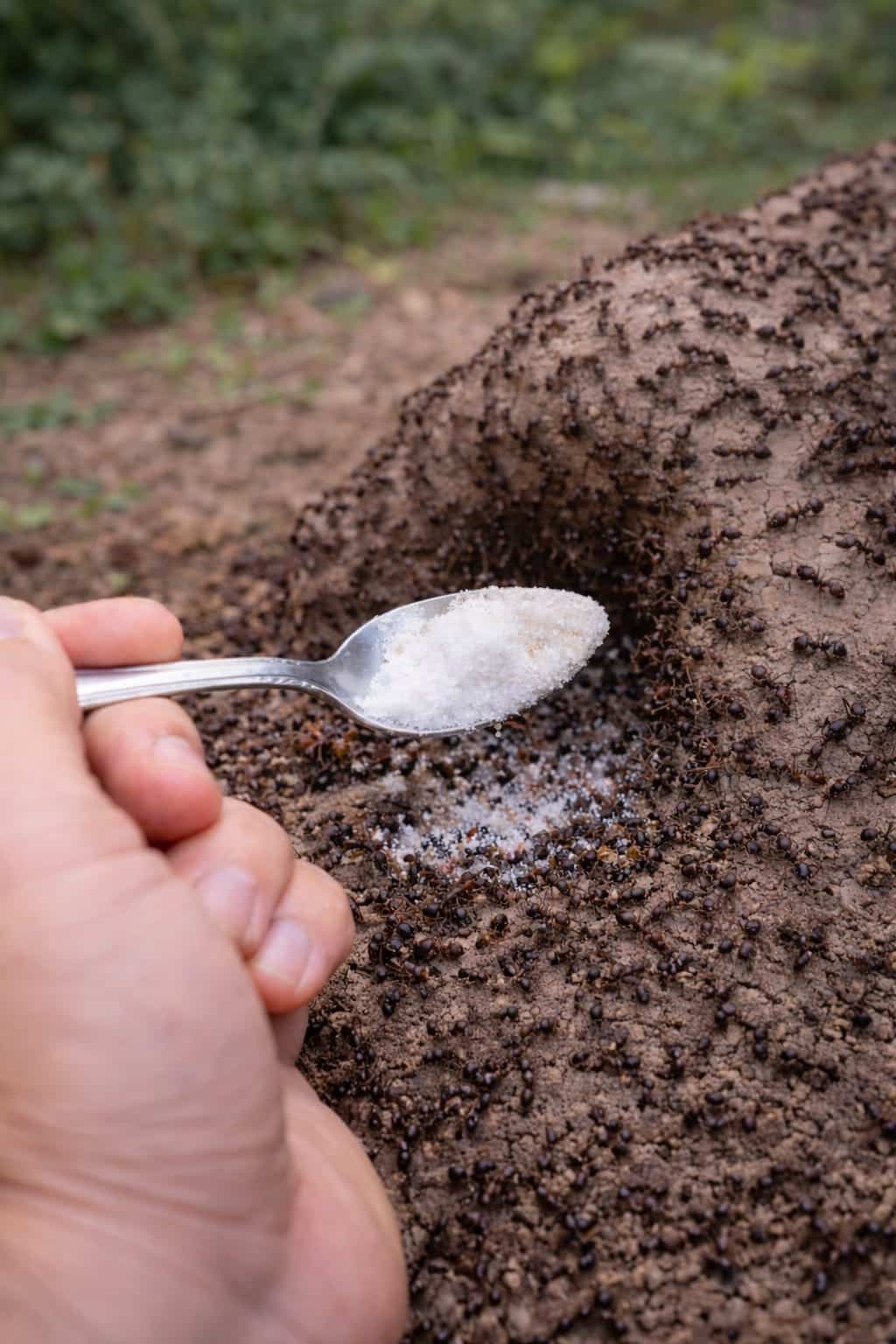
Ants in the garden can be frustrating. A few here and there usually are not a big deal, but when trails start spreading across pots, raised beds, patios, or around outdoor seating areas, they quickly become a nuisance. Many gardeners want a solution that is simple, inexpensive, and easy to make at home.
That is why borax bait gets so much attention.
The idea is straightforward: mix a small amount of borax with something sweet so worker ants carry it back to the colony. Over time, this may reduce the ant population at the source instead of only killing the ants you can see.
It can work, but it should be used carefully. In this guide, you will learn exactly how to make and use borax bait, why it works, important safety precautions, and what to do if the ants keep coming back.
Why Ants Keep Showing Up in Your Garden
Before you treat ants, it helps to understand why they are there. Ants are not random pests — they are drawn to specific conditions. If you eliminate those attractants, you will have fewer ants even without bait.
Common Ant Attractants:
· Sweet food residue – Spilled soda, fruit juice, or leftover sugary substances on surfaces.
· Aphids or other sap‑sucking pests – These insects produce honeydew, a sweet, sticky liquid that ants love. Ants will actually “farm” aphids, protecting them from predators to harvest the honeydew.
· Dry, loose soil that is easy to tunnel in – Sandy or fluffy soil makes nest building easy.
· Sheltered spaces under pots, stones, or edging – Ants love dark, undisturbed spots.
· Water sources nearby – Dripping faucets, leaky hoses, or standing water.
So before treating ants, take a walk around your garden. Look for aphids on plants, spilled birdseed, pet food bowls left outside, or areas of loose soil. Fixing these issues can reduce ant activity significantly.
How Borax Bait Works (The Science)
Borax (sodium tetraborate) is a naturally occurring mineral that has been used as a cleaning agent and pesticide for decades. When ants ingest borax, it disrupts their digestive system and damages their exoskeletons. However, borax does not act immediately. This delayed action is actually a benefit because it allows worker ants to carry the bait back to the colony and share it with other ants, including the queen.
The General Idea:
· The sweet bait attracts worker ants – They think they have found a food source.
· Worker ants carry some back to the nest – They feed it to larvae and the queen.
· The bait spreads through the colony over time – Eventually, the colony weakens and may collapse.
That is why bait is often more effective than simply spraying visible ant trails. Sprays may kill the ants you see, but bait aims deeper into the nest. It is a “kill the colony, not just the workers” approach.
A Simple Homemade Borax Bait Recipe
You can make an effective ant bait with just a few household ingredients. This recipe is safe for gardens when used correctly and placed out of reach of pets and children.
Ingredients:
· 1 cup warm water
· ½ cup granulated sugar
· 1 tablespoon borax (sodium tetraborate, found in the laundry aisle)
· Cotton balls or small shallow lids (like jar lids or bottle caps)
Step‑by‑Step Instructions:
Heat the water until warm (not boiling). Warm water dissolves sugar and borax more easily.
Add the sugar and stir until completely dissolved.
Add the borax and stir well. The mixture may look slightly cloudy.
Let the solution cool to room temperature.
Soak cotton balls in the liquid, or pour a small amount into shallow lids.
Place the bait near ant trails, entry points, or nest entrances. Do not put it directly on edible plants.
Important Notes:
· Do not increase the borax amount – More is not better. A higher concentration can make the bait less attractive or even repel ants.
· Keep the bait moist – If it dries out, ants will not take it. Replace every few days.
· Use a bait station – A small container with an entry hole (like a yogurt cup with a hole cut in the side) protects the bait from rain and pets.
Where to Place the Bait for Best Results
Location matters as much as the recipe. Place bait where ants are actively foraging, but away from children, pets, and edible crops.
Best Locations:
· Near active ant trails – Follow the line of ants to find where they are traveling.
· Beside ant entry points – Cracks in pavement, gaps under doors, or holes in soil.
· Close to nests – Look for small mounds of loose soil, often near foundations, under stones, or in dry garden beds.
· Near pots or patio edges – Where ants frequently travel.
What to Avoid:
· Do not scatter bait openly across soil – It can wash away or be eaten by non‑target insects.
· Do not place bait directly on vegetable leaves or fruits – Borax is not meant for edible surfaces.
· Avoid areas where pets dig or children play – Use covered bait stations in these zones.
A good technique is to place several small bait stations around the garden rather than one large pile. This increases the chance that ants will find it.
Why Patience Matters (Most People Give Up Too Soon)
One reason people think bait “doesn’t work” is because it does not act instantly. At first, you may even see more ants than before. That is a good sign — it means the bait is attracting workers.
What to Expect:
· Days 1–3: Ants discover the bait. Activity may increase.
· Days 4–7: Ants continue to take bait back to the nest. You may still see many ants.
· Days 8–14: The colony begins to weaken. Ant trails become less busy.
· Days 15–21: Significant reduction in ant activity. Nest may be abandoned.
Bait methods usually take 1–3 weeks to show clear results. The ants need time to collect the bait, carry it back, feed it to the colony, and for the borax to take effect. If you see no change after 3 weeks, try a different bait (e.g., use peanut butter instead of sugar for protein‑loving ants).
Important Safety Notes (Do Not Skip This)
Borax is often described as a “natural” or “simple” ingredient, but it is still a pesticide. It can be harmful if ingested in large quantities by pets, children, or wildlife.
Safety Guidelines:
· Keep bait away from children – Use bait stations or place bait in inaccessible spots (e.g., behind pots, under a overturned plant saucer with a small entrance hole).
· Keep bait away from pets – Dogs and cats are attracted to sweet smells. A covered bait station is essential.
· Do not smear bait directly on edible plants – Borax can be absorbed by plants and may leave residue.
· Wear gloves if preferred – Borax can irritate skin. Wash hands thoroughly after handling.
· Label your bait stations – Write “ANT BAIT – POISON” on the container to avoid accidental use.
If you are treating an area where dogs, cats, or toddlers roam freely, consider using a commercial ant bait station (like Terro or Combat) instead of homemade. They are designed to be pet‑resistant.
When Not to Use Borax Bait
Borax bait may not be the best choice in certain situations.
Avoid Using If:
· Pets roam the area freely and you cannot secure the bait.
· Small children have access to the garden.
· The ants are in or right next to edible crops – Risk of residue.
· You are not certain where the bait will end up (e.g., windy areas, rain forecast).
· You only have occasional harmless ant activity and no real infestation – In this case, simply cleaning up attractants may be enough.
For vegetable gardens, consider using diatomaceous earth (food grade) around plant bases instead. It is a mechanical killer (dehydrates insects) and is considered safe for edibles when used as directed.
The Hidden Reason Ants Keep Returning (Even After Baiting)
This is the part many people miss. If ants are farming aphids, mealybugs, or scale insects for honeydew, they may keep returning even after baiting. Why? Because the bait kills some ants, but the food source (honeydew) remains, and new ants from neighboring colonies will quickly move in.
What to Look For:
· Sticky, shiny residue on leaves (honeydew).
· Tiny green, black, or white insects on stems and leaf undersides.
· Ants walking up and down plant stems, seemingly “tending” to the insects.
The Solution:
· Control the aphids – Use insecticidal soap, neem oil, or a strong spray of water to knock them off.
· Remove heavily infested leaves – Dispose of them away from the garden.
· Encourage natural predators – Ladybugs, lacewings, and hoverflies eat aphids.
Once the honeydew source is gone, ants lose their reason to stay. Long‑term control means dealing with both the ants and the pests that attract them.
Continue to Page 2
Continue to page 2 for more details about this article and the key points many readers miss on the first page.