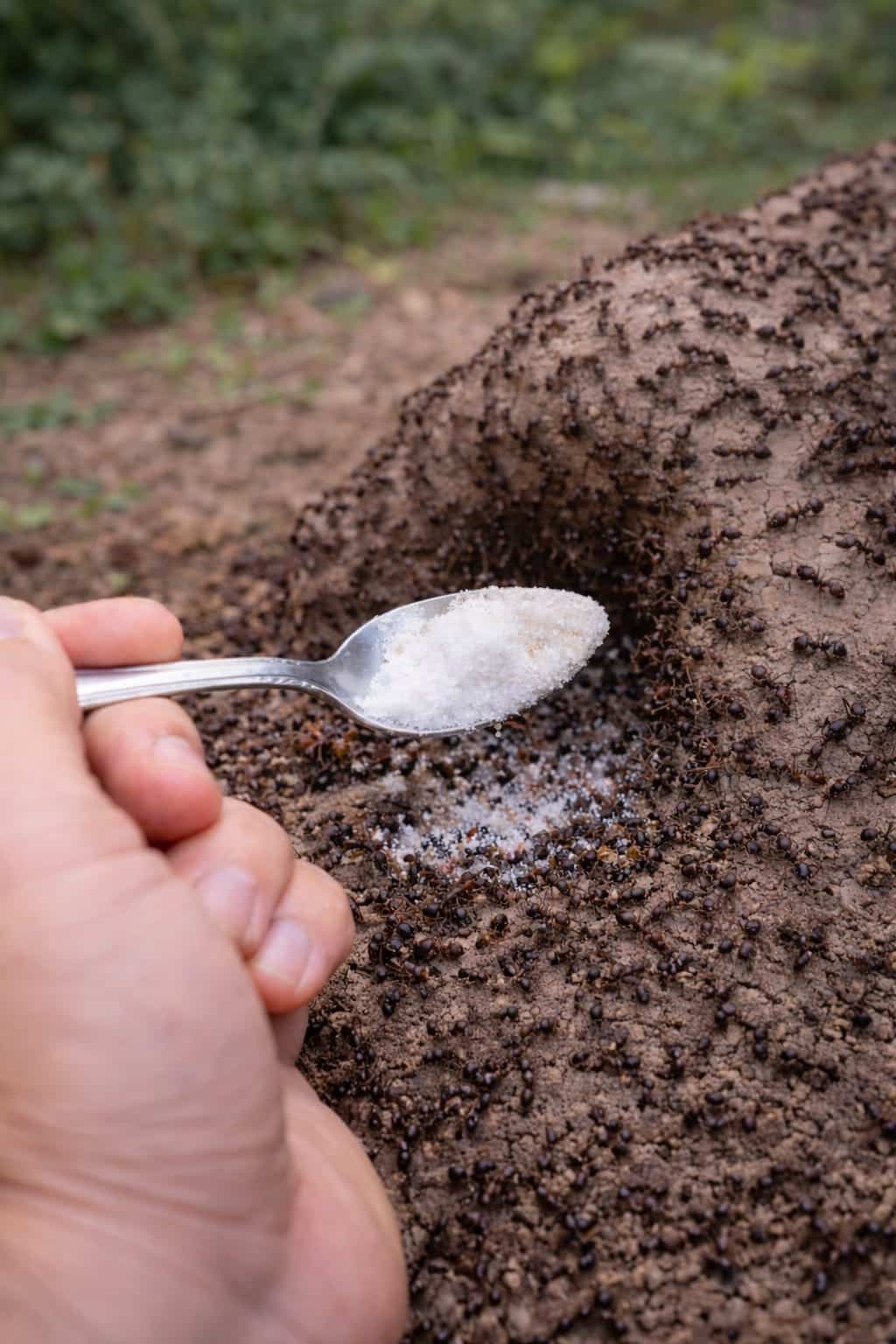
Other Ways to Reduce Ants Naturally (Alongside Bait)
Borax bait is effective, but it works best as part of an integrated approach. Use these simple steps to make your garden less inviting to ants.
Natural Ant Deterrents:
· Wipe up sugary spills – Clean patio tables, trash cans, and outdoor eating areas.
· Remove fallen fruit – Rotting fruit is a magnet for ants.
· Reduce aphids and mealybugs – As discussed above.
· Disturb dry nest areas carefully – Rake or water loose soil where ants have tunneled.
· Avoid leaving pet food outside – Feed pets indoors or remove bowls immediately after feeding.
· Move pots occasionally – Ants often nest under stationary containers.
· Use diatomaceous earth – Sprinkle a ring of food‑grade DE around plant bases or nest entrances. It is safe for pets and plants but deadly to ants.
· Pour boiling water on nests – For outdoor nests away from plants, carefully pour boiling water into the entrance. This kills ants instantly but does not prevent reinvasion.
The cleaner and less attractive the area is, the easier it is to reduce ant activity.
What to Expect If the Bait Is Working
If your borax bait is effective, you should see a clear progression.
Signs of Success:
· Heavy activity at first – More ants than before as they discover the bait.
· Then fewer ants over several days – Trails become sporadic.
· Weaker trails – Fewer ants, less organized movement.
· Less visible nest traffic – Fewer ants entering and exiting the nest.
· Complete absence after 2–3 weeks – The colony has collapsed or moved.
If Nothing Changes:
· The colony may not be interested in that bait mix – Try using a different attractant (e.g., peanut butter for protein‑loving ants like fire ants).
· The attraction source in the garden may be stronger than the bait – For example, a heavy aphid infestation will outcompete your sugar bait.
· You may have multiple colonies – Place bait in several locations.
· The bait dried out or was washed away – Refresh it every few days.
Frequently Asked Questions (Borax Ant Bait)
Can I use borax around vegetable plants?
It is best to avoid direct contact. Place bait stations nearby but not on the soil of edible crops. For vegetable gardens, use diatomaceous earth or bait in closed stations placed on the ground, not on leaves.
Will borax hurt my plants?
Borax in high concentrations can damage plants because it is a salt. However, the small amount used in bait, placed in stations away from plant roots, is unlikely to harm established plants. Do not pour leftover bait onto soil.
How long does borax bait last?
Liquid bait should be replaced every 2–3 days, or when it dries out. You can also make a thicker paste (less water) that lasts longer. Store unused bait in a sealed container away from children.
Can I use honey instead of sugar?
Yes. Honey is very attractive to ants. Mix 1 part honey with 1 part water, then add borax (1 tablespoon per cup of liquid). Honey bait may be more effective for sweet‑toothed species.
What about fire ants? Will borax work?
Fire ants are attracted to protein and fat as well as sugar. Try a mix of peanut butter and borax (2 parts peanut butter to 1 part borax). Place small amounts near mounds. Results may take longer.
Is borax safe for bees?
Borax bait placed in stations is unlikely to affect bees because bees are not attracted to sugar‑borax mixtures placed on the ground (bees forage on flowers). However, never pour bait directly onto blooming plants.
How do I know if ants are dead or just moved?
If you see no ants for 2 weeks but they reappear after rain, they may have moved to a different nest. Continue baiting. If they are gone for a month, the colony was likely eliminated.
Can I use borax indoors?
Yes, but use even more caution. Place bait in child‑proof stations and away from food preparation areas. Indoors, you may also use boric acid powder (similar to borax) as a crack and crevice treatment.
A Complete Ant Management Plan for Your Garden
Here is a step‑by‑step plan that combines borax bait with preventive measures.
Step 1 – Identify the Problem
· Locate ant trails, nests, and attractants (aphids, food spills, water).
Step 2 – Clean Up
· Remove fallen fruit, wipe spills, fix leaks, and control aphids.
Step 3 – Make Bait
· Prepare sugar‑borax solution as described. Use a covered bait station.
Step 4 – Place Bait
· Position stations near trails and nests, away from pets and edibles.
Step 5 – Be Patient
· Wait 2–3 weeks. Refresh bait as needed.
Step 6 – Monitor and Adjust
· If ants persist, try a different bait (protein‑based). If aphids are the issue, treat plants.
Step 7 – Prevent Reinfestation
· Keep garden clean, seal cracks in pavement, and use diatomaceous earth as a barrier.
Final Thoughts
A simple borax‑and‑sugar bait can be an effective way to deal with garden ants, especially when you want to target the colony instead of just the ants you see on the surface. It is inexpensive, easy to make, and uses common household ingredients.
But the best results usually come from combining bait with smarter garden maintenance:
· Reduce food sources – Clean up spills, fallen fruit, and pet food.
· Check for aphids and honeydew – Treat the root cause.
· Place bait carefully – Use stations to protect pets and children.
· Be patient – Results take 1–3 weeks.
· Use multiple methods – Diatomaceous earth, boiling water, and physical barriers can help.
That is what makes the method more effective and much safer. Because the easiest way to say goodbye to ants is not just killing a few on the trail. It is making the whole garden less inviting for them to stay.
So next time you see a line of ants marching across your patio, do not reach for a harsh spray. Mix up a batch of borax bait, place it carefully, and let the ants do the rest. Your garden — and your peace of mind — will thank you.
Have you tried the borax bait trick in your garden? Share your experience in the comments below. And if you found this guide helpful, save it for later or send it to a friend who is fighting a never‑ending ant battle.