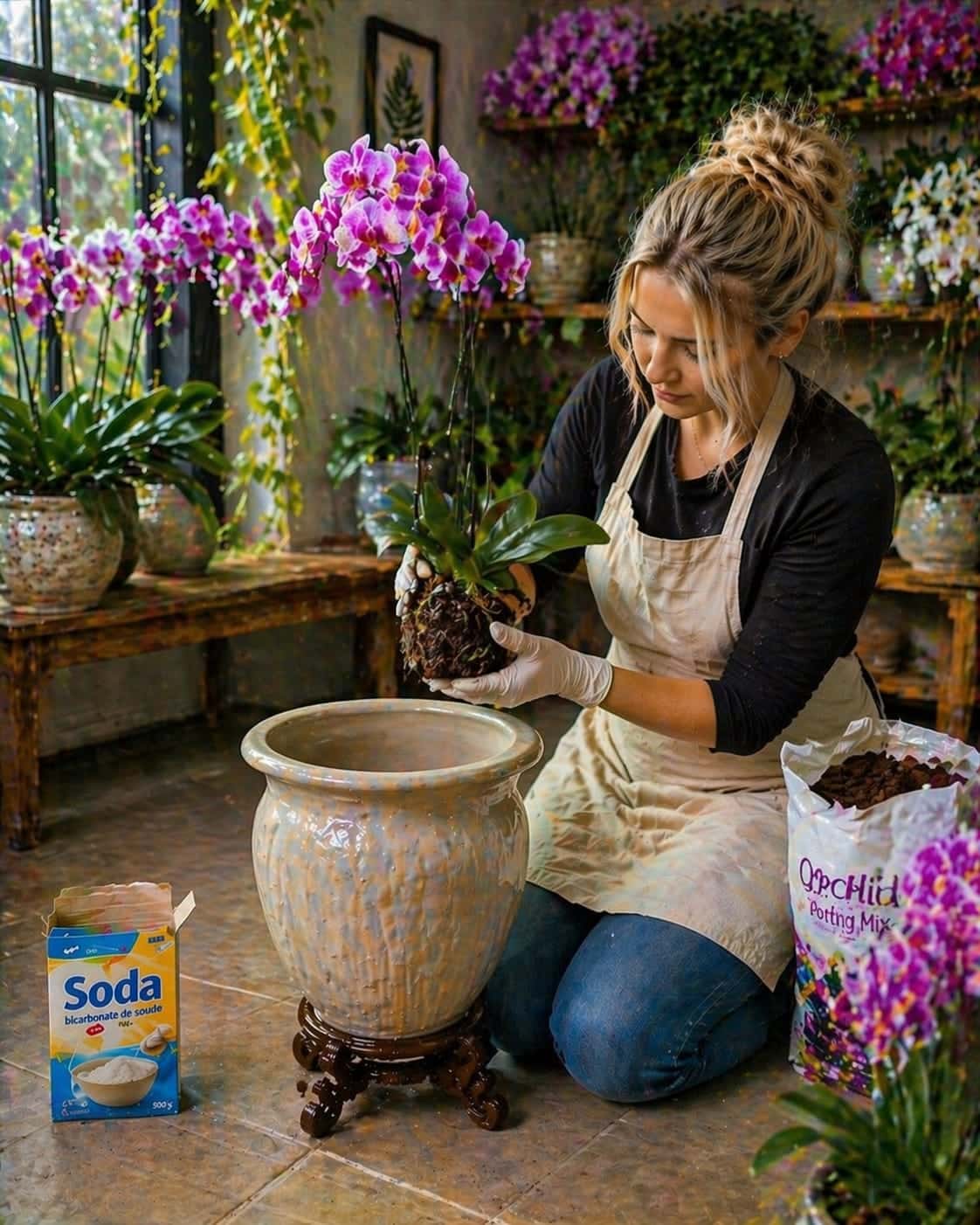
If you have an old vase covered in dirt, stains, mineral deposits, or even rust, do not throw it away just yet. With a simple, inexpensive ingredient like baking soda, you can restore it to like‑new condition and transform it into the perfect home for a stunning orchid plant.
Orchids are elegant, long‑blooming, and surprisingly resilient when given the right care. Paired with a clean, attractive vase, they become a focal point in any room — modern, fresh, and full of life.
In this guide, you will learn how to clean your vase naturally using baking soda, how to prepare and plant an orchid correctly, and the essential care tips to keep your orchid thriving for months. Whether you are a beginner or an experienced plant lover, this step‑by‑step tutorial will help you create a beautiful living decoration from something you might have otherwise discarded.
Why Use Baking Soda for Cleaning?
Baking soda (sodium bicarbonate) is one of the safest, most versatile, and most effective natural cleaners available. It is non‑toxic, inexpensive, and already in most kitchen pantries. Unlike harsh chemical cleaners, baking soda will not leave toxic residues that could harm your orchid or the environment.
Here is what baking soda can do for your vase:
· Remove stubborn stains – Coffee, tea, flower residue, and hard water marks disappear.
· Eliminate odors – Old vases can develop musty or sour smells; baking soda neutralizes them.
· Gently scrub without scratching – Its mild abrasiveness cleans glass, ceramic, or plastic without damaging surfaces.
· Break down mineral deposits – Hard water rings and calcium buildup soften and rinse away.
· Deal with light rust – On metal rims or inside glass, baking soda paste can lift early rust stains.
Best of all, baking soda is environmentally friendly and safe to use around your home, children, and pets. No need for rubber gloves or a face mask — just simple, effective cleaning.
Step 1: Clean the Vase with Baking Soda
Before you can plant an orchid, your vase must be sparkling clean. Any leftover dirt, bacteria, or chemical residue can harm the delicate roots of your orchid.
What You Need:
· Baking soda
· Warm water
· Sponge, soft brush, or cloth
· Gloves (optional, if you have sensitive skin)
· Old toothbrush (for crevices)
· Towel for drying
Instructions:
- Prepare the Vase
Rinse the vase with warm water to remove loose dirt and dust. If the vase has been sitting for a long time, soak it in warm water for 10 minutes to loosen hardened residue.
- Make a Baking Soda Paste
In a small bowl, mix 3 parts baking soda with 1 part water. Stir until it forms a thick, spreadable paste. Adjust the consistency as needed — thicker for scrubbing, thinner for soaking.
- Apply the Paste
Using a sponge or cloth, apply the baking soda paste to the inside and outside of the vase. Pay special attention to stained areas, water rings, or cloudy spots. For narrow‑necked vases, use a bottle brush or an old toothbrush to reach inside.
- Let It Sit
For light stains, scrub immediately. For tough, set‑in stains or mineral deposits, let the paste sit for 10–15 minutes. This gives the baking soda time to break down the residue.
- Scrub Gently
Scrub the vase with a sponge or soft brush. Baking soda is mildly abrasive, so it will lift stains without scratching glass or ceramic. Do not use steel wool or metal scrapers — they will leave permanent scratches.
- Rinse Thoroughly
Rinse the vase with warm water until all baking soda residue is gone. Check for any remaining stains. If needed, repeat the process on stubborn spots.
- Dry Completely
Dry the vase with a clean towel, or let it air dry upside down on a drying rack. Important: The vase must be completely dry before planting your orchid. Any trapped moisture can cause root rot.
💡 Pro Tips for Tough Stains:
· Hard water rings: Fill the vase with a solution of 1 tablespoon baking soda per 1 cup of warm water. Let it soak overnight, then scrub.
· Coffee or tea stains: Make a thick paste and apply directly. Let sit for 30 minutes.
· Rust spots: Sprinkle baking soda directly on the rust, add a few drops of water to make a paste, and scrub with a soft brush. Rinse well.
Step 2: Prepare the Orchid for Planting
Now that your vase is clean, it is time to prepare the orchid. Most orchids sold in stores are Phalaenopsis (moth orchids), which are perfect for beginners. They have long‑lasting blooms and are very forgiving.
What You Need:
· Orchid plant (healthy, with firm leaves)
· Orchid potting mix (bark‑based, not soil)
· Clean, dry vase (with drainage holes if possible, or use as a decorative outer pot)
· Sharp, sterilized scissors or pruning shears
· Optional: orchid fertilizer, cinnamon powder
Step‑by‑Step Orchid Preparation:
- Remove the Orchid from Its Old Pot
Gently grasp the orchid at the base and slide it out of its nursery pot. If it is stuck, squeeze the sides of the plastic pot to loosen the roots. Do not pull hard — you may break healthy roots.
- Shake Off Old Potting Mix
Carefully shake or brush off the old bark or moss from the roots. Old mix can be broken down and acidic, which harms new growth. Discard it.
- Inspect the Roots
Lay the orchid on a clean surface. Look at each root:
· Healthy roots – Firm, plump, green or silvery white. Some may have bright green growing tips.
· Dead or rotten roots – Brown, black, mushy, hollow, or papery. These must be removed.
- Trim Dead Roots
Using sterilized scissors, cut away every dead, mushy, or hollow root. Cut back to healthy tissue. Do not be afraid to remove a lot — the orchid will grow new roots. Dust the cut ends with a tiny amount of cinnamon powder (optional; cinnamon is a natural antifungal).
- Remove Old Leaves (If Necessary)
If any leaves are yellow, brown, or badly damaged, cut them off at the base. Leave only firm, green leaves.
- Let Roots Dry Briefly
Place the trimmed orchid on a paper towel for a few hours (or overnight) to allow cut surfaces to callus. This reduces the risk of rot when you repot.
Step 3: Plant the Orchid in Your Clean Vase
Now comes the fun, creative part. You will turn your clean vase into a beautiful home for your orchid.
Instructions:
- Add a Drainage Layer (If Your Vase Has No Holes)
If your vase does not have drainage holes, you have two options:
· Use it as a decorative outer pot – Plant the orchid in a slotted plastic orchid pot, then place that pot inside the vase. This allows you to remove it for watering.
· Add a layer of charcoal or pebbles – Place 1–2 inches of horticultural charcoal or small pebbles at the bottom. This helps prevent water from sitting directly on the roots. Still, be very careful not to overwater.
- Add a Layer of Orchid Bark
Pour a 1‑inch layer of fresh orchid bark mix (fir bark, perlite, charcoal) into the bottom of the vase. This provides drainage and air space.
- Position the Orchid
Place the orchid in the center of the vase. Spread the roots gently over the bark layer. The crown (the part where leaves meet roots) should sit just above the bark line. Do not bury the crown — it will rot.
- Fill Around the Roots
Add more orchid bark around the roots, shaking the vase gently to settle the mix. Fill until the roots are covered, but leave the top of the root ball exposed. Do NOT press the bark tightly — orchids need air pockets around their roots.
- Check Stability
The orchid should stand upright without wobbling. If it is loose, add a little more bark and tap the vase gently.
- Optional: Label and Date
If you are repotting multiple orchids, add a small label with the date. Orchids typically need repotting every 1–2 years.
Continue to Page 2
Continue to page 2 for more details about this article and the key points many readers miss on the first page.