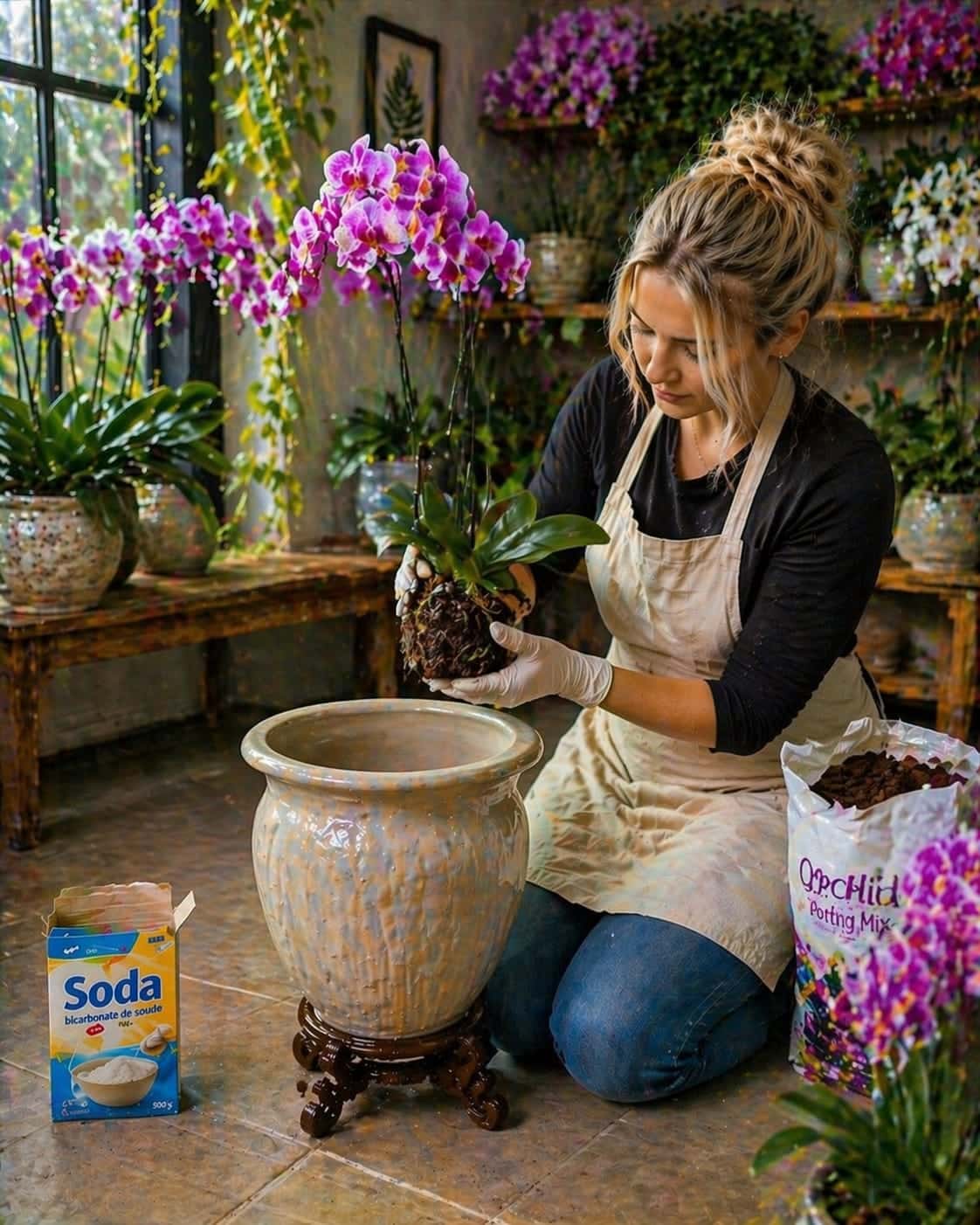
Step 4: Water & Care Tips for Your New Orchid
Proper aftercare is essential for your orchid to thrive and rebloom.
First Watering:
· Wait 5–7 days after repotting before watering. This gives trimmed roots time to heal.
· Then, water thoroughly by running room‑temperature water through the bark for 30 seconds. Allow all excess water to drain completely.
· Never let the vase sit in standing water.
Ongoing Watering Routine:
· Water once every 7–10 days, or when the bark feels nearly dry. Stick your finger into the bark; if it is dry an inch down, it is time.
· Use filtered or rainwater if possible. Tap water with high chlorine or minerals can cause brown leaf tips.
· Water in the morning so the leaves and crown dry by evening.
Light Requirements:
· Bright, indirect light is best. An east window or a south/west window with a sheer curtain is ideal.
· Avoid harsh direct sun, which can scorch leaves.
· If leaves turn dark green and floppy, the light is too low. If they turn reddish or yellow, the light is too intense.
Humidity and Airflow:
· Orchids love humidity (50–70%). Use a humidity tray, group plants, or run a small humidifier.
· Ensure good air circulation — a gentle fan on low helps prevent fungal issues.
· Do not mist the leaves directly; water droplets can lead to crown rot.
Fertilizing:
· Start fertilizing 4–6 weeks after repotting.
· Use a balanced orchid fertilizer (20‑20‑20) diluted to quarter strength.
· Feed every other week during spring and summer.
· Do not fertilize in fall and winter.
Temperature:
· Daytime: 65–80°F (18–27°C)
· Nighttime: Slightly cooler (55–65°F) to encourage blooming.
Final Result: A Beautiful Transformation
You have just turned an old, dirty, forgotten vase into a stunning decorative piece with a thriving orchid inside. This simple transformation can make your home look fresh, modern, and full of life. A clean vase showcases the orchid’s elegant roots and flowers, turning a functional container into a work of art.
Whether you place it on a dining table, a bathroom counter, a home office desk, or a bedroom nightstand, your orchid in a clean vase will draw compliments and brighten your space for months.
Long‑Term Orchid Care: Keeping It Blooming Year After Year
Once your orchid is settled, a little consistent care will reward you with repeated blooms.
After Blooming:
· When the last flower fades, cut the flower spike just above the second node (small bump) from the base. This may encourage a secondary bloom.
· If the spike turns brown and dry, cut it off at the base.
Repotting:
· Every 1–2 years, repot your orchid with fresh bark. Old bark breaks down and becomes acidic.
· Repot when you see roots growing out of the pot or when the bark looks dark and crumbly.
Common Problems and Solutions:
Problem Likely Cause Fix
Wrinkled leaves Underwatering or root loss Check roots; water more consistently
Yellow leaves Overwatering or too much sun Let soil dry; move to indirect light
No blooms Not enough light Move to brighter spot; ensure cool nights
Buds falling off Drafts, low humidity, or moving the plant Keep stable conditions
Brown leaf tips Fluoride in tap water or low humidity Use filtered water; increase humidity
Frequently Asked Questions (Orchids in Vases)
Can I plant an orchid in a vase without drainage holes?
Yes, but you must be very careful with watering. Use a plastic orchid pot inside the vase, or add a layer of charcoal and pebbles at the bottom. Always remove the orchid to water, let it drain completely, then return it to the vase. Do not let water pool at the bottom.
What is the best potting mix for orchids in a vase?
Use a coarse orchid bark mix (fir bark, perlite, charcoal). Never use regular potting soil — it suffocates orchid roots.
How do I know if my orchid is getting enough light?
Leaves should be medium green. Dark green leaves indicate too little light; reddish or yellow leaves indicate too much direct sun. Adjust placement accordingly.
Can I use a glass vase for an orchid?
Yes, glass vases are beautiful. However, they can trap heat and algae may grow on the roots if exposed to too much light. Use a clear glass vase in bright indirect light, and clean the inside periodically. Ensure drainage (or use an inner pot).
How long will my orchid bloom?
A healthy Phalaenopsis orchid can bloom for 2–3 months, sometimes longer. With good care, it will rebloom every 6–12 months.
Should I mist my orchid?
No. Misting leaves can cause crown rot and fungal spots. Instead, increase humidity with a tray or humidifier.
Can I use baking soda to clean other plant containers?
Absolutely. Baking soda is safe for cleaning terracotta pots, ceramic planters, plastic containers, and glass vases. Rinse thoroughly before planting.
Final Tip: Consistency Is Key
Your orchid does not need constant attention — it needs the right attention. Keep it clean, well‑lit, properly watered, and in a stable environment. It will reward you with stunning blooms for months, and with each passing year, the plant will grow stronger and more beautiful.
And that old vase you almost threw away? It now holds one of the most elegant plants in the world. That is the power of a simple cleaning with baking soda and a little bit of care.
Have you tried cleaning a vase with baking soda and planting an orchid? Share your before‑and‑after photos in the comments below. And if you found this guide helpful, save it for later or send it to a friend who loves DIY home decor and orchids.
This article is for informational purposes only. Growing conditions vary. Always observe your orchid and adjust care as needed.