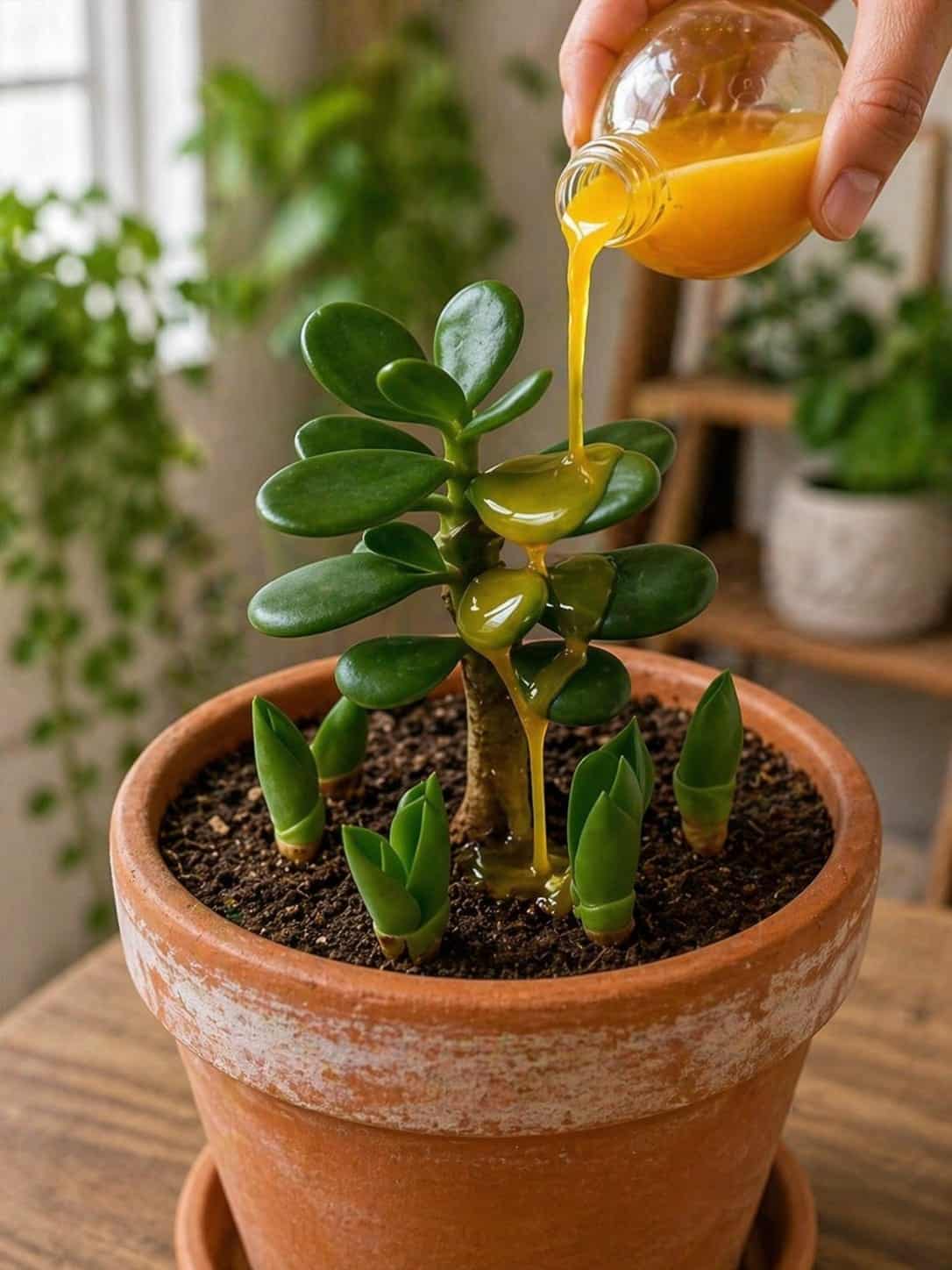
Jade plants (Crassula ovata) are known for their thick, glossy leaves and their ability to live for years with minimal care. They are often passed down through generations, becoming majestic, tree‑like specimens that anchor a room. But sometimes, they seem to stop growing. No new leaves, no branches, and definitely no flowers.
That is when many plant lovers start looking for simple solutions — and one popular idea is using a homemade liquid to “boost” growth and encourage blooming. You may have seen videos of rich, golden or milky liquids being poured over jade plants, with promises of overnight transformation. It looks easy. It looks effective. But what is really going on?
In this guide, you will learn why jade plants stall, what that “homemade liquid” trend really means, how a gentle nutrient boost can help (when used correctly), and — most importantly — the proven care habits that actually make jade plants grow faster, thicker, and eventually bloom.
Why Your Jade Plant Stops Growing (Before You Try Any Trick)
Before trying any special liquid, it is important to understand why your jade plant may be struggling. The plant may look alive, but it is not thriving. Common reasons include:
· Not enough light – Jade plants need bright light to grow. In dim corners, they simply stop producing new leaves.
· Overwatering – The #1 mistake. Overwatered roots cannot absorb nutrients, and growth slows or stops.
· Poor drainage – Heavy, compact soil suffocates roots and leads to rot.
· Lack of nutrients – Old, depleted soil provides no energy for new growth.
· A pot that is too large – An oversized pot encourages root growth at the expense of leaves and stems.
· Immature plant – Too young to bloom (jade plants often need 3–5 years to flower).
· No seasonal rest – Jade plants need cooler nights and reduced water in winter to set buds.
If these basics are off, no liquid — no matter how rich it looks — will fix the problem. The foundation must be solid before any supplement can help.
The “Homemade Liquid” Trend — What You’re Really Seeing
You may have seen thick, colorful liquids being poured over jade plants online. These mixtures often look rich and powerful — like honey, milk, or amber nutrients — which makes them very appealing. The videos are dramatic, the before‑and‑after shots are compelling, and the promise of “fast growth” is hard to resist.
In reality, these liquids usually represent:
· Diluted organic nutrients – Such as compost tea, seaweed extract, or worm casting tea.
· Plant‑safe feeding solutions – Highly diluted liquid fertilizers.
· Simply visual content – Designed to look impressive, with no real plant benefit.
⚠️ What matters is not how the liquid looks — but whether it is safe and used correctly. Some viral “hacks” use pure milk, sugar water, or even honey. These are not safe for jade plants. They can attract pests, sour in the soil, and cause root rot.
The key takeaway: a mild, properly diluted plant‑safe solution can be a helpful supplement, but it is never a substitute for good care.
Can a Liquid Boost Help a Jade Plant Grow Faster?
Yes — but only in the right way. A mild, diluted plant‑safe solution can:
· Support overall plant health – Trace minerals can benefit a plant that is slightly nutrient‑deficient.
· Encourage stronger growth – A gentle boost during the active growing season (spring and summer) can help.
· Help maintain leaf color and thickness – Healthier leaves are often greener and more robust.
But it must be:
· Used occasionally – Once a month at most.
· Properly diluted – Half strength or weaker. Never use pure concentrate.
· Combined with correct care – Light, water, and soil are still the main drivers.
Too much of the wrong liquid — or using it too often — can actually harm your plant. Over‑feeding leads to salt buildup, brown leaf tips, and weak, stretched growth.
What to Use (Safe Options)
· Diluted seaweed or kelp extract – Gentle, provides trace minerals.
· Diluted worm casting tea – Rich in beneficial microbes.
· Half‑strength succulent fertilizer – Balanced nutrition.
· Weak compost tea – If you make your own, dilute until pale.
What to Avoid (Risky Options)
· Milk – Can sour, attract pests, and cause mold.
· Sugar water – Feeds harmful bacteria and attracts ants.
· Honey water – Sticky, attracts pests, and can coat roots.
· Coffee or tea – Can acidify soil and compact it.
· Undiluted fertilizer – Burns roots.
The safest “homemade liquid” is simply a highly diluted version of a proven plant‑safe product. When in doubt, use less.
What Really Makes a Jade Plant Grow Faster (No Magic Required)
If you want real results — thicker stems, more leaves, faster growth — focus on these essentials first. These are the proven factors that turn a surviving jade into a thriving one.
- Give It More Light (The #1 Factor)
Jade plants love bright light. Without enough light, growth slows dramatically, and the plant becomes leggy (long stems with widely spaced leaves).
· Place near a sunny window – A south‑ or west‑facing window is ideal.
· A few hours of direct morning sun is beneficial; afternoon sun can be intense, but jade plants tolerate it if acclimated.
· Signs of too little light: Stretched stems, pale leaves, leaves dropping.
· Signs of too much light: Leaves turning reddish (normal stress, not harmful) or scorched (if moved suddenly).
If your jade plant has stopped growing, moving it to a brighter spot is the single most effective change you can make.
- Water Less, Not More (Dry Periods Encourage Growth)
Overwatering is the #1 mistake. Jade plants are succulents; they store water in their leaves and stems.
· Let soil dry completely between watering – Stick your finger in. If it is dry at least 2 inches down, water.
· Water deeply but infrequently – When you water, pour until it runs from the drainage holes. Empty the saucer.
· Water less in winter – Once a month or even less.
· Never let roots sit in water – This causes root rot.
Dry conditions encourage stronger roots. Stronger roots lead to faster growth above the soil line.
- Use the Right Soil (Fast‑Draining Mix)
Jade plants need soil that mimics their native rocky environment.
· Use cactus/succulent potting mix – Ready to use and perfectly formulated.
· Add sand or perlite – If using regular potting soil, mix in 30% perlite or coarse sand.
· Avoid heavy, moisture‑retentive soil – It leads to root rot.
Repot every 2–3 years to refresh the soil and remove compacted old mix.
- Feed Gently (If Using a Booster)
If you choose to use a homemade or commercial liquid booster:
· Use a diluted fertilizer or safe organic solution – Half strength or weaker.
· Apply once a month – Only during the growing season (spring and summer).
· Avoid heavy or frequent feeding – Less is more.
Do not feed a newly repotted or stressed plant. Wait 4–6 weeks.
- Keep It Slightly Root‑Bound
Jade plants actually prefer a snug pot. A slightly root‑bound plant is more likely to grow stems and leaves and, eventually, bloom.
· Avoid large pots – Choose a pot only 1–2 inches larger than the root ball.
· Repot only when necessary – Every 2–3 years, or when the plant is cracking its pot.
· Signs of a pot that is too large – Soil stays wet for more than a week, and the plant grows very slowly.
A snug pot limits root expansion, which signals the plant to focus energy on the top growth — exactly what you want for a fuller, faster‑growing jade.
Continue to Page 2
Continue to page 2 for more details about this article and the key points many readers miss on the first page.