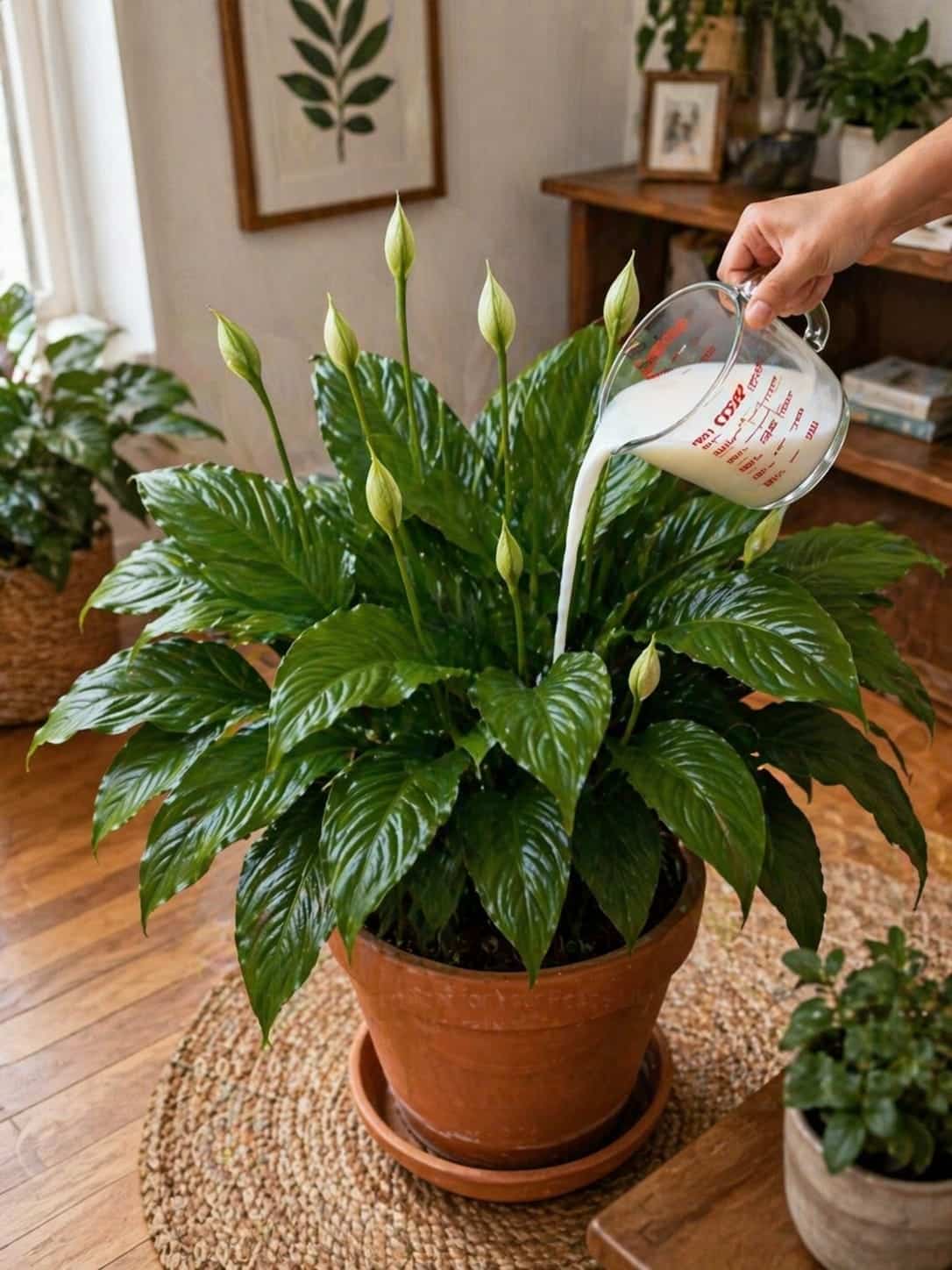
Peace lilies are among the most elegant indoor plants you can own. Their deep green leaves and graceful white blooms instantly bring a sense of calm, freshness, and beauty into any space. They purify the air, thrive in low light, and have a forgiving nature that makes them perfect for beginners and experienced plant lovers alike.
But many plant owners struggle with one common issue: getting their peace lily to bloom more often. You may have a plant that looks healthy and green, yet the flowers are sparse, small, or completely absent. That is when you start searching for simple solutions.
That is why a simple idea has been gaining attention — using milk as a natural plant booster. It sounds unusual, but it also feels easy, accessible, and surprisingly effective when used correctly.
So, can milk really help your peace lily bloom better? In this guide, we will explore the truth behind this popular hack, how to use milk safely, what actually triggers blooms, and the proven care routine that will have your peace lily flowering like never before.
Why Peace Lilies Stop Blooming (Before You Try Any Trick)
Before adding anything to your plant, it is important to understand why it may not be blooming in the first place. A peace lily that is green but flowerless is usually reacting to one or more of these common issues.
Peace Lilies Usually Struggle Due To:
· Low light conditions – Peace lilies can survive in dim rooms, but they need bright indirect light to produce blooms.
· Overwatering or poor drainage – Soggy soil leads to root stress, and stressed roots cannot support flowers.
· Lack of nutrients – If the plant has been in the same pot for a long time, the soil may be depleted.
· Compacted or old soil – Old potting mix becomes dense and acidic, suffocating roots.
· Inconsistent care – Sudden changes in temperature, humidity, or watering schedule stress the plant.
· Large pot size – A pot that is too large encourages root growth at the expense of flowers.
If the plant is not healthy overall, no single trick — including milk — will suddenly create blooms. The foundation always comes first. You must fix the basics before any supplement can help.
The Idea Behind Using Milk for Peace Lilies
Milk contains small amounts of nutrients like calcium, proteins, and trace minerals. When diluted properly, it can act as a mild, natural supplement for plants. Gardeners have used milk for decades, especially outdoors, to treat powdery mildew on leaves and to add a gentle calcium boost.
Some plant owners use it because it may:
· Support leaf strength – Calcium is essential for cell wall structure.
· Improve overall plant health – Trace minerals can benefit a plant that is slightly nutrient‑deficient.
· Contribute to better growth conditions – A mild tonic can help a plant in active growth.
· Help maintain a richer green color – Healthier leaves are often greener leaves.
And a healthier plant has a better chance of producing flowers. However, milk is not a complete fertilizer. It does not provide nitrogen, phosphorus, or potassium in significant amounts. It is best thought of as a gentle supplement, not a cure‑all.
How to Use Milk Safely for Your Peace Lily (Step‑by‑Step)
If you want to try this method, the key is dilution and moderation. Using pure or undiluted milk can lead to sour smells, mold, and pest problems. Here is the safe way to apply it.
Simple Milk Tonic Recipe
· 1 part milk (use whole milk or 2%; avoid skim)
· 3 to 4 parts water (filtered or tap water left out overnight)
· Mix well before each use.
How to Apply
· Use it occasionally – Once every 2–4 weeks during the active growing season (spring and summer).
· Pour lightly into the soil – Do not pour on the leaves or into the crown of the plant.
· Use it as a supplemental watering – Do not replace your regular watering routine.
· Always combine with proper watering habits – The soil should be ready for water when you apply the milk mixture.
Important Tips
· Never use pure milk – It is too concentrated and will spoil quickly.
· Avoid overuse – Too much milk can cause odor, attract fungus gnats, and create a white crust on the soil.
· Stop during fall and winter – Peace lilies rest during cooler months and do not need extra supplements.
· If you see mold or smell sourness – Stop immediately and flush the soil with plain water.
Think of milk as a gentle boost — not a replacement for regular care. It works best when your peace lily is already healthy and just needs a little extra support.
The Truth: What Actually Helps Peace Lilies Bloom More
While milk may offer mild support, the real secret to blooms lies in proper care. These are the proven factors that turn a leafy peace lily into a blooming one.
- Bright, Indirect Light (The #1 Bloom Trigger)
Peace lilies bloom best in good light. Too little light = lots of leaves, but no flowers.
· Ideal placement: East‑facing window, or a south/west window with a sheer curtain.
· How much: 10–12 hours of bright indirect light daily.
· Signs of too little light: Dark green leaves, long stems reaching toward light, no blooms.
If your peace lily has not bloomed in over a year, moving it closer to a window is the single most effective change you can make.
- Consistent Watering (Not Too Wet, Not Too Dry)
Peace lilies like evenly moist soil, but they hate soggy roots.
· Water when the top inch of soil feels dry – Stick your finger in.
· Water thoroughly until it runs from the drainage holes.
· Empty the saucer – Do not let the plant sit in water.
· In winter, water less often (every 10–14 days).
Inconsistent watering — going from bone dry to soaking wet — stresses the plant and stops blooming.
- Good Drainage (Healthy Roots = Healthy Blooms)
A peace lily in a pot without drainage holes is a peace lily that will eventually decline.
· Use a pot with drainage holes – Terracotta or plastic with holes both work.
· Use well‑draining soil – A standard houseplant mix with added perlite (2 parts soil, 1 part perlite) is ideal.
· Do not let the pot sit in a decorative cachepot without drainage – Water will pool at the bottom.
Roots need oxygen. When they have it, they can support flowers.
- Occasional Feeding (The Right Nutrients)
A balanced liquid fertilizer during the growing season helps encourage blooms.
· Use a balanced houseplant fertilizer (10‑10‑10 or 20‑20‑20) diluted to half strength.
· Feed once a month – Only during spring and summer.
· Do not fertilize in fall and winter – The plant rests.
· If using milk, consider it a supplement, not a substitute for fertilizer.
A well‑fed peace lily has the energy to produce multiple flower stalks.
- Stable Environment (Peace Lilies Love Consistency)
Avoid moving the plant too often. Peace lilies like consistency.
· Keep temperatures between 65–80°F (18–27°C).
· Avoid cold drafts, heating vents, and sudden temperature swings.
· Moderate humidity (40–60%) helps prevent brown leaf tips and supports blooming.
A plant that is not constantly stressed is much more likely to flower.
- Remove Spent Blooms and Yellow Leaves
This simple habit makes a big difference.
· Cut off faded flowers at the base of the stem.
· Remove yellow or brown leaves – They drain energy from the plant.
· Wipe leaves with a damp cloth to remove dust and improve light absorption.
When the plant no longer wastes energy on old tissue, it can put that energy into new blooms.
Continue to Page 2
Continue to page 2 for more details about this article and the key points many readers miss on the first page.