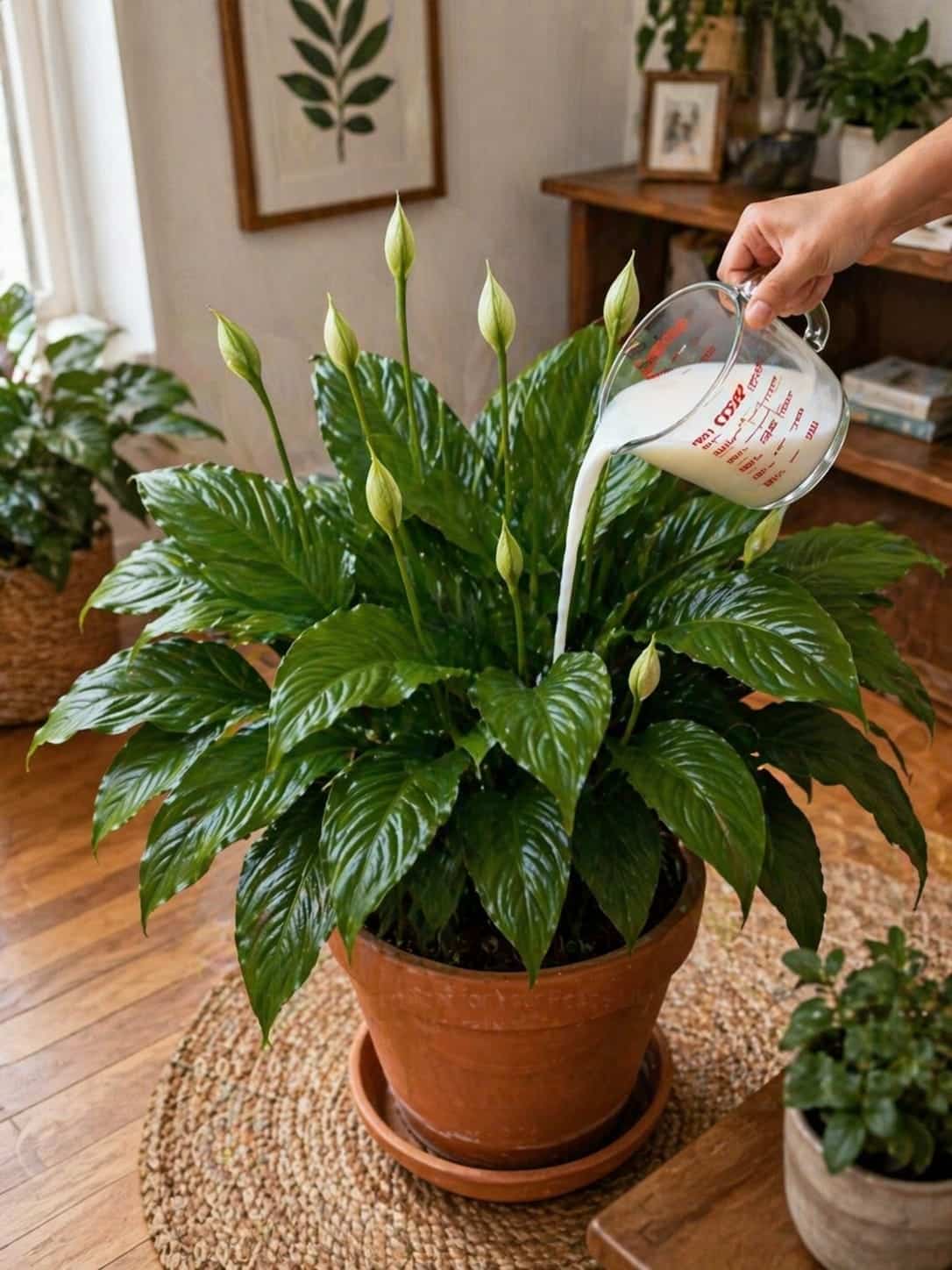
Why Moderation Matters (The Risks of Overusing Milk)
Milk can be helpful in small amounts, but too much can create problems. Here is what can go wrong.
Potential Issues with Excess Milk:
· Unpleasant smell in the soil – Sour milk is noticeable and hard to ignore.
· Buildup that attracts pests – Fungus gnats and fruit flies are drawn to fermenting sugars.
· Mold on the soil surface – White or green fuzz appears.
· Residue that blocks drainage – Milk solids can coat potting mix.
· Imbalance in the potting mix – Excess organic matter can harm sensitive roots.
That is why milk should always be used lightly and occasionally. If you see any of these signs, stop immediately. Flush the soil with plain water and let it dry out. If the problem persists, repot with fresh mix.
A Simple Peace Lily Care Routine for Year‑Round Blooms
Here is a weekly and seasonal plan that works better than any single trick. Combine it with occasional milk tonic if you wish, but the routine itself will produce results.
Weekly
· Check soil moisture. Water if top inch is dry.
· Wipe leaves with a damp cloth.
· Remove any spent blooms or yellow leaves.
Monthly
· Flush the soil with plain water to prevent salt buildup.
· Inspect for pests (mealybugs, spider mites, aphids).
· Rotate the pot for even light.
Spring & Summer (Active Growth)
· Bright indirect light (10–12 hours).
· Water every 5–7 days (when top inch dries).
· Feed with half‑strength balanced fertilizer once a month.
· Optional: Use diluted milk tonic once every 2–4 weeks.
· Maintain humidity (pebble tray or humidifier).
Fall & Winter (Resting Period)
· Still bright light, but days are shorter – consider a grow light.
· Water less often (every 10–14 days).
· Stop fertilizing completely.
· Stop milk tonic.
· Keep away from cold drafts (below 55°F / 13°C).
Annually
· Repot every 1–2 years with fresh, well‑draining potting mix.
· Divide if the plant is overcrowded.
· Trim any dead or brown roots.
Frequently Asked Questions (Milk for Peace Lilies)
Can I use any type of milk?
Use plain whole milk or 2%. Avoid skim milk (too watery), flavored milk (sugars), and plant milks (they spoil faster and have different nutrients). Always dilute.
How often should I use milk on my peace lily?
Once every 2–4 weeks during spring and summer. Do not use it in fall and winter. If you see any negative signs (smell, mold, pests), stop immediately.
Will milk make my peace lily bloom overnight?
No. Milk is a mild supplement. Blooms come from consistent light, water, and feeding. Milk may help a healthy plant, but it will not force blooms on a struggling one.
What are the signs that milk is hurting my plant?
· White or green mold on the soil surface.
· A sour, rotten smell from the pot.
· Small flying insects (fungus gnats) around the soil.
· Leaves turning yellow or drooping even though the soil is dry.
· A white crust on the soil or pot rim.
If you see any of these, stop milk immediately. Flush the pot with plain water. If the problem persists, repot with fresh mix.
Is there a better natural fertilizer for peace lilies?
Yes. Worm castings, compost tea, or a balanced organic houseplant fertilizer are far more reliable than milk. Milk is an occasional supplement, not a primary fertilizer.
Can I use yogurt water or buttermilk?
No. These are even more concentrated and spoil faster. Avoid all dairy products except highly diluted fresh milk.
How do I get my peace lily to produce more flowers without milk?
Focus on light, water, soil, and feeding. Move it to a brighter window. Water when the top inch is dry. Repot with fresh, well‑draining soil. Feed with a balanced fertilizer once a month in spring/summer. Remove spent blooms. That routine works every time.
Can I use milk on other houseplants?
Some houseplants tolerate diluted milk, but many do not. Succulents, orchids, and snake plants are better off without it. For peace lilies, use sparingly.
The Real Secret to Beautiful Blooms
A blooming peace lily is simply a healthy peace lily. When your plant has strong roots, proper light, balanced watering, clean fresh soil, and occasional gentle feeding, it naturally has the energy to produce those beautiful white flowers.
Milk can be part of the routine — but it is never the whole story. Think of it as a small supporting actor, not the star of the show. The star is good, consistent care.
So before you pour milk into your peace lily pot, check your light. Feel your soil. Look at your pot. Then, if everything else is right, you can experiment with a diluted milk tonic once in a while.
Your peace lily will reward you with firm, glossy leaves and those elegant white blooms — not because of a trick, but because you gave it what it truly needed.
Final Thoughts
The idea of using milk as a natural fertilizer is simple and interesting — and when used carefully, it can give your peace lily a gentle boost. But the true secret to more blooms is not one ingredient. It is consistency.
With the right care — bright indirect light, consistent watering, good drainage, occasional feeding, and a stable environment — your peace lily can reward you with elegant, long‑lasting flowers that bring life and calm into your home.
So move it closer to the window. Water it when the soil tells you to. Repot it in fresh mix. Feed it lightly in spring. And if you want to add a little diluted milk once a month, do so sparingly.
Then wait. Those beautiful white spathes will appear — not because of magic, but because you gave the plant exactly what it needed.
Have you tried using milk on your peace lily? Share your experience in the comments below. And if you found this guide helpful, save it for later or send it to a friend who wants more blooms without the guesswork.
This article is for informational purposes only. Growing conditions vary. Always observe your plant and adjust care as needed. When in doubt, focus on light, water, and soil before any supplement.