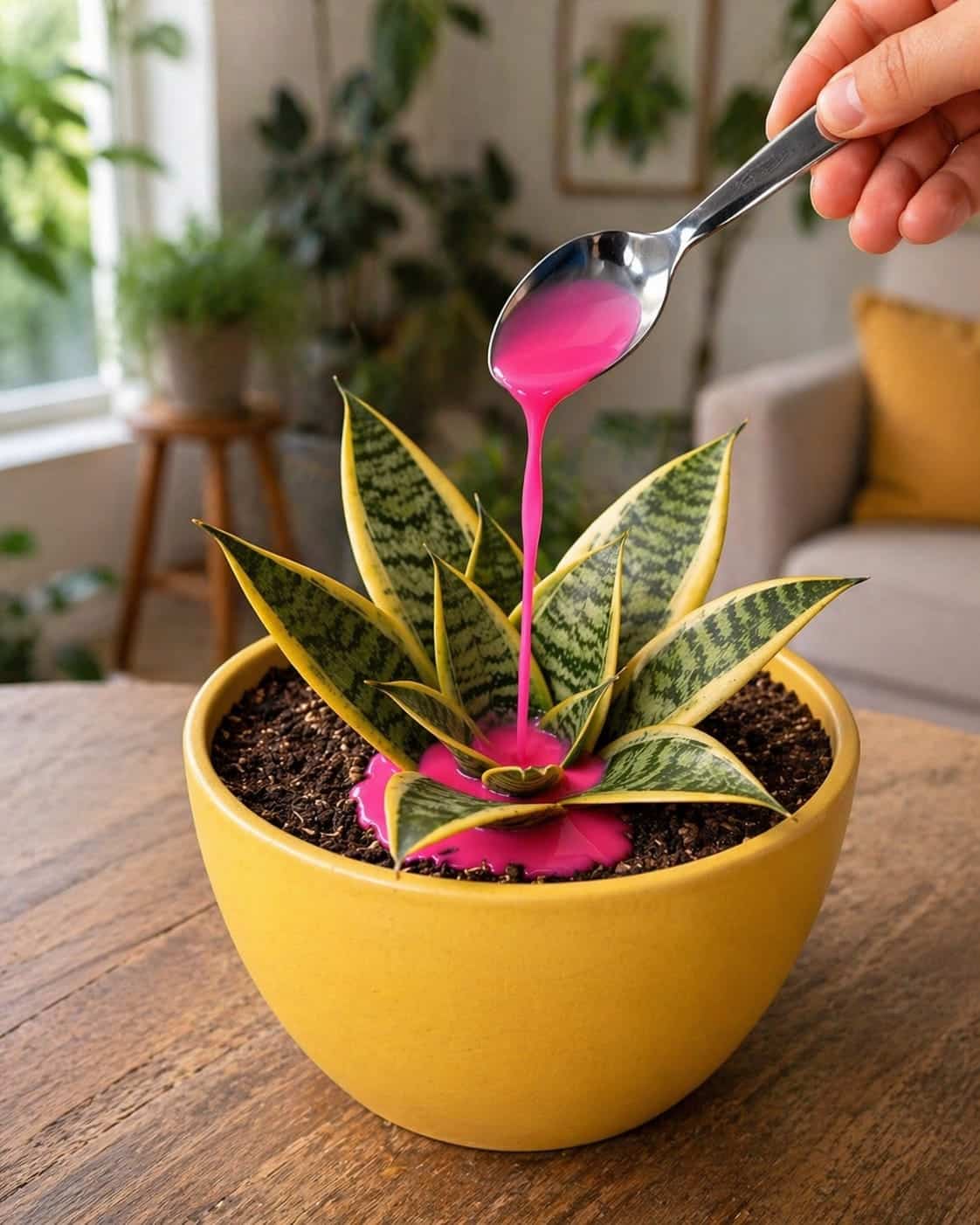
If you have been scrolling through plant videos lately, you have probably seen it. A bright, almost fluorescent pink liquid being poured onto a snake plant, often accompanied by dramatic captions like: “This changes everything”, “Most gardeners don’t know this trick”, or “Instant growth boost”. The liquid looks thick, rich, and powerful. The plant in the “after” shot looks greener, fuller, and somehow more vibrant. It is hard not to be curious.
But before you reach for that pink bottle or mix up a homemade pink concoction, let us take a step back. What is that pink liquid really doing to your snake plant? Is it a miracle growth booster, or just another viral illusion? In this guide, we will uncover the truth behind the trend, explain why snake plants do not need colorful shortcuts, and give you the real, proven care routine that will keep your snake plant healthy, strong, and beautiful for years.
Why This Pink Liquid Gets So Much Attention
The first reason for the popularity of any colored liquid hack is simple: visual impact.
· Bright color = instant curiosity – A pink, blue, or green liquid stands out in a feed of green plants and brown soil.
· Thick texture = looks “rich” and effective – The slower the pour, the more potent it seems.
· Dramatic pouring = feels like a powerful solution – It mimics the action of administering medicine or a special treatment.
These videos are designed to stop your scroll. They create the illusion that something extraordinary is happening. But in plant care, appearance can be deeply misleading. The color itself has no benefit to the plant. Plants do not respond to pink water; they respond to nutrients, water balance, light, and root health.
What This Pink Liquid Usually Represents
In most cases, colorful liquids shown in viral plant videos are one of three things:
- Diluted fertilizers with added food coloring – Some liquid plant foods are naturally colored (e.g., seaweed extract is brown; some synthetic fertilizers are blue or green). Others have dye added purely for visual effect.
- Nutrient solutions mixed with beet juice, food coloring, or other pigments – Home experimenters sometimes add color to make the liquid look more impressive.
- Purely visual content – The liquid may be nothing more than colored water, and the “after” results come from completely different care changes or even a different plant.
👉 The color itself has no benefit to the plant. A snake plant cannot tell the difference between pink water and clear water. What matters is what is dissolved in that water — and whether the plant actually needs it.
The Real Risk Behind Using Random Liquids on Snake Plants
Snake plants (Dracaena trifasciata, formerly Sansevieria) are famously hardy. They survive low light, dry air, and missed waterings. But that hardiness has a limit. They are also sensitive to overfeeding, poor drainage, and chemical buildup in the soil.
Using unknown or concentrated liquids can lead to:
· Root burn – Fertilizers and other additives applied at high concentrations can burn delicate root hairs, causing brown tips and wilting.
· Chemical buildup in soil – Excess salts from fertilizers or other additives accumulate as a white crust on the soil surface, blocking water and air.
· Blocked drainage – Thick, sticky liquids (like milk, honey water, or syrupy fertilizers) can coat the potting mix and prevent water from flowing through.
· Leaf damage – If the liquid splashes onto the leaves, it can cause spotting or rot, especially if it contains sugars or oils.
· Slowed growth instead of improvement – A stressed snake plant will stop producing new leaves and may even decline.
And the biggest issue? Snake plants do not need much feeding at all. They are adapted to survive in poor, rocky soils. Overfeeding is far more harmful than underfeeding.
Why Snake Plants Don’t Need “Special” Liquids
Snake plants are succulents. They store water and nutrients in their thick, fleshy leaves and underground rhizomes. They have evolved to thrive in environments with very little organic matter. Indoors, they do best when we mimic that lean, dry, stable environment.
What snake plants truly prefer:
· Dry soil between waterings – They hate sitting in wet soil.
· Minimal nutrients – A light feeding once or twice a year is plenty.
· Stable environments – They do not like frequent changes in light, temperature, or watering routines.
Adding too much — even something that looks beneficial like a pink nutrient booster — can stress the plant. A stressed snake plant may stop growing, drop leaves, or develop root rot. In many cases, the plant that looks amazing in the “after” video was already healthy; the pink liquid was just a prop.
What Actually Helps a Snake Plant Thrive (No Color Required)
Instead of focusing on viral tricks, focus on what truly works. These are the proven factors that turn a surviving snake plant into a thriving one.
- Proper Light
Snake plants can survive in low light, but they thrive in bright indirect light. An east‑facing window or a south/west window with a sheer curtain is ideal. Low light slows growth, dulls color, and can lead to leggy, weak leaves.
- Controlled Watering
Overwatering is the #1 killer of snake plants. Let the soil dry completely between waterings. In most homes, this means watering every 2–4 weeks in spring/summer and once a month or less in winter. Use your finger to check — if the soil is dry 2 inches down, water. If not, wait.
- Well‑Draining Soil
Use a cactus or succulent potting mix. Regular potting soil holds too much moisture. You can also mix 2 parts all‑purpose soil with 1 part perlite or coarse sand. A pot with drainage holes is non‑negotiable.
- Correct Pot Size
Snake plants prefer to be slightly root‑bound. A pot that is too large holds excess moisture and encourages root growth instead of leaves. Choose a pot only 1–2 inches larger than the root ball.
- Light Feeding (Optional)
If you want to feed your snake plant, use a diluted, balanced fertilizer (like 10‑10‑10 or 20‑20‑20) at half strength. Apply once in spring and once in summer at most. Do not fertilize in fall and winter. That is all they need.
None of these steps require pink liquid, colored water, or any viral hack.
Continue to Page 2
Continue to page 2 for more details about this article and the key points many readers miss on the first page.