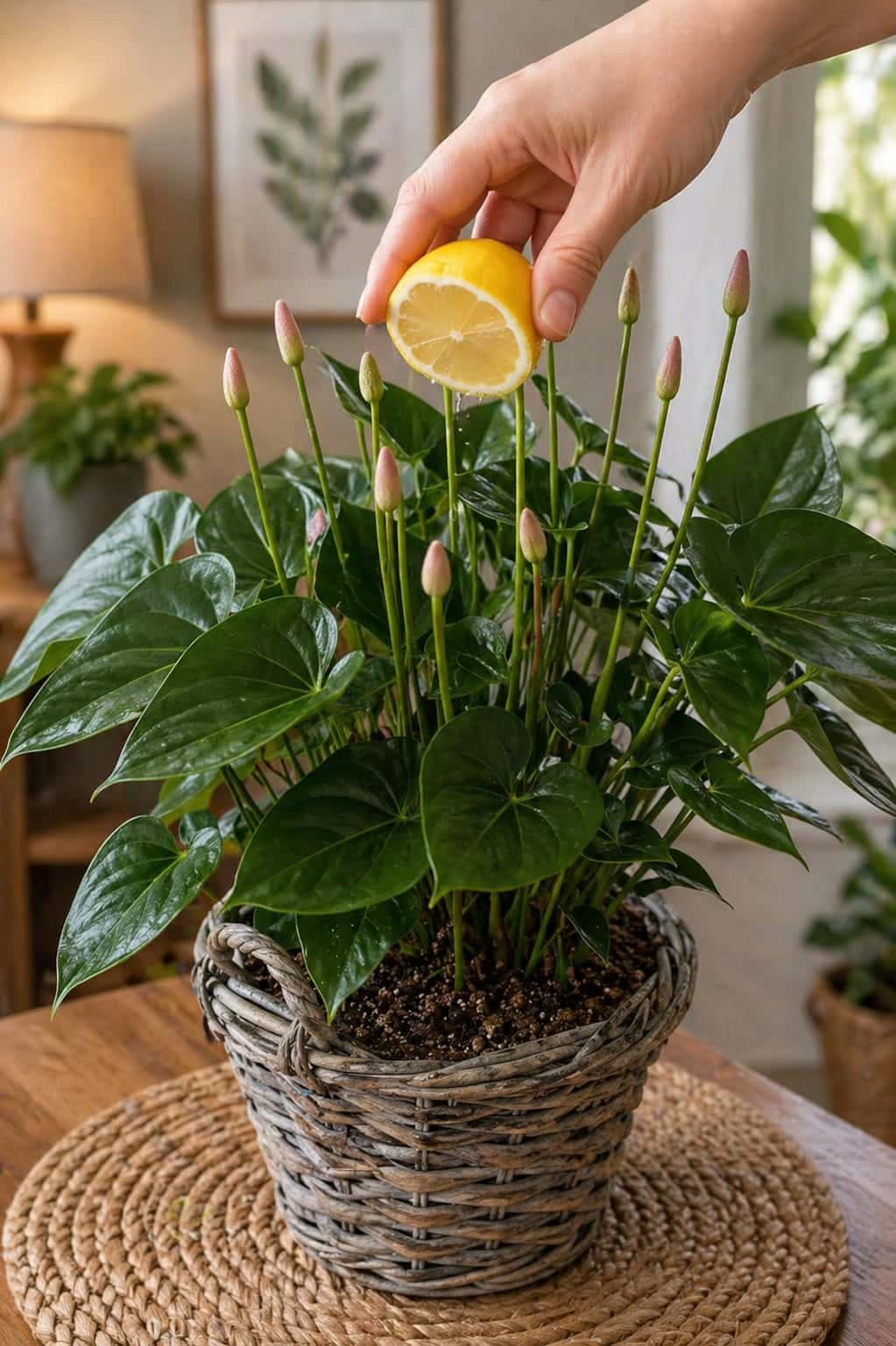
If you have been scrolling through plant videos lately, you have probably seen this eye‑catching moment: someone squeezing a fresh lemon over a lush, blooming anthurium plant, with captions promising nonstop blooms, stronger growth, and healthier roots. The video is visually appealing — bright yellow citrus, glossy green leaves, and vibrant red flowers. It looks simple. Natural. Almost magical.
But does it actually work? Can a common kitchen fruit really transform your anthurium into a flowering machine? Or is this just another viral plant myth that could do more harm than good?
In this guide, we will separate fact from fiction. You will learn what lemon juice actually does to soil, why anthuriums may prefer slightly acidic conditions, the risks of using lemon directly, and — most importantly — the proven, science‑backed care routine that will keep your anthurium blooming beautifully year after year.
Why This Lemon Trick Looks So Convincing
The setup is always appealing: a healthy anthurium already full of buds, a fresh lemon being squeezed over the soil, and a promise of “nonstop blooms” or “instant flowering power.” The visual creates a strong emotional hook. It suggests that one simple kitchen ingredient can replace expensive fertilizers and complicated care routines.
However, plants do not respond to visuals — they respond to chemistry. What you see on screen is often a staged moment: the plant was already thriving due to proper light, water, and humidity. The lemon is added after the fact, creating a false cause‑and‑effect relationship. The lemon gets the credit, but the real work was done elsewhere.
In this article, we will break down what lemon juice actually does to soil, why anthuriums prefer slightly acidic conditions, the potential risks of using lemon directly, and a smarter, safer approach to achieving those stunning, long‑lasting blooms.
What Lemon Juice Actually Does to Soil
Lemon juice is highly acidic, with a pH of around 2 to 3. When added to soil, it can:
· Slightly lower soil pH – Making the environment more acidic.
· Temporarily change nutrient availability – Some nutrients (like iron and manganese) become more available in acidic conditions, while others (like calcium and magnesium) become less available.
· Add organic acids – Citric acid can interact with soil microbes and minerals.
Now, here is the key: Anthuriums do prefer slightly acidic soil. They naturally grow in the tropics, where the soil pH ranges from 5.5 to 6.5. So the idea of using an acidifying agent is not completely random. In theory, a very mild, diluted acidic solution could be beneficial if your soil has become too alkaline. However, the way the viral trick is shown — squeezing raw lemon juice directly onto the soil — is often too concentrated and too unpredictable.
The Problem With Using Lemon Directly ⚠️
Pouring or squeezing fresh lemon juice straight into the pot can create several issues, especially if done repeatedly or in large amounts.
- Too Much Acidity → Root Stress
A sudden drop in pH can shock the roots. Anthuriums are adaptable, but extreme acidity (pH below 5.0) can damage root hairs, reducing the plant’s ability to absorb water and nutrients.
- Soil Imbalance → Disrupted Nutrient Uptake
While acidic conditions make some nutrients more available, they can also lock out others. For example, calcium and magnesium become less available in highly acidic soil, leading to deficiencies that cause leaf curling and poor growth.
- Microbial Disturbance → Unhealthy Root Environment
Soil is alive with beneficial bacteria and fungi that help break down organic matter and protect roots. A sudden influx of citric acid can kill beneficial microbes, leaving the root zone vulnerable to pathogens.
- Leaf Damage if It Touches Foliage
Lemon juice can burn anthurium leaves if it splashes onto them. The leaves may develop brown spots or yellow patches, detracting from the plant’s beauty.
In short: a little chemistry shift can help, but too much can harm your plant. The viral lemon trick is rarely a good idea for routine care.
Why Your Anthurium Blooms (or Doesn’t Bloom)
Flowering has much more to do with overall care than one ingredient. Anthuriums are not finicky, but they do have specific needs. If your plant is not blooming, the cause is almost never a lack of lemon juice. Instead, focus on these five essentials.
- Light (The #1 Bloom Trigger)
Anthuriums need bright indirect light to produce flowers. Place them near an east‑facing window or a south/west window with a sheer curtain. Too little light, and they will grow leaves but no blooms. Too much harsh direct sun, and the leaves will scorch.
· Signs of too little light: Dark green leaves, long stems reaching toward light, no flowers for over a year.
· Signs of too much light: Yellow or bleached leaves, brown spots.
- Watering (Consistent Moisture, Never Soggy)
Anthuriums like their soil to be lightly moist but not waterlogged. Overwatering leads to root rot, which stops flowering.
· Water when the top inch of soil feels dry.
· Water thoroughly until it runs from the drainage holes. Empty the saucer.
· In winter, reduce watering to every 7–10 days.
- Humidity (Tropical Plants Need Moist Air)
Anthuriums originate from rainforests, where humidity is high (60–80%). In dry indoor air, leaves develop brown tips, and flowering slows.
· Use a humidifier near the plant.
· Place the pot on a pebble tray with water (the pot should not sit in the water).
· Group plants together to create a microclimate.
· Lightly mist the leaves in the morning (avoid misting the flowers).
- Soil and Drainage
Anthuriums need well‑draining, airy soil to prevent root rot. Use a mix of potting soil, perlite, and orchid bark. Avoid heavy, moisture‑retentive soil.
· Best mix: 2 parts all‑purpose potting soil + 1 part perlite + 1 part orchid bark.
· Always use a pot with drainage holes.
- Nutrition (Balanced Fertilizer, Not Kitchen Experiments)
Anthuriums are not heavy feeders, but they need regular, balanced nutrition during the growing season (spring and summer). A slow‑release fertilizer or a half‑strength liquid fertilizer (10‑10‑10 or 20‑20‑20) applied every 2–4 weeks works best. Avoid high‑nitrogen formulas, which promote leaves over flowers.
Continue to Page 2
Continue to page 2 for more details about this article and the key points many readers miss on the first page.