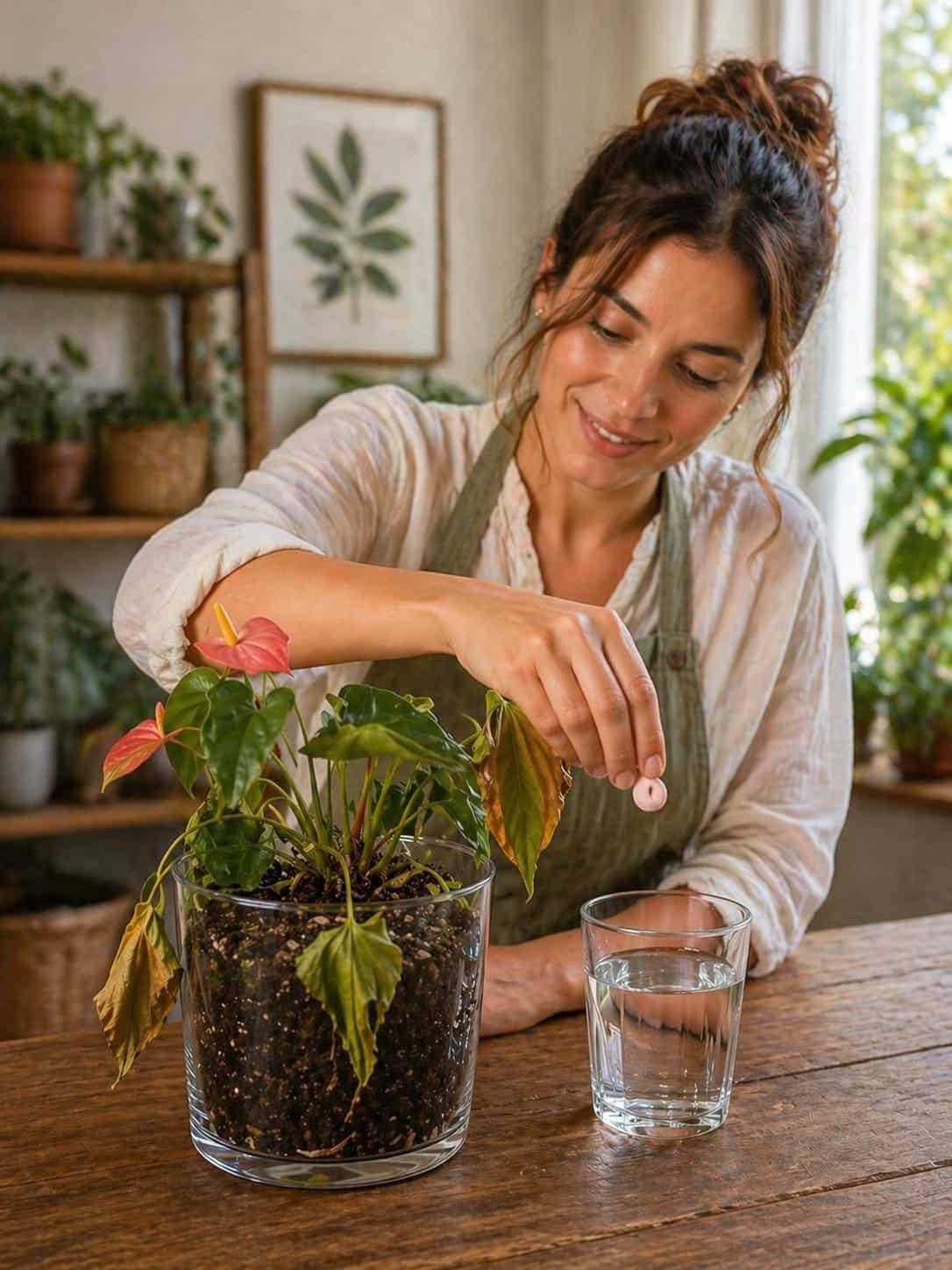
Anthuriums are stunning plants. With their glossy, heart‑shaped leaves and bright, waxy flowers that can last for weeks, they instantly elevate any indoor space. Whether you have a classic red Anthurium andraeanum or a rare white or pink variety, these tropical plants bring a sense of luxury and life to living rooms, offices, and bathrooms. But when they start to wilt, turn yellow, or lose their shine, many plant owners look for a fast solution.
That is where viral tricks come in — like dropping a mysterious pink tablet into the soil or water. The image shows a struggling, drooping plant on one side, a single pink tablet being added, and on the other side, a revived, blooming anthurium. It looks simple. It feels like a hidden secret. But is it actually helping your plant, or is it just another risky myth?
In this guide, we will uncover what that pink tablet could be, the risks of using unknown additives, the real reasons anthuriums decline, and — most importantly — the proven, science‑backed care that will bring your anthurium back to life and keep it blooming beautifully.
Why This Trick Gets So Much Attention
The image creates a strong emotional hook: a struggling, drooping plant, a single tablet being added, and the promise of a dramatic transformation. It suggests that one simple step will fix everything. But plant care rarely works that way.
There are several reasons why these viral tricks spread so quickly:
· They promise instant results – People want a quick fix for a plant that looks sick.
· They feel scientific – A tablet dissolving in water or soil looks like a targeted treatment.
· They are cheap and easy – No expensive products, no complicated steps.
· The before‑and‑after is convincing – A healthy plant in the “after” shot creates trust.
However, what the video does not show is the weeks of proper care that may have led to that recovery. It does not show the plant being repotted, the roots being trimmed, or the light being improved. The tablet gets the credit, but the real work was likely done elsewhere.
What That Pink Tablet Could Be (And What It Actually Does)
In most viral posts, the tablet is not clearly explained. It could be any number of substances, each with very different effects — and not all are safe for anthuriums.
- Vitamin Supplement (B‑Complex, C, etc.)
Human vitamins are not formulated for plants. They may contain binders, sugars, and dosages that are far too high for delicate anthurium roots. Vitamins can also encourage bacterial growth in the soil, leading to root rot.
- Aspirin (Acetylsalicylic Acid)
Some gardeners use aspirin to boost plant immunity. The salicylic acid in aspirin can trigger a defense response in some plants. However, aspirin is not a fertilizer, and its effects on anthuriums are not well studied. Too much aspirin can lower soil pH and stress the roots.
- Fertilizer Tablet (Slow‑Release or Water‑Soluble)
This is the most plausible beneficial tablet. A balanced, slow‑release fertilizer tablet (like 10‑10‑10 or a bloom‑booster formula) can provide nutrients over time. However, a single tablet in a small pot can be too concentrated, burning roots and causing leaf tip burn.
- Calcium or Magnesium Supplement
Some tablets contain calcium or magnesium, which are important for cell wall structure and chlorophyll production. However, anthuriums usually get these from potting mix and tap water. Adding a supplement without a known deficiency is unnecessary and can cause nutrient lockout.
- Epsom Salt (Magnesium Sulfate) in Tablet Form
Epsom salt can correct magnesium deficiency, but it is not a general fertilizer. Use only if specific deficiency symptoms appear (yellowing between leaf veins).
👉 The bottom line: Without knowing exactly what the tablet is, you should never add it to your anthurium’s soil or water. A struggling plant needs stability — not experimentation.
The Risks of Using Unknown Tablets on Anthuriums
Anthuriums are sensitive plants, especially when stressed. Their roots are fleshy and prone to rot. They prefer consistently moist but not soggy soil, and they are sensitive to salt buildup and chemical imbalances.
Adding random substances can lead to:
· Root damage – Concentrated chemicals can burn delicate root hairs.
· Chemical imbalance in soil – Sudden changes in pH or nutrient concentration can shock the plant.
· Salt buildup – Fertilizer and mineral tablets leave behind salts that accumulate as a white crust on the soil surface, blocking water and air.
· Slowed recovery – Instead of healing, the plant must cope with additional stress.
· Even plant death – In severe cases, root burn or toxicity can kill the plant.
Anthuriums are not heavy feeders. They do not need frequent fertilization, and they certainly do not need mystery tablets. If your plant is struggling, the answer is almost never “add more stuff.” It is usually “fix the environment.”
Why the Plant Looks “Revived”
Many viral transformations are misleading. What often really happens is that the plant was watered properly, lighting conditions improved, or damaged roots were already recovering. The improvement comes from better care — not the tablet itself.
Here are common reasons for a plant’s improvement that have nothing to do with the tablet:
· The plant was underwatered – A drooping anthurium often perks up within hours of watering. Any liquid — even plain water — would produce the same result.
· The plant was moved to better light – Anthuriums need bright indirect light. If the video creator moved the plant to a brighter spot, that alone could cause new growth.
· The roots were trimmed and repotted – Removing rotten roots and refreshing the soil is the single most effective way to revive a sick anthurium.
· The plant was given time – Recovery takes weeks. The “after” shot may have been taken a month later, after consistent care.
· The plant was swapped – In some cases, the “after” plant is a completely different, healthy anthurium.
The pink tablet gets the credit, but the real work was done elsewhere. Do not fall for the illusion.
What Causes Anthurium Problems in the First Place (Before You Try Any Tablet)
If your anthurium looks like the one in the “before” image — drooping leaves, yellowing, lack of blooms — the real causes are usually one or more of these common issues. Fixing the underlying problem is the only real solution.
- Overwatering (The #1 Killer)
Anthuriums like consistently moist soil, but they cannot tolerate soggy roots. Overwatering leads to root rot, which causes yellow leaves, drooping, and eventually death.
Signs: Soil stays wet for over a week, leaves turn yellow, stems feel soft, foul smell from the pot.
- Underwatering
Anthuriums are tropical plants; they do not like to dry out completely. If the soil becomes bone dry, the leaves will wilt, turn brown at the edges, and collapse.
Signs: Soil is dry and pulling away from the pot, leaves are drooping and crispy.
- Poor Drainage
A pot without drainage holes or heavy, compacted soil traps water around the roots, leading to rot even if you water infrequently.
Signs: Water sits on top of the soil, the pot feels heavy, roots are brown and mushy.
- Low Humidity
Anthuriums are native to tropical rainforests and need high humidity (60–80%). In dry indoor air, leaf tips turn brown, growth slows, and the plant becomes weak.
Signs: Brown, crispy leaf edges, slow growth, leaves curling under.
- Low Light
Anthuriums can survive in low light, but they will not bloom well. They need bright indirect light to produce those iconic waxy flowers. In low light, leaves become pale, and the plant becomes leggy.
Signs: No blooms for over a year, long stems reaching toward light, small pale leaves.
- Nutrient Deficiency (Less Common)
If the plant has been in the same pot for years without feeding, it may lack nutrients. Leaves may be pale, growth slow, and blooms small or absent.
Signs: Pale leaves, stunted growth, no blooms despite good light and water.
Continue to Page 2
Continue to page 2 for more details about this article and the key points many readers miss on the first page.