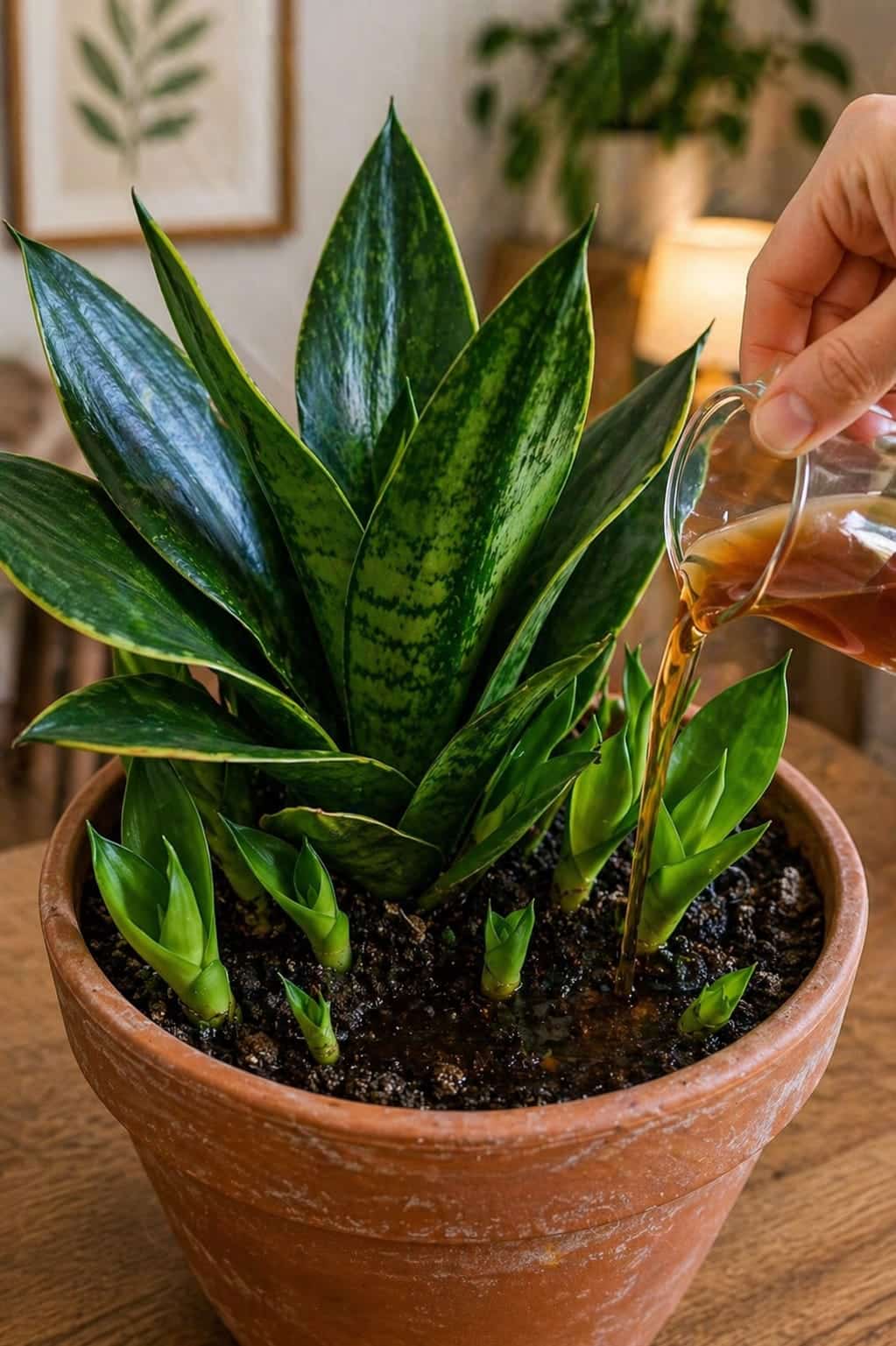
Snake plants are famous for being one of the easiest indoor plants to keep alive. They can sit in a corner, survive missed waterings, tolerate average indoor air, and still look stylish with their tall, upright leaves. That is why so many people choose snake plants for bedrooms, offices, apartments, entryways, and modern home decor.
But there is one thing many snake plant owners want more than anything else.
They want pups.
Those small new shoots that push up from the soil are what make a snake plant look fuller, stronger, and more expensive. A single snake plant can look beautiful, but a pot filled with fresh baby shoots looks like a thriving indoor showpiece. It feels alive. It feels active. It feels like the plant is finally doing what it is supposed to do.
The problem is that many snake plants refuse to multiply.
They stay green, but they do not grow. They survive, but they do not expand. They may look almost exactly the same for months, sometimes even years. No new shoots. No fresh pups. No signs of movement under the soil.
This is why a simple brown liquid trick has plant lovers curious. In short plant care videos, people are pouring a dark brown liquid around the soil of snake plants and connecting it with new baby shoots, stronger roots, and fuller growth. The method looks easy, natural, and satisfying. A small glass of brown liquid is poured into the pot, the soil absorbs it, and the viewer is left wondering if this is the missing step their snake plant needs.
The idea is simple: if your snake plant is not making babies, this gentle brown liquid method may help wake up the soil, support the roots, and encourage the plant to start producing new pups.
Whether your snake plant has been sitting still for months or you simply want a fuller pot, this method has become popular because it feels like an easy way to push the plant toward active growth.
Why Snake Plant Pups Matter So Much
Snake plant pups are small baby plants that grow from the underground root system. They usually appear as pointed green shoots emerging from the soil near the mother plant. Over time, these shoots grow taller and become full leaves, creating a thicker and more dramatic plant.
A snake plant with pups looks very different from a lonely single cluster. It looks healthier, more established, and more decorative. That is why people get excited when they see even one tiny pup breaking through the soil.
Pups matter because they mean the plant is expanding.
They also give you options. You can leave the pups in the same pot to create a fuller plant, or you can separate them later to create new snake plants. This makes snake plant pups one of the most rewarding parts of owning this plant.
For many plant lovers, seeing pups feels like a sign of success. It means the plant is comfortable enough to grow, spread, and create new life.
But if the plant never produces pups, it can feel frustrating.
Why Your Snake Plant Is Alive but Not Multiplying
One of the most confusing things about snake plants is that they can look healthy while still refusing to grow. This happens because snake plants are very good at surviving. They can hold their shape and color even when they are not actively thriving.
A snake plant can survive in low light, but it may not produce pups there. It can survive with occasional watering mistakes, but it may not multiply if the roots are stressed. It can survive in a large decorative pot, but it may focus on root growth instead of sending up baby shoots.
This is the difference between survival and growth.
Survival means the plant is staying alive. Growth means the plant has enough energy and stability to create something new.
If your snake plant is not making babies, it may be missing one or more of these key conditions:
Bright indirect light
A warm and stable location
Fast-draining soil
A pot with drainage
Careful watering
A slightly snug root space
Healthy roots
A consistent care routine
When these conditions are missing, the plant may stay alive, but it may not multiply.
This is exactly why people become curious about tricks like the brown liquid method. They want something that helps push the plant out of stillness and into growth.
What Is the Brown Liquid Trick?
The brown liquid trick is a simple plant care method shown in many short videos. A person pours a brown liquid around the soil of a snake plant, usually near the base where pups are expected to appear. The liquid is often presented as a natural growth booster, a homemade plant drink, or a gentle soil support method.
The exact recipe may vary depending on the video, but the purpose is usually the same.
The brown liquid is meant to support the soil and roots so the snake plant has a better chance of producing pups.
In many videos, the method is shown with captions like:
“This brown liquid snake plant pup trick has plant lovers curious.”
“Snake plant not making babies? Try this.”
“Pups appeared after this simple step.”
“Don’t skip this if you want more snake plant babies.”
The reason this content works so well is simple. The visual is strong. The brown liquid looks rich and powerful as it sinks into the dark soil. The green baby shoots nearby make the viewer connect the liquid with new growth. The whole scene feels like a secret garden routine that experienced plant lovers know.
It is easy to understand, easy to try, and easy to remember.
Why People Believe Brown Liquid Helps Snake Plants Produce Pups
The idea behind the brown liquid trick is that snake plants need strong roots before they can produce babies. Since pups come from the underground rhizome system, anything that supports root activity is believed to help the plant multiply.
People use brown liquid plant drinks because they believe they can:
Wake up slow soil
Support root strength
Encourage underground activity
Help the plant absorb nutrients
Improve the growing environment
Push the plant toward new shoots
Make the plant look fuller over time
The appeal is not only about feeding the plant. It is about creating a sense of movement below the soil.
Snake plants often grow quietly underground before anything appears above the surface. A plant may be preparing new growth long before you see a pup. That is why any method connected to root support feels exciting to plant owners.
They want to believe that the next pup is already forming, and the brown liquid is helping it break through.
The Secret Is Not Just the Liquid
The most interesting thing about this method is that the liquid is usually only one part of the story. When people try a new plant care trick, they often start paying closer attention to the plant overall. That attention can improve results.
They may move the plant to better light.
They may stop watering too often.
They may check the soil more carefully.
They may make sure the pot drains properly.
They may clean the leaves.
They may avoid disturbing the roots.
All of these changes help snake plants grow better.
The brown liquid becomes the exciting visible step, but the full routine is what creates the best chance of pups.
That is why this method is most effective when it is combined with the right snake plant care habits.
How the Brown Liquid Method Is Usually Done
The routine shown in plant care videos is simple and easy to follow.
First, the plant owner checks the soil. The soil should not already be soaked. Snake plants do not like sitting in wet conditions, so this method is usually done when the soil is ready for watering.
Next, a small amount of brown liquid is poured slowly around the soil surface. It is usually poured near the base of the plant, but not directly into the center of the leaves. The liquid is allowed to soak into the soil naturally.
After that, the plant is placed in bright indirect light and left alone to respond.
The method usually looks like this:
Check that the soil is not already wet.
Pour a small amount of brown liquid around the soil.
Avoid pouring directly into the leaf crown.
Let the soil absorb the liquid slowly.
Do not flood the pot.
Keep the plant in bright indirect light.
Wait and watch for new pups.
The simplicity is what makes people want to try it.
Why You Should Not Flood the Pot
Snake plants are not thirsty tropical plants that need constant moisture. Their thick leaves and underground structures store water, which is why they can tolerate dry periods. This also means they can suffer quickly if the soil stays wet for too long.
A common mistake with the brown liquid method is using too much at once.
If you pour a large amount into the pot and the soil stays wet for days, the roots may become stressed. A stressed snake plant is less likely to produce pups. In serious cases, too much moisture can lead to root rot.
The method is meant to be gentle, not heavy.
A small amount is enough. The goal is to refresh the soil, not drown the plant.
Think of it as a controlled plant drink, not a soaking flood.
Bright Indirect Light Makes the Trick Work Better
If there is one thing that can change a snake plant’s growth more than anything else, it is light.
Snake plants are often sold as low-light plants, but that description can be misleading. They can tolerate low light, but they usually grow much better in brighter conditions. If you want pups, bright indirect light is one of the biggest secrets.
A snake plant sitting in a dark corner may survive for a long time, but it may not have enough energy to produce babies. When moved to a brighter spot, it may begin growing more actively.
The best locations include:
Near an east-facing window
Near a bright window with filtered light
Close to a balcony door with indirect sunlight
In a bright living room
On a shelf near natural daylight
A few feet away from strong direct sun
Light gives the plant energy. Energy supports roots. Strong roots support pups.
The brown liquid method looks much more impressive when the plant is already receiving enough light to grow.
Continue to Page 2
Continue to page 2 for more details about this article and the key points many readers miss on the first page.