Snake plants are famous for their bold upright leaves, strong architectural shape, and almost unbelievable tolerance for neglect. They can survive in low light, handle dry indoor air, and forgive missed watering better than many other houseplants. But there is one thing about snake plants that surprises many people: they can bloom.
Yes, a snake plant can produce flowers. When it happens, it feels almost magical. Long flower stalks rise from the base of the plant, carrying clusters of small creamy white or pale green blooms. These flowers may even release a sweet fragrance, especially in the evening. For many plant owners, seeing a snake plant bloom feels like a rare reward.
Because snake plant blooms are not as common indoors as their leaves, many gardeners look for natural ways to encourage flowering. One popular idea is using simple kitchen ingredients to give the plant a gentle boost. In particular, two surprising ingredients often get attention: rice water and banana peel water.
These two ingredients are easy to find, inexpensive, and simple to prepare. Rice water is the cloudy liquid made from rinsing uncooked rice, while banana peel water is made by soaking banana peels in clean water for a short time. Both are used by many home gardeners as mild natural plant tonics. They are not magic, and they should not replace proper plant care, but when used carefully, they can support a healthy growing routine that may help a mature snake plant become strong enough to flower.
In this complete guide, you will learn how these two ingredients are used, why they are popular, how to apply them safely, what snake plants actually need in order to bloom, and how to avoid the mistakes that can damage your plant. If your snake plant is healthy but has never flowered, this natural care routine may be the gentle push it needs.
Can Snake Plants Really Bloom Indoors?
Many people own snake plants for years without ever seeing flowers, so it is easy to assume that they do not bloom indoors. But snake plants can bloom when they are mature, healthy, and growing under the right conditions. The blooms are usually small, tubular, and pale in color. They grow along a tall flower stalk that emerges from the base of the plant.
Snake plant blooms are often associated with maturity and mild stress. This does not mean the plant should be abused or neglected badly. Rather, it means that a slightly snug pot, strong light, and a dry-down period between waterings can sometimes encourage the plant to shift into flowering mode. A snake plant that is too comfortable in rich, wet soil may simply keep producing leaves slowly without flowering.
Indoors, blooms are considered special because the conditions are often less intense than outdoors. Many indoor snake plants live in low light, and while they can survive there, low light rarely encourages flowering. To bloom, the plant needs energy, and energy comes mainly from light.
This is why natural ingredients alone cannot force a bloom. Rice water and banana peel water may support the plant, but they work best when the snake plant already has bright indirect light, good drainage, healthy roots, and a proper watering routine.
The 2 Surprising Ingredients: Rice Water and Banana Peel Water
The two ingredients in this natural snake plant bloom routine are rice water and banana peel water. They are popular because they are gentle, affordable, and easy to make at home.
Rice water is made by rinsing plain uncooked rice in water. The water becomes cloudy because tiny particles of starch and trace compounds are released from the rice. Gardeners use this cloudy water as a mild plant tonic, usually after diluting it with more water.
Banana peel water is made by soaking banana peels in water for several hours. Banana peels are known for containing potassium and other minerals. Potassium is often connected with general plant strength, resilience, and flowering support. While banana peel water is not a complete fertilizer, it can be used occasionally as a gentle supplement.
When used together in a careful routine, these ingredients may help support root activity, leaf strength, and overall plant health. A stronger snake plant has a better chance of producing pups, growing upright leaves, and eventually blooming when conditions are right.
The key word is “careful.” Snake plants are not heavy feeders. They do not want constant wet soil or rich organic mixtures sitting around their roots. These ingredients should be used lightly, occasionally, and always with excellent drainage.
Why Rice Water Is Used for Snake Plants
Rice water has become popular in houseplant care because it feels natural and simple. Instead of throwing away the cloudy water after rinsing rice, gardeners use it as a light plant rinse. For snake plants, the appeal is that rice water is mild and easy to dilute.
Rice water may contain small amounts of starch and trace nutrients. In the soil, a tiny amount of organic material may support microbial activity. This can be helpful in moderation, especially if the plant is growing in a well-draining mix and is actively producing new growth.
However, rice water should never be thick or fermented heavily for snake plants. Snake plants prefer dry, airy soil. Too much starch or organic residue can lead to mold, fungus gnats, sour smells, and root stress if the soil stays wet.
The safest way to use rice water is as a diluted monthly tonic during the growing season. It should look lightly cloudy, not milky and heavy. If it seems thick, dilute it more. The goal is to refresh the soil lightly, not feed it like soup.
Why Banana Peel Water Is Used for Snake Plants
Banana peel water is another popular homemade plant tonic. Banana peels are often associated with potassium, and potassium is one of the nutrients involved in plant strength and flowering. Because the article topic is encouraging snake plant blooms, banana peel water is a natural choice for the second ingredient.
But just like rice water, banana peel water must be used with caution. Banana peels are organic matter. If pieces of peel are left in the pot, they can rot, smell, attract fruit flies, or encourage fungus gnats. That is why the peel pieces should always be strained out before the liquid is used.
Banana peel water should also be diluted. A light soak of 12 to 24 hours is enough. You do not need to let it rot for days. A fresh, mild infusion is better for indoor plants than a strong fermented mixture.
For snake plants, banana peel water should be used only occasionally, usually once every four to six weeks during active growth. It should not be used every time you water.
How These Ingredients May Encourage Blooming
Rice water and banana peel water do not directly command a snake plant to bloom. They are not magic bloom switches. Instead, they may support the plant’s overall condition. A snake plant that has stronger roots, steady growth, and balanced care is more likely to reach the level of maturity and energy needed for flowering.
Blooming is a whole-plant response. The plant needs enough stored energy. It needs healthy roots. It needs good light. It needs a watering rhythm that allows the soil to dry. It often needs maturity and a slightly snug root environment. Homemade tonics can support this process, but they cannot replace it.
Think of these two ingredients as helpers in a larger bloom plan. Rice water may gently refresh the root zone. Banana peel water may provide a mild mineral-style boost. Together, when used sparingly, they can become part of a natural routine that keeps the plant healthy and ready for growth.
The most powerful bloom trigger remains bright light. If your snake plant is in a dark hallway, it may survive beautifully, but it is unlikely to bloom. Move it closer to a bright window if you want flowers.
The Best Snake Plant Bloom Routine
To encourage your snake plant to bloom, you need to combine the two ingredients with the right environment. Start with light. A snake plant should receive bright indirect light for the best chance of blooming. Gentle morning sun can also be helpful. Avoid sudden harsh afternoon sun if the plant is not used to it, because leaves can scorch.
Next, focus on watering. Snake plants prefer drying out between waterings. This dry-down period is important. Constant moisture encourages root problems and weakens the plant. A healthy snake plant should be watered deeply, then allowed to dry before the next watering.
Then, make sure the pot is correct. A pot with drainage holes is essential. A slightly snug pot may encourage the plant to mature and sometimes bloom. A pot that is too large can hold too much wet soil, slowing growth and increasing the risk of rot.
Finally, use the two ingredients as occasional supplements. Do not use rice water and banana peel water constantly. Alternate them or use them at different times so the soil does not become overloaded with organic residue.
How to Make Rice Water for Snake Plants
Rice water is very easy to prepare. Use plain uncooked rice only. Do not use cooked rice water if it contains salt, oil, spices, or seasoning. Salt and oil can damage the plant and should never be added to houseplant soil.
Ingredients
- 1 tablespoon plain uncooked rice
- 1 cup clean water
- 2 to 3 cups extra water for dilution
- A bowl
- A strainer
Instructions
- Place the uncooked rice in a bowl.
- Add 1 cup of clean water.
- Stir the rice for 30 to 60 seconds until the water turns cloudy.
- Strain out the rice grains completely.
- Dilute the cloudy water with 2 to 3 cups of fresh water.
- Use the diluted rice water on the soil only when the snake plant is due for watering.
The final mixture should be light and watery. If it looks thick, add more water. Snake plants do not need a strong mixture.
How to Apply Rice Water Correctly
Before using rice water, check the soil. If the soil is still damp, wait. Snake plants should not be watered on a fixed schedule without checking dryness first. Use rice water only when the soil has dried well.
Pour the diluted rice water slowly around the soil surface, not directly into the center of the plant. Let it drain through the pot. If water does not drain from the bottom, the pot may not have proper drainage or the soil may be too compacted.
After watering, empty the saucer. Never let the snake plant sit in leftover rice water. Standing liquid around the roots can cause rot.
Use rice water once every four weeks at most during spring and summer. In fall and winter, use it less often or stop completely unless the plant is actively growing in bright light.
How to Make Banana Peel Water for Snake Plants
Banana peel water should be made fresh and used lightly. Do not leave banana peels soaking for many days indoors. A short soak is cleaner and safer.
Ingredients
- 1 banana peel
- 3 to 4 cups clean water
- A jar or bottle
- A strainer
Instructions
- Cut the banana peel into small pieces.
- Place the pieces in a clean jar.
- Add 3 to 4 cups of water.
- Let the peel soak for 12 to 24 hours.
- Strain out all banana peel pieces.
- Dilute the liquid with an equal amount of fresh water.
- Use a small amount on the soil only when the plant is ready for watering.
Do not bury banana peel pieces in the snake plant pot. They can rot and attract insects. Only use the strained liquid, and always keep it diluted.
How to Use Both Ingredients Together
The safest way to use rice water and banana peel water is to alternate them. Do not pour both into the pot at full strength on the same day. Snake plants prefer light feeding and dry soil, so too much homemade liquid can create problems.
A simple schedule could look like this:
- Week 1: Plain water if the soil is dry
- Week 3 or 4: Diluted rice water if the soil is dry
- Next watering: Plain water
- Following month: Diluted banana peel water if the soil is dry
This means each ingredient is used only occasionally. The plant receives a gentle boost without being overloaded. If the plant is not actively growing, reduce the routine even more.
For beginners, it is better to start with one ingredient first. Try rice water once, observe the plant for a few weeks, then try banana peel water later. This makes it easier to see how the plant responds.
Why You Should Not Sprinkle Too Much Rice Directly on the Soil
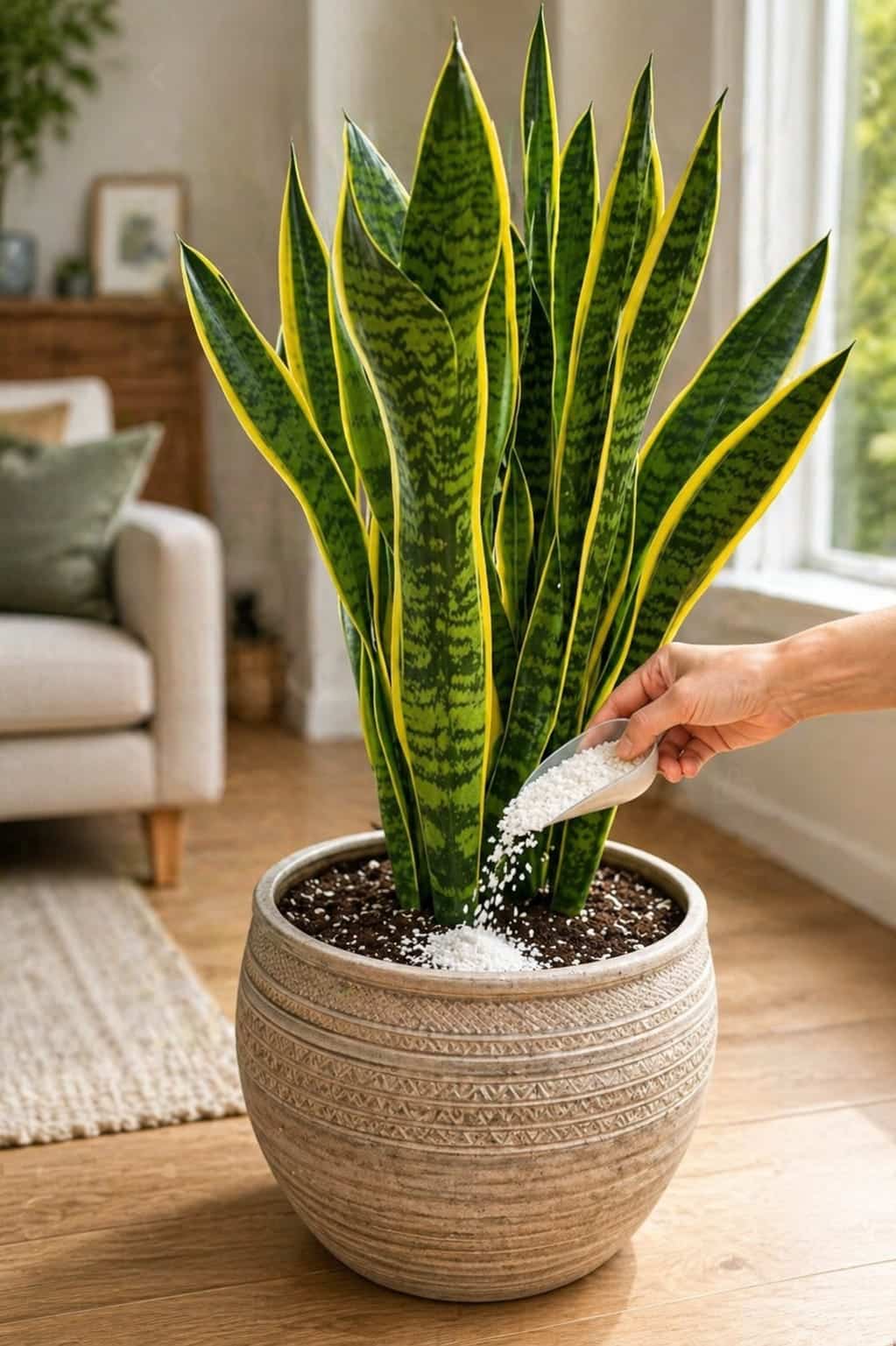
The image of rice being sprinkled onto a snake plant looks dramatic and satisfying, but it is not always the best method. Dry rice grains can absorb moisture, swell, and sit in the potting mix. In an indoor pot, this can encourage mold, pests, and unpleasant smells.
If you want to use rice for the visual effect, use only a tiny sprinkle and remove any visible grains after a short time. But for actual plant care, rice water is safer than leaving rice grains in the pot.
Snake plants grow best in clean, fast-draining soil. Solid food scraps, grains, or peels can disturb that environment. The root zone should stay airy and dry between waterings.
What a Snake Plant Needs Before It Can Bloom
Before expecting flowers, make sure your snake plant has the right foundation. A blooming snake plant is usually a mature, healthy plant with strong roots and enough light. Young plants may not bloom even with excellent care.
The plant should be in a bright spot. While snake plants tolerate low light, they rarely bloom in dim conditions. A bright window with indirect light is ideal. A few hours of gentle morning sun can also help.
The plant should be slightly snug in its pot. A severely rootbound plant can become stressed, but a slightly snug pot often encourages maturity. If the pot is huge, the plant may focus on root growth rather than blooming.
The soil should be well-draining. Snake plants hate soggy soil. Use cactus mix, succulent mix, or a blend with perlite, pumice, or coarse sand.
The watering routine should allow the soil to dry fully or almost fully between waterings. This is one of the biggest differences between a thriving snake plant and a struggling one.
Best Light for Snake Plant Flowers
Light is the most important factor if you want your snake plant to bloom. A snake plant can sit in a dark room and remain green for a long time, but it may never flower there. Blooming requires energy, and the plant gets that energy from light.
Place your snake plant near a bright window. East-facing windows are often excellent because they provide gentle morning light. South- and west-facing windows can work too, but protect the plant from sudden harsh sun if it has been living in low light.
If your home is dark, consider using a grow light. A snake plant under a good grow light may grow more actively and have a better chance of blooming than one sitting far from any window.
When moving the plant to brighter light, do it gradually. Sudden intense sun can burn leaves. Increase light over one to two weeks so the plant can adjust.
Best Soil for Snake Plant Blooming
Snake plants need soil that drains quickly. Heavy potting soil holds too much water and can suffocate the roots. A good snake plant mix should feel gritty, airy, and light.
A simple mix can include:
- 2 parts cactus or succulent potting mix
- 1 part perlite or pumice
- 1 part coarse sand or orchid bark
This mix allows water to pass through and helps prevent root rot. Healthy roots are essential for flowering. A plant with weak or rotting roots cannot produce strong leaves or blooms.
If your snake plant has not grown in years and the soil is old, compacted, or slow to dry, repotting may help more than any homemade ingredient. Fresh, well-draining soil gives the plant a better foundation.
Watering: The Dry-Down Secret
Snake plants are drought-tolerant. They store water in their thick leaves and underground rhizomes. Because of this, they do not need frequent watering. In fact, overwatering is the most common way people harm them.
To encourage healthy growth and possible blooming, let the soil dry between waterings. When you water, water deeply until liquid drains from the bottom. Then leave the plant alone until the soil dries again.
This wet-dry rhythm is important. Constant moisture tells the plant it is in a soft, leafy growth environment. A proper dry-down period can help mimic the tougher conditions snake plants often tolerate naturally.
Do not water just because the top looks dry. Check deeper into the pot. If the lower soil is still moist, wait.
Why a Slightly Snug Pot Can Help
Snake plants often bloom when they are mature and slightly rootbound. This does not mean they should be trapped forever in a tiny pot, but a slightly snug pot can encourage the plant to focus on reproduction instead of endless root expansion.
If your snake plant is in a pot that is much too large, the extra soil may stay wet too long. This can slow growth and increase the risk of rot. A pot only slightly larger than the root ball is usually best.
Terracotta pots are especially useful because they allow moisture to evaporate faster. They also provide weight and stability for tall snake plants.
Always choose a pot with drainage holes. Decorative pots without drainage are risky for snake plants.
How Often Do Snake Plants Bloom?
Snake plant blooms are not guaranteed every year indoors. Some plants bloom once after many years. Some bloom occasionally when conditions are right. Others may never bloom indoors but still remain perfectly healthy.
Do not treat lack of flowers as failure. Snake plants are grown mainly for their foliage, and their leaves are beautiful even without blooms. Flowers are a bonus.
That said, if you want to increase the chance of blooming, focus on maturity, bright light, dry-down watering, and gentle feeding. Rice water and banana peel water can be part of that routine, but they are not the entire answer.
Signs Your Snake Plant Is Getting Ready to Bloom
A snake plant flower stalk usually appears from the base of the plant, not from the tip of a leaf. At first, it may look like a thin new shoot. As it grows taller, you may notice small buds forming along the stalk.
The buds may be pale green, cream, or white. When they open, the flowers are delicate and sometimes fragrant. Some snake plant flowers release sticky nectar drops, so place the plant where this will not damage furniture.
If you see a flower stalk, continue normal care. Do not suddenly overwater or overfeed. The plant has already begun blooming, and sudden changes can cause stress.
Continue to Page 2
Continue to page 2 for more details about this article and the key points many readers miss on the first page.