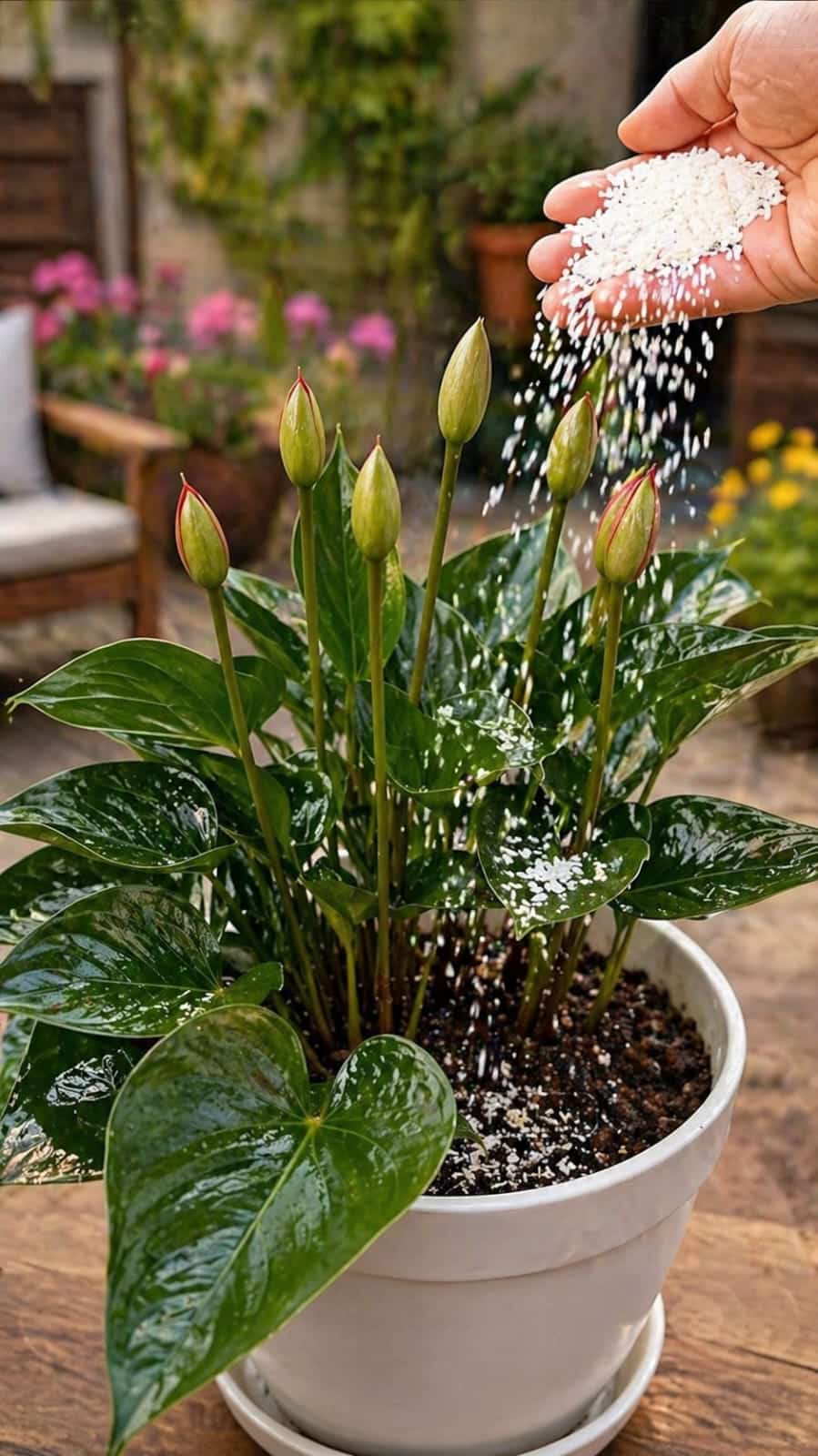
Anthuriums are already dramatic plants. With their glossy heart-shaped leaves, elegant upright stems, and long-lasting colorful blooms, they look almost too perfect to be real. Whether you grow red, pink, white, purple, or green anthuriums, these tropical plants can instantly make a patio, balcony, windowsill, or indoor plant corner feel more luxurious.
But like many tropical houseplants, anthuriums can also be frustrating. Sometimes they grow beautiful leaves but refuse to bloom. Sometimes the leaves look dull. Sometimes the flower buds appear slowly, stay small, or fail to open properly. And sometimes the plant simply looks tired, even though you are watering it and giving it light.
That is why simple homemade plant tricks always catch attention. One of the most talked-about tricks is using rice for anthuriums. The image of rice being sprinkled around a blooming anthurium looks unusual, almost like a secret old garden remedy. It makes people wonder: Can rice really help anthuriums grow? Can it encourage more blooms? Is it better to use rice grains, rice water, or fermented rice water?
After trying rice-based care on anthuriums, many gardeners are surprised by how refreshed the plant can look when the trick is used carefully. The leaves may appear glossier, the soil routine may feel more natural, and the plant may seem to push stronger growth during its active season. But the most important thing to understand is this: rice should not be treated like magic powder. Anthuriums need proper care first. Rice can be a gentle support, not a replacement for light, drainage, humidity, and balanced feeding.
In this complete guide, you will learn what the rice trick really is, why gardeners use it on anthuriums, the safest way to apply it, what results you can expect, and how to avoid the mistakes that can turn a good idea into a plant problem.
What Is the Rice Trick for Anthuriums?
The rice trick for anthuriums is a homemade plant-care method where rice or rice water is used as a natural supplement around the plant. There are several versions of this trick. Some people sprinkle uncooked rice on top of the soil. Others rinse rice and use the cloudy water to water their plants. Some soak rice overnight and use the water as a mild tonic. A few gardeners even ferment rice water before applying it to certain plants.
For anthuriums, the safest and most practical version is diluted rice water, not dry rice grains scattered heavily over the pot. Rice water is the cloudy water left after rinsing or soaking uncooked rice. It contains small amounts of starch and trace nutrients from the rice surface. When diluted and used occasionally, it may give the plant a mild natural boost.
The trick became popular because it is simple, inexpensive, and visually satisfying. Rice is found in many kitchens, and the idea of turning kitchen leftovers into plant care feels clever and sustainable. Instead of throwing rice rinse water away, many gardeners use it to support houseplants.
However, anthuriums are sensitive tropical plants. They do not like heavy, compact, sour, or constantly wet soil. That means the rice trick must be used lightly. Too much rice residue can attract pests, encourage mold, or make the potting mix unpleasant. The goal is a gentle boost, not a thick layer of food sitting on top of the soil.
Why Anthuriums Respond to Gentle Homemade Care
Anthuriums are tropical plants that naturally grow in warm, humid environments. Many types are epiphytes or semi-epiphytes, meaning they often grow attached to trees or in loose organic material rather than dense ground soil. Their roots like oxygen, moisture, and good drainage at the same time.
This is the key to understanding anthurium care. They like moisture, but they hate being suffocated. They like nutrients, but they do not like heavy feeding. They enjoy humidity, but they do not want stale wet leaves or soggy roots.
A mild homemade supplement like diluted rice water can fit into this routine because it is gentle. It does not hit the plant with a strong chemical dose. Instead, it provides a light organic rinse that can be used occasionally during active growth. When combined with proper light, airy soil, and careful watering, it may help the plant look more energetic.
The “shocking” result many people notice is not usually overnight magic. It is the plant responding to a more attentive routine. When you prepare rice water, check the soil, pour carefully, and observe the plant, you are giving your anthurium better care overall. That alone can make a huge difference.
Can Rice Make Anthuriums Bloom?
This is the question most people ask first. Can rice make anthuriums bloom? The honest answer is that rice water may support the plant, but it does not force blooms by itself. Anthuriums bloom when several conditions come together: bright indirect light, warm temperatures, humidity, healthy roots, proper watering, and enough nutrition.
If your anthurium is sitting in a dark corner, rice will not magically create flowers. If the roots are rotting, rice will not fix the problem. If the plant is cold, stressed, or sitting in compact soil, blooms will remain difficult.
But if your anthurium is already healthy and just needs a gentle boost, diluted rice water may help support stronger growth. A plant with stronger roots and healthier leaves is more likely to produce blooms when the other conditions are right.
Think of rice water as a supportive helper. It may encourage better plant energy, but light is still the main bloom trigger. Anthuriums need bright, indirect light to flower well. Without enough light, they may produce leaves but few or no blooms.
Rice Grains vs. Rice Water: Which Is Better?
For anthuriums, rice water is usually better than sprinkling dry rice grains directly into the pot. Dry rice grains can sit on the soil surface, absorb moisture, swell, ferment, attract insects, or grow mold if conditions are damp. Indoor pots do not have the same natural breakdown system as outdoor garden beds, so kitchen scraps and grains can cause problems faster.
Rice water is cleaner and easier to control. You can dilute it, pour it evenly, and allow it to drain through the potting mix. It gives you the benefit of the rice trick without leaving solid food pieces in the pot.
If you still want the visual look of rice sprinkled on the soil, use only a very tiny amount and remove it after a short period. But for regular care, rice water is the safer choice.
The Best Rice Water Recipe for Anthuriums
The best rice water for anthuriums is light, fresh, and diluted. It should not smell sour, feel slimy, or look thick like paste. Anthuriums need airflow around their roots, so any homemade liquid should pass through the potting mix easily.
Ingredients
- 1 tablespoon uncooked white rice or brown rice
- 1 cup clean water for rinsing
- 2 to 3 cups clean water for dilution
- A bowl or jar
- A strainer
Instructions
- Place the rice in a clean bowl.
- Add 1 cup of clean room-temperature water.
- Stir the rice gently with your fingers or a spoon for 30 to 60 seconds.
- Let the water turn cloudy.
- Strain out the rice grains completely.
- Dilute the cloudy rice water with 2 to 3 cups of clean water.
- Use the diluted rice water immediately on the soil only.
The final mixture should look lightly cloudy, not thick. If it looks very white and heavy, add more water. A weak solution is safer for anthuriums than a strong one.
How to Apply Rice Water to Anthuriums
Before applying rice water, check the soil moisture. Do not pour rice water into an already wet pot. Anthuriums like moisture, but they do not want soggy roots. The top layer of potting mix should be slightly dry before watering again.
Place the pot over a sink, tray, or outdoor surface where excess water can drain. Slowly pour the diluted rice water around the outer part of the soil, not directly into the center crown of the plant. Let the liquid move through the potting mix naturally.
Make sure water drains from the bottom of the pot. This is extremely important. If the pot has no drainage holes, do not use rice water. In fact, anthuriums should never be grown long-term in pots without drainage. Standing water can quickly lead to root rot.
After watering, empty the saucer. Do not let the plant sit in leftover liquid. Place the anthurium back in bright indirect light and allow the potting mix to dry slightly before the next watering.
How Often Should You Use Rice Water?
For anthuriums, rice water should be used occasionally. Once every three to four weeks during spring and summer is enough. During fall and winter, reduce use or stop completely unless your plant is actively growing under warm, bright conditions.
Using rice water too often can create buildup in the potting mix. Organic residue may encourage fungus gnats, mold, or sour smells if the soil stays wet. Anthuriums grow best in clean, airy conditions, so moderation matters.
A good routine is simple: use plain water most of the time, use balanced fertilizer lightly during the growing season, and use diluted rice water once a month as an optional natural boost.
Why the Result Can Look So Surprising
The result of using rice water can feel surprising because anthuriums respond visibly when their care improves. Their leaves may look shinier after better hydration. New growth may appear stronger during the active season. Flower buds may hold better when the plant is not stressed. The entire plant may look more refreshed because the routine encourages careful watering.
Many gardeners think the rice alone caused the transformation. In reality, it is often the full routine. The plant receives water at the right time, the soil is checked, the leaves are observed, and the grower becomes more consistent. Rice water becomes part of a better care rhythm.
That does not make the trick useless. It simply means the trick works best when it encourages better plant care. A homemade tonic is most powerful when it supports the basics, not when it replaces them.
Best Light for Anthurium Blooms
If you want your anthurium to bloom, light is the first thing to fix. Anthuriums need bright indirect light. They do not like harsh direct midday sun, which can burn the leaves, but they also do not bloom well in deep shade.
A bright east-facing window is often excellent. A north-facing window can work if the room is very bright. A south- or west-facing window may be suitable if the plant is protected by a sheer curtain or placed a few feet back from the glass.
If the leaves are dark green and the plant never blooms, it may be receiving too little light. If the leaves develop pale patches or scorched areas, it may be receiving too much direct sun. The ideal spot gives strong brightness without burning.
Rice water may help support growth, but bright indirect light is what gives the plant enough energy to produce flowers.
Best Soil for Anthuriums
Anthuriums need an airy potting mix. Regular dense potting soil often holds too much water and can suffocate the roots. A better mix includes chunky materials that allow air to move around the roots.
A simple anthurium mix can include:
- Orchid bark
- Perlite or pumice
- Coco coir or peat-based potting mix
- Charcoal pieces
- A small amount of compost or worm castings if desired
The mix should hold some moisture but drain quickly. When you water, liquid should pass through rather than sit on top. If your anthurium is planted in heavy soil, rice water may make the problem worse by adding organic residue to a mix that already stays too wet.
If your plant is struggling, repotting into a proper airy mix may help much more than any homemade trick.
Continue to Page 2
Continue to page 2 for more details about this article and the key points many readers miss on the first page.