Watering Anthuriums the Right Way
Anthuriums like consistent moisture, but they do not like soggy soil. Water when the top inch or two of the potting mix begins to dry. In a chunky mix, this may happen faster than in regular soil. Always check before watering.
When watering, water thoroughly and let the excess drain. Avoid small daily sips. Small sips can leave parts of the root zone dry while keeping the top layer damp. Deep watering followed by slight drying is better.
If the leaves droop, yellow, or develop black spots, check the roots and soil moisture. Overwatering is one of the most common problems with anthuriums. A plant with damaged roots cannot bloom well, no matter what supplement is used.
Humidity and Warmth Matter
Anthuriums are tropical plants, so they enjoy humidity and warmth. Dry indoor air can lead to crispy edges, slower growth, and stressed leaves. If your home is very dry, consider grouping plants together, using a pebble tray, or placing a humidifier nearby.
Warmth is also important. Anthuriums dislike cold drafts. Keep them away from cold windows in winter, air conditioning vents, and doors that open frequently. A stable warm room helps the plant grow more consistently.
Rice water will not overcome cold stress. If your plant is too cold, fix the temperature first. A warm, bright, humid environment is the real secret behind beautiful anthuriums.
How Rice Water Supports the Soil Environment
Rice water contains starches and tiny amounts of nutrients. In small doses, these may feed beneficial microbes in the potting mix. A living soil environment can help organic matter break down and support root activity.
But too much starch can create the opposite effect. If the pot stays wet and rice residue builds up, unpleasant microbes, mold, or fungus gnats may become a problem. That is why rice water should be fresh, diluted, and used sparingly.
For anthuriums, the soil environment should stay airy and clean. The rice water should act like a light rinse, not a heavy food layer.
Should You Ferment Rice Water for Anthuriums?
Some gardeners ferment rice water before using it on plants. Fermented rice water is stronger and more biologically active, but it is also riskier indoors. It can smell sour, attract insects, and create too much microbial activity in a small pot.
For most anthurium owners, fresh diluted rice water is better. It is easier to control and less likely to cause problems. If you are a beginner, avoid fermented mixtures until you fully understand how your plant responds.
Anthuriums do not need extreme treatments. They prefer steady, moderate care. Fresh rice water once a month is more than enough if you want to try this trick.
Can You Sprinkle Dry Rice on Anthurium Soil?
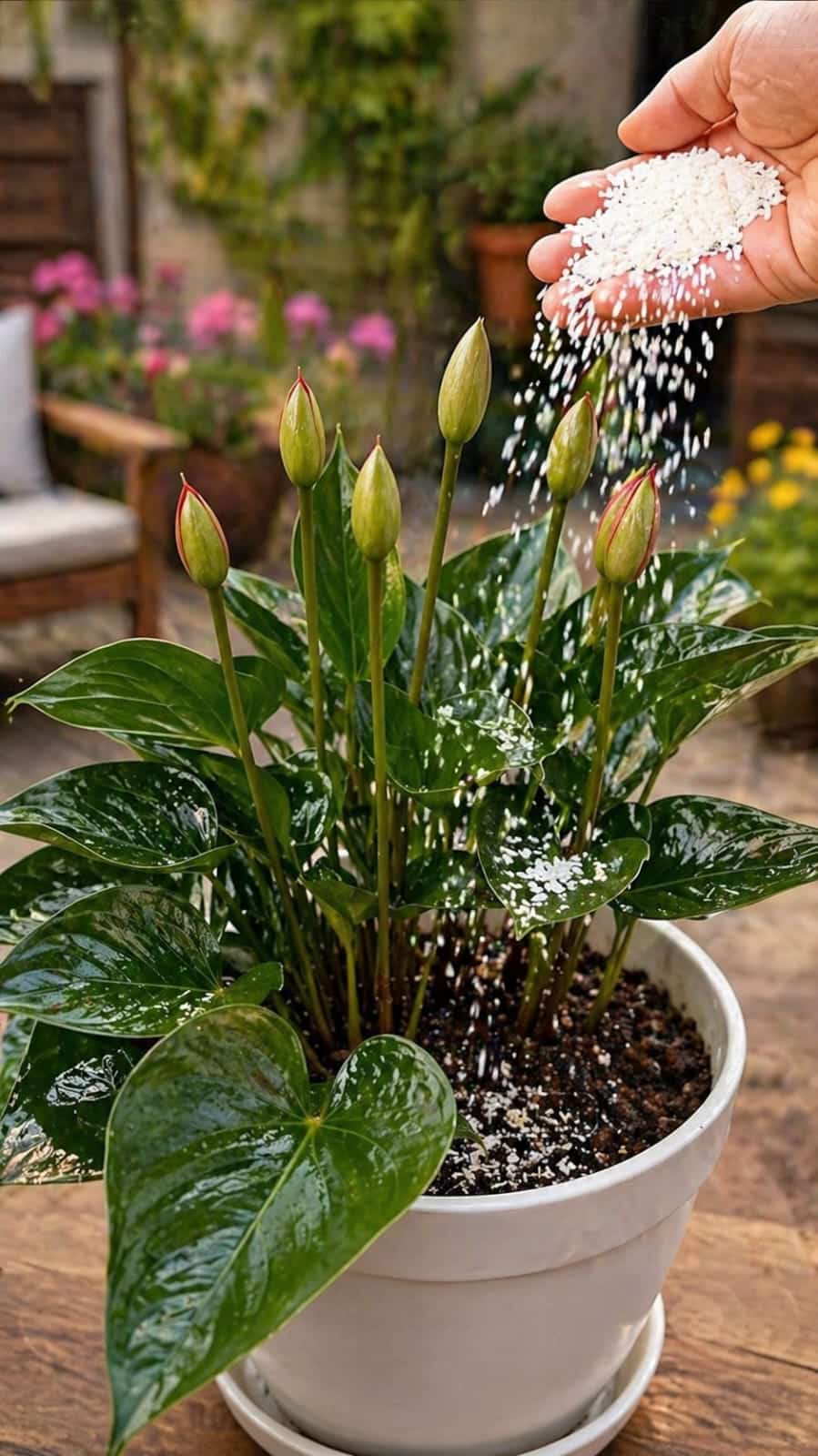
You can sprinkle a tiny amount for a short visual effect, but it is not the best long-term method. Dry rice can absorb water, swell, and break down in the pot. This can attract pests or create mold, especially indoors.
If you want to use rice directly, crush it into a very small amount and mix it into compost outdoors instead of placing whole grains in a houseplant pot. For potted anthuriums, rice water is much cleaner.
The image of rice falling over an anthurium may look dramatic and exciting, but plant health depends on what happens after the photo. Leaving too much rice in the pot is not ideal.
Signs Your Anthurium Likes the Rice Water Routine
If your anthurium responds well, you may notice firmer leaves, a fresher look, steady new growth, and possibly stronger flower development during the growing season. New leaves may emerge with good color and size. Existing blooms may last well if the plant is otherwise healthy.
Remember that anthuriums grow at their own pace. Do not expect a dramatic change in one day. Look for improvement over several weeks. The most important signs of success are healthy roots, steady leaves, and active growth.
If your plant begins to smell sour, develops mold on the soil, attracts gnats, or shows yellowing after repeated use, stop using rice water. Flush the pot with plain water and let the mix dry appropriately.
What to Do If Your Anthurium Has No Flowers
If your anthurium has no flowers, do not immediately reach for more rice water. First, check the light. Most bloom problems come from insufficient brightness. Move the plant to a brighter spot with indirect light and give it time.
Next, check the roots. If the potting mix is dense or wet, the roots may be stressed. Repot into an airy anthurium mix if needed. Then check temperature and humidity. Anthuriums bloom better when they are warm and comfortable.
Finally, consider feeding. Use a balanced houseplant fertilizer at diluted strength during active growth. Rice water can be used occasionally, but a complete fertilizer provides more predictable nutrition.
How to Feed Anthuriums for Better Blooms
Anthuriums are not heavy feeders, but they appreciate gentle nutrition. During spring and summer, feed with a diluted balanced fertilizer every four to six weeks. Some growers prefer a bloom-supporting fertilizer, but it should still be used weakly.
Too much fertilizer can burn roots or create salt buildup. Anthuriums have sensitive roots, so mild feeding is safer than heavy feeding. If using rice water, do not combine it with strong fertilizer on the same day. Keep treatments simple and separated.
A good feeding schedule might look like this:
- Plain water as needed
- Diluted fertilizer once a month during active growth
- Diluted rice water once a month, on a different watering day
- Plain water flush every few months to remove buildup
This gives the plant gentle support without overwhelming it.
How to Clean Anthurium Leaves
Anthurium leaves are naturally glossy, but dust can make them look dull. Dust also blocks light, which can reduce the plant’s energy. Clean the leaves every couple of weeks with a soft damp cloth.
Support each leaf with one hand and wipe gently with the other. Avoid heavy leaf shine products, oils, or sticky homemade sprays. Clean water is usually enough.
If rice water splashes onto the leaves, wipe it off. Rice residue on leaves can leave marks or attract dust. Use rice water on the soil only.
Common Anthurium Problems and How Rice Fits In
Yellow Leaves
Yellow leaves may be caused by overwatering, poor drainage, low light, aging, or root stress. Rice water will not fix yellow leaves if the roots are too wet. Check the potting mix first.
Brown Leaf Tips
Brown tips may come from dry air, inconsistent watering, mineral buildup, or fertilizer stress. If you use rice water too often, buildup can contribute to problems. Reduce supplements and flush with plain water.
No Blooms
No blooms usually means not enough bright indirect light. Rice water may support growth, but light is the key to flowering.
Small Leaves
Small leaves can indicate low light, poor nutrition, root problems, or general stress. Improve the full care routine rather than relying on one trick.
Fungus Gnats
Fungus gnats often appear when soil stays too wet or organic material builds up. If gnats appear after using rice, stop the rice treatment and let the potting mix dry more properly between waterings.
Best Time to Use Rice Water on Anthuriums
The best time to use rice water is during active growth, usually spring and summer. This is when the plant can make the best use of extra support. If your anthurium is growing indoors under stable warmth and bright light, it may continue active growth for much of the year, but it will still slow down during darker periods.
Avoid rice water in winter if your plant is not actively growing. During cooler, darker months, the potting mix dries more slowly, and organic additives are more likely to cause problems.
Also avoid rice water immediately after repotting. Give the plant a few weeks to settle before adding any homemade supplement.
Should You Use White Rice or Brown Rice?
Both white rice and brown rice can be used to make rice water. White rice usually creates a cleaner, starchier rinse. Brown rice may release slightly different particles from the outer layer. For anthuriums, the difference is not dramatic because the solution should be diluted anyway.
The most important thing is that the rice is plain. Do not use salted rice, seasoned rice, oily rice, cooked rice with spices, or leftover meal rice. Only plain uncooked rice should be used for making rice water.
Never use rice water that contains salt. Salt can damage roots and build up in the soil.
Can Cooked Rice Water Be Used?
It is better to use rinse water from uncooked rice rather than water from cooked rice, especially if anything was added during cooking. Cooked rice water can be thicker and starchier. If it contains salt, oil, or seasoning, it should not be used on plants.
If you only have plain unsalted cooked rice water, it must be heavily diluted and used with caution. But for simplicity and safety, use fresh rinse water from uncooked rice.
How to Avoid Mold When Using Rice Water
Mold is the biggest risk with rice-based plant tricks. To avoid it, follow these rules:
- Use rice water fresh.
- Dilute it well.
- Do not leave rice grains in the pot.
- Do not use it on already wet soil.
- Make sure the pot has drainage holes.
- Use an airy anthurium potting mix.
- Do not use rice water too often.
- Keep the plant in bright indirect light with good airflow.
If mold appears, stop using rice water. Remove the top layer of affected mix if needed, improve airflow, and water less often. If the problem continues, repot into fresh mix.
What Happened After Trying Rice on Anthuriums?
When rice water is used correctly, the most noticeable result is often a fresher, more hydrated-looking plant. The leaves can appear glossier because the plant is being watered more carefully and observed more closely. During active growth, new leaves may emerge with better strength, and bloom stems may look more supported when the plant is receiving enough light and warmth.
The “shocked me” part comes from how such a simple kitchen ingredient can fit into a plant-care routine. It feels almost too easy. But the real surprise is not that rice is magic. The real surprise is that gentle, consistent care can wake up a plant that looked stuck.
For many gardeners, rice water becomes a monthly ritual. It is simple, low-cost, and satisfying. It makes the care routine feel more intentional. And anthuriums often reward intentional care with beautiful leaves and long-lasting blooms.
A Complete Anthurium Care Routine with Rice Water
Here is a simple routine you can follow if you want to include rice water in your anthurium care:
- Place the anthurium in bright indirect light.
- Use an airy potting mix with bark, perlite, and organic matter.
- Water when the top inch or two begins to dry.
- Let all excess water drain completely.
- Keep humidity moderate to high.
- Feed lightly during spring and summer.
- Use diluted rice water once every three to four weeks.
- Wipe leaves regularly with a damp cloth.
- Remove faded blooms and yellow leaves.
- Watch for mold, gnats, or sour smells.
This routine gives your anthurium the balance it needs. The rice water is only one part of the plan, but it can be a fun and gentle addition.
Can Rice Water Replace Fertilizer?
No, rice water should not completely replace fertilizer. It is not a complete plant food. It may contain small amounts of helpful compounds, but it does not provide a balanced nutrient profile in a predictable way.
If your anthurium is actively growing and blooming, it may still benefit from a proper diluted houseplant fertilizer. Rice water can be used as a natural supplement between feedings, but do not rely on it as the only source of nutrition.
Balanced feeding, good light, and healthy roots are still the foundation of long-term growth and blooming.
Can Rice Water Help Weak Anthuriums?
It depends on why the anthurium is weak. If the plant is weak from mild nutrient depletion or inconsistent care, rice water may help as part of a better routine. If the plant is weak from root rot, pests, cold damage, or severe low light, rice water will not solve the problem.
Before using rice water on a weak anthurium, inspect the plant. Check the leaves, stems, soil, roots, and drainage. If the pot smells bad or roots are mushy, repot and treat the root problem first. If the plant is in a dark location, move it to brighter indirect light.
Once the plant is stable, rice water can be introduced gently.
Frequently Asked Questions
Can I put rice directly on anthurium soil?
It is better not to leave rice grains on the soil. They can attract pests, swell, ferment, or grow mold. Use diluted rice water instead.
How often should I use rice water on anthuriums?
Once every three to four weeks during active growth is enough. Do not use it every time you water.
Can rice water make anthuriums bloom?
Rice water may support healthy growth, but blooms depend mostly on bright indirect light, warmth, humidity, healthy roots, and proper feeding.
Should rice water be fermented?
Fresh diluted rice water is safer for most indoor anthuriums. Fermented rice water can smell, attract bugs, and be too strong for small pots.
Can I spray rice water on anthurium leaves?
No. Use it on the soil only. Rice residue on leaves can leave marks and attract dust.
What kind of rice is best?
Plain uncooked white or brown rice can be used. Avoid salted, cooked, seasoned, oily, or flavored rice.
Why did mold appear after using rice?
The mixture may have been too strong, used too often, or applied to soil that stayed too wet. Stop using rice water and improve drainage and airflow.
Is rice water safe for all houseplants?
Many houseplants can tolerate diluted rice water occasionally, but some are more sensitive. Always test gently and avoid overuse.
Final Thoughts
Trying rice on anthuriums can be a surprisingly satisfying plant-care experiment. The trick is simple, natural, and inexpensive, and when used correctly, diluted rice water can become a gentle monthly boost for your plant. It may help support stronger growth, fresher leaves, and better overall plant energy during the growing season.
But the secret is using it wisely. Do not bury the pot in rice grains. Do not pour thick starchy water into soggy soil. Do not expect rice to replace light, fertilizer, humidity, or healthy roots. Anthuriums are beautiful tropical plants, and they bloom best when their full care routine is balanced.
If you want the best result, use fresh diluted rice water once every few weeks, keep the plant in bright indirect light, grow it in an airy mix, water carefully, and maintain warmth and humidity. With patience, your anthurium may reward you with glossy leaves, strong stems, and elegant blooms that make the whole plant look refreshed.
So yes, rice can be part of the anthurium routine. The result may surprise you, especially when this simple kitchen trick is combined with the care your plant truly needs. Sometimes the smallest habit change can make a plant look dramatically better, and for anthuriums, a gentle rice-water boost might be exactly the refreshing touch they need.