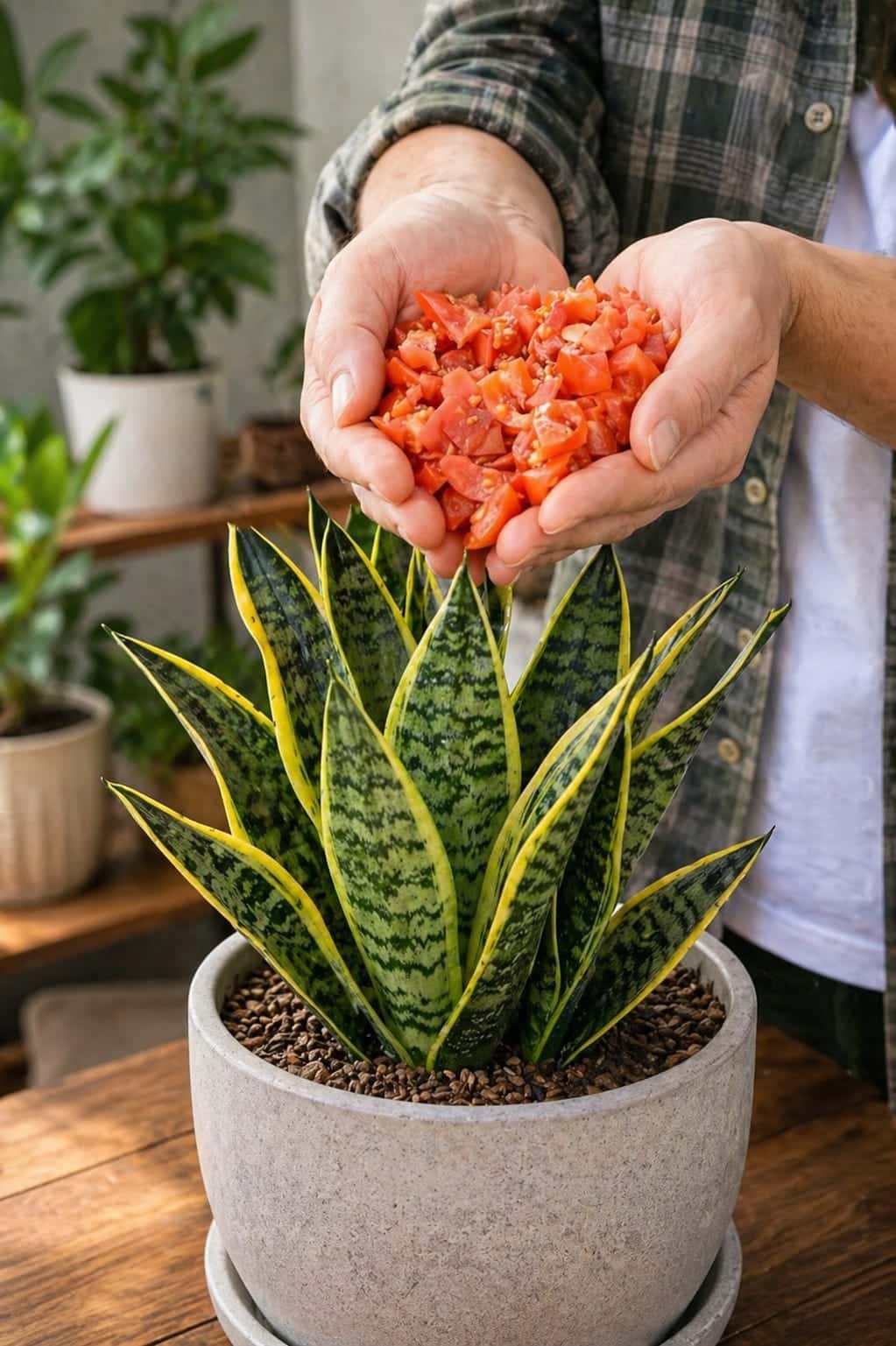
Snake plants are famous for being tough, stylish, and wonderfully low-maintenance. They can survive missed watering, tolerate dry indoor air, and still look elegant in almost any room. Their tall, sword-like leaves bring structure and greenery to homes, offices, apartments, and plant shelves. But even though snake plants are hardy, many owners eventually notice that their plant looks stuck. It stays alive, but it does not seem to grow stronger. The leaves may look dull, the yellow edges may lose their brightness, or new pups may appear very slowly.
That is where simple homemade plant tricks become interesting. One unusual method that plant lovers are starting to talk about is the tomato peel hack. The idea is simple: instead of throwing away tomato skins, seeds, and soft scraps, you turn them into a gentle homemade plant tonic that can be used carefully around a snake plant. It looks surprising because tomatoes are usually associated with cooking, salads, sauces, and kitchen scraps — not houseplant care.
But tomato peels and scraps contain organic matter, moisture, and small amounts of plant-friendly compounds. When prepared correctly, they can become part of a natural care routine that supports soil life and gives a tired snake plant a mild boost. The trick is not to dump chopped tomato pieces directly into the pot and hope for the best. Snake plants do not like wet, rotting material around their roots. The safer method is to make a diluted tomato peel water or a strained tomato peel infusion, then use it occasionally and lightly.
This method is especially appealing for people who enjoy natural, low-cost, kitchen-based plant care. It feels satisfying to reuse something that would normally go into the trash. It also makes plant care feel more intentional. Instead of simply watering your snake plant and forgetting it, you prepare a mild homemade rinse, check the soil, observe the leaves, and give the plant a little extra attention.
In this complete guide, you will learn exactly what the tomato peel hack is, why people use it for snake plants, how to prepare it safely, how often to apply it, what results to expect, and what mistakes to avoid. You will also learn the full snake plant care routine that makes any homemade trick work better: proper light, fast-draining soil, careful watering, and the right pot.
What Is the Tomato Peel Hack for Snake Plants?
The tomato peel hack is a homemade plant-care method that uses tomato peels, skins, seeds, or soft tomato scraps to make a mild liquid plant tonic. Instead of placing raw tomato pieces directly into the soil, the scraps are soaked briefly in water, strained, diluted, and then used as an occasional soil rinse.
The goal is to create a gentle organic supplement, not a thick tomato sauce for your plant. Snake plants are not heavy feeders. They are drought-tolerant plants with thick leaves and underground rhizomes that store water. They prefer dry, airy soil and do not enjoy soggy conditions. Because of that, any homemade liquid must be light, diluted, and used only when the plant actually needs watering.
Tomato peels contain organic matter and small amounts of nutrients. Gardeners often compost tomato scraps because they break down and return material to the soil. In a small indoor pot, however, composting directly inside the pot is risky. Fresh tomato pieces can rot, smell sour, attract fruit flies, encourage fungus gnats, and make the soil too wet.
That is why the best version of the tomato peel hack is not burying tomato scraps in the snake plant pot. The safer version is tomato peel water: a strained and diluted liquid made from a short soak. This gives you the idea of the trick without leaving wet food waste around the roots.
Why Use Tomato Peels Instead of Throwing Them Away?
Tomato peels are often discarded after cooking, blending, or making sauces. Many people remove tomato skins when preparing smooth recipes, and those skins usually end up in the trash. But for gardeners, kitchen scraps can feel valuable. They are organic material, and organic material is the foundation of composting and soil building.
The tomato peel hack is a small way to reuse those scraps. It is not the same as making full compost, but it follows the same idea: waste can become useful when handled properly. Instead of throwing peels away immediately, you can soak them in water, strain the liquid, and use that diluted water as a mild plant-care boost.
This method also fits well with the way many plant lovers think. They enjoy simple routines that feel natural and homemade. They like turning everyday ingredients into plant support. A tomato peel tonic feels clever because it comes from something ordinary and inexpensive.
For snake plants, the benefit is subtle. The tomato peel water may support the potting environment lightly, especially if the plant is actively growing. But the bigger benefit is often the attention it brings. When you prepare a special tonic, you are more likely to check whether the soil is dry, whether the leaves are firm, whether the pot drains well, and whether the plant is getting enough light. That improved care routine is what helps the snake plant most.
Can Tomato Peels Really Make a Snake Plant Stronger?
Tomato peels may help support a snake plant as part of a balanced routine, but they are not a miracle cure. They will not make a snake plant grow huge overnight. They will not repair root rot. They will not replace proper light. They will not turn a weak plant into a perfect specimen in one day.
What they can do is provide a mild organic supplement when prepared safely. A diluted tomato peel infusion may add small amounts of organic compounds to the potting mix. It may also encourage a more mindful watering routine. If your snake plant is healthy but a little stagnant, this kind of gentle treatment may help support fresh growth during the active season.
However, the real strength of a snake plant comes from the basics. It needs bright indirect light if you want faster growth. It needs a pot with drainage holes. It needs fast-draining soil. It needs water only when the soil has dried. It needs warmth and patience.
The tomato peel hack should be seen as a small extra, not the foundation of snake plant care. If the basic conditions are wrong, tomato peel water will not fix them. But if the basic conditions are right, this trick can become a fun, natural, occasional boost.
Why Snake Plants Need Gentle Feeding
Snake plants grow slowly compared with many tropical houseplants. They do not need constant fertilizer or rich soil. In fact, too much feeding can stress them. Their roots are adapted to survive in lean, well-draining conditions, and they can store moisture in their leaves and rhizomes.
This is why heavy homemade mixtures can be risky. A pothos or peace lily may tolerate more frequent moisture, but a snake plant does not want organic scraps breaking down in wet soil. If the pot stays damp, the roots can rot. If the soil becomes sour, the plant can decline.
Gentle feeding means using very diluted supplements and applying them only during active growth. Spring and summer are usually the best times. In winter, when light is lower and growth slows, snake plants need far less water and usually no extra feeding.
The tomato peel hack fits into snake plant care only when used gently. A weak, strained liquid once in a while is very different from a handful of chopped tomato scraps buried in the pot. One is a light tonic. The other is a rot risk.
The Safe Way to Use Tomato Peels on Snake Plants
The safest way to use tomato peels is to make tomato peel water. This method keeps solid scraps out of the pot and gives you control over strength and application. It is simple, quick, and much cleaner than burying food waste in the soil.
Here is the basic idea: collect clean tomato peels or small scraps, soak them briefly in water, strain the liquid, dilute it, and use it only when your snake plant needs watering. The mixture should be light and watery, not thick, pulpy, or sour-smelling.
Never use tomato scraps that have salt, oil, vinegar, dressing, spices, garlic, onion, or sauce on them. Only plain fresh tomato skins or scraps should be used. Anything seasoned can harm the soil, attract pests, or create bad smells.
Also avoid fermented or rotten tomato mixtures for indoor snake plants. Some gardeners experiment with fermented plant juices outdoors, but snake plants in indoor pots need a cleaner, more controlled approach. Fresh and diluted is safer.
Tomato Peel Water Recipe for Snake Plants
This recipe is designed to be mild and safe for occasional use. It is not meant to be strong. Snake plants prefer gentle care.
Ingredients
- Peels from 1 small tomato or a few tablespoons of plain tomato scraps
- 2 cups clean room-temperature water
- 2 additional cups clean water for dilution
- A clean jar or bowl
- A fine strainer or cloth
- A small watering cup
Instructions
- Place the plain tomato peels or scraps into a clean jar.
- Add 2 cups of room-temperature water.
- Let the mixture sit for 2 to 4 hours only.
- Stir gently once or twice during soaking.
- Strain out every piece of tomato skin, pulp, and seed.
- Dilute the strained liquid with 2 more cups of clean water.
- Use the diluted tomato peel water immediately.
The finished liquid should be very light. It may have a faint tomato tint, but it should not look thick or smell strong. If it smells sour, rotten, or unpleasant, do not use it. Throw it away and make a fresh, shorter-soaked batch next time.
How to Apply Tomato Peel Water to a Snake Plant
Before applying tomato peel water, check the soil. This is the most important step. Snake plants should never be watered just because you made a tonic. The soil should be dry or nearly dry before any liquid is added.
Push your finger or a wooden stick several inches into the potting mix. If the soil still feels damp, wait. If it is dry, you can use the tomato peel water as that watering.
Pour slowly around the outer edge of the pot, aiming for the soil rather than the leaves. Avoid pouring liquid into the center of the leaf cluster. Water trapped between snake plant leaves can sometimes cause rot, especially if the room is cool or air circulation is poor.
Let the liquid drain completely through the pot. If the pot has a saucer, empty it after watering. The plant should never sit in leftover tomato peel water. Standing liquid around the roots can cause problems.
If your pot does not have drainage holes, do not use this method. In fact, snake plants should always be grown in pots with drainage holes.
How Often Should You Use the Tomato Peel Hack?
Use tomato peel water rarely. Once every six to eight weeks during spring and summer is enough. If your snake plant is in lower light or grows slowly, use it even less often. In fall and winter, stop using it unless the plant is actively growing in a warm, bright space.
More frequent use is not better. Too much organic liquid can create mold, gnats, sour soil, and root stress. Snake plants prefer a clean, dry, well-draining root zone.
A good routine is to use plain water most of the time. If you use tomato peel water, treat it as an occasional bonus. You can also alternate it with a very diluted cactus fertilizer, but do not use both on the same watering day.
When trying any new plant trick, start slowly. Use a small amount, observe the plant for a few weeks, and continue only if the plant remains healthy.
Should You Put Chopped Tomato Peels Directly in the Soil?
It is better not to put chopped tomato peels directly into a snake plant pot. While it may seem natural, indoor pots are not compost piles. Fresh tomato scraps can rot, attract pests, and keep the soil too moist. They may also create a sour smell or encourage mold on the surface.
In an outdoor compost pile, tomato scraps are mixed with dry materials, microbes, oxygen, and a large volume of organic matter. In a small indoor pot, the situation is different. The scraps sit close to the roots and break down slowly. This can create an unhealthy environment for a drought-tolerant plant like a snake plant.
If you want to compost tomato peels, add them to an outdoor compost bin or a proper composting system. Once fully composted, that material may eventually become part of a potting mix. But fresh tomato peels should not be buried directly around snake plant roots.
Continue to Page 2
Continue to page 2 for more details about this article and the key points many readers miss on the first page.