Can Tomato Peels Attract Pests?
Yes, tomato peels can attract pests if used incorrectly. Fruit flies, fungus gnats, and other small insects are attracted to moist organic matter. If pieces of tomato are left in the pot, they may become a food source for pests.
This is another reason the strained liquid method is better. By removing all solids, you reduce the chance of pests. Diluting the liquid and using it only occasionally also helps.
If you notice gnats after trying the tomato peel hack, stop using it immediately. Let the soil dry more thoroughly. Remove any visible organic material from the surface. Use sticky traps if needed. If the infestation continues, replace the top layer of soil or repot into fresh, gritty mix.
Snake plant soil should never stay damp and food-rich. That is the perfect environment for gnats.
What Nutrients Are in Tomato Peels?
Tomato peels and scraps contain organic matter and small amounts of plant minerals. Tomatoes are associated with potassium and other trace elements, which is why gardeners often compost them. However, the exact nutrient content of tomato peel water is not predictable. It depends on the tomato, the amount used, the soaking time, and how much the liquid is diluted.
That means tomato peel water should not be treated as a complete fertilizer. It is not measured like a commercial plant food. It may provide a mild organic boost, but it cannot reliably supply everything a snake plant needs.
If your plant truly needs nutrients, a diluted cactus or succulent fertilizer is more predictable. Tomato peel water is best used as a natural supplement, not as the only feeding method.
Why the Tomato Peel Hack Looks So Powerful
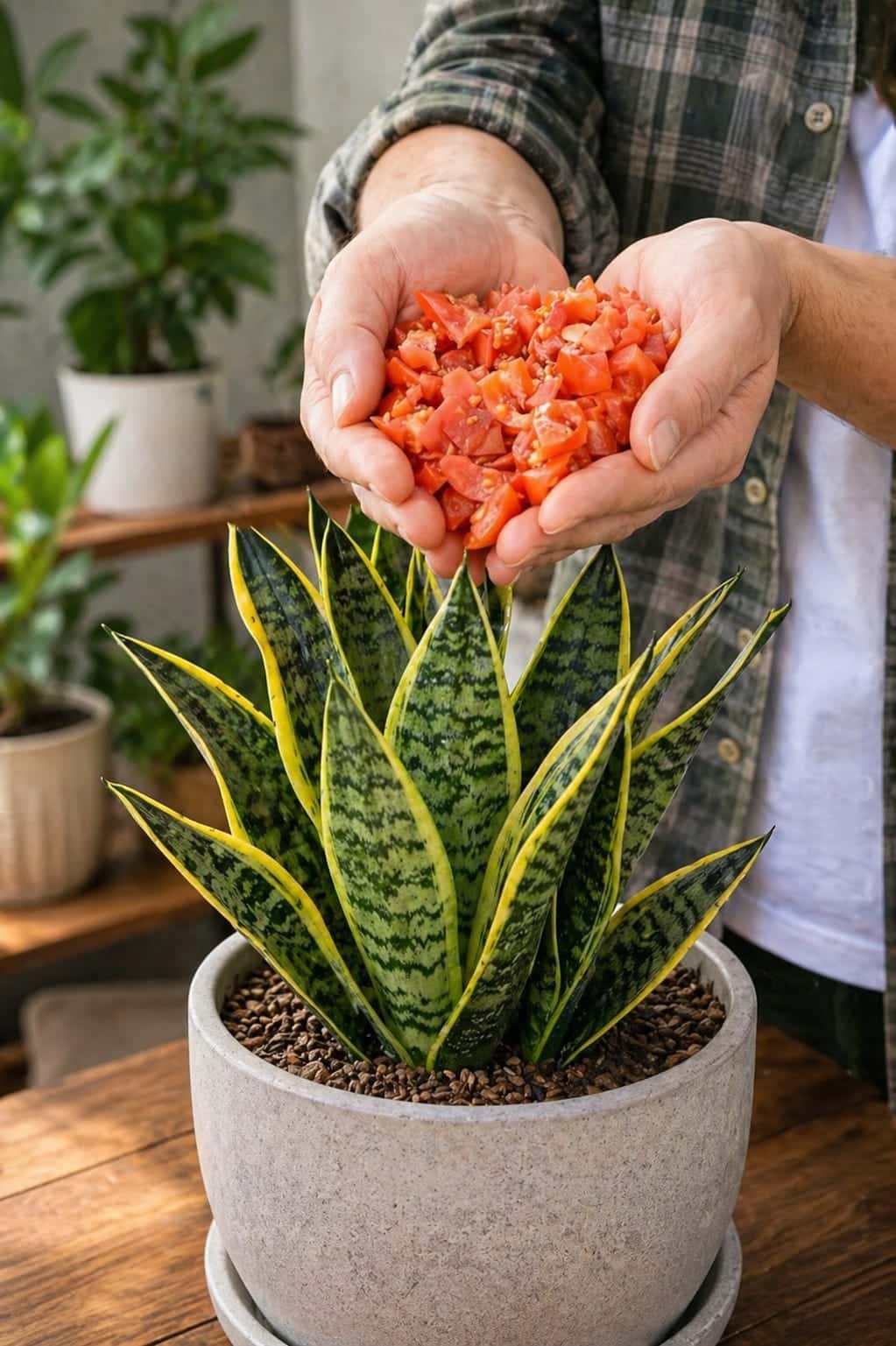
The tomato peel hack looks powerful because it feels unexpected. People are used to seeing fertilizer bottles, compost, and watering cans, but not chopped tomato scraps held over a snake plant. The bright red color creates a strong visual contrast against the green leaves. It makes the trick look bold, fresh, and dramatic.
But the visual effect should not lead to overuse. Just because the trick looks exciting does not mean the plant needs a lot of tomato material. Snake plants are slow and conservative growers. They respond best to gentle, steady care.
The real power of the hack is not the handful of tomato peels. The real power is turning waste into a thoughtful plant-care step while staying careful about the plant’s needs.
Best Snake Plant Conditions for Stronger Growth
If you want your snake plant to grow stronger, the tomato peel hack should be combined with proper care. The first requirement is light. Snake plants can survive in low light, but they grow much better in bright indirect light. A plant sitting in a dark corner may stay alive for years without much visible growth.
Place your snake plant near a bright window. East-facing windows are excellent because they provide gentle morning light. South- or west-facing windows can work too, but introduce stronger light gradually to avoid leaf scorch.
The second requirement is well-draining soil. Snake plants need a gritty, airy mix. Regular potting soil often holds too much moisture. A cactus or succulent mix with added perlite, pumice, bark, or coarse sand is better.
The third requirement is correct watering. Let the soil dry between waterings. Do not water on a fixed schedule without checking the soil. Snake plants would rather be slightly dry than constantly wet.
The fourth requirement is a suitable pot. A pot with drainage holes is essential. A slightly snug pot is often better than a huge container because extra soil can stay wet too long.
Best Soil Mix for Snake Plants
A strong snake plant begins with healthy roots, and healthy roots need the right soil. Dense soil can suffocate roots and hold moisture for too long. A fast-draining mix keeps the roots oxygenated and reduces the chance of rot.
A simple snake plant soil mix can include:
- 2 parts cactus or succulent potting mix
- 1 part perlite or pumice
- 1 part orchid bark or coarse sand
This mix drains quickly but still holds enough moisture for the plant to absorb after watering. It also allows homemade tonics like tomato peel water to pass through rather than sit stagnant around the roots.
If your snake plant is in old compacted soil, repotting into a better mix may do more for growth than any kitchen hack. Homemade supplements work best when the root environment is already healthy.
Best Pot for Snake Plants
The best pot for a snake plant has drainage holes. Terracotta pots are excellent because they allow moisture to evaporate through the sides, helping the soil dry faster. Ceramic and plastic pots can also work, but they may hold moisture longer, so watering must be adjusted.
A heavy pot is helpful for tall snake plants because the leaves can make the plant top-heavy. Choose a pot that is stable and only slightly larger than the root ball. A huge pot may look impressive, but it can hold too much wet soil.
If you use a decorative cover pot without drainage, keep the snake plant inside a separate nursery pot with holes. Remove the inner pot when watering, let it drain fully, then place it back into the decorative container.
This is especially important if using tomato peel water. The liquid must never sit trapped at the bottom.
How to Water Snake Plants Correctly
Watering is where most snake plant problems begin. These plants do not need frequent watering. They store moisture in their leaves and rhizomes, so they can tolerate dry periods.
Before watering, check the soil deeply. The top inch may be dry while the lower soil is still moist. Use your finger, a wooden skewer, or a moisture meter. Water only when the soil is dry several inches down, or almost completely dry depending on the pot size.
When you water, water thoroughly until liquid drains from the bottom. Then empty the saucer. Do not give tiny sips every few days. Deep, occasional watering is better than constant shallow watering.
Tomato peel water should be treated exactly like a watering. Do not use it as an extra drink between waterings. Use it only when the plant is already due.
Can Tomato Peel Water Make Snake Plants Produce Pups?
Snake plant pups grow from underground rhizomes. A healthy, mature plant in good conditions is more likely to produce pups. Tomato peel water may support the overall routine, but it does not directly force pups to appear.
To encourage pups, focus on bright indirect light, a snug pot, fast-draining soil, warm temperatures, and careful watering. A gentle supplement during the growing season can help, but light is the main driver.
If your snake plant has not produced pups, it may need more time. Some plants grow slowly, especially indoors. Be patient and avoid overfeeding. Too much organic liquid can slow the plant down by harming the roots.
Can Tomato Peel Water Help Snake Plants Bloom?
Snake plants can bloom, but flowering is uncommon indoors. Blooms usually appear on mature plants under the right conditions. Bright light, a slightly snug pot, healthy roots, and a dry-down watering rhythm are more important than any kitchen ingredient.
Tomato peel water may support plant health, but it cannot guarantee blooms. If your plant is young, in low light, or overwatered, it is unlikely to flower no matter what tonic you use.
If your goal is blooming, move the plant to brighter indirect light, keep it slightly snug, avoid overwatering, and feed lightly during spring and summer. The tomato peel hack can be an occasional part of that routine, but it is not the bloom trigger by itself.
Signs the Tomato Peel Hack Is Working
If your snake plant responds well, you may notice steady firmness in the leaves, improved color, and eventually new growth during the active season. The plant should look stable and healthy. The soil should dry normally between waterings and should not smell sour.
New pups are a strong sign that the plant is growing well. Fresh leaf growth may also appear stronger and more upright if the plant has good light and healthy roots.
Remember that snake plants are slow. Do not expect dramatic results in a week. Look for gradual improvement over several months.
Signs You Should Stop Using Tomato Peel Water
Stop using tomato peel water if you notice mold on the soil, fungus gnats, sour smells, sticky residue, yellowing leaves, soft mushy leaf bases, or soil that stays wet too long. These signs suggest the treatment is too strong, too frequent, or not suited to your plant’s conditions.
If problems appear, return to plain water only. Let the soil dry properly. Improve airflow and light. If the soil smells bad or remains soggy, repot into fresh fast-draining mix.
Do not try to fix a bad reaction by adding another homemade ingredient. Keep things simple until the plant recovers.
What to Do If You Accidentally Added Tomato Pieces to the Pot
If you already placed chopped tomato pieces directly into the snake plant pot, remove them as soon as possible. Use a spoon, tweezers, or your fingers to take out all visible scraps. Check the soil surface for seeds and pulp.
If the scraps were only there briefly, the plant will likely be fine. If they have been sitting for days and the soil smells sour, remove the top layer of soil and replace it with fresh dry mix. If the smell continues or the plant begins to decline, repot the snake plant completely.
Do not leave tomato pieces to “compost” in the pot. Indoor snake plant pots are too small and too dry-loving for that method.
Can Tomato Seeds Sprout in the Pot?
Yes, tomato seeds can sometimes sprout if they are left in moist soil. This is another reason to strain the tomato peel water carefully. A tomato seedling growing in your snake plant pot may look funny, but it is not helpful. It competes for moisture and nutrients, and it may encourage you to keep the soil wetter than the snake plant prefers.
If tomato seedlings appear, pull them out gently. Then reduce the use of tomato-based scraps and make sure all future mixtures are strained thoroughly.
Can You Use Tomato Juice Instead?
Store-bought tomato juice is not recommended. It often contains salt, preservatives, seasonings, or acids that are not ideal for plant soil. Even homemade tomato juice can be too thick and pulpy for a snake plant pot.
The tomato peel hack should be made from plain fresh peels soaked briefly in water, then strained and diluted. The liquid should be weak and clean. Do not pour tomato juice, sauce, soup, or blended tomato pulp into the soil.
Snake plants need a light touch. Thick liquids are risky.
Can You Use Tomato Peel Water on Other Houseplants?
Tomato peel water may be used carefully on some other houseplants, especially faster-growing plants that tolerate more moisture. Pothos, spider plants, and philodendrons may be more forgiving than snake plants. Still, the liquid should always be diluted and strained.
Avoid using tomato peel water on plants that need very dry soil, sensitive roots, or low-nutrient conditions. Succulents and cacti should be treated with caution. Orchids should not receive thick organic liquids. Carnivorous plants should not receive this kind of tonic at all.
Every plant has different needs. The method should always be adjusted to the plant, not copied blindly.
How This Hack Fits into a Natural Plant Care Routine
A natural plant care routine does not mean adding random kitchen scraps to every pot. It means using simple ingredients thoughtfully and safely. Tomato peel water can fit into that routine when used as a rare, mild supplement.
A balanced snake plant routine might look like this:
- Bright indirect light most of the day
- Fast-draining cactus-style soil
- A pot with drainage holes
- Water only when the soil is dry
- Plain water for most waterings
- Tomato peel water once every six to eight weeks in spring or summer
- Very diluted cactus fertilizer occasionally if needed
- Leaf cleaning every few weeks
- No feeding during winter rest
This routine keeps the plant healthy while allowing room for the tomato peel hack as a fun extra.
Cleaning Snake Plant Leaves for Better Growth
One of the easiest ways to help a snake plant look stronger is to clean the leaves. Dust builds up on the leaf surface and can reduce the plant’s ability to absorb light. Since light is essential for growth, clean leaves matter.
Use a soft damp cloth and wipe each leaf gently from base to tip. Support the leaf with one hand while wiping with the other. Do not use tomato peel water, oil, or sticky homemade sprays on the leaves. Plain water is enough.
Clean leaves instantly look fresher and more vibrant. This simple step can make your snake plant appear healthier even before any homemade tonic has time to work.
Why Light Matters More Than Tomato Peels
If your snake plant is not growing, the first thing to check is light. Snake plants are often described as low-light plants, but that only means they can survive in low light. They grow stronger and faster in bright indirect light.
A snake plant in a dark corner may remain alive, but it may not produce many new leaves or pups. Tomato peel water will not change that. The plant needs energy, and energy comes from light.
Move the plant closer to a bright window if possible. If the plant has been in low light for a long time, introduce brighter light gradually. Sudden intense sun can burn the leaves.
Once the plant receives better light, occasional gentle feeding becomes more useful because the plant has the energy to use it.
Common Snake Plant Problems and the Tomato Peel Hack
Yellow Leaves
Yellow leaves often mean overwatering, poor drainage, or root stress. Do not use tomato peel water on a snake plant with yellowing leaves until you check the roots and soil.
Mushy Leaves
Mushy leaves usually indicate rot. Remove the plant from the pot, inspect the roots, and repot if needed. Tomato peel water cannot fix rot.
Brown Tips
Brown tips can come from inconsistent watering, mineral buildup, dry air, or fertilizer stress. If brown tips appear after using homemade tonics, stop and flush the soil with plain water if drainage is good.
No Growth
No growth may be caused by low light, cool temperatures, old soil, or natural slow growth. Improve conditions before trying supplements.
Fungus Gnats
Fungus gnats indicate moist organic soil conditions. Stop tomato peel water, let the soil dry, and remove any decaying material.
Should You Mix Tomato Peel Water with Fertilizer?
No, it is better not to mix tomato peel water with fertilizer. Keep treatments separate. Mixing too many things can make the solution too strong and can create buildup in the soil.
If you use a diluted cactus fertilizer, use it on a different watering day. Then use plain water for the next watering. Tomato peel water can be used another month if the plant is healthy and actively growing.
Simple routines are safer. Snake plants do not need complicated feeding schedules.
Best Time of Year to Use the Tomato Peel Hack
The best time to use tomato peel water is spring or summer, when the snake plant is actively growing. During this period, the plant can make better use of mild supplements. Warmth and brighter light support growth.
Fall and winter are usually rest periods indoors. Light levels drop, temperatures may cool, and the soil dries more slowly. Using organic liquids during this time can increase the risk of damp soil and pests.
If your snake plant is growing under strong grow lights and staying warm year-round, you can use the hack sparingly. But for most homes, keep it seasonal.
How to Store Tomato Peel Water
It is best not to store tomato peel water. Make it fresh and use it immediately. Stored tomato water can ferment, smell sour, or grow bacteria. This is not ideal for indoor snake plants.
If you make too much, discard the extra. Do not keep it in a bottle for next week. Fresh, short-soaked, diluted liquid is safer.
The recipe is quick enough that you can make a small amount whenever needed.
Can You Freeze Tomato Peels for Later?
You can freeze plain tomato peels if you want to save them for compost or future garden use. However, for indoor snake plant tonic, fresh scraps are easier and cleaner. Frozen tomato peels may become mushy when thawed, making the mixture more pulpy.
If you use frozen peels, soak them briefly, strain very carefully, and dilute well. Do not use old freezer-burned scraps that smell strange.
Again, keep the mixture light. Snake plants do not need rich tomato liquid.
A Better Alternative: Compost Tomato Peels First
If you want to use tomato scraps in a more traditional gardening way, compost them first. Fully finished compost is far safer than fresh scraps. Composting breaks down organic matter into a stable material that can support soil life without rotting directly in the pot.
For indoor snake plants, even compost should be used lightly. Too much compost can make the mix hold too much moisture. Snake plants prefer gritty, lean soil. A small amount of finished compost can be blended into a larger batch of well-draining mix, but it should not dominate the soil.
For most people, tomato peel water is easier than composting, but composting is the better long-term use for large amounts of scraps.
Frequently Asked Questions
Can I put tomato peels directly in my snake plant soil?
It is better not to. Fresh tomato peels can rot, smell, attract pests, and keep the soil too moist. Use strained, diluted tomato peel water instead.
How do I make tomato peel water for snake plants?
Soak plain tomato peels in water for 2 to 4 hours, strain out all solids, dilute the liquid with fresh water, and use it only when the soil is dry.
How often should I use tomato peel water?
Once every six to eight weeks during spring and summer is enough. Do not use it every time you water.
Can tomato peel water make my snake plant grow faster?
It may support healthy growth as part of a good routine, but bright light, fast-draining soil, and proper watering matter much more.
Can tomato scraps attract gnats?
Yes, especially if solid pieces are left in the pot or if the soil stays wet. Always strain the liquid and avoid overuse.
Can I use tomato sauce or tomato juice?
No. Tomato sauce and juice may contain salt, oil, spices, or too much pulp. Use only plain fresh tomato peels soaked in water.
Can this hack help a rotting snake plant?
No. A rotting snake plant needs root inspection, trimming, drying, and repotting into fresh well-draining soil. Tomato peel water can make rot worse.
Should I use tomato peel water in winter?
Usually no. Snake plants grow slowly in winter, and organic liquids are more likely to cause damp soil problems.
Can I spray tomato peel water on snake plant leaves?
No. Use it on the soil only. Clean leaves with plain water and a soft cloth.
Is tomato peel water a fertilizer?
It is a mild homemade supplement, not a complete fertilizer. A diluted cactus fertilizer is more predictable for nutrition.
Final Thoughts
The tomato peel hack is a creative and surprising way to reuse kitchen scraps for plant care. For snake plants, the safest version is not burying chopped tomatoes in the soil, but making a light, strained, diluted tomato peel water and using it only occasionally during the growing season.
This trick can be a fun natural boost for a healthy snake plant, but it should never replace the basics. A strong snake plant needs bright indirect light, fast-draining soil, a pot with drainage, careful watering, and time. Tomato peel water may support the routine, but it is not the main reason a plant becomes strong.
Use the hack gently. Soak briefly. Strain completely. Dilute well. Apply only to dry soil. Let the pot drain fully. Stop immediately if you notice mold, gnats, sour smells, or soft leaves.
When used wisely, the tomato peel hack can become a satisfying little ritual. It turns kitchen waste into a thoughtful plant-care moment and helps you pay closer attention to your snake plant’s needs. With steady care, your plant can grow firmer leaves, stronger roots, and possibly new pups over time.
Sometimes the best plant tricks are not about dramatic overnight miracles. They are about small, careful habits that make you more connected to your plants. This tomato peel method is exactly that: simple, natural, surprising, and best used with patience.