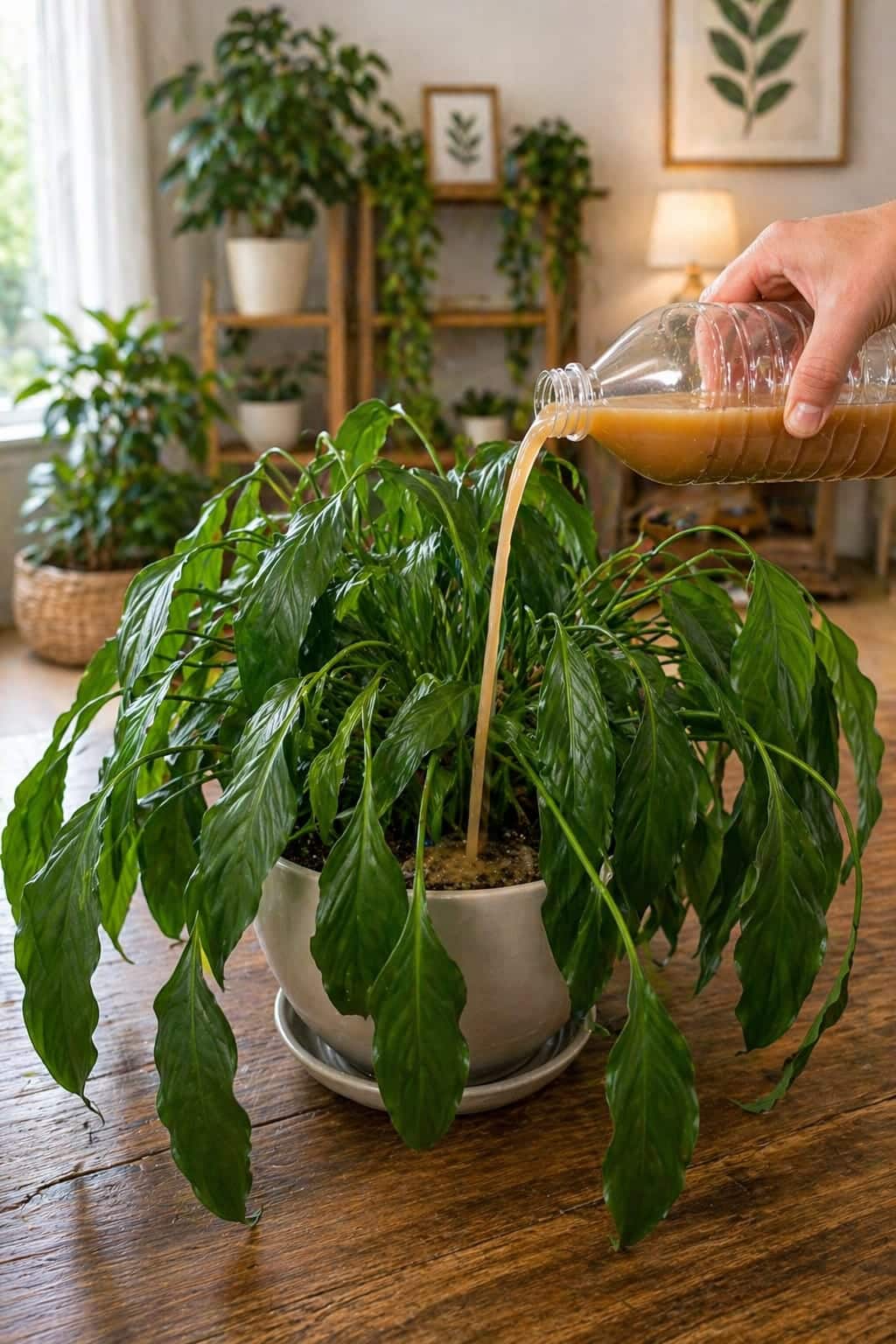
A peace lily is one of the most expressive houseplants you can own. When it is happy, it looks lush, glossy, elegant, and calm. Its long green leaves arch beautifully, its white blooms rise above the foliage, and the whole plant gives a room a fresh tropical feeling. But when a peace lily is unhappy, it does not hide it. The leaves droop dramatically, the stems collapse over the side of the pot, and the plant can look as if it is only hours away from dying.
If you have ever walked into a room and found your peace lily hanging limp over the pot, you know the panic. Many people immediately grab water, fertilizer, or whatever plant trick they recently saw online. One method that has started getting attention is the “brown liquid” plant drink. In photos, it looks like a homemade tea being poured into the soil around a tired peace lily. It seems rich, natural, and powerful, almost like a rescue tonic for weak indoor plants.
So what is this brown liquid? In most safe homemade versions, it is a diluted compost tea, banana peel water, worm casting tea, or weak organic plant infusion. These liquids are usually made by soaking natural plant-friendly materials in water, straining them, and diluting them before applying them to the soil. The idea is to give the plant a gentle nutrient and microbial boost while watering it.
For peace lilies, this method can be useful when done carefully. Peace lilies enjoy slightly moist soil, mild feeding, warmth, and humidity. They are not as drought-loving as snake plants or cacti. A gentle organic drink can fit into their care routine better than it would for many dry-loving plants. However, the brown liquid must be fresh, diluted, and used only when the plant actually needs water. A strong, sour, fermented, or unstrained mixture can create mold, gnats, bad smells, and root problems.
In this complete guide, you will learn what the brown liquid peace lily trick is, why homeowners use it, how to make a safer version, when to apply it, what results to expect, and what mistakes to avoid. You will also learn how to tell whether your peace lily is drooping from thirst, overwatering, root rot, low humidity, or stress, because no homemade plant drink can help if the real problem is not understood first.
What Is the Brown Liquid Peace Lily Trick?
The brown liquid peace lily trick is a homemade plant-care method where a weak organic liquid is poured into the soil around a peace lily. The liquid is usually brown or amber because it contains dissolved organic material from compost, worm castings, banana peels, used tea leaves, or other natural ingredients. It is meant to act as a mild plant tonic rather than a strong fertilizer.
The safest version for most indoor peace lilies is a diluted worm casting tea or very mild compost tea. Worm castings are gentle, natural, and often used by houseplant owners to support soil health. When soaked briefly in water and strained, they create a light brown liquid that can be used as a mild soil drink. Banana peel water can also have a pale brown or golden color and is popular because banana peels are associated with potassium, a nutrient connected with overall plant strength and flowering support.
This trick is appealing because it looks like a natural rescue treatment. A drooping plant receives a rich-looking liquid, and the visual effect makes it seem as if the plant is being revived instantly. But the real value depends on the cause of the drooping. If the peace lily is simply thirsty, any proper watering may perk it up. If the plant is weak from depleted soil, a mild organic drink may support it over time. But if the roots are rotting, adding more liquid can make the problem worse.
That is why this method should never be used blindly. Before pouring any brown liquid onto a peace lily, check the soil. If the soil is dry, the plant may be thirsty. If the soil is wet and the plant is still drooping, the roots may be damaged. The same drooping leaves can mean opposite problems.
Why Peace Lilies Droop So Dramatically
Peace lilies are famous for dramatic drooping. Their leaves can collapse when the plant is thirsty, then rise again after watering. This is one reason many people consider them easy to read. The plant practically tells you when it needs attention.
However, drooping does not always mean the plant needs more water. A peace lily can also droop when it has been overwatered. If the roots are sitting in soggy soil, they may begin to rot. Rotten roots cannot absorb water properly, so the leaves droop even though the soil is wet. This is where many plant owners make a mistake. They see drooping, assume thirst, and water again. The plant gets worse.
Peace lilies can also droop because of transplant shock, cold drafts, heat stress, direct sun, low humidity, root crowding, or old compacted soil. Sometimes they droop briefly after being moved or repotted. Sometimes they wilt near a hot window because the leaves are losing moisture faster than the roots can replace it.
Because peace lilies communicate so visibly, it is tempting to react quickly. But the best response is to pause and check the soil, pot, roots, light, and recent care history. Once you understand the cause, you can decide whether plain water, a brown liquid tonic, repotting, or another fix is needed.
What Is Usually in the Brown Liquid?
There are several possible versions of the brown liquid plant drink. The safest options are mild, strained, and diluted. Here are the most common versions:
- Worm casting tea: Made by soaking a small amount of worm castings in water, then straining and diluting.
- Compost tea: Made from finished compost soaked in water, strained carefully, and used weakly.
- Banana peel water: Made by soaking banana peels briefly in water, then straining and diluting.
- Used black tea water: A very weak tea-like liquid sometimes used by plant owners, though it should be unsweetened and diluted.
- Liquid organic fertilizer: A commercial organic plant food diluted heavily with water.
For indoor peace lilies, worm casting tea is often the most beginner-friendly natural option. It is mild and less likely to smell bad if prepared correctly. Banana peel water is also popular, but it must be strained well and used fresh. Compost tea can be useful, but only if the compost is fully finished and clean. Poor-quality compost tea can introduce odors, pests, or unwanted microbes into an indoor pot.
No matter which version you use, the liquid should never smell rotten. It should not be thick, slimy, or chunky. It should look like weak tea, not soup. If it smells sour or unpleasant, do not use it on a houseplant.
The Safest Brown Liquid Recipe for Peace Lilies
If you want to try this trick safely, start with a simple diluted worm casting tea. It is gentle and easy to prepare. You do not need a strong mixture. Peace lilies appreciate mild, consistent feeding more than heavy treatments.
Ingredients
- 1 tablespoon worm castings
- 4 cups clean room-temperature water
- A jar or bowl
- A fine strainer, cloth, or coffee filter
- A watering can or bottle
Instructions
- Add 1 tablespoon of worm castings to a jar or bowl.
- Pour in 4 cups of room-temperature water.
- Stir gently.
- Let the mixture sit for 2 to 4 hours.
- Strain the liquid carefully so no solids remain.
- Dilute the strained liquid with another 2 to 4 cups of fresh water.
- Use immediately when your peace lily is ready for watering.
The final liquid should be light brown, like weak tea. If it is very dark, dilute it more. Stronger is not better. A weak tonic is safer for indoor plants.
Banana Peel Brown Liquid Recipe
If you prefer a kitchen-scrap version, banana peel water is another popular choice. It creates a golden-brown liquid and is often used by plant lovers who want to support flowering plants naturally. Peace lilies may benefit from gentle feeding during active growth, but banana peel water should still be used sparingly.
Ingredients
- 1 clean banana peel
- 4 cups water
- A clean jar
- A strainer
Instructions
- Cut the banana peel into small pieces.
- Place the pieces in a clean jar.
- Add 4 cups of water.
- Let it soak for 12 to 24 hours.
- Strain out every piece of peel.
- Dilute the liquid with an equal amount of fresh water.
- Use the diluted liquid on the soil only.
Do not leave banana peels soaking for many days. Long soaking can create odors and attract fruit flies. Do not bury banana peel pieces in the peace lily pot. They can rot and attract pests indoors.
How to Use the Brown Liquid on a Peace Lily
Before applying any brown liquid, check the soil moisture. This step decides whether the trick is helpful or harmful. Push your finger about an inch into the soil. If the top inch feels dry and the pot feels light, the plant may be ready for watering. If the soil feels wet, do not add more liquid.
When the plant is ready, pour the diluted brown liquid slowly onto the soil around the base of the plant. Avoid pouring it directly into the crown or onto the leaves. Peace lilies like moisture, but wet leaf bases in still air can lead to problems.
Water until the soil is evenly moist and a little liquid drains from the bottom of the pot. Then empty the saucer. A peace lily should not sit in standing water. Even moisture-loving plants can suffer from root rot if water remains trapped around the roots.
After applying the liquid, place the plant in bright indirect light. Do not put it in harsh direct sun, especially when it is already drooping. Give it time to respond.
How Often Should You Use This Trick?
Use the brown liquid trick only occasionally. Once every four to six weeks during spring and summer is enough for most peace lilies. During fall and winter, reduce or stop use because growth slows and the soil may stay wet longer.
Do not use homemade plant tea every time you water. Too much organic liquid can create buildup, mold, fungus gnats, or sour soil. Peace lilies like moisture, but they still need fresh, breathable soil around their roots.
A simple routine is best:
- Use plain water most of the time.
- Use diluted brown liquid once a month during active growth.
- Use balanced fertilizer lightly if needed.
- Flush the soil with plain water occasionally to prevent buildup.
If you notice gnats, mold, or a bad smell, stop using the brown liquid and return to plain water until the plant stabilizes.
Can This Brown Liquid Revive a Drooping Peace Lily?
It depends on why the peace lily is drooping. If the plant is drooping because it is thirsty, watering with a diluted brown liquid may help it perk up. In that case, the hydration is the immediate rescue, while the mild nutrients may support the plant over time.
If the plant is drooping because the soil is wet and the roots are damaged, the brown liquid will not revive it. In fact, adding more liquid can worsen root rot. A wet, drooping peace lily needs root inspection, not another drink.
If the plant is drooping because of heat, direct sun, or low humidity, the brown liquid may not solve the real issue. The plant may need a better location, more humidity, or more stable conditions.
So yes, the method can help a thirsty or mildly depleted peace lily, but it is not a universal cure. Always check the soil first.
How Quickly Will a Peace Lily Perk Up?
If a peace lily is simply thirsty, it can perk up within a few hours after watering. Sometimes the leaves lift dramatically by the next morning. This quick recovery is one reason peace lilies feel so rewarding.
If the plant is weak from low nutrients, poor soil, or low humidity, improvement will take longer. You may see gradual changes over several weeks, such as firmer leaves, better color, or new growth.
If the plant has root rot, it may not perk up after watering at all. The leaves may remain limp even though the soil is wet. That is a sign that the roots cannot absorb water properly.
Do not judge the brown liquid trick only by instant results. If thirst was the issue, plain water would also create a fast response. The brown liquid’s benefit is more about long-term gentle support.
How to Tell If Your Peace Lily Is Thirsty or Overwatered
This is the most important skill for peace lily care. A thirsty peace lily and an overwatered peace lily can look surprisingly similar because both may droop. The difference is in the soil and roots.
A thirsty peace lily usually has dry soil, a lighter pot, and leaves that perk up after watering. The soil may pull away slightly from the sides of the pot if it has become very dry.
An overwatered peace lily has wet or soggy soil, a heavy pot, and leaves that droop even though moisture is present. The soil may smell sour or swampy. Yellow leaves may appear. If you remove the plant from the pot, the roots may be brown, black, mushy, or rotten.
Never add the brown liquid to a peace lily with wet soil. If the soil is wet and the plant is drooping, investigate the roots before watering again.
What to Do If the Soil Is Wet and the Plant Is Drooping
If your peace lily is drooping while the soil is wet, stop watering. Remove the plant from its pot and inspect the roots. Healthy peace lily roots are usually firm and pale to light tan. Rotten roots are mushy, dark, and may smell bad.
Trim away rotten roots with clean scissors. Remove soggy old soil. Repot the plant into fresh, well-draining potting mix. Choose a pot with drainage holes. After repotting, water lightly only if the new mix is dry. If it is already slightly moist, wait.
Place the plant in bright indirect light and give it time to recover. Do not use brown liquid, fertilizer, or strong homemade tonics immediately after root rot. The roots need a clean, gentle environment first.
Continue to Page 2
Continue to page 2 for more details about this article and the key points many readers miss on the first page.