Best Soil for Peace Lilies
Peace lilies need soil that holds some moisture but still drains well. They do not like bone-dry soil for long periods, but they also do not like swampy conditions. A regular houseplant mix can work, but it is often better when improved with perlite, orchid bark, or coco coir.
A good peace lily mix can include:
- 2 parts indoor potting mix
- 1 part perlite
- 1 part orchid bark or coco coir
This creates a balance between moisture retention and airflow. If your soil is dense, muddy, or slow to dry, the roots may suffer. A brown liquid tonic will not fix compacted soil. Repotting into a better mix may be the real solution.
Best Pot for Peace Lilies
A peace lily pot must have drainage holes. This is essential. Decorative pots without drainage may look beautiful, but they can trap water and cause root rot.
If you love a decorative container, keep the peace lily in a plastic nursery pot with holes and place that inside the decorative pot. When watering, remove the inner pot, let it drain completely, and then return it.
Peace lilies like a pot that gives their roots room but is not excessively large. A pot that is too big holds too much soil, and too much soil holds too much water. Choose a pot only slightly larger than the root ball when repotting.
Best Light for a Peace Lily
Peace lilies are often called low-light plants, but this can be misleading. They can survive in lower light, but they grow and bloom better in bright indirect light. A peace lily in a dark corner may stay green, but it may droop more often, grow slowly, and produce fewer white blooms.
Place your peace lily near a bright window where it does not receive harsh direct sun. East-facing windows are often excellent. North-facing windows can work if the room is bright. South- or west-facing windows may be too intense unless filtered by a sheer curtain.
If the leaves look scorched, pale, or crispy, the light may be too direct. If the plant never blooms and grows slowly, it may need more brightness.
Humidity and Peace Lily Health
Peace lilies enjoy humidity. Dry indoor air, especially during winter heating, can lead to brown tips, drooping, and dull leaves. A brown liquid plant drink can water the roots, but it cannot fully fix dry air around the leaves.
To increase humidity, group plants together, place the pot on a pebble tray with water below the pot level, or use a small humidifier nearby. Avoid placing peace lilies near heating vents, radiators, fireplaces, or air conditioners.
Misting can make leaves look fresh temporarily, but it does not raise humidity for long. If you mist, do it lightly and make sure the plant has airflow.
Can the Brown Liquid Help Peace Lily Blooms?
A mild organic liquid can support general plant health, but it will not force blooms by itself. Peace lilies bloom when they receive enough bright indirect light, proper moisture, warmth, and gentle nutrition. If your peace lily has healthy leaves but no flowers, light is usually the first thing to check.
Banana peel water is often promoted for blooms because banana peels are associated with potassium. However, it is not a complete fertilizer. A balanced houseplant fertilizer used at half strength during active growth is more predictable.
The brown liquid trick may support blooming indirectly by improving plant strength, but it is not a magic flower trigger. For more blooms, give the plant brighter indirect light and consistent care.
Can You Use Compost Tea Indoors?
You can use compost tea indoors, but you must be careful. Only use fully finished compost that smells earthy, not rotten. The tea should be weak, strained, and fresh. Do not use compost tea that smells sour, swampy, or unpleasant.
Indoor pots are small, closed environments compared with outdoor garden beds. A strong compost tea can create odors, mold, or gnats if misused. If you are new to plant care, worm casting tea or a diluted liquid houseplant fertilizer may be safer than homemade compost tea.
If using compost tea, apply it sparingly and always watch the plant and soil afterward.
Can You Use Tea or Coffee as the Brown Liquid?
Some people use weak tea or coffee water on houseplants, but this must be done with caution. Tea and coffee should never contain sugar, milk, cream, flavorings, or sweeteners. These can attract pests and create soil problems.
Peace lilies may tolerate very weak, plain, diluted tea occasionally, but it is not necessary. Coffee can be acidic and may not be ideal for frequent use. Strong coffee can also create issues in the soil.
If you want a brown liquid plant drink, worm casting tea or banana peel water is usually a better choice than leftover beverages. Never pour sweetened drinks into houseplant soil.
Can You Use This Trick on All Houseplants?
No. Different houseplants have different needs. Peace lilies like moderate moisture and may tolerate mild organic liquids occasionally. Snake plants, cacti, succulents, and many orchids need much drier, airier conditions and may react badly to frequent organic liquid treatments.
Fast-growing tropical plants such as pothos, philodendrons, and spider plants may tolerate mild organic drinks better than dry-loving plants. However, every plant still needs proper dilution, drainage, and timing.
Do not use the brown liquid method on carnivorous plants. They are sensitive to nutrients and minerals and require special care.
Why the Brown Liquid Looks So Effective
The brown liquid looks effective because it resembles a rich plant tonic. It gives the impression that the plant is receiving something nourishing and earthy. Compared with clear water, it feels more powerful and intentional.
But the color is not the secret. The secret is correct timing and dilution. A weak brown liquid applied to dry soil can be useful. A strong brown liquid poured into wet soil can harm the plant.
The method also encourages observation. When you prepare a special plant drink, you usually pay more attention to the plant. You notice the soil moisture, the leaf condition, the pot drainage, and the location. That attention often improves care more than the liquid itself.
Common Mistakes with the Brown Liquid Method
Using It Too Strong
A dark, thick mixture can overwhelm indoor soil. Always dilute until it looks like weak tea.
Using It Too Often
Once a month during active growth is enough. More can create buildup and pests.
Applying It to Wet Soil
If the soil is already wet, do not add more liquid. Check for overwatering or root problems.
Leaving Solids in the Pot
Banana peel pieces, compost bits, or other solids can rot and attract gnats. Always strain thoroughly.
Using Rotten Mixtures
If the liquid smells bad, do not use it. Fresh and mild is safer.
Expecting It to Cure Root Rot
Root rot needs repotting and root care. Brown liquid cannot fix rotten roots.
Signs the Brown Liquid Is Helping
If the method is working as part of a good routine, your peace lily may look firmer, produce new leaves, and show better color over time. A thirsty plant may perk up after watering, while a mildly underfed plant may gradually become more vigorous after occasional feeding.
Healthy new growth is a good sign. Leaves should emerge green, firm, and upright. The soil should smell fresh and earthy, not sour. There should be no increase in fungus gnats or mold.
Be patient. Long-term improvement takes time. Do not keep adding more liquid just because you want faster results.
Signs You Should Stop Using It
Stop using the brown liquid if you notice mold on the soil, fungus gnats, sour smell, yellowing leaves, black spots, mushy stems, or soil that stays wet for too long. These signs suggest the potting environment is becoming unhealthy.
Return to plain water. Let the soil dry slightly. Improve airflow and light. If the problem continues, inspect the roots and repot if needed.
Homemade tricks should never make the plant’s environment worse. If the plant reacts badly, stop immediately.
How to Clean Peace Lily Leaves
Peace lily leaves are large and glossy, which means they collect dust. Dusty leaves cannot absorb light as efficiently and may look dull even when the plant is healthy. Cleaning the leaves is one of the easiest ways to improve the plant’s appearance.
Use a soft damp cloth and gently wipe each leaf. Support the leaf with one hand while wiping with the other. Do not use the brown liquid on the leaves. It may leave residue and attract dust. Plain water is enough.
Clean leaves often look instantly fresher and help the plant make better use of available light.
Should You Fertilize Too?
The brown liquid method is not always a complete fertilizer. Worm casting tea and banana peel water may provide mild support, but they do not offer the predictable nutrient balance of a formulated houseplant fertilizer.
During spring and summer, you can feed peace lilies with a balanced houseplant fertilizer at half strength every four to six weeks. If you are using brown liquid, do not overdo both. Alternate them or choose one method at a time.
Too much fertilizer can cause brown leaf tips, salt buildup, and root stress. Peace lilies prefer gentle feeding.
A Simple Peace Lily Recovery Routine
If your peace lily is drooping and weak, try this careful routine:
- Check soil moisture before watering.
- If soil is dry, water thoroughly with plain water or diluted brown liquid.
- If soil is wet, inspect roots before adding more liquid.
- Remove yellow or dead leaves.
- Move the plant to bright indirect light.
- Keep it away from heating vents and cold drafts.
- Increase humidity if the air is dry.
- Use diluted brown liquid only once a month during active growth.
- Flush the soil occasionally with plain water.
- Repot if the soil is compacted or roots are damaged.
This routine gives the plant a better chance of recovery because it addresses the real care needs, not just the visible drooping.
Frequently Asked Questions
What is the brown liquid being poured on peace lilies?
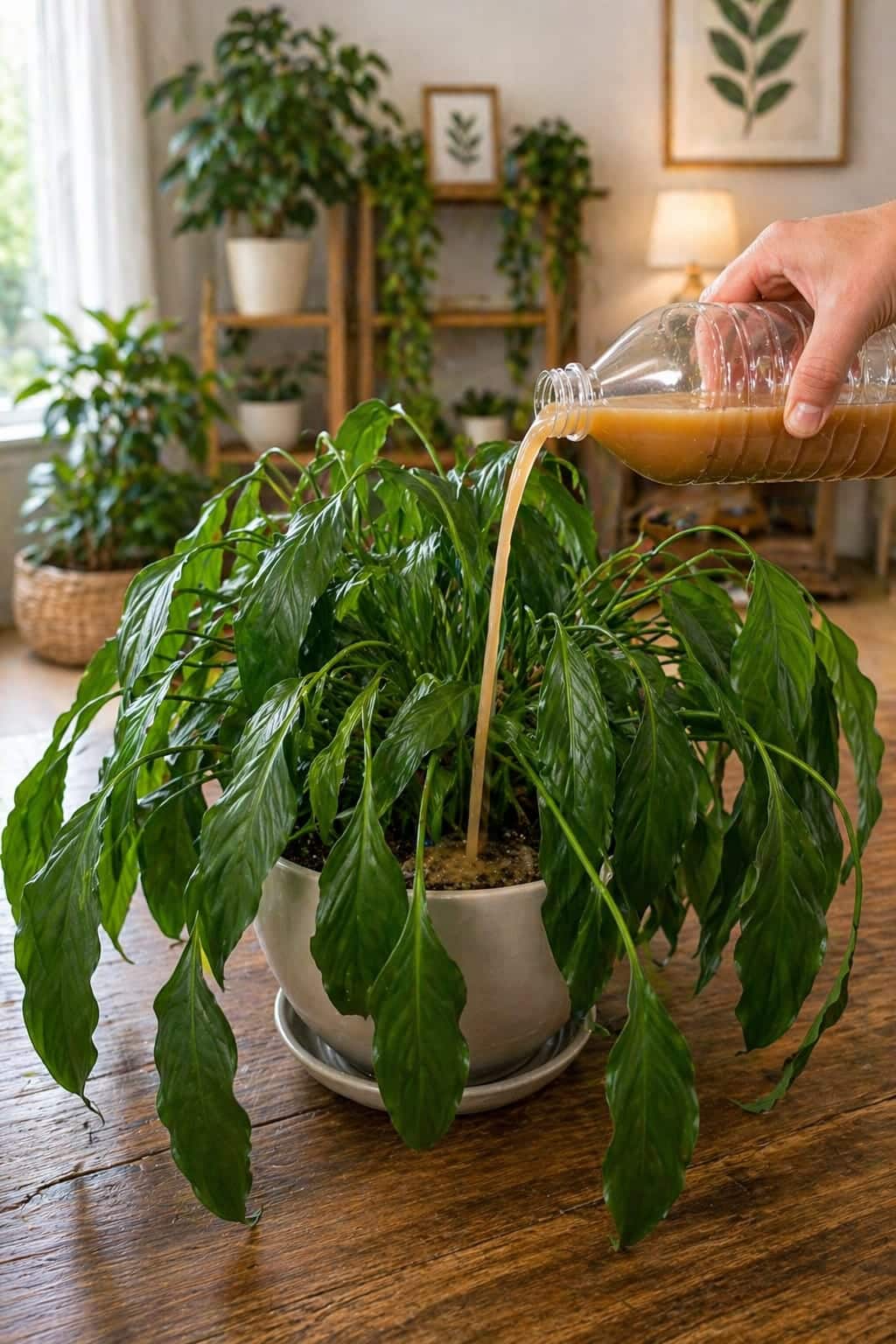
It is usually a diluted organic plant tonic such as worm casting tea, compost tea, banana peel water, or weak liquid organic fertilizer.
Can brown liquid revive a drooping peace lily?
It can help if the plant is thirsty or mildly underfed, but it will not help if the roots are rotting from overwatering.
How often should I use it?
Once every four to six weeks during spring and summer is enough. Use plain water most of the time.
Can I use banana peel water?
Yes, if it is fresh, strained, diluted, and used only occasionally. Do not leave banana peel pieces in the pot.
Can I pour coffee on my peace lily?
It is better not to use coffee regularly. If used at all, it must be plain, unsweetened, heavily diluted, and occasional. Worm casting tea is safer.
What if my peace lily is drooping but the soil is wet?
Do not add more liquid. Check the roots for rot and repot if needed.
Can this trick make peace lilies bloom?
It may support overall health, but blooms depend mostly on bright indirect light, proper watering, warmth, and balanced feeding.
Should I spray the liquid on leaves?
No. Apply it to the soil only. Clean leaves with plain water and a soft cloth.
What if the soil smells bad after using it?
Stop using the liquid, let the soil dry slightly, and check for root rot. Repot if the smell continues.
Is this safe for all plants?
No. Moisture-loving tropical plants may tolerate it occasionally, but dry-loving plants like cacti, succulents, and snake plants need much more caution.
Final Thoughts
The brown liquid peace lily trick can be a helpful and satisfying plant-care method when used correctly. A weak, drooping peace lily may respond beautifully to a gentle watering if it is thirsty, and a mild organic tonic like worm casting tea or diluted banana peel water can support healthy growth during the active season.
But this trick is not magic. The first step is always diagnosis. If the soil is dry, the plant may need water. If the soil is wet, the plant may have root problems. Pouring more liquid into soggy soil can make a struggling peace lily worse.
Use the brown liquid only when it is fresh, diluted, strained, and mild. Apply it to the soil only, let the pot drain completely, and use it no more than once a month during active growth. Avoid rotten mixtures, thick liquids, sweetened drinks, and unstrained kitchen scraps.
For the best results, combine the trick with proper peace lily care: bright indirect light, a pot with drainage, well-draining soil, consistent moisture, humidity, and gentle feeding. When these basics are right, a peace lily can recover from dramatic drooping, produce glossy leaves, and eventually reward you with elegant white blooms again.
Sometimes a plant does not need to be thrown away. It needs a careful check, a better routine, and a gentle boost at the right time. This brown liquid method can be part of that comeback, as long as you use it wisely and let the plant’s real needs guide you.