Orchids are some of the most elegant plants you can grow indoors. Their glossy leaves, arching stems, and delicate blooms can make any living room, bedroom, kitchen window, or plant shelf feel instantly more luxurious. A blooming orchid looks like a living decoration, and when the flowers are full and healthy, it is easy to understand why so many people fall in love with them.
But orchids can also be confusing. One day they look perfect, and then suddenly the flowers fade, the leaves look tired, or the roots appear dry, brown, or weak. Many orchid owners ask the same questions: Why did my orchid stop blooming? Why are the leaves limp? Why are the roots turning silver? How do I make it bloom again?
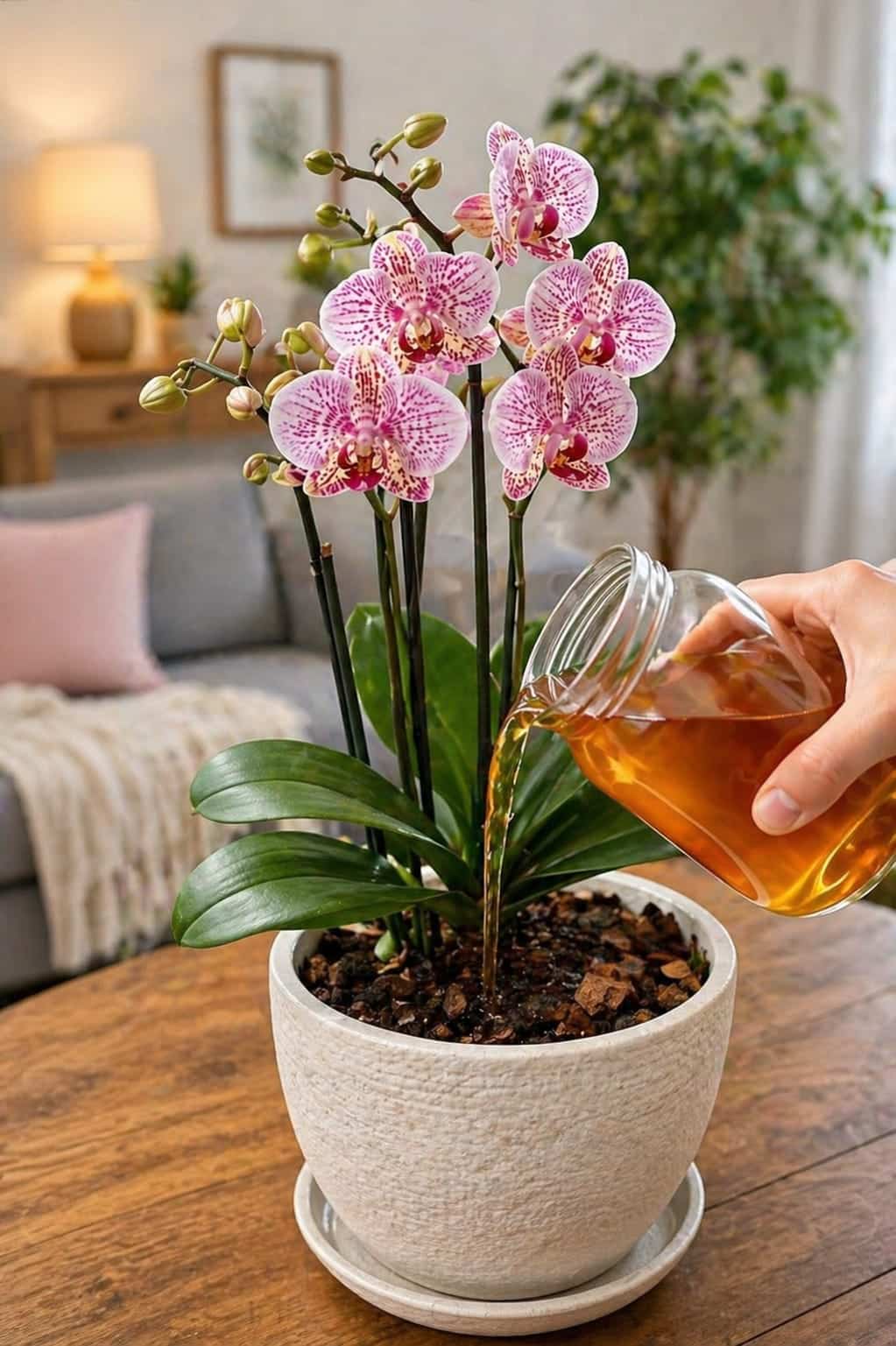
This is why simple orchid care tricks always get attention. One popular method people are starting to notice is the “amber liquid” orchid trick. In photos, a golden-brown liquid is poured gently into the orchid pot, soaking through the bark like a rich natural tonic. It looks warm, nourishing, and almost magical. The color makes it seem like the orchid is receiving a special homemade drink designed to wake up the roots and support more blooms.
So what is this amber liquid?
The safest version is usually a weak banana peel tea, diluted compost tea, diluted worm casting tea, or a very mild organic orchid tonic. These liquids often have a golden-brown or tea-like color, which makes them look richer than plain water. The idea is to give the orchid a gentle natural boost without using a strong chemical fertilizer.
However, orchids are not ordinary houseplants. Most common indoor orchids, especially Phalaenopsis orchids, grow naturally with airy roots. They do not like heavy soil, thick liquids, or soggy conditions. That means this amber liquid trick must be used carefully. The liquid should be weak, strained, fresh, and able to drain freely through the orchid bark. If it is too strong, too frequent, or left sitting around the roots, it can cause mold, gnats, sour smells, and root problems.
In this complete guide, you will learn what the amber liquid orchid trick is, why plant lovers use it, how to make a safe version at home, how often to apply it, what results to expect, and what mistakes to avoid. You will also learn how to combine this method with proper orchid care so your plant has the best chance of growing healthy roots, glossy leaves, and beautiful blooms again.
What Is the Amber Liquid Orchid Trick?
The amber liquid orchid trick is a homemade orchid-care method where a weak golden-brown liquid is poured through the orchid potting medium. The liquid is usually made from natural ingredients such as banana peels, worm castings, finished compost, or very diluted organic fertilizer. It is not meant to be thick or heavy. It should look like weak tea and flow easily through the orchid bark.
The purpose of the trick is to provide a gentle boost to the root zone. Many orchid owners use it when their plant looks tired after blooming, when roots seem slow to grow, or when they want to support the next blooming cycle. The amber color gives the liquid a rich, nourishing appearance, which is part of why the trick has become so popular.
But the color is not the secret. The real secret is dilution and timing. Orchids need moisture and nutrients, but they also need air. If the root zone becomes too wet or filled with organic residue, the orchid can decline quickly. A safe amber liquid should be light enough to drain fully and mild enough not to overwhelm the roots.
Think of this method as a soft supplement, not a miracle cure. It can support an orchid that is already being cared for properly, but it cannot fix root rot, poor lighting, old bark, or a pot without drainage.
Why Orchid Owners Love This Method
Orchid owners love the amber liquid method because it feels natural, simple, and satisfying. Instead of using a strong bottled fertilizer, the method uses a gentle homemade liquid that looks like plant tea. It feels less harsh and more connected to natural gardening.
The visual effect is also powerful. Plain water disappears into bark, but amber liquid stands out. When poured slowly around an orchid, it looks like a special treatment. It makes the care routine feel intentional, almost like giving the plant a nourishing spa drink.
Another reason people love this method is that orchids can be slow to respond. After the flowers fade, many owners panic and think the plant is dying. In reality, the orchid may simply be resting and preparing for new roots or leaves. A gentle amber tonic can become part of a recovery routine after blooming, helping the owner focus on root health instead of only flowers.
The method also encourages observation. When you prepare a special liquid, you are more likely to check the roots, look at the bark, notice whether the plant needs water, and inspect the leaves. That extra attention often improves orchid care more than the liquid itself.
What Is Usually in the Amber Liquid?
There are several possible versions of the amber liquid. The safest options for orchids are mild, fresh, strained, and diluted. The most common homemade versions include banana peel tea, worm casting tea, and weak compost tea.
Banana peel tea is made by soaking banana peels in water for a short period, then straining and diluting the liquid. Banana peels are often associated with potassium, which plant lovers connect with flower support and general plant strength. For orchids, banana peel tea should be very weak and used occasionally.
Worm casting tea is made by soaking a small amount of worm castings in water, then straining the liquid. Worm castings are gentle and widely used in natural gardening. A weak worm casting tea can have a light brown color and may support the potting environment when used sparingly.
Compost tea is made from finished compost soaked in water. This method requires more caution indoors. The compost must be fully finished, clean, and earthy-smelling. If the compost smells sour, rotten, or swampy, it should not be used on orchids.
Some people also use a very diluted organic liquid fertilizer. This can be useful, but it should be mixed far weaker than the standard dose because orchid roots are sensitive.
The Best Amber Liquid for Beginners
For beginners, the safest amber liquid is a very diluted banana peel tea or a weak worm casting tea. Both are simple to make and easy to strain. They should never be thick, sticky, or dark. The final liquid should be pale golden or light brown, similar to weak tea.
Banana peel tea is appealing because most people already have banana peels at home. It feels like an easy kitchen-scrap trick. Worm casting tea is appealing because worm castings are gentle and designed for plant use.
If you are new to orchids, avoid strong fermented mixtures. Fermented plant liquids can smell bad, attract insects, and become too intense for indoor orchid pots. Orchids prefer clean, airy conditions. A fresh, mild liquid is safer than a sour, powerful brew.
Also avoid using coffee, sweet tea, soda, fruit juice, or leftover drinks. These may contain sugar, acids, milk, flavorings, or other ingredients that can harm the potting medium and attract pests.
Why Orchids Need Gentle Feeding
Orchids do not feed the same way as garden vegetables or heavy-blooming outdoor annuals. Many common orchids grow naturally on trees, where their roots receive rainwater, air, and small amounts of nutrients from organic debris. They are used to light feeding, not heavy fertilizer sitting around their roots.
This is why orchid growers often use the phrase “weakly, weekly” when talking about fertilizer, meaning very diluted fertilizer applied regularly during growth. Even then, many orchid owners use fertilizer less often and flush with plain water between feedings.
The amber liquid trick follows the same principle. Weak is better than strong. Occasional is better than constant. Clear drainage is essential.
If you pour a thick organic liquid into orchid bark, it can settle in the gaps, break down, and create an unhealthy environment. The roots may suffocate or rot. A diluted amber liquid should act like a gentle rinse, not a heavy meal.
How to Make Banana Peel Amber Liquid for Orchids
Banana peel tea is one of the most popular amber liquid recipes. It is simple, inexpensive, and easy to prepare. The key is to keep it fresh and diluted.
Ingredients
- 1 clean banana peel
- 4 cups clean room-temperature water
- A clean jar
- A fine strainer or cloth
- 4 additional cups water for dilution
Instructions
- Cut the banana peel into small pieces.
- Place the pieces into a clean jar.
- Add 4 cups of clean water.
- Let the peel soak for 12 to 24 hours.
- Strain out every piece of banana peel.
- Dilute the liquid with 4 more cups of clean water.
- Use the diluted liquid immediately.
The final liquid should be pale golden or light brown. It should not smell rotten. If it smells sour or unpleasant, do not use it. Make a fresh batch and soak it for less time.
How to Make Worm Casting Amber Liquid for Orchids
Worm casting tea is another gentle option. It has a light brown color and is often used by houseplant owners who prefer natural soil support.
Ingredients
- 1 teaspoon worm castings
- 4 cups clean room-temperature water
- A jar or bowl
- A coffee filter, cloth, or fine strainer
- Additional water for dilution if needed
Instructions
- Add 1 teaspoon of worm castings to a jar.
- Pour in 4 cups of water.
- Stir gently.
- Let it sit for 2 to 4 hours.
- Strain carefully until no particles remain.
- If the liquid is dark, dilute it with more water.
- Use immediately on the orchid potting medium.
This mixture should be weak. Do not make it thick or muddy. Orchids need a clean rinse, not a heavy soil soup.
How to Apply the Amber Liquid to Orchids
Before using the amber liquid, check whether your orchid actually needs watering. Do not pour any tonic into wet bark. Orchids should be watered when the potting medium is approaching dryness. If the roots are still bright green and the bark feels wet, wait.
Place the orchid over a sink, tray, or basin. Slowly pour the diluted amber liquid around the bark, not into the crown of the plant. The crown is the central area where the leaves meet. Water or liquid trapped there can cause rot, especially in Phalaenopsis orchids.
Let the liquid run through the pot completely. You should see it drain from the bottom. This step is very important. If the pot does not drain, the method is not safe. Orchids should never sit in standing liquid.
After the liquid drains, empty the saucer or decorative outer pot. Return the orchid to bright indirect light and allow the bark to dry appropriately before watering again.
How Often Should You Use the Amber Liquid?
Use the amber liquid sparingly. Once every four to six weeks during active growth is enough for most orchids. Active growth means the orchid is producing new roots, new leaves, or a flower spike. If the plant is resting, use plain water instead.
Do not use the amber liquid every time you water. Too much organic liquid can create residue in the bark and encourage fungus gnats or mold. Orchids need a clean and airy root environment.
During winter or darker months, reduce use or stop completely. If your home is cool and the orchid dries slowly, organic liquids are more likely to linger in the potting medium.
A good routine is simple: plain water most of the time, weak orchid fertilizer during active growth, and amber liquid only once in a while as a natural supplement.
Can the Amber Liquid Make Orchids Bloom?
The amber liquid can support overall orchid health, but it cannot force blooms by itself. Orchid blooming depends on several factors: light, temperature, maturity, root health, and seasonal rhythm.
For many Phalaenopsis orchids, blooming is encouraged by bright indirect light and a slight drop in nighttime temperature for a period of time. If the plant is kept in very low light, it may grow leaves but never produce a new flower spike.
A gentle amber liquid may help support the plant during active growth, especially if it is mildly depleted. But blooms come from a healthy plant with enough stored energy. That energy comes mostly from light and strong roots.
If your orchid is not blooming, do not keep adding more tonic. First, check the light, the roots, the age of the potting medium, and the general care routine.
Continue to Page 2
Continue to page 2 for more details about this article and the key points many readers miss on the first page.