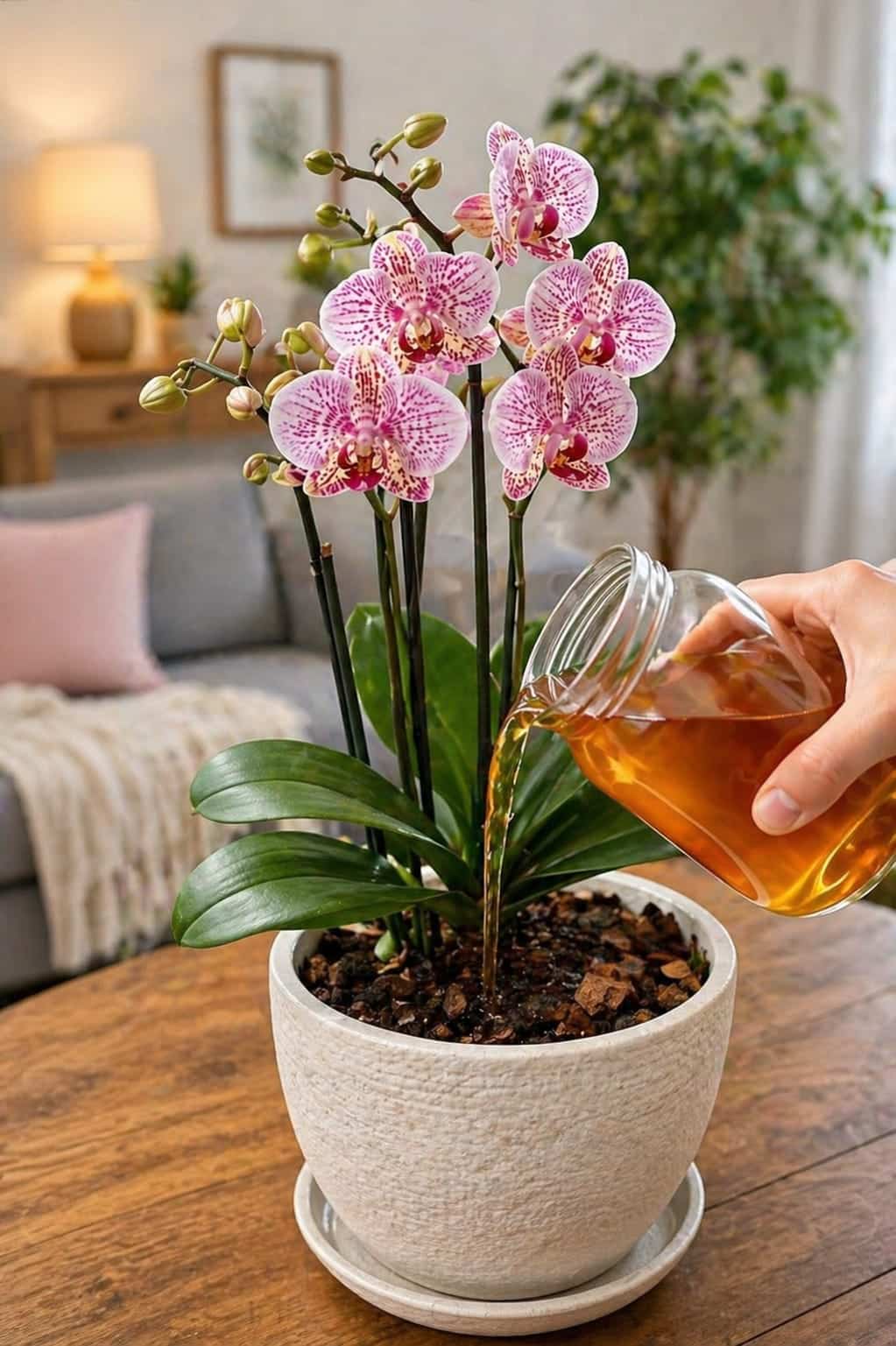
What Results Can You Expect?
The most realistic result from the amber liquid method is gradual improvement, not instant transformation. You may notice the orchid looking fresher over time. Leaves may remain firmer. New roots may appear during the growing season. The plant may recover better after blooming if the rest of the care routine is correct.
Healthy roots are the best sign of progress. New root tips are often green or reddish and firm. If your orchid is producing new roots, it is preparing itself for future growth and blooming.
Do not expect flowers overnight. Orchids are slow and seasonal. A plant may take months to rebloom. The amber liquid can be part of the support system, but patience is still required.
Why Drainage Is So Important
Drainage is the difference between a helpful orchid tonic and a harmful one. Orchids need water to pass through the potting medium and then drain away. If liquid sits in the bottom of the pot, roots can rot.
Many orchids are sold in decorative pots without proper drainage. Sometimes the orchid is inside a plastic nursery pot placed inside a ceramic cover pot. This is fine if you remove the inner pot for watering and let it drain fully before putting it back.
If your orchid is planted directly in a pot with no drainage holes, be very careful. It is better to repot it into a proper orchid pot. The amber liquid method should not be used in a closed container where liquid cannot escape.
Healthy orchid roots need both moisture and air. Drainage provides the balance.
Why You Should Avoid Thick Organic Liquids
Thick liquids are risky for orchids. Anything pulpy, sugary, sticky, or unstrained can clog the bark and feed mold. Banana peel pieces, compost particles, coffee grounds, fruit pulp, or tea leaves should not be left in the orchid pot.
The amber liquid should be completely strained. It should flow like water. If particles remain, strain it again through cloth or a coffee filter.
Remember, orchid bark is not a compost bin. It is a root-supporting medium that must stay open and airy. Solid organic scraps belong in compost, not in an orchid pot.
Can You Use Regular Tea on Orchids?
Some people use weak tea on plants, but it is not the best choice for orchids unless it is plain, unsweetened, and heavily diluted. Tea with sugar, milk, lemon, honey, flavorings, or spices should never be used. These ingredients can attract pests and damage the potting medium.
Even plain tea should be used cautiously. It can contain tannins and other compounds that may not be necessary for orchids. If your goal is a brown or amber liquid, banana peel tea or worm casting tea is a better plant-focused option.
Never pour leftover sweet drinks into orchid pots. Orchids need clean moisture, not kitchen beverages.
Can You Use Coffee on Orchids?
Coffee is not recommended as a regular orchid treatment. It can be acidic, it may leave residue, and it can encourage mold or gnats if used incorrectly. Coffee grounds are especially unsuitable for orchid bark because they can clog air spaces and stay wet.
If you want to support orchid growth, use a diluted orchid fertilizer or a mild strained natural tonic. Coffee is not necessary and may cause more problems than benefits.
The amber liquid trick should be gentle and clean, not a way to dispose of leftover drinks.
Can You Use Honey Water?
Honey water is not recommended for routine orchid watering. Honey contains sugar, and sugar can attract insects, feed unwanted microbes, and create sticky residue in the pot. Some people use honey in very specific plant propagation contexts, but it is not needed for general orchid care.
For orchids, avoid sugary mixtures. The roots need clean moisture and air. A sticky sweet liquid can create the wrong environment.
Best Light for Orchids After Using the Tonic
After applying the amber liquid, place your orchid in bright indirect light. Light is one of the biggest factors in orchid health and blooming. Without enough light, the plant cannot use nutrients efficiently.
An east-facing window is often ideal for Phalaenopsis orchids. A bright north-facing window may work if the room is naturally bright. A south- or west-facing window can work if the light is filtered with a sheer curtain.
Avoid harsh direct afternoon sun, which can scorch orchid leaves. If the leaves turn yellowish, develop burned patches, or feel hot to the touch, the light may be too intense. If the leaves are very dark green and the plant never blooms, it may need more brightness.
Best Potting Medium for Orchids
The amber liquid method works best when the orchid is growing in proper orchid medium. Most common indoor orchids prefer chunky bark-based mixes. These mixes may include orchid bark, charcoal, perlite, and sometimes a little sphagnum moss.
Regular potting soil is usually too dense for orchids. It can suffocate the roots and hold too much moisture. If your orchid is planted in soil, consider repotting it into proper orchid bark.
Old bark can also cause problems. Over time, bark breaks down and becomes more compact. It holds more water and less air. If the potting medium smells sour, looks broken down, or stays wet too long, repotting is better than adding any tonic.
How to Tell If Your Orchid Roots Are Healthy
Healthy orchid roots are firm. In Phalaenopsis orchids, roots often look silvery when dry and green when hydrated. They may grow inside the pot or outside as aerial roots. Aerial roots are normal and should not be cut off unless they are dead.
Unhealthy roots may be brown, black, mushy, hollow, or rotten. If many roots are damaged, the plant may have limp leaves because it cannot absorb water properly.
Before using amber liquid on a weak orchid, inspect the roots. If roots are rotten, the plant needs rescue care first. Remove it from the pot, trim dead roots with clean tools, and repot into fresh orchid bark. Do not add homemade tonics to a rotting root system.
Can This Trick Help Weak Orchids?
The amber liquid trick may help a mildly tired orchid if the plant still has healthy roots. For example, an orchid that has finished blooming and is beginning new leaf or root growth may benefit from a light tonic as part of a gentle routine.
However, a severely weak orchid needs diagnosis. If the roots are rotten, the bark is old, or the crown is damaged, amber liquid will not solve the problem. It may even make things worse by adding more moisture or organic material.
Weak orchids should first be stabilized with proper potting medium, correct watering, and bright indirect light. Once new roots appear, a mild supplement can be introduced carefully.
Can This Trick Help Flowers Last Longer?
Healthy care can help orchid flowers last as long as possible, but no liquid can keep flowers forever. Orchid blooms naturally age and fade. The amber liquid may support the plant overall, but flower longevity depends on temperature, humidity, light, watering consistency, and plant health.
To help flowers last longer, keep the orchid away from hot drafts, cold drafts, fruit bowls, strong direct sun, and heating vents. Water properly and avoid letting the plant dry severely while in bloom.
Do not overfeed a blooming orchid. Strong fertilizer or strong homemade liquids can stress roots. Gentle care is better.
Can This Trick Help an Orchid Rebloom?
The amber liquid can support the plant after blooming, but reblooming depends on the orchid’s full care cycle. After flowers fade, the plant often enters a growth phase. It may produce new leaves and roots. This is the time to provide good light, mild feeding, and proper watering.
Once the plant is mature enough and has enough energy, it may produce a new flower spike. For many Phalaenopsis orchids, a slight nighttime temperature drop can help encourage spiking.
Use the amber liquid only occasionally during the growth phase. Do not try to force reblooming with constant tonics. Orchids need time to rebuild energy.
Common Mistakes with the Amber Liquid Method
Using It Too Strong
A dark, concentrated liquid can overwhelm orchid roots. Always dilute until it looks like weak tea.
Using It Too Often
Once every four to six weeks is enough. More frequent use can create residue in the bark.
Leaving Solids in the Pot
Banana peel bits, compost particles, or worm casting clumps should not remain in the orchid pot. Strain everything carefully.
Pouring Into the Crown
Liquid trapped in the crown can cause rot. Pour around the bark, not into the center of the leaves.
Using It on Wet Bark
Do not water an orchid that is still wet. Wait until the medium is approaching dryness.
Using It on Rotten Roots
Root rot must be fixed before any tonic is used.
Signs the Amber Liquid Is Helping
If the method is helping, your orchid should remain stable and healthy. You may notice new root tips, firmer leaves, and steady growth during the active season. The potting medium should still smell fresh, and it should dry normally after watering.
The best sign is root growth. Roots are the foundation of orchid health. If new roots are emerging, the plant is responding well to its care environment.
Another good sign is a new leaf. Orchids often produce leaves before they rebloom. A healthy new leaf means the plant is building strength.
Signs You Should Stop Using It
Stop using the amber liquid if you notice mold on the bark, fungus gnats, sour smells, slimy residue, or roots turning mushy. These signs suggest that the mixture is too strong, used too often, or not draining properly.
Flush the pot with plain water and let it drain fully. Improve airflow. If the bark smells bad or remains wet too long, repot the orchid in fresh medium.
Never continue a homemade treatment if the plant is reacting badly. Return to simple care until the orchid stabilizes.
Should You Still Use Orchid Fertilizer?
Yes, if your orchid is actively growing, a proper orchid fertilizer may still be useful. The amber liquid is not a complete fertilizer. Banana peel tea, worm casting tea, and compost tea are not as predictable as a balanced orchid fertilizer.
Use orchid fertilizer weakly and according to the plant’s growth stage. Many growers use a very diluted fertilizer during active root and leaf growth, then flush with plain water between feedings.
If you use amber liquid, do not use it on the same day as strong fertilizer. Keep treatments separated and mild.
A Simple Orchid Care Routine with Amber Liquid
Here is a safe routine for using the amber liquid method:
- Keep the orchid in bright indirect light.
- Use a pot with excellent drainage.
- Grow it in proper orchid bark or orchid mix.
- Water only when the bark is approaching dryness.
- Keep water out of the crown.
- Use plain water for most waterings.
- Use weak orchid fertilizer during active growth.
- Use diluted amber liquid once every four to six weeks.
- Strain all homemade liquids completely.
- Stop if mold, gnats, or sour smell appears.
This routine keeps the amber liquid in the correct role: a gentle supplement, not the entire care plan.
Frequently Asked Questions
What is the amber liquid used on orchids?
It is usually a diluted homemade plant tonic such as banana peel tea, worm casting tea, weak compost tea, or very diluted organic fertilizer.
Can amber liquid make orchids bloom?
It may support overall health, but blooms depend mostly on light, root health, maturity, temperature, and proper orchid care.
How often should I use it?
Use it once every four to six weeks during active growth. Do not use it every time you water.
Can I use banana peel water on orchids?
Yes, but it must be fresh, strained, diluted, and used sparingly. Do not leave banana peel pieces in the pot.
Can I use coffee or tea?
It is better to avoid coffee. Plain weak tea may be used rarely, but banana peel tea or worm casting tea is safer and more plant-focused.
Should I pour it over the leaves?
No. Pour it through the potting medium only and avoid the crown of the orchid.
Can this help a weak orchid?
Only if the orchid still has healthy roots. If roots are rotten, repot and fix root health first.
What if the bark smells sour after using it?
Stop using the liquid, flush with plain water, improve airflow, and repot if the smell continues.
Can amber liquid replace orchid fertilizer?
No. It is a mild supplement, not a complete fertilizer. A balanced orchid fertilizer is more predictable.
Is this safe for all orchids?
It can be tried carefully on many common orchids, but different orchid types have different needs. Start weak and observe the plant.
Final Thoughts
The amber liquid orchid trick is beautiful, simple, and satisfying, but it must be used wisely. The safest versions are weak banana peel tea, worm casting tea, or another mild organic tonic that has been strained and diluted. The liquid should be light, fresh, and able to drain freely through the orchid potting medium.
This method can support an orchid during active growth, especially when combined with good light, healthy roots, proper watering, and fresh orchid bark. It may help the plant feel more vigorous over time, but it will not force instant blooms or rescue rotten roots.
Use the amber liquid only occasionally. Avoid thick mixtures, sugary drinks, coffee grounds, unstrained compost, and fermented liquids that smell sour. Never pour it into the crown of the orchid, and never use it in a pot that does not drain.
Orchids reward patience. Their flowers may seem delicate, but the plant itself follows a steady rhythm of roots, leaves, rest, and bloom. A gentle amber tonic can become part of that rhythm if used with care.
If your orchid is healthy and actively growing, this golden liquid trick can be a lovely monthly ritual. It makes orchid care feel more natural and intentional. And with the right routine, your plant may respond with stronger roots, glossier leaves, and eventually another stunning display of blooms.