Jade plants are some of the most charming indoor plants you can grow. Their thick, glossy, coin-shaped leaves make them look elegant and cheerful at the same time. A mature jade plant can almost look like a miniature tree, with woody stems, rounded green leaves, and a calm sculptural shape that fits beautifully on a table, plant stand, windowsill, or sunny shelf.
But even though jade plants are famous for being easy, they can still become tired indoors. The leaves may lose shine. The stems may stretch. The soil may become compacted. The plant may stop producing fresh growth. Sometimes the leaves look dusty, sticky, or dull, and the whole plant seems less lively than it used to.
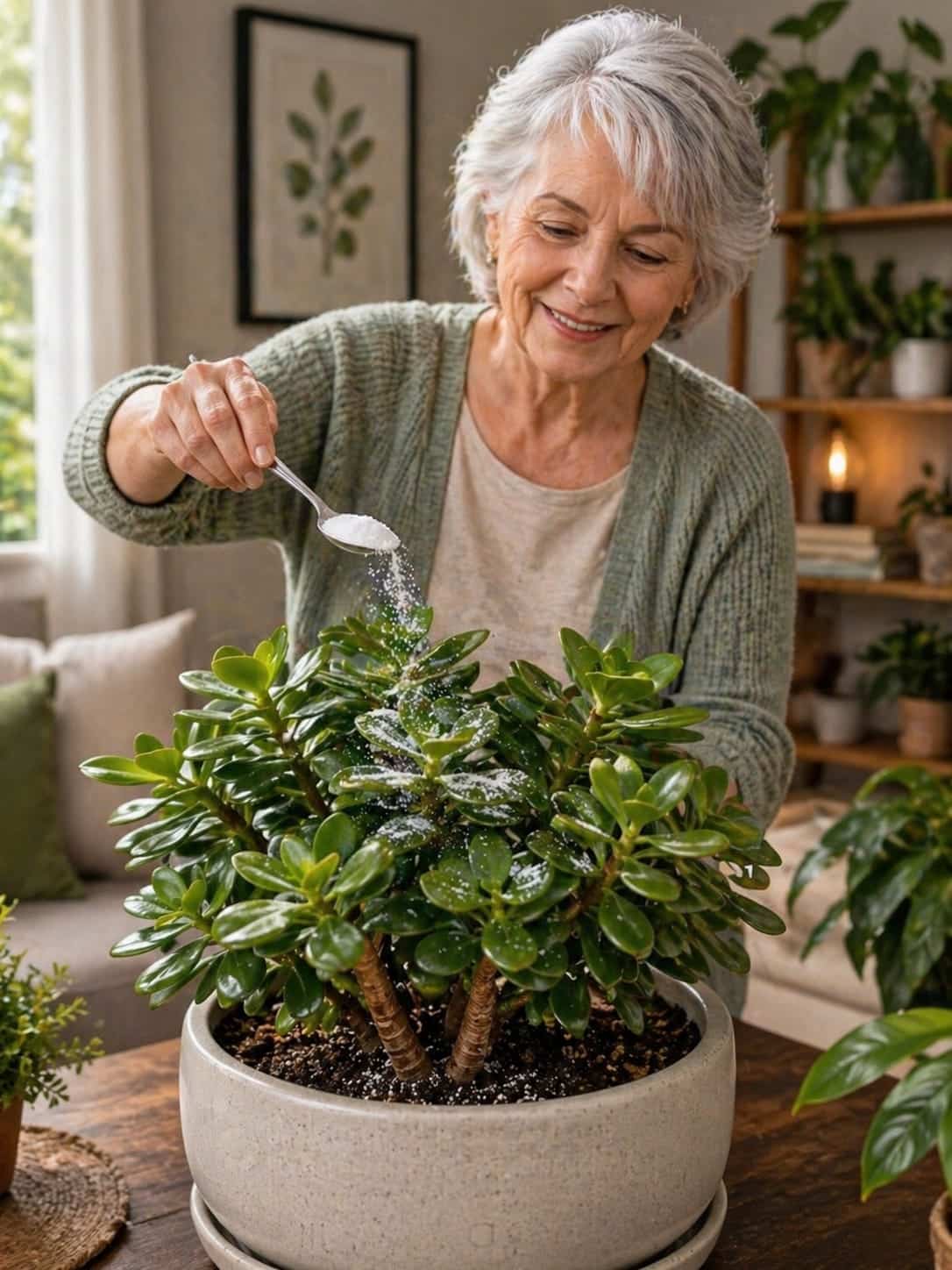
That is why simple jade plant tricks are so popular. In the image, a smiling woman is sprinkling a white powder over a healthy jade plant. The plant has thick green leaves, strong woody stems, and a full rounded shape. The white powder catches the eye because it looks like a secret ingredient, something simple from the kitchen or garden shelf that can refresh the plant and make it look healthy again.
This method is often called the white powder jade plant trick. Depending on the version, the white powder may be crushed eggshell powder, a tiny amount of baking soda used for surface freshening, diatomaceous earth used for pest prevention, or a light mineral dusting mixed into the soil. The safest and most useful version for jade plants is finely crushed eggshell powder or a very small amount of clean mineral top-dressing used carefully on the soil surface, not heavily dumped over the leaves.
Jade plants are succulents. That means they store water in their thick leaves and stems. They do not like wet soil, heavy feeding, or constant homemade treatments. Any white powder trick must be used gently. A small sprinkle can be part of a freshening routine, but a heavy coating can create problems, especially if it traps moisture on the leaves or changes the soil too much.
Used correctly, this trick can help refresh the top layer of the pot, support a cleaner growing surface, and give the plant a more polished look. Used incorrectly, it can clog the soil surface, leave residue on the leaves, attract moisture, or make the plant look messy. The secret is not the powder alone. The secret is how lightly and carefully it is used.
In this complete guide, you will learn what the white powder jade plant trick is, which white powders are safest, which ones to avoid, how to apply the trick properly, how to clean jade leaves afterward, and what your jade plant truly needs if you want it to grow strong, glossy, and tree-like indoors.
What Is the White Powder Jade Plant Trick?
The white powder jade plant trick is a simple indoor plant-care method where a small amount of fine white powder is sprinkled around a jade plant, usually over the soil surface. The goal is to refresh the pot, lightly support the soil, discourage surface pests, or add a gentle mineral element depending on what powder is used.
The trick looks dramatic because the white powder stands out against the dark soil and shiny green leaves. It creates the feeling of a special treatment, almost like dusting the plant with a growth booster. But the best version of this trick is much more modest. It should not be a thick layer. It should not cover the whole plant. It should not be used every week.
For jade plants, the safest powder choices are mild and dry. Finely crushed eggshell powder can be used as a slow, gentle mineral addition. Food-grade diatomaceous earth can be used very lightly on dry soil as a pest barrier. A tiny amount of horticultural lime may be used only if the soil truly needs pH adjustment, but most beginners should avoid it unless they understand their soil. Baking soda is sometimes shown in plant tricks, but it should be used with caution and is not a fertilizer.
The most important thing is this: the powder should mostly go on the soil, not all over the leaves. Jade leaves need to breathe and photosynthesize. A heavy dusty coating can block light, hold moisture, and make the plant look dull instead of healthy.
Why Jade Plants Need Gentle Care
Jade plants look sturdy because their stems become woody and their leaves are thick, but they are still succulents. They store moisture inside their leaves and stems, which allows them to survive dry periods. This is why jade plants do not need frequent watering. In fact, too much attention is often worse than neglect.
The most common problem with jade plants is overwatering. When the soil stays wet for too long, the roots can rot. Once roots rot, the leaves may become soft, wrinkled, yellow, or drop from the plant. The stems may become mushy at the base. A jade plant can recover from dryness much more easily than from rot.
This matters because any powder or homemade trick that holds moisture around the base can create trouble. A thick layer of powder mixed with water can form a paste. That paste can reduce airflow and make the soil surface stay damp. Jade plants need the opposite: dry, airy, fast-draining conditions.
So the white powder trick must be light. It should never turn the top of the pot into a white crust. It should never be watered into a thick slurry. It should simply be a small sprinkle used occasionally as part of a clean, dry-care routine.
The Best White Powder for Jade Plants: Crushed Eggshell Powder
One of the safest white powders for jade plants is clean, dry, finely crushed eggshell powder. Eggshells contain calcium carbonate, and when crushed into a fine powder, they can slowly break down in the soil. This is not an instant fertilizer, but it can be used as a gentle mineral addition.
Eggshell powder is popular because it is simple and low-waste. Instead of throwing eggshells away, you can clean them, dry them, crush them, and use a small amount around plants. For jade plants, the key is using the powder sparingly.
Do not add large chunks of eggshell to indoor pots. Large pieces break down very slowly and can look messy. They may also attract attention from pests if not cleaned properly. Fine powder is better because it blends into the soil more easily.
Eggshell powder will not instantly make a jade plant grow new leaves. It is not a complete fertilizer. It is simply a mild mineral support that can be part of a broader care routine.
How to Make Eggshell Powder for Jade Plants
Making eggshell powder is easy, but cleanliness matters. Dirty eggshells can smell or attract pests, so prepare them properly.
What You Need
- Clean eggshells
- A baking tray
- A blender, grinder, or mortar and pestle
- A small jar for storage
Instructions
- Rinse the eggshells very well after cracking the eggs.
- Remove any leftover egg white or membrane if possible.
- Let the shells dry completely.
- For extra cleanliness, bake them at low heat for 10 to 15 minutes.
- Let them cool.
- Grind them into a fine powder.
- Store the powder in a dry jar.
The powder should be fine and dry. If it feels damp, let it dry longer before storing. Moist powder can clump or spoil.
When using it on jade plants, apply only a small pinch or light dusting over the soil surface. You can gently scratch it into the top layer of soil, but do not dig deeply around the roots.
How Much Eggshell Powder Should You Use?
Use very little. For a small jade plant, a pinch is enough. For a medium pot, use about half a teaspoon. For a large pot like the one in the image, one teaspoon spread across the soil surface is usually plenty.
More is not better. Too much eggshell powder can build up on the surface and make the pot look chalky. It can also change the soil slowly over time if used excessively.
Use it only once every few months, not every week. Jade plants are slow to moderate growers indoors, and they do not need constant amendments.
After sprinkling, you can gently mix the powder into the top half inch of soil. This keeps it from sitting on the leaves or creating a dusty surface.
Can Baking Soda Be Used on Jade Plants?
Baking soda is often shown in plant hacks because it is white, cheap, and common in kitchens. However, baking soda is not a fertilizer. It contains sodium, and too much sodium can harm plant roots. Jade plants do not need baking soda for growth.
A tiny amount of baking soda may be used by some gardeners for very specific surface cleaning or odor control outside the root zone, but it should not be sprinkled heavily over jade plant soil. It should not be used as a regular feeding method. It should not be mixed into the pot every week.
If the image is interpreted as baking soda, the safe version would be extremely limited: a tiny dusting on the soil surface only if there is a specific reason, and not as a growth booster. Even then, crushed eggshell powder or a proper succulent fertilizer is usually a better choice.
For most jade plant owners, baking soda should be avoided in the potting mix. It is safer to use it for cleaning the outside of the pot, not feeding the plant.
Can Diatomaceous Earth Be Used?
Food-grade diatomaceous earth is another white powder sometimes used around houseplants. It is often used as a dry pest barrier against crawling insects. It works best when dry. If it gets wet, it becomes less effective until it dries again.
For jade plants, diatomaceous earth can be lightly dusted on dry soil if there is a pest issue, especially crawling pests or fungus gnat activity on the surface. However, it should not be used as a thick layer. A heavy layer can look messy and may reduce airflow.
Wear care when applying it because fine dust can irritate lungs if inhaled. Keep it away from your face and do not create clouds of dust indoors. Use only food-grade diatomaceous earth, not pool-grade products.
Diatomaceous earth is not a fertilizer. It is a pest-control surface tool. If your jade plant is healthy and pest-free, you may not need it.
Can Epsom Salt Be Used as the White Powder?
Epsom salt is sometimes used in plant care because it contains magnesium and sulfur. However, it should not be sprinkled dry over jade plant leaves or used heavily in the soil. Too much can create salt buildup and stress roots.
If magnesium is truly needed, Epsom salt is usually dissolved in water at a very weak rate and used rarely. But most jade plants growing in decent succulent mix do not need it. A balanced succulent fertilizer is safer and more complete.
Do not use Epsom salt just because it is white and looks like a plant booster. Jade plants do not need frequent mineral salts, and excess salts can damage roots.
For the white powder trick, eggshell powder or a light pest-control dust is a better interpretation than Epsom salt.
Can Powdered Milk Be Used?
No. Powdered milk should not be sprinkled on jade plants. It can clump, sour, smell bad, attract pests, and create mold when it becomes damp. It may look like a harmless white powder, but it is not a good indoor plant amendment.
Milk-based plant tricks can become messy quickly in pots. Jade plants especially do not want organic dairy residue near their dry-loving roots. Powdered milk can form a sticky layer when watered, and that can make the soil surface unpleasant.
Keep powdered milk out of houseplant soil. If calcium is the goal, use clean eggshell powder sparingly or a proper plant fertilizer instead.
Can Flour or Cornstarch Be Used?
No. Flour and cornstarch should never be used as plant powders. They can become paste-like when wet, attract pests, grow mold, and block airflow at the soil surface. They provide no meaningful benefit for jade plants.
Some online tricks use white kitchen powders because they look dramatic in photos, but not all white powders belong in plant pots. Flour and cornstarch are food ingredients, not plant-care products.
For indoor plants, anything that can turn sticky, sour, or moldy should be avoided.
Where Should the White Powder Be Applied?
The powder should be applied mainly to the soil surface, not the leaves. In the image, some powder appears to fall over the top leaves. That may look pretty for a photo, but in real care, it is better to avoid coating the foliage.
Jade leaves are thick and glossy. They look best when clean. A powdery coating can make them look dull and may block some light. If the powder becomes damp on the leaves, it can leave spots or residue.
To apply safely, hold the spoon low and sprinkle near the soil. Use your fingers or a small spoon to spread the powder around the base. Keep it away from leaf clusters as much as possible.
If powder lands on the leaves, wipe it off gently with a dry or slightly damp cloth.
How to Apply the White Powder Trick Step by Step
Here is the safest way to use a white powder trick on a jade plant.
Step 1: Choose the Right Powder
Use finely crushed eggshell powder for gentle mineral support, or food-grade diatomaceous earth only if you are dealing with pests. Avoid flour, powdered milk, cornstarch, heavy baking soda, and random kitchen powders.
Step 2: Make Sure the Soil Is Dry
Jade plants prefer dry soil between waterings. Apply powder when the soil surface is dry, not wet.
Step 3: Clean the Surface
Remove dead leaves, old debris, and anything decaying on the soil. This reduces pest and mold risk.
Step 4: Sprinkle Lightly
Use only a small pinch to one teaspoon depending on pot size. Spread it thinly.
Step 5: Keep It Off the Leaves
Aim for the soil, not the foliage. If leaves get dusty, wipe them clean.
Step 6: Gently Mix the Top Layer
If using eggshell powder, lightly scratch it into the top half inch of soil. Do not dig deep.
Step 7: Wait Before Watering
Do not water immediately unless the plant is already due. Jade plants should not be watered just because powder was added.
Should You Water After Applying the Powder?
Not automatically. This is important. Jade plants should be watered only when the soil has dried properly. If you add powder and then water when the soil is still damp, you may create a muddy or pasty surface.
If the plant is already due for watering, water gently and let the pot drain completely. If using diatomaceous earth for pests, remember that it works best dry, so watering right away will reduce its effect.
If using eggshell powder, watering eventually helps it settle into the soil, but there is no rush. It breaks down slowly. It does not need to be soaked immediately.
Always follow the plant’s moisture needs first. The trick should not change the basic watering routine.
Why the Soil Surface Matters
The top layer of soil is easy to ignore, but it affects the plant’s health. Over time, the surface can collect dust, dead leaves, mineral crust, fertilizer salts, or compacted material. This can make watering uneven and may attract pests.
A light soil refresh or powder sprinkle can make the surface cleaner and more useful. If you remove debris and add a small amount of fresh mineral or top-dressing, the pot looks better and the plant may benefit from improved surface conditions.
However, the surface should remain open and breathable. A thick powder layer can do the opposite by forming a crust. That is why less is better.
For jade plants, dry and airy is always safer than damp and covered.
Can This Trick Make Jade Leaves Glossier?
The powder itself will not make jade leaves glossy. In fact, if it lands on the leaves, it can make them look dull. Glossy jade leaves come from health, light, and cleanliness.
If you want shinier leaves, wipe them gently with a soft damp cloth. Dust can build up on jade leaves and hide their natural shine. After cleaning, the plant may look instantly healthier.
Do not use oil, mayonnaise, milk, or leaf shine products on jade leaves. These can clog the surface, attract dust, or create sticky residue.
Plain water and a soft cloth are usually enough. The white powder belongs on the soil, not as a leaf polish.
Can This Trick Strengthen Jade Stems?
The white powder trick may support the plant only indirectly. Strong jade stems come from bright light, careful watering, and slow steady growth. A jade plant grown in low light often becomes stretched and weak. A jade plant grown in bright light develops shorter spaces between leaves, firmer stems, and a more compact shape.
Eggshell powder will not instantly thicken stems. Diatomaceous earth will not make branches stronger. Baking soda will not build woody trunks. The real stem-strength trick is proper light.
Place your jade plant near a bright window. Morning sun is excellent. Several hours of gentle direct sun can help jade plants stay compact. If moving from low light to brighter sun, do it gradually to avoid sunburn.
Strong stems come from energy, and energy comes from light.
Continue to Page 2
Continue to page 2 for more details about this article and the key points many readers miss on the first page.