Snake plants are usually known as the “almost impossible to kill” houseplant. They can handle dry air, missed waterings, low-light corners, and long stretches of neglect better than many indoor plants. Their upright sword-shaped leaves make them look strong and architectural, and their green-and-yellow patterns bring an instant decorative touch to any room.
But even snake plants have limits.
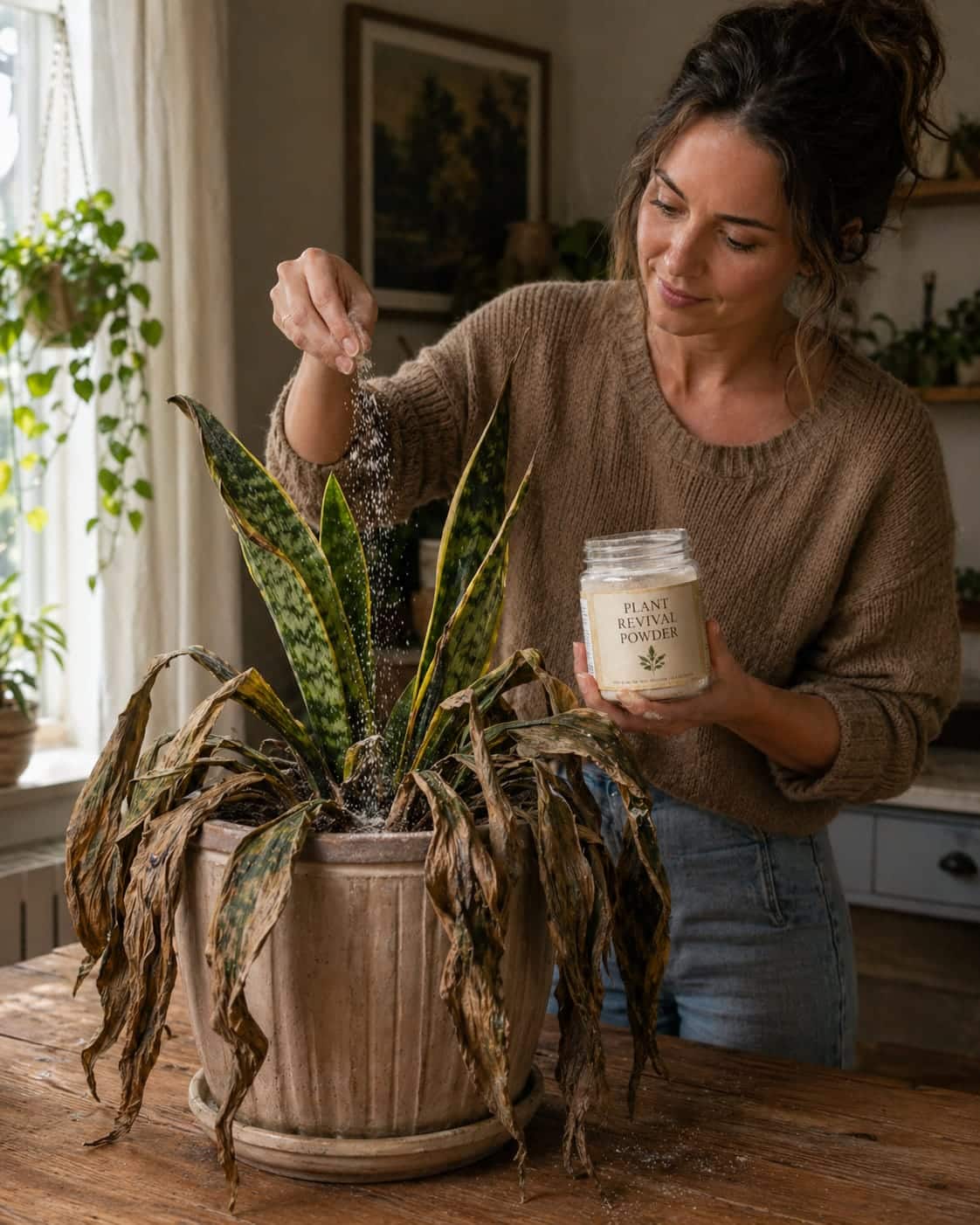
In the image, a tired snake plant is sitting in a large ceramic pot. Some leaves in the center are still standing upright, but many of the outer leaves are brown, crispy, limp, and collapsing over the rim. A woman is sprinkling a white powder labeled “Plant Revival Powder” over the plant, as if giving it one last rescue treatment before giving up.
This kind of image gets attention because every houseplant owner knows the feeling. You look at a plant that used to be beautiful, and suddenly it seems half-dead. The leaves are drying, bending, yellowing, or turning brown. You wonder if it is too late. Then a simple white powder trick appears, promising a possible comeback.
So what is this white plant revival powder trick?
The safest way to understand it is as a dry root-zone reset, not a magic cure. The powder may represent a mix of dry soil amendments such as crushed eggshell powder, cinnamon, diatomaceous earth, powdered biochar, or a gentle dry succulent amendment. Some people also use commercial “plant revival” powders that claim to support roots or reduce surface pests. But for snake plants, the most important rule is this: no powder can revive a plant if the roots are rotten, the soil is soaked, or the pot has poor drainage.
A white powder can help only in specific ways. It can dry and freshen the top layer of soil. It can discourage some surface pests if the right powder is used. It can add a mild mineral touch if using clean eggshell powder. It can make the plant owner stop and inspect the roots, remove dead leaves, and correct the real issue. But it cannot replace proper diagnosis.
For a weak snake plant like the one in the image, the first step is not sprinkling more and more powder. The first step is understanding what happened. A snake plant with crispy brown leaves may be underwatered, sunburned, cold-damaged, or neglected for too long. A snake plant with mushy yellow leaves may be overwatered and rotting. A plant with both crispy and collapsing leaves may have had inconsistent watering, old compacted soil, or damaged roots.
This article explains the white powder revival trick in a practical, safe way. You will learn what the powder can be, how to use it without harming the plant, why snake plants decline, when the plant can recover, when it cannot, and the full rescue routine that actually gives a weak snake plant the best chance to grow again.
What Is the White Plant Revival Powder Trick?
The white plant revival powder trick is a houseplant rescue method where a dry powder is sprinkled lightly over the soil surface of a struggling plant. For snake plants, it is usually used when the plant looks weak, dull, droopy, brown, or close to dying. The powder is meant to “wake up” the plant, refresh the pot, and support recovery.
There are different versions of this trick. Some use finely crushed eggshell powder for a slow calcium boost. Some use food-grade diatomaceous earth to help with surface pests. Some use cinnamon as a dry dusting on cut areas after removing rot. Some use powdered activated charcoal or biochar to freshen the soil. Some use a commercial plant revival powder that may contain minerals, microbes, or dry organic amendments.
The problem is that people often treat the powder as if it is medicine for every plant problem. That is not how snake plant recovery works. A snake plant does not recover because the top of the soil looks white. It recovers when the damaged parts are removed, the roots are checked, the soil dries properly, and the plant is placed in the right light.
The powder can be part of a rescue routine, but it should not be the entire rescue routine.
The safest version is a light sprinkle of dry, plant-safe material on the soil surface after you have removed dead leaves and checked that the plant is not sitting in wet, rotten soil. The powder should never be piled thickly. It should never be mixed with water into a paste. It should never be used to cover up a bad smell. It should never be used instead of repotting when the roots are rotting.
Why This Trick Looks So Convincing
The image is powerful because the contrast is dramatic. The plant looks damaged, the woman looks hopeful, and the powder looks like a special remedy. The label “Plant Revival Powder” makes it feel like a final rescue product. The white sprinkle is visible, so it looks like something active is happening.
Many plant tricks become popular because they are visual. A liquid pour, a powder sprinkle, a banana peel, a spoonful of rice, or a handful of compost all look like action. Plant owners love visible steps because they feel satisfying. When a plant is struggling, doing something feels better than waiting.
But plants recover slowly. The most important work happens below the soil, where roots either heal or continue to rot. A powder on top can look impressive, but the real question is what is happening underneath.
For snake plants, the hidden root zone matters more than the visible powder. If the rhizomes are firm, the plant may recover even after losing many leaves. If the rhizomes are mushy and rotten, no surface powder will save those damaged sections.
The trick is useful only when it encourages a full rescue routine: inspect, trim, dry, repot if needed, and correct the watering habits.
What Could “Plant Revival Powder” Be?
A plant revival powder can mean several different things. Since the image shows a white powder, here are the most common safe interpretations for snake plants.
1. Crushed Eggshell Powder
Clean, dry, finely crushed eggshell powder is sometimes used as a mild calcium source. It breaks down slowly and is not an instant fertilizer. It is safe in small amounts, but it will not cure root rot or repair brown leaves.
2. Food-Grade Diatomaceous Earth
Diatomaceous earth is a fine white powder used as a dry pest barrier. It can help with some crawling pests when the soil surface is dry. It is not plant food. It should not be inhaled, and it should be used carefully.
3. Cinnamon Powder
Cinnamon is not usually white, but some “revival” blends may include it. Cinnamon is often used as a dry dusting on cut plant wounds because it helps dry the surface. It should not be dumped heavily over the whole pot.
4. Powdered Charcoal or Biochar Mix
Some plant rescue powders contain charcoal or biochar to help freshen soil and improve structure. These are usually dark rather than white, but they may appear lighter when mixed with mineral powder.
5. Commercial Root Support Powder
Some products contain minerals, microbes, humic substances, or root-support ingredients. These can be useful if used exactly as directed, but they still cannot fix overwatering without proper soil and drainage.
6. Baking Soda
Baking soda is sometimes used in online plant hacks, but it is not recommended as a regular snake plant revival powder. It contains sodium and can stress roots if overused. It should not be treated as fertilizer.
For a weak snake plant, the best “powder” is usually not the most dramatic one. A light dusting of cinnamon on cut rot, fresh dry succulent mix, or a small amount of diatomaceous earth for pests may be helpful. But the biggest rescue step is often repotting into fresh, dry, gritty soil.
What the White Powder Cannot Do
Before using any revival powder, it is important to be realistic. White powder cannot turn brown leaves green again. Once a snake plant leaf is crispy, rotten, or badly damaged, it will not heal back to perfect condition. The plant can grow new leaves later, but the old damaged leaf will stay damaged.
White powder cannot reverse root rot. If the roots and rhizomes are mushy, they must be removed. Rotten tissue does not become healthy again because powder was sprinkled on top.
White powder cannot fix a pot without drainage. If water collects at the bottom of the pot, the roots will continue to suffer.
White powder cannot replace light. A snake plant in a dark corner may survive, but it may not recover strongly or produce new growth.
White powder cannot fix compacted soil. If the soil is dense, wet, and airless, the plant needs a better mix.
The powder can support recovery only after the real cause is corrected.
Why Snake Plants Start Looking Like This
A snake plant with brown, drooping, collapsing leaves can decline for several reasons. The appearance of the leaves can give clues.
Overwatering
This is one of the most common causes of snake plant decline. If the soil stays wet, roots and rhizomes can rot. Leaves may turn yellow, soft, mushy, or collapse at the base. Sometimes outer leaves fall over while the center still looks alive.
Underwatering
Snake plants tolerate dryness, but they cannot live forever without water. Severe underwatering can cause leaves to wrinkle, curl, brown, and become crispy. The soil may pull away from the pot edges.
Old Compacted Soil
Soil that has been in the pot for years can become dense and uneven. It may stay wet in some areas while becoming bone dry in others. This stresses the roots.
No Drainage
A pot without drainage can trap water at the bottom. Even if the top looks dry, the lower soil may be wet and rotten.
Cold Damage
Snake plants dislike cold drafts and freezing temperatures. Cold damage can create limp, damaged, darkened, or collapsing leaves.
Sunburn
If a snake plant is moved suddenly into harsh direct sun, leaves can develop dry brown patches.
Pest Stress
Pests are less common on snake plants than on some plants, but mealybugs, spider mites, or scale can weaken them.
The powder trick should never be used blindly. First, identify which problem is most likely.
How to Tell If the Snake Plant Can Be Saved
A weak snake plant can often be saved if the rhizomes are still firm. The rhizome is the thick underground structure that stores energy and sends up leaves. Even if many leaves are ruined, a healthy rhizome can produce new growth.
To check, gently remove the plant from the pot or carefully uncover part of the base. Healthy rhizomes are firm and usually pale, tan, orange, or light brown depending on the variety. Healthy roots are firm, not slimy.
Rotten rhizomes are soft, mushy, dark, smelly, or collapsing. If only a small section is rotten, you can cut it away. If the entire root system is rotten, the plant may not survive.
The center leaves in the image still stand upright, which suggests there may be living tissue left. The outer leaves look badly damaged and should probably be removed. If the center rhizome is firm, the plant has a chance.
The goal is not to save every leaf. The goal is to save the living core.
Step One: Remove Dead and Collapsing Leaves
Before adding any powder, clean up the plant. Dead leaves do not recover. They can hold moisture, attract pests, and make it harder to see what is happening at the base.
Use clean scissors or pruning shears. Cut brown, crispy, mushy, or fully collapsed leaves near the soil line. If a leaf is partly damaged but still firm and green, you can leave it or trim the damaged area. But if the leaf is soft at the base, remove it.
Do not yank leaves out roughly. Pulling can damage the rhizome. Cut cleanly instead.
After removing dead leaves, the plant may look smaller, but that is okay. A clean plant has a better chance of recovering than a pot full of decaying leaves.
This is often the real first “revival” step. The powder comes later.
Step Two: Check the Soil Moisture
After removing dead leaves, check the soil. Push your finger deep into the pot if possible. If the soil is wet, heavy, sour-smelling, or compacted, do not sprinkle powder and hope for the best. The plant likely needs to be removed from the pot and inspected.
If the soil is bone dry and pulling away from the edges, the plant may have suffered from underwatering. In that case, powder is not the immediate solution either. The plant may need a careful rehydration, but only after dead material is removed and the roots are checked.
If the soil is dry, airy, and the plant is simply tired, a light powder or top-dressing may be safe.
The moisture level decides the next step. Never apply a powder blindly to wet, smelly soil.
Step Three: Inspect the Roots and Rhizomes
For a snake plant as damaged as the one in the image, root inspection is strongly recommended. Gently slide the plant out of the pot. If the pot is large, loosen the edges first. Be careful because weak leaves may break.
Shake away loose soil. Look at the roots and rhizomes. Keep anything firm. Remove anything mushy, black, slimy, or foul-smelling.
Use clean scissors or a clean knife. Cut rotten parts back to firm tissue. If you make cuts into rhizomes, let them dry and callus for a day before replanting. This helps reduce the chance of rot spreading.
If only the outer sections are dead but the center is firm, you can rebuild the plant from the healthy middle. If several healthy rhizome pieces remain, they can be replanted separately.
This step matters far more than the powder. A clean root system is the foundation of recovery.
Step Four: Use the Right Powder in the Right Place
Once the dead parts are removed and the roots are inspected, you can use powder carefully if it fits the situation.
If You Cut Rotten Rhizomes
Use a small amount of cinnamon powder on the cut surfaces only. Let the pieces dry before repotting. Do not coat the entire root system heavily.
If You Suspect Surface Pests
Use a very light dusting of food-grade diatomaceous earth on dry soil after repotting. Keep it dry for best effect. Avoid inhaling the dust.
If You Want Mild Mineral Support
Use a small pinch of clean eggshell powder mixed into the top layer of soil. Do not use it as an emergency cure.
If You Have a Commercial Plant Revival Powder
Follow the product directions. Use less rather than more. Do not apply repeatedly unless the label says to.
The powder should support the rescue, not bury the plant in dust.
Step Five: Repot Into Fresh Dry Succulent Mix
A struggling snake plant often benefits from fresh soil. Use a gritty, fast-draining mix. Regular potting soil alone can hold too much moisture for snake plants.
A good rescue mix can include:
- 2 parts cactus or succulent mix
- 1 part perlite or pumice
- 1 part coarse sand, lava rock, orchid bark, or small gravel
The mix should feel loose and airy. Water should be able to pass through it easily. It should not feel muddy or sticky.
Choose a pot with drainage holes. This is essential. If the old pot has no drainage, do not reuse it unless you place the snake plant in a draining nursery pot inside it.
Repot only the firm, healthy sections. Do not bury the leaves too deeply. Keep the base stable but not smothered.
Continue to Page 2
Continue to page 2 for more details about this article and the key points many readers miss on the first page.