Snake plants are famous for being tough, sculptural, and almost impossible to ignore. Their upright sword-like leaves bring structure to a room, their green patterns look bold and clean, and their yellow edges add a bright decorative line that works beautifully with terracotta, ceramic, wood, and modern interiors. Most people grow snake plants for their foliage, but every once in a while, a snake plant surprises its owner with tall flower stalks covered in small fragrant white blossoms.
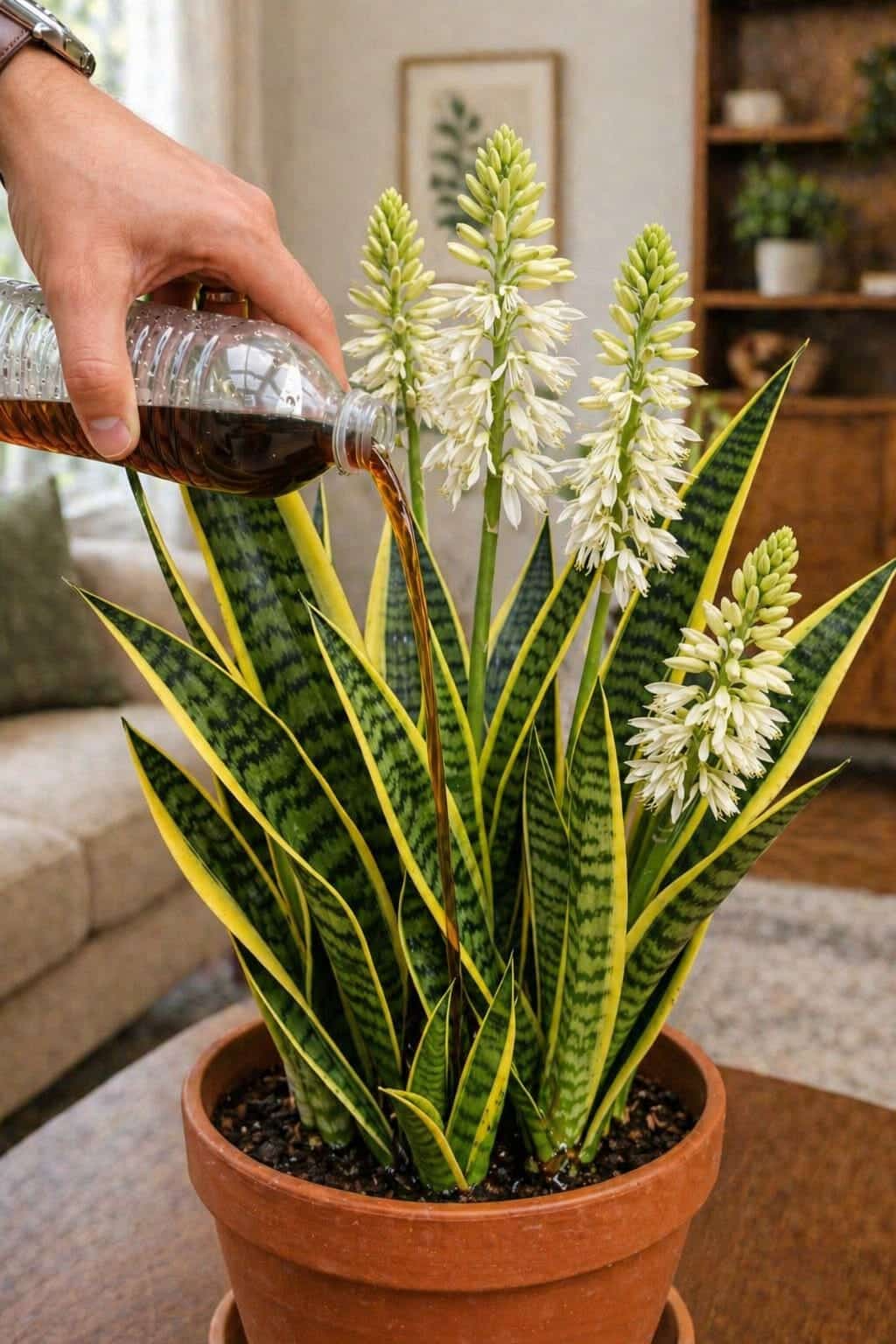
The image shows a beautiful variegated snake plant in a terracotta pot. The leaves are tall, firm, and edged in yellow. Several white flower spikes rise from the center of the plant, creating a rare and impressive display. A hand is pouring a dark brown liquid from a bottle into the soil. The liquid looks like a homemade tea, compost extract, coffee-colored tonic, or natural root booster. The scene suggests a simple trick: pour this brown liquid into the soil, and the snake plant rewards you with stronger growth and flowers.
This method is often called the brown pour snake plant trick, the compost tea bloom method, the banana peel tea snake plant booster, the coffee-colored root tonic, or the homemade flowering rinse. It looks powerful because the liquid is dark, rich, and earthy, almost like the plant is receiving a concentrated natural fertilizer.
The safest version of this trick is not a random strong liquid. It is a very diluted homemade compost tea or banana peel water used rarely during the active growing season. Snake plants do not like heavy feeding, wet soil, or constant tonics. They are drought-tolerant plants with thick leaves and underground rhizomes, so too much liquid can cause more harm than good. The trick should be used as a gentle occasional boost, not as a weekly watering habit.
The most important thing to understand is that snake plant flowers are rare indoors. A brown tonic cannot force flowers overnight. Snake plants usually bloom when they are mature, slightly root-bound, receiving enough light, and living under stable conditions. A homemade tonic may support the plant if used correctly, but the real bloom triggers are maturity, light, dry-down periods, and healthy roots.
In this article, you will learn what the brown pour snake plant trick is, what the liquid should be, how to make the safer version, how to apply it without causing rot, why snake plants sometimes bloom indoors, and how to create the conditions that make flowering more likely.
What Is the Brown Pour Snake Plant Trick?
The brown pour snake plant trick is a homemade plant-care method where a dark diluted liquid is poured into the soil around a snake plant. The liquid is usually described as a natural tonic made from compost, banana peels, weak worm castings tea, or another mild organic ingredient. Its purpose is to refresh the soil and give the plant a light nutrient boost during active growth.
In the image, the liquid looks strong and concentrated, but for real indoor plant care, it should be much weaker. Snake plants are not heavy feeders. A strong organic liquid can sit in the pot, smell sour, attract fungus gnats, and keep the soil wet too long. The safest version should look like weak tea, not thick syrup or muddy water.
The trick works best when the plant is already healthy. It is not a rescue treatment for a rotting snake plant. If the leaves are mushy, yellowing at the base, or collapsing, the problem is usually too much water or poor drainage. Adding a brown tonic to wet soil will make that problem worse.
Used correctly, the brown pour is simply an occasional supportive watering. It can add a gentle nutrient touch, but it should never replace the basics: bright indirect light, a draining pot, gritty soil, and careful watering.
What Is the Brown Liquid?
The safest brown liquid for this trick is a weak banana peel tea or a very diluted compost tea. Both create a brownish liquid that looks natural and earthy. However, they must be prepared carefully and diluted well before being used on a potted snake plant.
A weak banana peel tea is made by soaking small pieces of banana peel in water for a short time, then diluting the liquid. It may contain small amounts of potassium and other minerals, but it should not be treated as a complete fertilizer.
A weak compost tea is made by steeping a small amount of finished compost or worm castings in water, then straining and diluting the liquid. It can add a mild soil refresh, but if made too strong or left too long, it can smell bad and attract pests.
The liquid should never be thick, sticky, fermented, sweet, oily, salty, or sour. It should be fresh and mild. If it smells unpleasant, do not use it indoors.
Why Snake Plant Flowers Are So Special
Many people do not even know snake plants can flower. They are mostly known for leaves, not blooms. But mature snake plants can produce tall flower stalks with clusters of small white, cream, or pale green blossoms. The flowers may have a sweet fragrance, especially in the evening.
Snake plant flowering often happens when the plant is mature and slightly stressed in a controlled way. This does not mean the plant should be neglected or harmed. It means the plant may bloom when it is root-bound, receiving enough light, watered carefully, and allowed to dry between waterings.
Indoor blooming is not guaranteed. Some snake plants bloom often, while others never bloom indoors. The plant in the image is shown with multiple flower spikes, which is a dramatic and rare display.
The brown pour trick is attractive because it suggests that flowering can be encouraged naturally. But the liquid alone is not the secret. The plant must already be strong enough to bloom.
Can a Brown Tonic Make a Snake Plant Bloom?
A brown tonic cannot force a snake plant to bloom immediately. Flowers come from a combination of maturity, light, root condition, and seasonal rhythm. A plant that is too young, too weak, too wet, or sitting in very low light is unlikely to flower no matter what liquid is poured into the soil.
However, a mild tonic can support an already healthy plant by giving it a light nutrient refresh during the growing season. If the plant has strong roots, firm leaves, and good light, occasional feeding may help it maintain enough energy to grow well. Strong growth can make flowering more likely over time.
Think of the brown pour as a supporting actor, not the star of the show. The star is the plant’s overall care routine.
The Safe Banana Peel Tea Recipe
Banana peel tea is one of the most common homemade brown plant tonics. It is popular because banana peels are easy to find and the liquid develops a soft brown color. For snake plants, the recipe must stay weak.
Ingredients
- One small piece of banana peel, about 2 inches long
- 2 cups clean water
- A jar or bowl
- A strainer
- Extra water for dilution
Instructions
- Cut a small piece of banana peel into tiny pieces.
- Place the peel pieces in a jar.
- Add 2 cups of clean water.
- Let it soak for 12 to 24 hours only.
- Strain out all peel pieces.
- Dilute the liquid with an equal amount of fresh water.
- Use it immediately.
The final liquid should look like weak brown tea. It should not smell fermented. Do not leave banana peel water sitting for several days indoors. Old banana water can sour quickly and attract gnats.
The Safe Worm Casting Tea Recipe
Worm castings are a gentle organic amendment many plant owners use. A weak worm casting tea can create a light brown liquid that feels similar to the one in the image.
Ingredients
- 1 teaspoon worm castings
- 2 cups clean water
- A small jar
- A strainer or cloth
- Extra water for dilution
Instructions
- Add 1 teaspoon worm castings to 2 cups of water.
- Stir gently.
- Let it sit for 1 to 2 hours.
- Strain the liquid carefully.
- Dilute with another 2 cups of fresh water.
- Use as a very light watering.
This version is often cleaner than banana peel tea because it is less sugary. Still, it should be used sparingly and only on dry soil.
How to Apply the Brown Pour Safely
The most important rule is to water only when the soil is dry. Snake plants should not sit in constantly moist soil. Their roots and rhizomes can rot if they stay wet for too long.
Step-by-Step Application
- Check the soil first. It should be dry at least several inches down.
- Make sure the pot has drainage holes.
- Prepare a weak, fresh brown tonic.
- Pour slowly around the soil surface, not into the leaf crown.
- Use only enough to lightly moisten the root zone.
- Let the pot drain fully.
- Empty the saucer after watering.
- Do not water again until the soil dries properly.
Do not pour the liquid directly into the center where the leaves meet. Water sitting in tight leaf bases can cause rot. Aim for the soil around the plant, especially near the outer area of the pot.
How Often Should You Use the Brown Pour?
Use the brown pour rarely. Once every six to eight weeks during spring or summer is enough. Snake plants are slow-growing and do not need frequent feeding.
Do not use this trick every week. Do not use it every time you water. Do not use it during winter if the plant is not actively growing. Too much organic liquid can keep the soil damp and invite pests.
The safest routine is mostly plain water, occasional diluted fertilizer during active growth, and the brown pour only as a rare extra.
When Is the Best Time to Use It?
The best time to use the brown pour is during active growth, usually spring through early fall. This is when the plant is most likely to use nutrients. If your snake plant is producing new leaves or pups, it is actively growing.
Avoid using the tonic during cold months, low-light periods, or when the plant is resting. In winter, snake plants often need much less water. Adding organic liquid at that time can create damp soil that lingers too long.
If your snake plant is blooming, you can water normally when the soil is dry, but avoid dramatic changes. A flowering snake plant should not be shocked with strong fertilizer or heavy homemade liquid.
Why the Pot in the Image Matters
The snake plant in the image is growing in a terracotta pot. Terracotta is a good choice for snake plants because it breathes. Moisture can evaporate through the clay, helping the soil dry faster than it would in plastic or glazed ceramic.
This matters because snake plants hate soggy conditions. A breathable pot lowers the risk of rot, especially if the soil mix is gritty and the pot has drainage holes.
If you want to try any homemade watering trick, a draining terracotta pot is safer than a closed decorative pot. Still, even terracotta cannot protect a plant from constant overwatering.
Best Soil for the Brown Pour Trick
The brown pour trick should only be used in fast-draining soil. If the soil is dense, muddy, or compacted, any liquid will stay too long around the roots.
A good snake plant mix can include:
- 2 parts cactus or succulent mix
- 1 part perlite or pumice
- 1 part coarse sand, lava rock, fine bark, or small gravel
This type of mix lets water move through quickly while still giving the roots enough contact with moisture. It also reduces the risk of sour organic buildup from homemade tonics.
If your snake plant is in regular potting soil that stays wet for many days, repot it before trying any brown liquid method.
Why Drainage Is Non-Negotiable
A snake plant pot must have drainage holes. Without drainage, water collects at the bottom of the pot. The top may look dry, but the lower roots may be sitting in wet soil.
If you pour a brown organic tonic into a pot with no drainage, the liquid can stagnate. That creates a perfect environment for rot, gnats, and bad smells.
If your decorative pot has no holes, use it as a cover pot only. Keep the snake plant in a nursery pot with drainage, water it separately, let it drain, and then return it to the decorative container.
How to Water Snake Plants the Right Way
Snake plants should be watered deeply but infrequently. This means you wait until the soil is dry, then water enough that the root zone receives moisture. After that, you allow the soil to dry again.
A common mistake is giving tiny sips every few days. This keeps the surface damp but may not water the deeper roots properly. Another mistake is watering heavily too often, which keeps the whole pot wet and causes rot.
The best method is to check the soil first. If it is dry, water. If it is damp, wait.
During bright warm months, watering may be needed every two to three weeks. During winter, it may be once a month or less. Always let the soil guide you.
What Makes Snake Plants Bloom Indoors?
Snake plant flowering is not completely predictable, but several conditions seem to help.
- The plant is mature.
- The plant is slightly root-bound.
- The plant receives bright indirect light.
- The soil dries between waterings.
- The roots are healthy.
- The plant is not overfed.
- The plant experiences stable care over time.
Many people notice flowers after keeping a snake plant in the same pot for several years. The plant becomes established, fills the pot, and eventually sends up a flower stalk.
This is why patience matters. A newly purchased small snake plant is unlikely to bloom right away. A mature plant that has been cared for simply and steadily has a better chance.
Does Root-Bound Stress Help Flowering?
Snake plants sometimes bloom when they are slightly root-bound. This means the roots and rhizomes have filled much of the pot. The plant may respond by sending up a flower spike.
However, there is a difference between slightly root-bound and severely trapped. A slightly snug pot can be fine. A pot packed so tightly that water cannot move through or roots are breaking the container may need repotting.
Do not force stress too aggressively. The goal is a mature, stable plant, not a suffering plant.
Should You Repot a Blooming Snake Plant?
It is usually better not to repot a snake plant while it is blooming unless there is a serious problem such as rot. Flowering is a special event, and repotting can disturb the roots.
Let the plant finish flowering first. After the flower stalk fades, you can decide whether repotting is needed. If the pot is still draining well and the plant looks healthy, you may leave it alone.
Snake plants often prefer being left undisturbed.
What to Do With Snake Plant Flowers After They Fade
After the flowers fade, the stalk will eventually dry. You can cut it near the base with clean scissors or pruners. Do not pull it forcefully, because that may damage surrounding leaves or rhizomes.
The plant does not need special treatment after flowering. Continue normal care. Water only when dry, keep it in bright indirect light, and avoid overfeeding.
If the plant used energy to flower, it may rest afterward before producing new leaves.
What Does a Snake Plant Flower Smell Like?
Snake plant flowers can have a sweet fragrance. Some people describe the scent as similar to jasmine, vanilla, or a soft floral perfume. The fragrance may be stronger in the evening.
The flowers may also produce small drops of nectar. This is normal. If nectar drips onto leaves or furniture, wipe it gently with a damp cloth.
Do not spray the flowers with anything. Let them open naturally.
Can the Brown Pour Make Leaves Greener?
A mild brown tonic may support greener growth if the plant was mildly nutrient-depleted, but it will not instantly change leaf color. Snake plant color depends on variety, light, age, and health.
Variegated snake plants need enough light to maintain strong yellow edges and patterned leaves. In very low light, new growth may become weaker or less vibrant.
If leaves are pale because of low light, a tonic will not solve the problem. Move the plant to brighter indirect light gradually.
Can the Brown Pour Fix Yellow Leaves?
No homemade tonic can turn damaged yellow leaves green again. Once a snake plant leaf has yellowed because of rot, age, cold, or stress, it usually will not recover its original color.
If one old outer leaf yellows slowly, that may be normal aging. If several leaves yellow at the base or become soft, check for overwatering or root rot.
Do not add a brown tonic to a yellowing snake plant until you know the cause. If the cause is wet soil, more liquid is the wrong solution.
Can the Brown Pour Help Snake Plant Pups?
Healthy snake plants produce pups from underground rhizomes. A mild feeding routine during active growth can support overall plant strength, which may help pups develop. But the brown pour does not directly create pups.
To encourage pups, give bright indirect light, use a slightly snug pot, avoid overwatering, and let the plant grow undisturbed. Pups appear when the plant is mature and comfortable.
A healthy root system is the real pup producer.
Why Strong Brown Liquids Can Be Dangerous
Strong homemade liquids can be risky indoors. Banana peel water left too long can ferment. Compost tea made too strong can smell bad. Coffee can be too acidic or leave residue. Molasses and sugar-based liquids can attract pests. Any thick organic liquid can make the pot unpleasant.
Snake plants do not need rich soil or heavy organic feeding. They prefer lean, airy, fast-draining conditions.
If the brown liquid looks very dark and smells strong, dilute it heavily or do not use it.
Should You Use Coffee on Snake Plants?
Coffee is sometimes promoted as a brown plant tonic, but it is not the best choice for snake plants. Coffee can alter soil conditions, leave residue, and encourage fungus gnats if used in pots. Used coffee grounds can compact and hold moisture, which is bad for snake plants.
If you want a brown liquid, weak worm casting tea or very diluted banana peel water is safer than coffee. Even then, use it rarely.
Plain water is still the best watering choice most of the time.
Can You Use Tea on Snake Plants?
Weak unsweetened tea is sometimes used by plant owners, but it is not necessary for snake plants. Strong tea, sweet tea, flavored tea, or tea with milk should never be used. These can leave residue or attract pests.
If your snake plant is healthy, do not complicate the routine. Simple care works best.
Continue to Page 2
Continue to page 2 for more details about this article and the key points many readers miss on the first page.