Snake plants are famous for being tough, architectural, and almost impossible to ignore. Their upright sword-shaped leaves can survive low light, missed watering, dry indoor air, and the kind of neglect that would finish off many other houseplants. That is why they are so often recommended for beginners, busy homeowners, offices, apartments, and anyone who wants a dramatic plant without a demanding care routine.
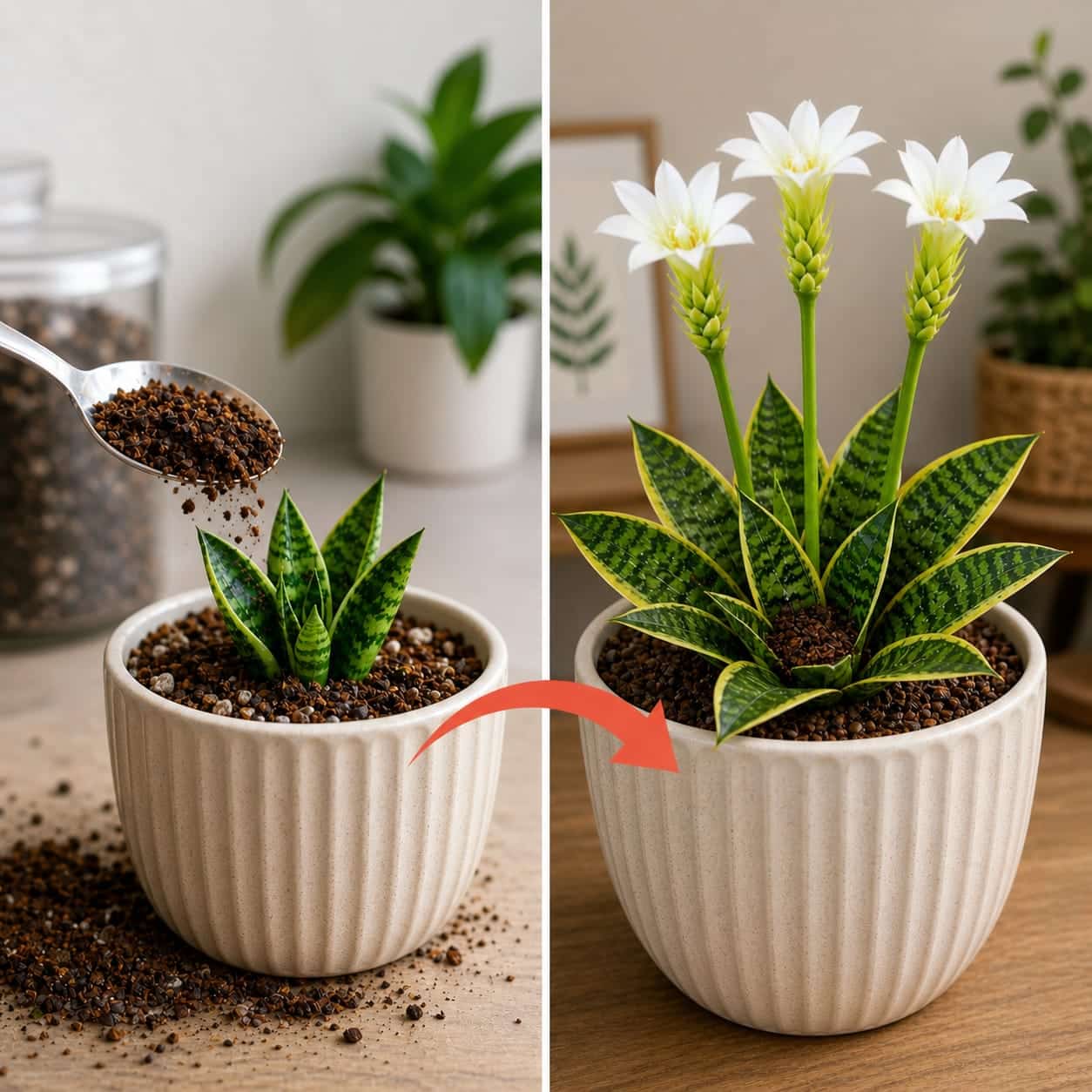
The image shows a small variegated snake plant in a cream-colored pot. On the left side, a spoonful of dark brown granules is being sprinkled over the soil surface. On the right side, the plant appears fuller, healthier, and surprisingly covered with tall white flowers. A red arrow suggests a transformation from a small plant to a blooming one after using the granules.
This kind of image is designed to make plant lovers stop scrolling. Snake plants are already popular, and the idea that a simple spoonful of brown granules could trigger flowers feels exciting. After all, many people grow snake plants for years and never see them bloom. So when an image suggests that one kitchen or soil trick can unlock flowers, it naturally grabs attention.
But snake plant care is more subtle than that. Snake plants can flower indoors, but it is uncommon. They usually bloom only when they are mature, slightly stressed in a controlled way, root-bound, receiving enough light, and growing in the right conditions. No single spoonful of brown granules can guarantee flowers.
The brown granules in the image could represent several different things: slow-release fertilizer, orchid bark, coco chips, coffee grounds, composted material, leca, akadama, or decorative top dressing. Some of these can be helpful when used correctly. Others can cause mold, pests, root rot, salt buildup, or compacted soil.
The safest version of this trick is not a miracle bloom hack. It is a careful top-dressing or mild feeding method using plant-safe material in a very small amount. The dangerous version is dumping unknown brown kitchen scraps or concentrated fertilizer on a snake plant and expecting flowers.
In this article, you will learn what the brown granule snake plant trick might be, what materials are safe, which ones to avoid, whether snake plants can really flower indoors, and how to care for your plant if you want stronger leaves, pups, and the best possible chance of blooms.
What Is the Brown Granule Snake Plant Trick?
The brown granule snake plant trick is a plant-care idea where small dark granules are sprinkled over the top of a snake plant’s potting mix. The visual message is simple: add the granules, and the plant grows stronger or blooms.
In the image, the granules are applied with a spoon, which makes the method look easy and controlled. The plant on the right appears much larger and has white star-shaped flowers growing from tall green stalks. This suggests that the granules may have encouraged blooming.
However, real snake plant blooming is not usually caused by a single top-dressing. It happens because of a combination of maturity, light, pot conditions, watering rhythm, and seasonal growth. A plant-safe amendment can support health, but it cannot force a young snake plant to flower overnight.
The trick may still be useful if the granules are the right material. The key is knowing what they are before adding them.
What Could the Brown Granules Be?
The granules in the image could represent several different materials. Some are suitable for snake plants, and some are not.
Possible safe options include:
- Slow-release houseplant fertilizer pellets
- Composted bark fines
- Orchid bark pieces
- Coco husk chips
- LECA or clay granules
- Pumice or lava rock
- Akadama or bonsai soil granules
- Worm castings used lightly
- Gritty succulent soil top dressing
Possible risky options include:
- Fresh coffee grounds
- Tea leaves
- Uncomposted kitchen scraps
- Wet compost
- Mulch from outdoors
- Unknown fertilizer granules
- Animal manure
- Soil from the garden
- Decorative material that traps moisture
For snake plants, the best brown granules are dry, airy, plant-safe, and not too rich. Snake plants are succulents. They prefer drainage and root oxygen more than rich, moist soil.
Can Brown Granules Make a Snake Plant Flower?
Not by themselves. Snake plants can produce flowers, but flowering is not common indoors. A mature snake plant may send up a tall stalk with fragrant white or pale green flowers, often when it is slightly root-bound and receiving brighter light than usual.
Fertilizer or a mild top dressing can support growth, but it does not act like a flower switch. If the plant is too young, too shaded, overwatered, or growing in a pot that is much too large, brown granules will not make it bloom.
The image shows a dramatic before-and-after effect, but real results are slower. A snake plant may take years to reach flowering size, and even then, blooming is never guaranteed.
Why Snake Plants Bloom So Rarely Indoors
Snake plants are usually grown for their leaves, not their flowers. Indoors, they often receive lower light than they would outdoors in warm climates. They also grow slowly, especially in dim rooms.
Flowering often occurs when a mature plant experiences a combination of:
- Bright indirect light
- A slightly snug pot
- Good drainage
- Long-term healthy roots
- Periods of drying between waterings
- Warm temperatures
- Seasonal growth changes
- Mild controlled stress
This does not mean you should neglect or abuse the plant. Severe drought, root rot, or harsh sun can damage it. But snake plants sometimes bloom when they are mature, comfortable, and slightly pot-bound rather than constantly pampered.
The Most Likely Safe Interpretation: Gritty Top Dressing
The safest interpretation of the brown granules is a gritty top dressing made of bark, pumice, lava rock, clay granules, or succulent soil particles. This kind of material can help keep the soil surface neat and slightly more open.
A dry, gritty top dressing can reduce soil splash, improve appearance, and discourage fungus gnats by helping the surface dry faster. It does not feed heavily, but it supports the kind of dry, airy environment snake plants prefer.
If you want to copy the look safely, choose cactus soil granules, pumice, lava rock, bonsai soil, orchid bark, or small clay pebbles. Keep the layer thin. Do not bury the leaf bases.
Could It Be Slow-Release Fertilizer?
The brown granules could also be slow-release fertilizer. This can be useful if used correctly, but snake plants do not need much fertilizer. They are slow growers and can be damaged by overfeeding.
If you use slow-release fertilizer, choose one labeled for houseplants, succulents, or cacti. Use less than the package recommends. Sprinkle it lightly around the soil surface, away from the plant’s crown and leaf bases.
Do not add more fertilizer just because the plant has not bloomed. Too much fertilizer can cause weak growth, brown tips, root burn, or salt buildup.
Could It Be Coffee Grounds?
Many plant hacks use coffee grounds, and the granules in the image may remind some people of them. However, fresh coffee grounds are not ideal for snake plants in indoor pots.
Coffee grounds can hold moisture, compact the soil surface, attract fungus gnats, and grow mold when used indoors. Snake plants dislike constantly damp conditions, so coffee grounds can create the opposite of what they need.
If you want to use coffee grounds for plants, compost them first outdoors. Do not sprinkle fresh wet coffee grounds over a snake plant pot. A tiny amount of fully composted material may be fine in a larger soil blend, but coffee grounds are not a bloom trick.
Why Fresh Coffee Grounds Are Risky for Snake Plants
Snake plants store water in their thick leaves and rhizomes. They are adapted to dry periods. Their roots can rot if the potting mix stays wet too long.
Fresh coffee grounds can create a dense layer on top of the soil. This layer may slow evaporation, hold moisture, and encourage mold. It can also make it harder to judge when the soil is dry.
For a moisture-sensitive plant like snake plant, that is risky. If you already added coffee grounds and notice mold, smell, gnats, or slow drying, remove them immediately.
Could It Be Worm Castings?
Worm castings are a gentle organic amendment that can support soil health. They are less harsh than many fertilizers. However, they should still be used sparingly for snake plants.
A very thin sprinkle of worm castings on the soil surface can be acceptable during active growth. But a thick layer can hold moisture and make the potting mix too rich. Snake plants prefer lean soil.
If using worm castings, apply a light dusting around the outer edge of the pot. Do not pack it around the leaf bases. Water normally only when the soil is dry.
Could It Be Bark Chips?
Bark chips or orchid bark can be useful for snake plants when mixed into soil. Bark improves structure and helps keep the mix airy. A bark top dressing can also look attractive.
However, bark alone on top will not transform a snake plant. Its biggest benefit comes when it is part of a well-draining soil mix. If your snake plant is sitting in dense soil, a few bark pieces on top will not fix root-zone problems.
For best results, use bark in the potting mix along with perlite, pumice, or coarse sand.
The Best Soil Mix for Snake Plants
Snake plants need a fast-draining mix. Regular potting soil can hold too much water if used alone. A better mix is light, gritty, and airy.
A simple snake plant mix can include:
- 2 parts cactus or succulent mix
- 1 part perlite or pumice
- 1 part orchid bark or coarse coco chips
You can also use a commercial cactus mix and add extra pumice or perlite. The goal is to let water drain quickly and air reach the roots.
If your soil stays wet for more than a week, it is probably too dense for a snake plant.
Why Drainage Matters More Than Any Granule Trick
Before adding any top dressing or fertilizer, check the pot. A snake plant must have drainage holes. A decorative pot without drainage can trap water at the bottom, leading to root rot.
The cream-colored pot in the image looks attractive, but the most important question is whether it drains. If it does not, keep the snake plant in a nursery pot inside the decorative pot. Remove it to water, let it drain fully, then place it back.
No brown granule trick will save a snake plant that is sitting in trapped water.
How to Water Snake Plants Correctly
Snake plants should dry out between waterings. Water thoroughly, then wait until the potting mix is dry before watering again. In bright warm conditions, this may be every two to three weeks. In lower light or winter, it may be much less often.
Do not water on a fixed schedule without checking the soil. Push a finger or moisture meter deep into the pot. The top may feel dry while the lower soil remains wet.
Overwatering is one of the fastest ways to damage a snake plant. Underwatering is usually easier to correct than root rot.
Can Top Dressing Cause Root Rot?
Yes, if the top dressing traps moisture or hides wet soil. A thick layer of organic granules, compost, coffee grounds, or mulch can keep the surface damp and reduce airflow.
A thin layer of dry mineral top dressing is usually safer. Pumice, lava rock, or coarse grit can allow water to pass through while keeping the surface open.
Whatever you use, keep the layer shallow and avoid piling material against the leaf bases.
Why You Should Keep Granules Away From the Crown
Snake plants grow from rhizomes and leaf bases near the soil surface. The area where leaves emerge should not be buried deeply or packed with damp material. If granules are piled against the base, they can trap moisture and encourage rot.
When top dressing, leave a little breathing space around each leaf base. The soil should support the plant without smothering it.
This is especially important for small plants and newly divided pups.
Can Fertilizer Help Snake Plants Grow More Pups?
Light fertilizer can support pup production when the plant is already healthy. Snake plants produce pups from underground rhizomes. Bright indirect light, a suitable pot, and healthy roots are usually more important than feeding.
If the plant has enough light and is slightly snug in its pot, it may produce more offsets over time. A weak fertilizer during spring and summer can help, but too much fertilizer may lead to soft growth or root stress.
Use fertilizer as a gentle support, not a push.
How Often Should You Fertilize a Snake Plant?
Snake plants need very little fertilizer. During spring and summer, feed once every two to three months with a diluted cactus or houseplant fertilizer. Use half strength or weaker.
In fall and winter, skip fertilizer unless the plant is actively growing under strong light.
Overfeeding does not make snake plants bloom faster. It often creates problems.
Signs a Snake Plant Is Overfed
Too much fertilizer can stress a snake plant. Watch for:
- Brown leaf tips
- Soft or floppy leaves
- Yellowing
- White crust on soil
- Burned roots
- Slow decline after feeding
- Salt buildup around the pot edge
If you see these signs, stop fertilizing. Flush the soil with plain water if the pot drains well, then let it dry completely before watering again.
Signs the Brown Granule Trick Is Unsafe
Remove the granules if you notice any of the following:
- Mold on the soil surface
- Fungus gnats
- Sour or musty smell
- Soil staying wet too long
- Granules clumping into a paste
- Leaf bases becoming soft
- Yellowing after application
- Brown tips shortly after feeding
- White crust or residue
These signs mean the material is not working well in the pot. Remove it and return to simple snake plant care.
How to Safely Apply Brown Granules
If you want to use a brown top dressing or mild plant-safe amendment, follow this safer method:
- Identify the material before using it.
- Use only plant-safe granules.
- Make sure the pot has drainage.
- Apply a thin layer only.
- Keep granules away from the leaf bases.
- Do not cover the crown.
- Do not water unless the soil is dry.
- Watch for mold, gnats, or slow drying.
- Remove the granules if problems appear.
- Do not combine multiple fertilizers at once.
This approach keeps the trick decorative and controlled rather than risky.
Continue to Page 2
Continue to page 2 for more details about this article and the key points many readers miss on the first page.