Spider plants are some of the most cheerful houseplants you can grow indoors. Their long arching leaves, bright green and white stripes, and dangling baby plantlets make them look lively without needing complicated care. A healthy spider plant can turn a plain windowsill, shelf, or tabletop into a fresh indoor garden almost instantly.
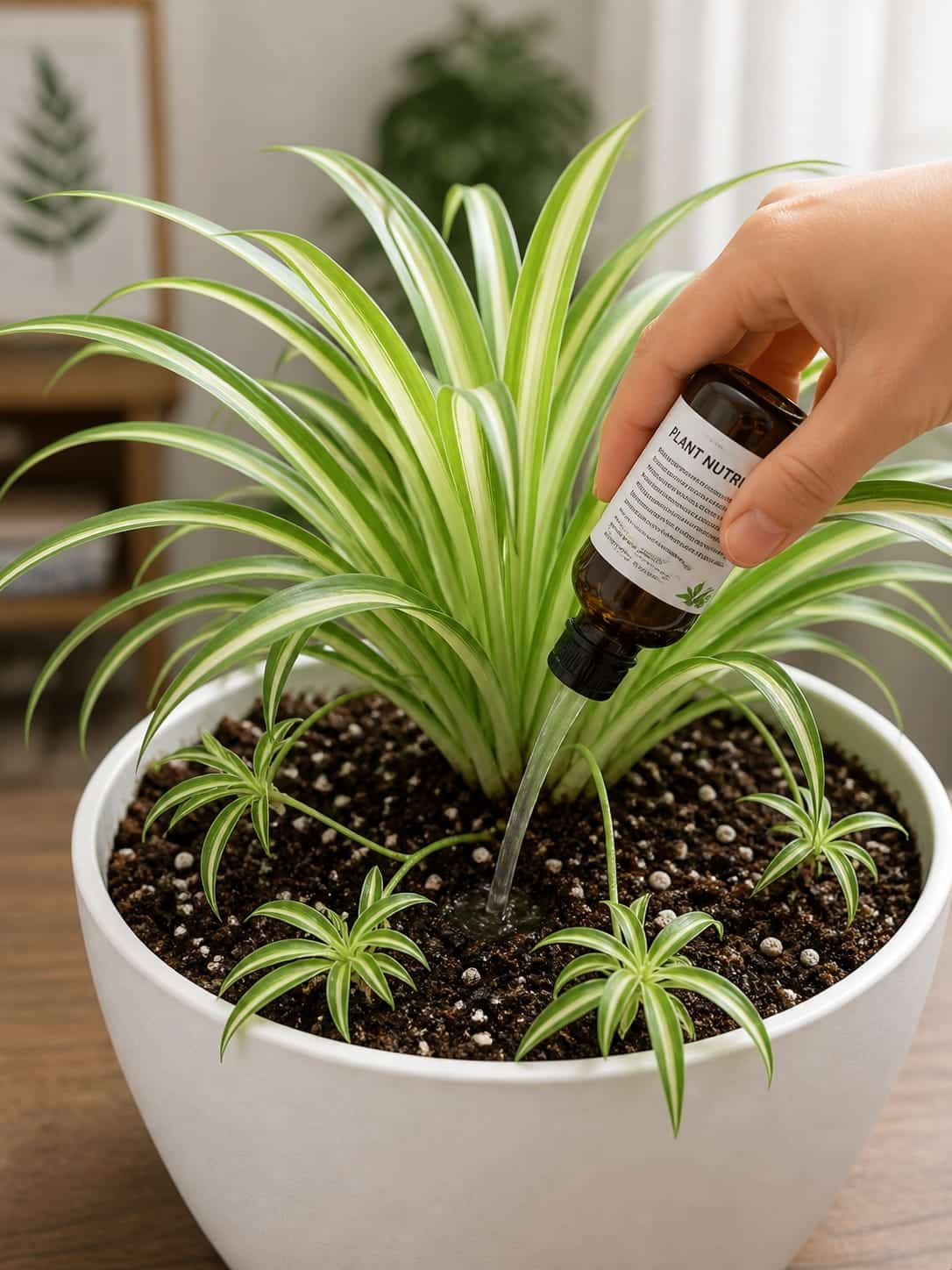
The image shows a full variegated spider plant growing in a white pot. Several baby spider plants are spreading across the soil surface, and a hand is applying liquid plant nutrients from a small dropper bottle directly into the potting mix. The label on the bottle suggests a concentrated plant nutrient or liquid fertilizer. The scene gives the impression of a simple trick: add a few drops of plant food near the roots, and the spider plant may grow fuller, greener, and produce more babies.
This kind of method is often called the plant nutrient dropper trick, the liquid fertilizer boost, the spider plant baby booster, or the root-feeding method. It looks clean and controlled because the fertilizer is added with a dropper instead of poured from a large bottle. That can be helpful, but only if the nutrient solution is diluted correctly.
The most important thing to understand is this: concentrated fertilizer should never be squeezed directly into a spider plant pot unless the product label specifically says it is ready to use. Spider plants are tough, but they can still suffer from fertilizer burn, brown tips, salt buildup, and root damage if they receive too much plant food.
The safe version of this trick is not about using more fertilizer. It is about using less, but using it carefully. A diluted liquid fertilizer applied during active growth can support stronger leaves and more plantlets. A strong dose applied too often can do the opposite.
What Is the Plant Nutrient Dropper Trick?
The plant nutrient dropper trick is a feeding method where liquid fertilizer is applied in small measured amounts, often with a dropper bottle. Instead of guessing with a capful or pouring too much, the dropper gives better control.
For spider plants, this can be useful because they do not need heavy feeding. They grow best with light, steady nutrition during spring and summer. A dropper can help you apply a weak solution around the soil without splashing the leaves or soaking the crown.
However, the dropper method is safe only when the fertilizer is properly diluted. A few drops of concentrated fertilizer can still be too strong if placed directly on roots. Always read the label first.
Why Spider Plants Benefit From Light Feeding
Spider plants can survive in fairly average indoor conditions, but they grow fuller and produce more plantlets when they have enough light, moisture, and nutrients. Fertilizer supports new leaf growth, root activity, and the long stems that eventually carry baby spider plants.
When a spider plant is growing actively, it uses nutrients from the potting mix. Over time, regular watering can wash nutrients out of the soil. Light feeding replaces some of what is lost.
But spider plants are not heavy feeders. Too much fertilizer often causes brown tips, weak growth, or salt crust on the soil. The goal is gentle support, not aggressive feeding.
What Kind of Fertilizer Is Best for Spider Plants?
A balanced liquid houseplant fertilizer is usually best. Look for a formula made for indoor foliage plants. A balanced fertilizer has similar numbers on the label, such as 10-10-10, 5-5-5, or 3-1-2. Any of these can work if diluted properly.
You can also use an organic liquid fertilizer, but it should be mild and well diluted. Strong-smelling organic feeds may attract gnats if the soil stays wet.
For spider plants, avoid strong bloom boosters, heavy outdoor garden fertilizers, lawn fertilizers, and unknown homemade mixtures. These can be too intense for a potted indoor plant.
The Safest Way to Use a Dropper Bottle
The safest method is to dilute the fertilizer in water first, then apply the diluted solution to already slightly moist soil.
- Read the fertilizer label.
- Mix the fertilizer at half or quarter strength.
- Water the plant lightly first if the soil is bone dry.
- Apply the diluted nutrient solution evenly around the soil.
- Keep it away from the central crown.
- Do not let fertilizer collect in one wet spot.
- Let excess water drain from the pot.
- Empty the saucer afterward.
If the bottle is already a ready-to-use plant nutrient, you can apply it according to the label. If it is concentrated, do not apply it directly from the bottle into the pot.
Should You Fertilize Dry Soil?
It is better not to fertilize completely dry soil. When soil is very dry, fertilizer salts can hit roots too strongly. This can cause root burn.
If the potting mix is dry, water lightly with plain water first. Wait a little while, then apply the diluted fertilizer. The soil should be slightly moist, not soaking wet.
This small step makes feeding much safer for spider plant roots.
How Often Should You Feed a Spider Plant?
During spring and summer, feed a healthy spider plant about once every four to six weeks with diluted fertilizer. If the plant is growing very actively in bright indirect light, it may enjoy light feeding once a month.
During fall and winter, reduce feeding or stop completely. Spider plants grow more slowly in lower light and cooler conditions, so they do not use as many nutrients.
Overfeeding in winter is a common reason for brown leaf tips and salt buildup.
Can Fertilizer Help Spider Plants Produce More Babies?
Fertilizer can support baby production, but it is not the only factor. Spider plants produce plantlets when they are mature, healthy, and receiving enough light. A slightly snug pot can also encourage runners and babies.
If your spider plant is not producing babies, check these conditions first:
- Is the plant mature enough?
- Is it getting bright indirect light?
- Is the pot too large?
- Is the plant being overwatered?
- Is it receiving light feeding during active growth?
- Is it stressed from low humidity, heat, or poor soil?
Fertilizer helps only when the rest of the care routine is already suitable.
Why the Plant in the Image Looks So Healthy
The spider plant in the image looks full, bright, and actively growing. It has long variegated leaves and several baby plants near the soil. This kind of growth usually comes from good light, steady watering, and a healthy root system.
The plant does not look like it needs emergency feeding. It looks like it may benefit from gentle maintenance feeding. That distinction matters. Healthy plants can use light nutrients well. Stressed plants should not be overloaded.
If your spider plant looks this good, use fertilizer carefully. Do not turn a healthy plant into a stressed one by adding too much.
Best Light for Spider Plants
Spider plants grow best in bright indirect light. They can tolerate lower light, but their growth may slow, and variegated leaves may lose some brightness. In stronger indirect light, they usually grow fuller and produce more offsets.
An east-facing window is often ideal. A spot near a bright south or west window can also work if direct sun is filtered. Too much harsh sun can scorch the leaves, especially the white striped areas.
If your spider plant is pale, stretched, or not producing babies, it may need brighter indirect light before it needs fertilizer.
How to Water Spider Plants Correctly
Spider plants like evenly moist soil, but they do not like staying soggy. Water when the top inch of soil feels dry. Water thoroughly until excess drains from the bottom, then empty the saucer.
Do not leave the pot sitting in water. Wet roots can rot, and fertilizer in standing water can concentrate around the root zone.
If the plant dries out occasionally, it usually recovers. If it stays wet for too long, root problems are more likely.
Why Drainage Matters Before Feeding
Before adding plant nutrients, make sure the pot has drainage holes. A white decorative pot can look beautiful, but if it has no drainage, fertilizer and water can collect at the bottom.
That trapped liquid can cause root rot and salt buildup. If your pot has no hole, keep the spider plant in a nursery pot inside the decorative container. Remove it to water and feed, let it drain, then return it.
Feeding without drainage is risky.
Best Soil for Spider Plants
Spider plants do well in a light, well-draining indoor potting mix. A standard houseplant mix can work if it contains perlite or another drainage material.
A good mix could include:
- 2 parts indoor potting soil
- 1 part perlite
- 1 part coco coir or fine bark
The soil should hold some moisture but still drain freely. If the soil is dense, compacted, or sour-smelling, fertilizer will not fix it. Repotting into fresh mix may be better.
Can Liquid Nutrients Cause Brown Tips?
Yes. Brown tips are one of the most common spider plant problems, and overfertilizing can make them worse. Fertilizer salts can accumulate in the soil and stress the roots.
Brown tips can also come from dry air, inconsistent watering, fluoride or minerals in tap water, direct sun, or underwatering. But if brown tips appear after feeding, the fertilizer may be too strong.
Use weaker fertilizer, flush the soil with plain water, and avoid feeding again until the plant shows healthy new growth.
Why Spider Plants Are Sensitive to Tap Water
Spider plants are known for reacting to minerals, salts, and sometimes fluoride in tap water. This can show as brown leaf tips. If your water is heavily treated or very mineral-rich, try using filtered water, rainwater, or water left out overnight.
This matters even more when fertilizing. Fertilizer adds salts to the soil. If your water also contains lots of dissolved minerals, buildup can happen faster.
Occasional flushing with plain water can help.
How to Flush Soil After Fertilizing
Flushing removes excess salts from the potting mix. To flush a spider plant, take it to a sink and slowly pour plain water through the soil until it drains freely from the bottom. Let the pot drain fully before returning it to its saucer.
Flush every few months if you fertilize regularly, or sooner if you see white crust on the soil surface.
Do not flush constantly if the plant is already too wet. Let the soil dry appropriately between waterings.
Signs Your Spider Plant Needs Feeding
A spider plant may benefit from light feeding if it is actively growing but looks slightly pale, produces smaller leaves, or has slowed down despite good light and proper watering.
Other signs can include fewer runners, weak new growth, and soil that has not been refreshed in a long time.
However, feeding should not be the first response to every problem. Always check light, watering, root health, and pot size first.
Signs You Are Overfeeding
Too much fertilizer can cause visible stress. Watch for:
- Brown leaf tips
- Yellowing leaves
- White crust on soil
- Wilting after feeding
- Weak or floppy growth
- Leaf edges turning dry
- Soil that smells sour
- Roots that look brown or damaged
If you see these signs, stop fertilizing. Flush the soil with plain water if drainage is good. Trim only the brown tips if you want a neater appearance, but do not cut into healthy green tissue.
Can You Apply Fertilizer Directly Near Baby Plants?
Be careful. Baby spider plants have smaller, more delicate roots than the mature plant. Strong fertilizer near them can cause stress.
If plantlets are rooted in the same pot, use a very weak fertilizer solution and apply it evenly around the whole pot rather than concentrating it near the babies.
If you are propagating babies separately, wait until they are established before feeding. New plantlets usually need moisture and light first, not fertilizer.
Should You Fertilize Newly Repotted Spider Plants?
No, not right away. Fresh potting mix often contains some nutrients, and repotted roots need time to settle. Wait four to six weeks before feeding a newly repotted spider plant.
Fertilizing too soon after repotting can stress damaged or disturbed roots.
Should You Fertilize a Sick Spider Plant?
Do not fertilize a sick plant until you know what is wrong. If the plant is drooping because of root rot, fertilizer will make the problem worse. If it is yellowing from overwatering, feeding will not help. If it is crispy from underwatering, it needs water first.
Fertilizer is for healthy, actively growing plants. It is not medicine for every plant problem.
Continue to Page 2
Continue to page 2 for more details about this article and the key points many readers miss on the first page.