Peace lilies are among the most graceful indoor plants you can grow. Their deep green leaves, elegant white spathes, and calm tropical appearance make them a favorite for living rooms, offices, bedrooms, and shaded indoor corners. When a peace lily is healthy, it looks lush and polished with very little effort. When it struggles, however, it can wilt dramatically, yellow quickly, and make plant owners wonder what went wrong.
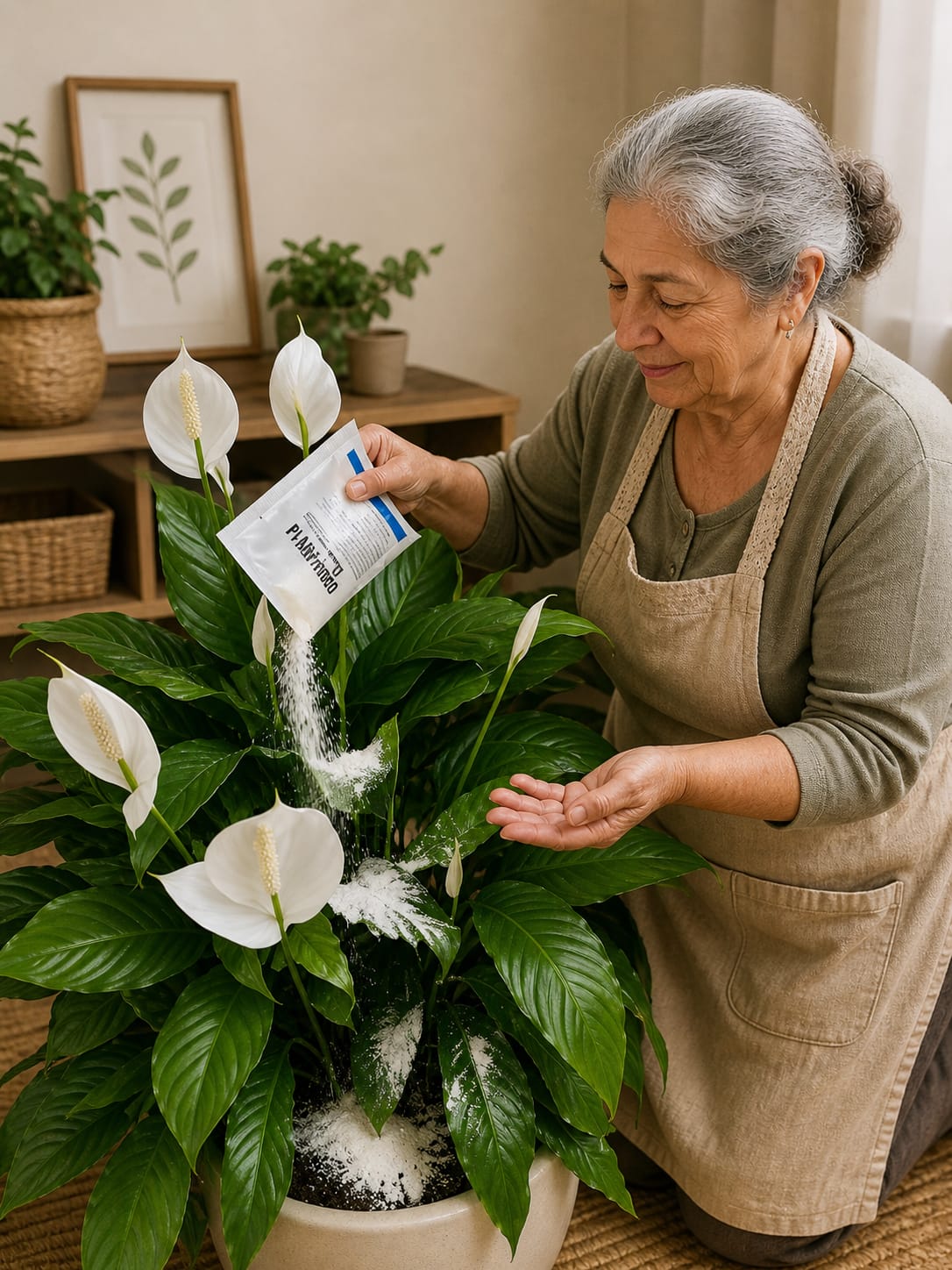
The image shows a mature peace lily with glossy green leaves and several white blooms. A woman is sprinkling a white powder from a small packet over the plant, and the powder is falling onto the leaves, flowers, and soil surface. The packet appears to be a plant product, possibly a plant food, bloom booster, mineral powder, or soil amendment. At first glance, it looks like an easy secret: sprinkle a little white powder, and the peace lily may grow fuller, greener, and bloom more often.
This type of method is often called the white powder peace lily trick, the powdered plant food trick, the peace lily bloom powder method, or the soil booster hack. It looks simple, clean, and powerful. But peace lilies are sensitive plants, and white powders can be risky if used incorrectly. Some powders can help when applied properly. Others can burn roots, stain leaves, clog the soil, attract pests, or create mold.
The safest way to understand this trick is this: only use a powder that is clearly labeled for houseplants, and apply it according to the label. Do not sprinkle random kitchen powders, cleaning powders, baking soda, salt, flour, sugar, or mystery products onto a peace lily. A healthy peace lily needs gentle feeding, proper watering, bright indirect light, and well-draining soil far more than it needs dramatic powder treatments.
In this guide, you will learn what the white powder might be, whether it can help peace lilies bloom, how to use powdered plant food safely, what powders to avoid, and what actually keeps a peace lily green, glossy, and flowering indoors.
What Is the White Powder Peace Lily Trick?
The white powder peace lily trick is a plant-care method where a powdered product is sprinkled around the plant, usually with the promise of stronger roots, shinier leaves, or more blooms. In the image, the powder is being poured directly from a packet over the plant and into the pot.
If the product is a legitimate powdered houseplant fertilizer or mineral soil amendment, it may provide nutrients when used correctly. However, most powdered fertilizers are not meant to be poured heavily over leaves. They are usually meant to be mixed into water, blended into soil, or applied carefully to the potting mix in measured amounts.
The biggest danger is treating any white powder as harmless. Peace lilies have tender roots and broad leaves that can react badly to strong residues. A small amount of the right product can support growth. Too much of the wrong powder can cause damage quickly.
What Could the White Powder Be?
The white powder in the image could represent several different plant-related products. Some may be useful, while others may be harmful.
Possible safe options include:
- Powdered houseplant fertilizer
- Water-soluble plant food
- Calcium or mineral supplement labeled for plants
- Dolomitic lime, used only when soil pH correction is needed
- Perlite dust or mineral top dressing, though this is not usually sprinkled over leaves
- Mycorrhizal powder, used around roots during repotting
Unsafe or questionable options include:
- Baking soda
- Flour
- Sugar
- Salt
- Laundry powder
- Cleaning powder
- Powdered milk
- Cornstarch
- Bleach powder
- Unknown garden chemical
- Pest poison
The rule is simple: if it is not labeled for plants, do not put it on a peace lily.
Can White Powder Make Peace Lilies Bloom?
A proper plant fertilizer can support blooming, but it cannot force a peace lily to flower by itself. Peace lily blooms depend on several conditions working together. The plant needs bright indirect light, healthy roots, steady moisture, warm temperatures, and mild nutrition.
If a peace lily is sitting in a dark corner, adding powder will not make it bloom. If the soil is soggy and roots are rotting, fertilizer can make the plant worse. If the plant is already healthy and actively growing, a gentle feeding routine may encourage better growth and future flowering.
White powder is not magic. It is only useful if it is the right product, applied in the right amount, to a plant that is already in decent growing conditions.
The Real Reason Peace Lilies Bloom Indoors
Peace lilies bloom best when they receive bright indirect light. Many people place them in low light because peace lilies can survive there, but survival is not the same as blooming. A peace lily in a dim corner may stay alive for years while rarely producing flowers.
For more blooms, place the plant near a bright window where it receives filtered light. An east-facing window is often excellent. A north-facing window can work if it is bright. A south or west-facing window may be suitable if softened by a sheer curtain.
Too much direct sun can scorch the leaves, but too little light is one of the most common reasons peace lilies stop blooming.
Why Sprinkling Powder on Leaves Is Risky
In the image, powder is landing on the leaves as well as the soil. This is not ideal. Peace lily leaves are broad and glossy, and powder residue can sit on the leaf surface. This can block light, attract moisture, leave marks, or irritate the plant tissue depending on what the powder contains.
If powder lands on the leaves, gently wipe it off with a damp cloth. Do not leave fertilizer powder sitting on foliage. Fertilizer belongs in the soil or in diluted water, not on the leaf surface unless the product is specifically designed as a foliar spray.
Clean leaves help the plant photosynthesize better. A dusty white coating does not help the plant look or grow better.
Why Powder Should Not Be Piled Around the Crown
The crown is the area where the leaves emerge from the base of the plant. Peace lilies grow in clumps, and the base can become crowded. If powder collects there and becomes wet, it may cause irritation, mold, or rot.
When applying any plant food or amendment, keep it on the soil surface around the plant rather than packed into the crown. Water should also move through the soil, not sit around the stems.
A clean, open crown is healthier than one coated in powder.
How to Use Powdered Plant Food Safely
If the white powder is a powdered fertilizer, the safest method is usually to dissolve it in water according to the product label. Most powdered plant foods are concentrated. Sprinkling them directly onto the soil can create strong pockets of fertilizer that burn roots when watered.
Use this safer routine:
- Read the label carefully.
- Check whether the powder is meant to be dissolved or sprinkled.
- If it is water-soluble, mix it with water first.
- Use half the recommended strength for indoor peace lilies.
- Apply only to moist soil, not bone-dry soil.
- Keep fertilizer off the leaves and flowers.
- Let excess water drain completely.
- Do not feed again until the plant is actively growing and ready.
For peace lilies, weak feeding is usually better than strong feeding.
How Often Should You Fertilize a Peace Lily?
Peace lilies do not need heavy fertilizer. During spring and summer, feed about once every four to six weeks with a diluted balanced houseplant fertilizer. In fall and winter, reduce feeding or stop completely if growth slows.
Overfertilizing can cause brown leaf tips, yellowing, weak growth, and salt buildup in the soil. Many peace lilies look better with less fertilizer than with too much.
If your plant is blooming and growing well, do not overdo it. Maintain the routine gently.
What Kind of Fertilizer Is Best for Peace Lilies?
A balanced liquid or water-soluble houseplant fertilizer is usually best. A formula such as 10-10-10, 20-20-20, or similar balanced plant food can work when diluted. You can also use a fertilizer made for flowering indoor plants, but avoid anything too strong.
Organic fertilizers can also work, but they should be mild. Strong-smelling organic powders or liquids may attract fungus gnats if the soil stays damp.
Peace lilies prefer a gentle, steady nutrient supply rather than heavy doses.
Can Baking Soda Help Peace Lilies?
Baking soda should not be sprinkled onto peace lilies as a general plant-care trick. It is alkaline and salty enough to disturb soil conditions if used incorrectly. It can also leave residue on leaves and soil.
Some people use baking soda in homemade fungal sprays, but this should be done with caution and proper dilution. It is not a fertilizer, bloom booster, or root-strengthener.
Do not pour baking soda powder onto a peace lily pot.
Can Epsom Salt Help Peace Lilies?
Epsom salt contains magnesium sulfate and is sometimes used when plants show magnesium deficiency. However, it should not be used casually or heavily. Too much can create salt buildup and nutrient imbalance.
If you use Epsom salt, dissolve a very small amount in water and apply rarely. Do not sprinkle dry crystals over leaves or soil. For most peace lilies, a balanced houseplant fertilizer is safer and more complete.
Can Powdered Milk Help Peace Lilies?
Powdered milk is not a good peace lily fertilizer. It can smell, mold, attract pests, and create residue. Although milk contains calcium and proteins, it is not a balanced or clean plant food for indoor pots.
Do not sprinkle powdered milk onto peace lily soil or leaves. Use proper plant fertilizer instead.
Can Flour or Cornstarch Help Peace Lilies?
No. Flour and cornstarch can turn sticky when wet, mold quickly, attract insects, and clog the soil surface. They do not provide useful plant nutrition in a clean or controlled way.
Kitchen powders that behave like food should stay out of houseplant pots. Indoor plant soil is not a compost pile.
Can Lime Be Used on Peace Lilies?
Dolomitic lime can raise soil pH and add calcium and magnesium, but it should only be used if needed. Peace lilies generally prefer slightly acidic to neutral potting conditions. Randomly adding lime can push the soil in the wrong direction.
If you suspect a pH problem, it is better to repot into fresh, high-quality potting mix than to guess with lime. Use lime only if a product label or soil test supports it.
Can Mycorrhizal Powder Help?
Mycorrhizal powder is a beneficial fungi product sometimes used during repotting to support root relationships. It is not usually sprinkled over leaves. It works best when placed in contact with roots during repotting.
If the white powder is mycorrhizae, follow the label. Apply it around the root zone, not over the foliage. It is not an instant bloom booster, but it may support root establishment in the right conditions.
Why Peace Lilies Get Brown Tips After Feeding
Brown tips are common on peace lilies and can be caused by several issues. Fertilizer is one of them. Too much fertilizer creates salt buildup in the soil, which can draw moisture away from roots and damage leaf tips.
Other causes of brown tips include underwatering, low humidity, inconsistent watering, mineral-heavy tap water, direct sun, and root stress.
If brown tips appear after using powder, stop feeding and flush the soil with plain water. Let the pot drain completely. Future feeding should be weaker and less frequent.
Continue to Page 2
Continue to page 2 for more details about this article and the key points many readers miss on the first page.