Why Peace Lilies Wilt Dramatically
Peace lilies are famous for dramatic wilting. They often droop when thirsty and perk back up after watering. But wilting can also happen from overwatering and root rot.
Before feeding a wilted peace lily, check the soil. If the soil is dry, water thoroughly. If the soil is wet and the plant is wilting, the roots may be struggling. Fertilizer will not fix root rot.
Never use powder as a rescue treatment before checking moisture and roots.
How to Water Peace Lilies Correctly
Peace lilies like evenly moist soil, but they do not like sitting in soggy conditions. Water when the top inch of soil feels dry. Water thoroughly until excess drains from the bottom, then empty the saucer.
If the plant is in a decorative pot with no drainage, move it to a pot with holes or use a nursery pot inside the decorative container. Drainage is essential for long-term health.
Good watering habits are more important than any powder trick.
Should You Water Before Fertilizing?
Yes, if the soil is very dry. Fertilizing bone-dry soil can burn roots. Water lightly first, then apply diluted fertilizer later. The soil should be slightly moist when nutrients are added.
If the soil is already wet, wait. Do not fertilize a waterlogged peace lily. Wet soil plus fertilizer can stress roots and encourage rot.
How to Flush Soil After Using Powder
If you think you added too much powder, flush the soil. Take the plant to a sink or shower and slowly run plain water through the potting mix. Let water drain freely from the drainage holes. This helps wash out excess fertilizer or salts.
After flushing, let the pot drain completely. Do not leave the plant sitting in runoff. Avoid fertilizing again for several weeks.
If the powder was not plant-safe, remove as much as possible from the soil surface first. If it mixed deeply into the pot, repotting may be safer.
What to Do If Powder Is on the Leaves
If powder lands on peace lily leaves, wipe it away gently. Use a soft damp cloth and support each leaf with your hand while cleaning. Avoid rubbing too hard because peace lily leaves can bruise.
If powder is stuck in leaf folds or near stems, use a small soft brush or rinse gently with lukewarm water. Let the plant dry in a bright, airy place away from direct sun.
Clean leaves are healthier and more attractive.
Should You Feed a Peace Lily While It Is Blooming?
You can feed lightly while a peace lily is blooming, but do not overfeed. A plant in bloom is already using energy, and strong fertilizer can stress it. Use a diluted fertilizer at half strength or weaker.
If the plant is blooming well, the best approach is to keep conditions stable. Avoid sudden changes, heavy feeding, or repotting unless necessary.
Should You Feed a Newly Repotted Peace Lily?
No. Wait four to six weeks after repotting before fertilizing. Fresh potting mix often contains some nutrients, and disturbed roots need time to recover.
Feeding immediately after repotting can burn sensitive roots. Let the plant settle first.
Should You Feed a Sick Peace Lily?
Usually not. A sick peace lily needs diagnosis before fertilizer. If the plant has yellow leaves, mushy roots, pests, or wet soil, feeding may worsen the stress.
Fertilizer helps healthy plants grow. It does not cure root rot, pest infestations, sunburn, or overwatering damage.
Fix the care problem first. Feed only when new healthy growth appears.
Why Peace Lily Leaves Turn Yellow
Yellow leaves can happen for many reasons. One old lower leaf turning yellow may be normal. Several yellow leaves at once can mean overwatering, underwatering, too much direct sun, cold stress, root problems, or nutrient imbalance.
If yellowing happens after using powder, the product may have been too strong or unsuitable. Remove excess powder, flush the soil, and observe the plant.
Do not keep adding more treatments. Too many fixes at once can stress the plant further.
Why Peace Lily Flowers Turn Green
Peace lily flowers often turn green as they age. This is normal. Sometimes too much fertilizer, especially nitrogen-heavy fertilizer, may encourage more green growth and less dramatic white flowering.
If your peace lily flowers are turning green quickly, check light and feeding. Keep fertilizer mild and make sure the plant receives enough bright indirect light.
How to Deadhead Peace Lily Blooms
Once a peace lily bloom turns brown, green, or tired, cut it off near the base of the stem. Use clean scissors or pruning shears. Removing old blooms helps the plant look tidy and redirect energy to new growth.
Do not pull the flower stem by hand, as this may damage the plant base.
Best Light for Peace Lilies
Peace lilies prefer bright indirect light. They can tolerate low light, but blooming is usually reduced. A bright room with filtered sunlight is ideal.
Signs of too little light include few or no blooms, slow growth, and dark leaves that stretch toward the light. Signs of too much direct sun include scorched patches, faded leaves, and crispy edges.
For the best blooms, give your peace lily more gentle light before increasing fertilizer.
Best Soil for Peace Lilies
Peace lilies need a potting mix that holds moisture but still drains well. A standard indoor potting mix can work, especially if improved with perlite, orchid bark, or coco coir.
A simple peace lily mix can include:
- 2 parts indoor potting mix
- 1 part perlite
- 1 part fine orchid bark or coco coir
This keeps the roots moist but not suffocated. Dense soil plus fertilizer powder is a bad combination because it can trap salts and water around the roots.
When to Repot a Peace Lily
Repot a peace lily when roots are crowded, soil dries too quickly, water runs straight through without absorbing, or the plant is declining in old compacted soil. Peace lilies usually prefer being slightly snug, but they should not be trapped in exhausted soil forever.
Choose a pot only one size larger. A pot that is too large can hold excess water and cause root rot.
After repotting, wait before fertilizing.
Can Powder Fix Root Rot?
No. Root rot cannot be fixed with powder. If the peace lily smells sour, wilts in wet soil, or has mushy roots, it needs root care.
Remove the plant from the pot, trim rotten roots with clean scissors, discard sour soil, and repot in fresh well-draining mix. Water carefully afterward.
Adding fertilizer or powder to rotting roots only makes stress worse.
Can Powder Fix Low Humidity?
No. Peace lilies prefer moderate humidity, and dry air can cause crispy edges or brown tips. Powder does not change humidity.
To help humidity, group plants together, use a pebble tray, or run a humidifier nearby. Avoid misting heavily if leaves stay wet for long periods. Good airflow matters too.
Can Powder Make Leaves Shinier?
Not directly. Glossy leaves come from health, hydration, and cleanliness. Powder on leaves actually makes them look dull and dusty.
To make peace lily leaves shine naturally, wipe them with a damp cloth. Do not use oil, mayonnaise, milk, or heavy leaf shine products. These can attract dust and clog leaf surfaces.
How to Keep Peace Lily Leaves Clean
Wipe leaves every few weeks with a soft damp cloth. Support the underside of each leaf while cleaning. This removes dust and helps the plant absorb light.
If the plant is large, you can rinse it gently in the shower with lukewarm water. Let it drain and dry before returning it to its spot.
Clean leaves are one of the easiest ways to improve a peace lily’s appearance.
A Safe White Powder Routine for Peace Lilies
If you want to use a white powdered plant food or amendment, follow this safer routine:
- Use only a product labeled for houseplants.
- Read the instructions carefully.
- Do not apply more than the recommended amount.
- Use half strength if the product is a fertilizer.
- Keep powder off leaves and blooms.
- Keep it away from the plant crown.
- Apply to the soil only.
- Water according to the label and plant needs.
- Let the pot drain completely.
- Stop if brown tips, yellowing, mold, or crust appears.
This turns the trick from a risky sprinkle into a controlled feeding method.
What to Do If You Used the Wrong Powder
If you accidentally used baking soda, flour, salt, sugar, cleaning powder, or another unsafe powder, remove it immediately. Scoop off the top layer of soil if needed. Wipe the leaves with a damp cloth.
If the powder dissolved into the soil, flush thoroughly with plain water if the pot drains well. If you used a chemical cleaner or unknown product, repotting may be the safest option.
Do not wait for the plant to show damage if the product was clearly unsafe.
Signs the Powder Trick Is Helping
If the product is plant-safe and used correctly, improvement should be gradual. You may notice stronger new leaves, steadier growth, or more blooms over time. The plant should look balanced, not suddenly forced.
The soil should not smell bad. Leaves should not develop powdery residue, burn marks, or brown tips. There should be no mold or white crust buildup.
Healthy feeding is subtle.
Signs You Should Stop Using It
Stop immediately if you notice:
- Brown leaf tips after application
- Yellowing leaves
- White crust on soil
- Mold growth
- Fungus gnats
- Sour smell
- Wilting in wet soil
- Powder clumping around stems
- Residue stuck on leaves
These signs mean the powder is causing stress or buildup. Return to plain water and basic care.
Better Alternatives to the White Powder Trick
If your goal is a healthier, fuller peace lily with more flowers, these steps are more reliable:
- Move it to brighter indirect light.
- Water when the top inch of soil dries.
- Use a pot with drainage holes.
- Empty the saucer after watering.
- Use diluted balanced fertilizer during active growth.
- Wipe leaves clean regularly.
- Repot when soil becomes compacted.
- Maintain moderate humidity.
- Remove old blooms at the base.
- Avoid strong or random additives.
These habits will do more for your peace lily than any mystery powder.
Common Mistakes With the White Powder Peace Lily Trick
Using Mystery Powder
Never use a product unless you know what it is and it is labeled for plants.
Sprinkling Powder Over Leaves
Fertilizer should not sit on peace lily leaves. Wipe it off if it lands there.
Using Too Much
More fertilizer does not mean more blooms. Too much causes brown tips and root stress.
Feeding a Sick Plant
A sick plant needs diagnosis first. Fertilizer can worsen root rot or stress.
Ignoring Light
Peace lilies need bright indirect light to bloom. Powder cannot replace light.
Applying to Dry Soil
Strong nutrients on dry roots can cause burn. Slightly moist soil is safer.
Letting the Pot Sit in Runoff
Fertilized runoff can cause salt buildup and root problems. Empty the saucer.
Frequently Asked Questions
What is the white powder being added to the peace lily?
It may be powdered plant food, mineral supplement, or soil amendment. Use only products clearly labeled for houseplants.
Can white powder make a peace lily bloom?
Only if it is a proper fertilizer and the plant already has good light and healthy roots. It cannot force blooms by itself.
Can I sprinkle baking soda on my peace lily?
No. Baking soda is not a peace lily fertilizer and can disturb the soil if used incorrectly.
Can I use powdered milk on peace lilies?
No. Powdered milk can mold, smell, and attract pests.
Should fertilizer powder go on the leaves?
No. Keep fertilizer on the soil or dissolve it in water according to the label.
How often should I fertilize a peace lily?
Every four to six weeks during spring and summer is enough for most plants. Reduce or stop in winter.
Why did my peace lily get brown tips after feeding?
The fertilizer may have been too strong, or salts may be building up in the soil. Flush with plain water and feed less often.
Can powder fix a wilted peace lily?
No. Wilting is usually a watering or root issue. Check soil moisture before adding anything.
Is powder fertilizer better than liquid fertilizer?
Not necessarily. Powder fertilizer is often concentrated and must be diluted. Liquid fertilizer can be easier to control.
What is the best way to get more peace lily flowers?
Give bright indirect light, correct watering, drainage, mild fertilizer during active growth, and a warm stable environment.
Final Thoughts
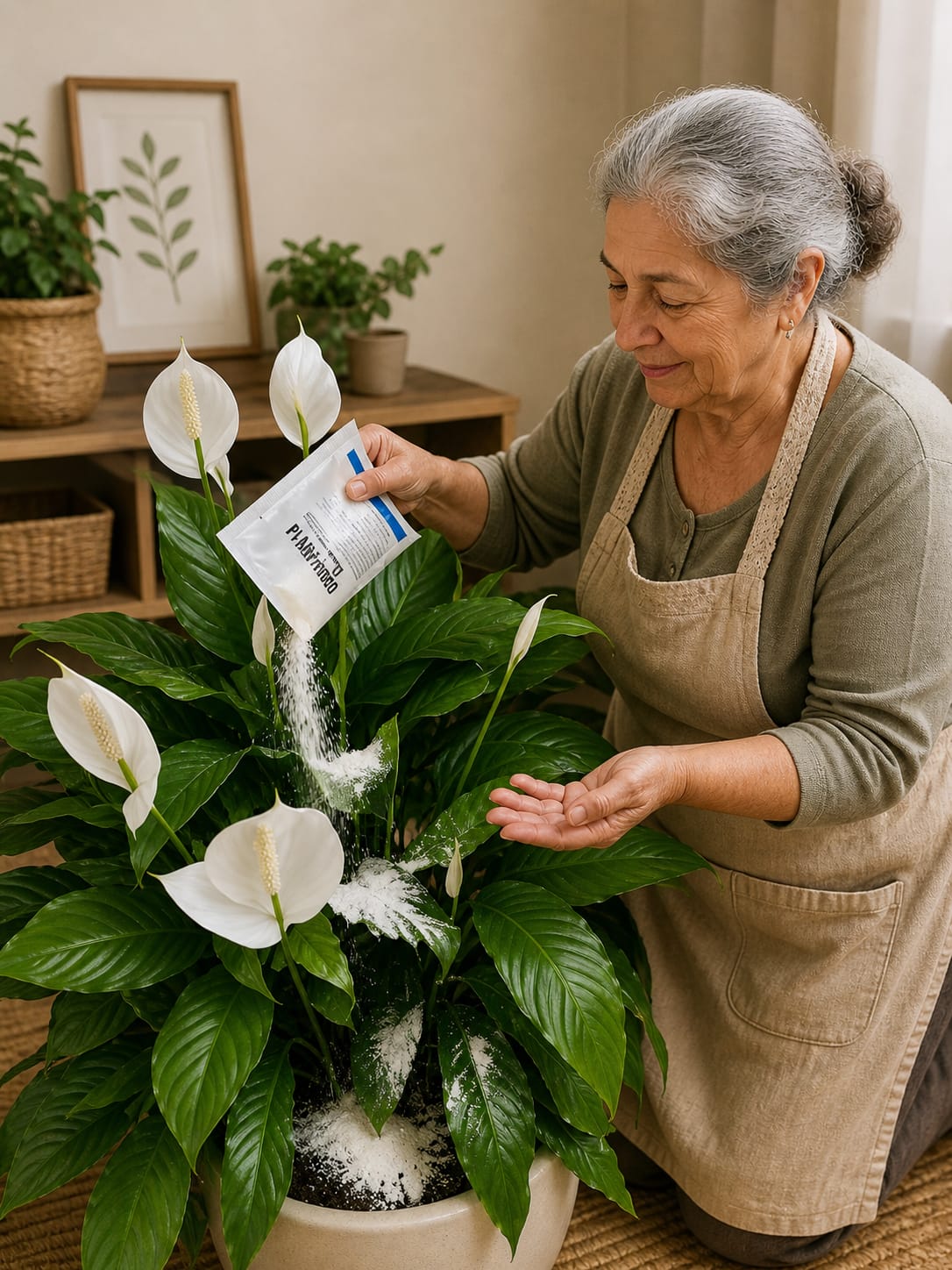
The white powder peace lily trick looks dramatic and convincing, especially when shown on a large plant with glossy leaves and elegant white blooms. It suggests that a simple sprinkle can unlock stronger growth and more flowers. But peace lilies do not need mystery powders. They need steady, gentle care.
If the white powder is a real houseplant fertilizer or plant-safe amendment, it may help when used correctly. But it should be measured carefully, kept off the leaves, kept away from the crown, and applied only according to the label. In many cases, powdered fertilizer is safest when dissolved in water and used at half strength.
Do not use baking soda, flour, sugar, salt, powdered milk, cleaning products, or unknown white powders on a peace lily. These can cause mold, pests, leaf damage, root burn, or soil problems.
The real secret to a thriving peace lily is simple: bright indirect light, evenly moist but well-drained soil, a pot with drainage, clean leaves, moderate humidity, and light feeding during active growth. When those basics are right, a peace lily can produce glossy green leaves and graceful white blooms without risky tricks.
Use plant food as support, not as a shortcut. A gentle routine will always serve your peace lily better than a heavy sprinkle of mystery powder.