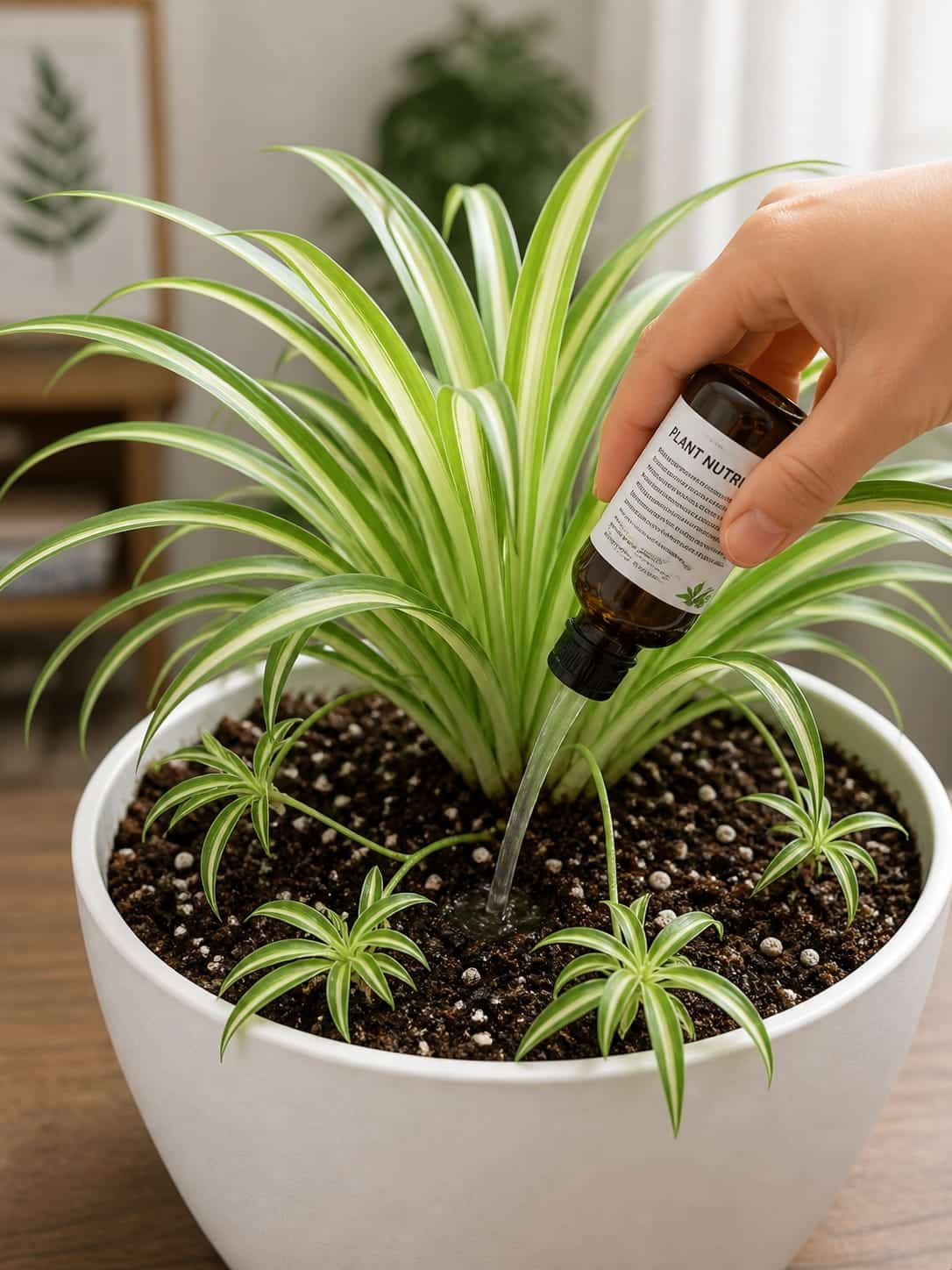
Can This Trick Revive a Weak Spider Plant?
Only sometimes. If a spider plant is weak because the soil is depleted but the roots are healthy, diluted fertilizer may help. If it is weak because of root rot, poor light, compacted soil, pests, or overwatering, fertilizer will not solve the real issue.
Before using the dropper trick on a weak plant, check the roots. Healthy roots are usually pale, firm, and fleshy. Rotten roots are brown, black, mushy, or foul-smelling.
If roots are rotten, repotting and better watering are more important than feeding.
How to Apply Nutrients Without Damaging the Crown
Spider plants grow from a central crown. This crown should not stay wet or packed with fertilizer. When using a dropper, apply the liquid to the soil around the plant, not into the tight center where leaves emerge.
If liquid collects in the crown, blot it gently with a paper towel. This helps prevent rot or fungal issues.
How Much Fertilizer Solution Should You Use?
The amount depends on pot size and product strength. For a medium pot, use enough diluted solution to moisten the soil lightly, not flood it. If the plant is due for a full watering, you can water thoroughly with diluted fertilizer and allow excess to drain.
Do not keep adding drops in the same spot. Spread the solution evenly around the pot.
Always follow the fertilizer label. If unsure, use a weaker mixture.
Can You Use Homemade Fertilizers Instead?
Some homemade fertilizers can be used carefully, but spider plants do not need complicated kitchen treatments. Many homemade liquids can smell, attract gnats, or create mold if they are too rich.
A diluted commercial houseplant fertilizer is usually more predictable. If you prefer natural feeding, use a mild organic liquid fertilizer labeled for indoor plants.
Avoid pouring milk, sugar water, coffee, strong tea, or thick kitchen scraps into spider plant soil.
Can Coffee Help Spider Plants?
Coffee is often promoted as a plant trick, but it can be risky indoors. Used coffee grounds can mold and compact soil. Coffee liquid can be acidic and unpredictable. Spider plants do not need coffee to thrive.
If you want to enrich soil naturally, compost coffee grounds outdoors first. Do not dump them into a small indoor pot.
Can Rice Water Help Spider Plants?
Weak fresh rice water can sometimes be used as an occasional rinse, but it is not necessary. It should be diluted, unsalted, and used rarely. Thick rice water can encourage mold or gnats.
For spider plants, a balanced liquid fertilizer is more reliable than rice water.
Can Banana Peel Water Help Spider Plants?
Banana peel water is another popular plant hack, but it can attract pests and does not provide balanced nutrition. It may smell or ferment if left too long.
If you want to use banana peels, compost them first. Do not rely on banana water as a main fertilizer for indoor spider plants.
Why the Dropper Method Can Be Better Than Pouring
The dropper method has one real advantage: control. It helps prevent overapplication if the fertilizer is already diluted or ready to use. You can direct the liquid to the soil and avoid splashing leaves.
It also encourages careful feeding rather than dumping a large amount into the pot. For small plants, baby plantlets, or tabletop pots, that control can be useful.
But the dropper does not make concentrated fertilizer safe. Dilution still matters most.
Best Time of Day to Feed a Spider Plant
Morning is a good time to feed. The plant has the day to use moisture, and the soil surface can dry a bit before night. Avoid feeding late at night if the room is cool or airflow is poor.
Do not fertilize when the plant is sitting in direct hot sun. Feed during mild conditions to reduce stress.
Should You Mist After Fertilizing?
Spider plants do not need misting after fertilizing. Misting does not replace watering or feeding, and it can leave spots on leaves if your water is mineral-rich.
If humidity is low, grouping plants or using a humidifier nearby is more effective than misting. Keep air moving gently to prevent fungal issues.
How to Keep Spider Plant Leaves Clean
Clean leaves help spider plants absorb light. Dust can dull the leaves and slow growth. Wipe leaves occasionally with a soft damp cloth, or rinse the plant gently in the shower with lukewarm water.
Avoid leaf shine products. Spider plants look best with naturally clean leaves.
How to Encourage More Spider Plant Babies
If you want more baby spider plants, give the mother plant bright indirect light and avoid overpotting. A slightly snug pot often encourages runners. Feed lightly during active growth, but do not overfeed.
When plantlets form, you can leave them attached for a fuller look or root them in small pots. Baby plants root easily when their little root nubs touch moist soil.
Do not rush to cut babies too early. Let them grow large enough to handle.
How to Propagate Spider Plant Babies
Spider plant propagation is simple.
- Choose a baby plantlet with small root nubs.
- Place it on moist potting mix while still attached, or cut it from the runner.
- Press the base gently into the soil.
- Keep the soil lightly moist.
- Place it in bright indirect light.
- Wait for roots to establish.
You can also root spider plant babies in water, but soil propagation often creates stronger roots for long-term pot growth.
When to Repot a Spider Plant
Spider plants like being a little snug, but they should not be extremely root-bound forever. Repot when roots are pushing out of drainage holes, the plant dries out too quickly, or the pot becomes crowded with thick tuberous roots.
Move up only one pot size. A pot that is too large can hold excess moisture and slow growth.
After repotting, wait several weeks before fertilizing.
Can You Split a Large Spider Plant?
Yes. Large spider plants can be divided. Remove the plant from the pot, gently separate sections with roots attached, and repot each section in fresh mix.
Dividing is useful when a plant is overcrowded or has become too large for its container. Water lightly after division and avoid fertilizer until new growth resumes.
What If the Leaves Are Pale?
Pale leaves can mean several things. The plant may need more light, or it may be underfed. It may also be stressed from overwatering or poor roots.
First, check light. If the plant is far from a window, move it closer to bright indirect light. Then check soil moisture and root health. If those are good, light feeding may help.
Do not assume pale leaves always mean fertilizer deficiency.
What If the Leaves Are Limp?
Limp leaves may come from underwatering, overwatering, heat stress, or root problems. Check the soil before doing anything. If the soil is dry, water thoroughly. If the soil is wet and the plant is limp, inspect the roots.
Do not fertilize a limp plant until it recovers. Feeding stressed roots can make things worse.
What If the Leaf Tips Are Brown?
Brown tips are common on spider plants. Trim them with clean scissors if they bother you, following the natural shape of the leaf. Leave a tiny brown edge rather than cutting into green tissue.
To prevent more brown tips, check fertilizer strength, water quality, humidity, and watering consistency. If you recently used strong fertilizer, flush the soil and reduce feeding.
What If the Plant Has No Babies?
A spider plant with no babies may simply be young. It may also need brighter light or time to mature. Very large pots can sometimes delay baby production because the plant focuses on root growth.
Give the plant bright indirect light, a slightly snug pot, and light feeding during active growth. Be patient. Runners often appear when conditions are steady.
A Safe Plant Nutrient Dropper Routine
Here is a safe routine for using the dropper trick:
- Use a liquid fertilizer labeled for houseplants.
- Dilute it to half or quarter strength unless it is ready-to-use.
- Feed only during active growth.
- Apply to slightly moist soil, not bone-dry soil.
- Keep liquid away from the crown.
- Spread the solution around the pot instead of one spot.
- Let the pot drain fully.
- Empty the saucer.
- Repeat every four to six weeks in spring and summer.
- Stop or reduce feeding in fall and winter.
This gives the spider plant gentle nutrition without overwhelming the roots.
Common Mistakes With the Plant Nutrient Dropper Trick
Using Concentrated Fertilizer Directly
This can burn roots. Always dilute concentrated fertilizer unless the label says otherwise.
Feeding Too Often
Spider plants do not need weekly feeding. Too much fertilizer causes brown tips and salt buildup.
Fertilizing Dry Soil
Bone-dry soil can make fertilizer hit roots too strongly. Moist soil is safer.
Letting the Pot Sit in Runoff
Drainage matters. Do not let fertilized water sit in the saucer.
Feeding in Winter
Spider plants grow more slowly in winter and need little to no fertilizer.
Using Fertilizer on a Sick Plant
Diagnose the problem first. Fertilizer is not plant medicine.
Ignoring Light
A spider plant in low light will not respond well to extra feeding. Improve light first.
Frequently Asked Questions
What is the liquid being added to the spider plant?
It appears to be a liquid plant nutrient or fertilizer. It should be diluted unless the product is clearly labeled ready-to-use.
Can liquid fertilizer help spider plants grow more babies?
Yes, light feeding can support baby production, but only when the plant also has bright indirect light, healthy roots, and proper watering.
How often should I fertilize a spider plant?
Every four to six weeks during spring and summer is enough for most spider plants. Reduce or stop feeding in winter.
Can I use fertilizer drops directly from the bottle?
Only if the product label says it is ready-to-use. Concentrated fertilizer must be diluted first.
Why does my spider plant have brown tips after feeding?
The fertilizer may be too strong, or salts may be building up in the soil. Flush with plain water and use weaker fertilizer next time.
Should I fertilize spider plant babies?
Wait until they are rooted and growing. Young plantlets need light moisture and bright indirect light more than fertilizer.
Can I fertilize a spider plant in winter?
It is usually better to stop or greatly reduce feeding in winter because growth slows down.
What is the best fertilizer for spider plants?
A balanced liquid houseplant fertilizer diluted to half or quarter strength is usually best.
Should I water before fertilizing?
If the soil is very dry, water lightly first. Fertilizer is safer on slightly moist soil.
Can fertilizer save a dying spider plant?
Not usually. A dying spider plant needs diagnosis first. Check watering, roots, light, drainage, and pests before feeding.
Final Thoughts
The plant nutrient dropper trick looks simple, modern, and precise. A few drops near the root zone can seem like the secret to a fuller spider plant with more babies. Used correctly, liquid fertilizer can absolutely support healthy spider plant growth.
But the real secret is not the dropper bottle. It is dilution and timing. Spider plants need gentle feeding, not strong fertilizer. Concentrated nutrients placed directly into the soil can burn roots, create brown tips, and cause salt buildup.
The safest method is to use a balanced houseplant fertilizer diluted to half or quarter strength. Apply it during spring and summer, when the plant is actively growing. Feed slightly moist soil, keep liquid away from the central crown, let the pot drain completely, and empty the saucer afterward.
For more spider plant babies, remember that fertilizer is only one part of the routine. Bright indirect light, a slightly snug pot, healthy roots, even watering, and fresh soil all matter. A plant in poor light or soggy soil will not become healthy just because nutrients are added.
Use the dropper trick as a careful feeding method, not a shortcut. With light nutrition and steady care, your spider plant can stay full, striped, and lively, sending out baby plants that make it one of the easiest houseplants to share and multiply.