Spider plants are loved because they look fresh, forgiving, and full of movement. Their long striped leaves arch outward like ribbons, and once they are happy, they often send out baby plantlets that can be rooted and shared. A healthy spider plant can make a room feel brighter without needing complicated care.
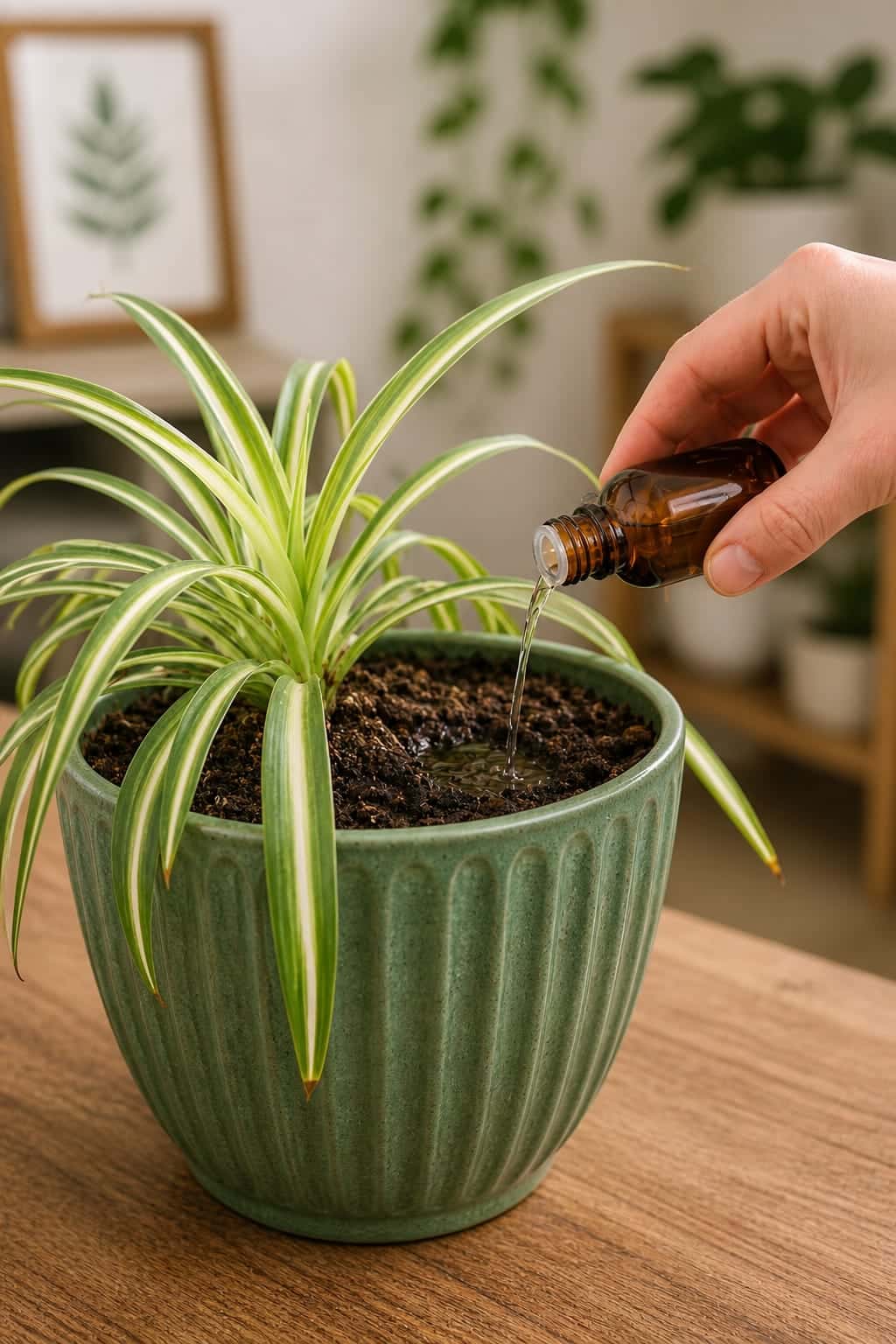
The image shows a variegated spider plant growing in a green ceramic pot. A hand is pouring a clear liquid from a small amber bottle directly onto the soil. The scene suggests a simple care trick: a few drops or a small pour from a bottle may help the spider plant grow stronger, greener, and fuller.
This kind of trick is often shown as a plant tonic, liquid nutrient booster, root stimulant, vitamin solution, or homemade plant revival liquid. It looks easy because the bottle is small and the amount seems controlled. But the safety of this method depends entirely on what is inside the bottle.
A clear liquid can be harmless water, diluted fertilizer, seaweed extract, rooting tonic, hydrogen peroxide solution, vinegar, alcohol, essential oil, or something else entirely. Some of these can be useful in tiny amounts. Others can damage roots very quickly.
The safest interpretation of this image is a diluted liquid houseplant fertilizer or very mild plant tonic being applied to the soil. The risky interpretation is pouring an unknown concentrated liquid into the pot. Spider plants are hardy, but they are not immune to root burn, chemical damage, salt buildup, or soggy soil.
In this guide, you will learn what the small bottle spider plant trick might be, which liquids are safe, which ones to avoid, how to apply liquid nutrients correctly, and what actually helps spider plants grow fuller, greener, and produce more baby plants indoors.
What Is the Small Bottle Spider Plant Trick?
The small bottle spider plant trick is a method where a liquid product is poured or dropped directly into the potting soil. The bottle often looks like a plant supplement, vitamin bottle, fertilizer concentrate, or homemade tonic. Because the bottle is small, the method seems precise and powerful.
In the image, the liquid is clear and being poured into one spot on the soil. The spider plant itself looks healthy, with bright green and cream variegated leaves. The potting mix looks dark and moist, which means the liquid is soaking into the root zone.
This trick can be useful only if the liquid is safe and properly diluted. Spider plants do not need strong treatments. They do best with gentle, consistent care. A mild nutrient solution can support growth, but a strong or unknown liquid can create problems.
What Could Be Inside the Bottle?
The bottle in the image could represent several different liquids. Some are safe for spider plants when diluted. Others should never be poured into a houseplant pot.
Possible safe options include:
- Diluted liquid houseplant fertilizer
- Ready-to-use plant tonic
- Diluted seaweed or kelp extract
- Filtered water
- Rainwater
- Very weak compost tea
- Very diluted rooting stimulant
Risky or unsafe options include:
- Undiluted fertilizer concentrate
- Essential oils
- Vinegar
- Alcohol
- Bleach
- Hydrogen peroxide used too strongly
- Dish soap solution
- Sugar water
- Milk
- Medication liquid
- Unknown homemade mixture
The rule is simple: if you do not know exactly what the liquid is, do not pour it into your spider plant. Roots are sensitive, and once a harsh liquid soaks into the soil, it can be hard to remove quickly.
The Safest Version: Diluted Liquid Fertilizer
The safest and most useful version of this trick is diluted liquid fertilizer. Spider plants benefit from light feeding during active growth, especially in spring and summer. Fertilizer can help support fresh leaves, stronger roots, and baby plant production.
However, spider plants are not heavy feeders. They do not need strong fertilizer every week. Too much feeding can cause brown tips, salt buildup, yellowing leaves, and stressed roots.
A diluted fertilizer solution is much safer than pouring concentrate directly from a bottle. If the bottle contains fertilizer concentrate, it should be mixed with water first according to the label, usually at half or quarter strength for indoor spider plants.
Why Concentrated Fertilizer Is Dangerous
Concentrated fertilizer can burn roots. Even a small amount can create a strong pocket of salts in the soil. When roots touch that concentrated area, they may become damaged, which can show up later as brown tips, wilting, yellowing, or slow decline.
Spider plants are especially known for developing brown leaf tips when salts build up in the potting mix. Fertilizer is not the only cause of brown tips, but it is a common one.
If the bottle is a concentrate, do not pour it directly into the soil. Always dilute it first.
How to Use Liquid Fertilizer Safely on Spider Plants
Use this simple method:
- Read the fertilizer label.
- Mix the fertilizer into water at half or quarter strength.
- Make sure the spider plant is actively growing.
- Apply to slightly moist soil, not bone-dry soil.
- Pour evenly around the pot instead of one spot.
- Keep liquid out of the central crown.
- Let excess drain out of the bottom.
- Empty the saucer afterward.
This method gives the roots gentle nutrition without shocking them.
Should You Apply Liquid to Dry Soil?
It is better not to fertilize bone-dry soil. When soil is extremely dry, fertilizer can hit the roots too strongly. Dry roots are more vulnerable to burn.
If the soil is very dry, water lightly with plain water first. Then apply diluted fertilizer after the soil has absorbed some moisture. The soil should be slightly moist, not soaked.
This small step helps protect the root system.
How Often Should You Use the Bottle Trick?
If the liquid is diluted fertilizer, use it once every four to six weeks during spring and summer. That is enough for most spider plants. If the plant is in very bright indirect light and growing quickly, monthly feeding can work well.
During fall and winter, reduce feeding or stop completely. Spider plants grow more slowly in cooler, darker months and do not need much fertilizer.
Using the bottle trick too often can cause buildup in the soil. More is not better.
Can This Trick Make Spider Plants Produce More Babies?
Liquid nutrients can support baby plant production, but they are not the only factor. Spider plants produce babies when they are mature, healthy, and receiving enough light. A slightly snug pot can also encourage runners.
If your spider plant is not making babies, check these things before reaching for fertilizer:
- Is the plant mature enough?
- Is it getting bright indirect light?
- Is the pot too large?
- Is the soil staying too wet?
- Is the plant root-bound in a healthy way?
- Has it been fed lightly during active growth?
Fertilizer supports growth, but light and maturity are often more important for plantlets.
Why the Spider Plant in the Image Looks Healthy
The spider plant in the image already looks strong. It has bright variegation, upright central growth, and no obvious signs of major stress. The leaf tips look mostly clean, and the plant appears well established in its pot.
This matters because healthy plants respond better to light feeding. A struggling plant may not need fertilizer at all. It may need better watering, more light, fresh soil, or root care.
When a plant already looks healthy, use any supplement gently. Do not overcorrect a plant that is doing well.
Can a Clear Liquid Be Just Water?
Yes. The bottle may simply contain water, filtered water, or rainwater. If so, the trick is more about targeted watering than fertilizing.
Spider plants like evenly moist soil, but they do not like being waterlogged. Pouring a little water into the soil is fine if the plant needs it. However, watering only one small spot can cause uneven moisture. Some roots may stay dry while others remain too wet.
For regular watering, it is better to water the whole pot evenly until water drains from the bottom. Then let the top inch of soil dry before watering again.
Best Water for Spider Plants
Spider plants can be sensitive to minerals, salts, and sometimes fluoride in tap water. This sensitivity often shows as brown leaf tips. If your spider plant constantly develops brown tips despite good care, try using filtered water, rainwater, or distilled water occasionally.
You can also let tap water sit out overnight before using it, although this does not remove all minerals. If your water is very hard, filtered water may help more.
Good water quality can make a noticeable difference in spider plant appearance.
Could the Bottle Contain Seaweed Extract?
Seaweed or kelp extract is sometimes used as a mild plant tonic. It may support root growth and stress recovery when used correctly. However, it should always be diluted according to the label.
Seaweed extract is not a substitute for proper light, watering, or soil. It is a supplement, not a cure-all. If used too strongly or too often, it can still contribute to buildup in the soil.
If you use seaweed extract, apply it lightly during active growth and avoid using it on a plant that is sitting in wet soil.
Could the Bottle Contain Hydrogen Peroxide?
Hydrogen peroxide is sometimes used by plant owners to oxygenate soil or address root issues. However, it is easy to misuse. Strong hydrogen peroxide can damage roots and beneficial soil life.
Do not pour hydrogen peroxide from a bottle into a spider plant unless you know the concentration and have diluted it properly. It should not be used as a routine plant tonic.
If your spider plant has root rot, the better fix is usually to remove damaged roots, repot into fresh soil, and correct watering habits.
Could the Bottle Contain Vinegar?
Vinegar should not be poured into a spider plant pot. It is acidic and can damage roots. Vinegar is sometimes used as a weed killer outdoors, which tells you how risky it can be for plants when applied incorrectly.
Even diluted vinegar is not a good general houseplant treatment. Spider plants do not need vinegar to grow. If you are trying to adjust soil pH, repotting into fresh mix is safer than guessing with vinegar.
Could the Bottle Contain Essential Oils?
Essential oils should not be poured into spider plant soil. They are concentrated plant compounds and can be toxic to roots. Some people use essential oils in homemade pest sprays, but even then they must be used with extreme caution and should not be soaked into the soil.
For indoor plants, essential oils can also be risky around pets. Keep them away from plant pots unless you are following a reliable, plant-safe formulation.
Could the Bottle Contain Alcohol?
Alcohol should not be poured into the soil. Rubbing alcohol can be used carefully on cotton swabs to remove certain pests from leaves, but it should not be applied to roots. Alcohol in the potting mix can damage root tissue and soil life.
If pest treatment is needed, identify the pest first and use the least harmful method.
Could the Bottle Contain Sugar Water?
Sugar water is not a good plant fertilizer. Plants make their own sugars through photosynthesis. Pouring sugar into soil can feed microbes, attract pests, encourage mold, and create sticky conditions.
Spider plants do not need sugar water. They need light, proper watering, and mild fertilizer if actively growing.
Could the Bottle Contain Milk?
Milk is not recommended for spider plant soil. It can smell, spoil, attract gnats, and create mold. Although milk contains nutrients, it is not a clean or balanced fertilizer for indoor pots.
Do not use milk as a spider plant tonic. If you want to feed the plant, use diluted houseplant fertilizer.
Why Drainage Matters Before Using Any Liquid
The green ceramic pot in the image looks decorative and attractive. But the most important question is whether it has a drainage hole. If it does not, any liquid poured into it can collect at the bottom.
Standing water at the bottom of a pot can cause root rot. If that water contains fertilizer, the risk increases because salts can concentrate around the roots.
For spider plants, drainage is essential. If your decorative pot has no hole, keep the plant in a plastic nursery pot inside it. Remove the inner pot to water and feed, let it drain fully, then place it back.
How to Water a Spider Plant Correctly
Water when the top inch of soil feels dry. Pour water evenly over the soil until it drains from the bottom. Then empty the saucer. Do not water again until the top layer dries.
Spider plants like moisture, but they also need oxygen around their roots. Constantly wet soil can cause yellowing, limp leaves, and root rot.
If your spider plant is in lower light, it will use water more slowly. In brighter light, it may need water more often.
Why One-Spot Pouring Can Be a Problem
In the image, the liquid is being poured into one spot. For a small dose of ready-to-use tonic, this may be fine. But for regular watering or feeding, one-spot pouring can create uneven moisture and concentrated nutrients.
Roots spread throughout the pot. If all the fertilizer goes into one area, roots in that area may receive too much while other roots receive none.
When feeding, pour diluted liquid evenly around the pot. This is safer and more effective.
Keep Liquid Away From the Crown
Spider plants grow from a central crown where the leaves emerge. This area should not remain wet for long periods. If liquid collects in the crown, it can increase the risk of rot or fungal problems.
Apply liquids to the soil around the plant, not directly into the center. If the crown gets wet, gently blot it with a paper towel and make sure the plant has good airflow.
Best Soil for Spider Plants
Spider plants grow best in a light, well-draining potting mix. A standard indoor potting mix can work, especially if it contains perlite. If the soil is dense and heavy, mix in extra perlite or fine bark.
A good spider plant mix can include:
- 2 parts indoor potting mix
- 1 part perlite
- 1 part coco coir or fine bark
The soil should hold enough moisture for the roots but still drain well. If water sits on the surface or the soil stays wet for many days, the mix may be too dense.
When Liquid Nutrients Help Most
Liquid nutrients help most when the plant is healthy, rooted, and actively growing. Spring and summer are the best seasons. During these months, spider plants produce new leaves, runners, and plantlets more readily.
Liquid nutrients are less useful when the plant is dormant, stressed, newly repotted, or suffering from root problems.
Feed growth, not stress.
When You Should Not Use This Trick
Do not use a liquid nutrient trick if:
- The soil is already wet
- The plant is wilting in wet soil
- The roots may be rotten
- The plant was recently repotted
- The bottle contains an unknown liquid
- The plant has brown tips from overfeeding
- The pot has no drainage
- The plant is not actively growing
In these cases, adding liquid may make the problem worse.
Continue to Page 2
Continue to page 2 for more details about this article and the key points many readers miss on the first page.