Signs Your Spider Plant Likes the Routine
If the liquid is safe and used correctly, the plant should respond gradually. You may see brighter new growth, more upright leaves, stronger roots, or more runners over time.
Healthy improvement is slow and steady. Do not expect overnight transformation. Spider plants grow quickly compared with many houseplants, but they still need time.
Good signs include:
- Fresh new leaves
- Firm roots
- No sour smell
- No white crust on soil
- No sudden brown tips
- New runners or plantlets during active growth
Signs You Used the Wrong Liquid
Stop immediately if you notice:
- Wilting soon after application
- Sudden yellowing
- Brown tips appearing quickly
- Soil smelling sour
- White crust on the soil
- Mold or fungus gnats
- Leaves becoming limp
- Roots turning brown or mushy
If these signs appear, flush the soil with plain water if the pot drains well. If the liquid was clearly unsafe, repotting may be the better option.
What to Do If You Poured Too Much Fertilizer
If you accidentally poured concentrated fertilizer into the pot, act quickly. Take the plant to a sink and flush the soil with plenty of plain water. Let the water run through the drainage holes for several minutes. Then let the pot drain completely.
Do not fertilize again for at least several weeks. Watch for brown tips or yellowing. If the plant declines badly, repot into fresh soil.
The sooner you dilute and flush the fertilizer, the better.
What to Do If You Used an Unknown Liquid
If you poured an unknown liquid into the pot, remove the plant from danger as soon as possible. If it was only a tiny amount and the plant looks fine, flush the soil thoroughly. If it was a chemical, cleaner, oil, alcohol, or anything harsh, repot immediately into fresh soil.
Rinse the roots gently with lukewarm water if needed. Remove any damaged roots. Repot in a clean pot with drainage and fresh mix.
Do not wait for severe damage if the liquid was clearly unsuitable.
Can This Trick Revive a Dying Spider Plant?
Not usually. A dying spider plant needs diagnosis first. If it is drooping because it is dry, it needs water. If it is drooping because roots are rotting, it needs repotting and better drainage. If it is pale because of low light, it needs a brighter spot. If it has brown tips from salts, it needs flushing and gentler water.
Liquid nutrients can help only if the plant is nutrient-starved but otherwise healthy. Fertilizer is not medicine for root rot, pests, poor light, or overwatering.
How to Diagnose a Struggling Spider Plant
Before using any bottled liquid, check the basics:
- Is the soil dry, moist, or soggy?
- Does the pot have drainage?
- Are the roots firm and light-colored?
- Is the plant getting bright indirect light?
- Are the leaves crispy, limp, yellow, or pale?
- Are there pests under the leaves?
- Has fertilizer been used recently?
These clues tell you what the plant actually needs. Guessing with a bottle can create extra stress.
Best Light for Spider Plants
Spider plants thrive in bright indirect light. They can tolerate lower light, but growth slows, variegation may fade, and baby production may decrease.
Place the plant near an east-facing window or a bright filtered window. Avoid harsh direct afternoon sun, which can scorch the leaves.
If you want more growth and more babies, improving light is often more effective than adding extra nutrients.
How to Encourage Fuller Growth
For a fuller spider plant, focus on steady care. Give bright indirect light, water when the top inch dries, feed lightly during active growth, and rotate the pot every week or two so growth stays even.
You can also root baby spider plants and place them back into the mother plant’s pot to create a fuller look. This is often safer and more reliable than heavy fertilizing.
How to Encourage Baby Spider Plants
Spider plants produce babies when they are mature and comfortable. Bright indirect light is key. A slightly snug pot can also help. Too much fertilizer, especially too much nitrogen, may produce leaves but not necessarily more runners.
To encourage babies:
- Give bright indirect light
- Avoid overpotting
- Water consistently
- Feed lightly in spring and summer
- Let the plant mature
- Avoid constant stress
Patience matters. Young spider plants may need time before producing plantlets.
Should You Repot Before Feeding?
If the soil is old, compacted, sour-smelling, or draining poorly, repotting is better than feeding. Fertilizer cannot fix bad soil. In fact, adding fertilizer to poor soil can make root stress worse.
Repot into fresh, airy mix and wait four to six weeks before feeding. Fresh soil usually has enough nutrition to support recovery at first.
When to Repot a Spider Plant
Repot when the plant dries out too quickly, roots are pushing out of drainage holes, the pot is packed with thick tuberous roots, or the soil has become compacted.
Move up only one pot size. A pot that is too large can hold too much moisture and increase the risk of root rot.
After repotting, keep the plant in bright indirect light and avoid fertilizer until it settles.
Can You Use the Bottle Trick on Spider Plant Babies?
Use caution. Baby spider plants have small roots and do not need much fertilizer. If they are newly rooted, wait until they show new growth before feeding.
When you do feed, use a very weak fertilizer solution. Baby plants are easy to burn with strong nutrients.
For plantlets, moisture, light, and gentle soil are more important than feeding.
How to Propagate Spider Plant Babies
Propagation is simple. Choose a baby plantlet with small root nubs. Place it on moist soil while still attached to the runner, or cut it off and pot it separately. Keep the soil lightly moist and place it in bright indirect light.
Once the baby resists a gentle tug, roots have formed. After it begins growing new leaves, you can treat it like a small spider plant.
Do not fertilize immediately after propagation.
How to Prevent Brown Tips
Brown tips are common on spider plants. To reduce them:
- Use filtered or rainwater if your tap water is harsh
- Avoid overfertilizing
- Flush the soil occasionally
- Keep watering consistent
- Avoid harsh direct sun
- Maintain moderate humidity
- Do not let fertilizer sit in the saucer
You can trim brown tips with clean scissors, following the natural shape of the leaf. Leave a tiny brown edge rather than cutting into healthy green tissue.
Should You Flush the Soil Regularly?
If you fertilize regularly or use mineral-heavy tap water, flushing every few months can help. Pour plain water through the soil until it drains freely. Let the pot drain completely afterward.
This washes away excess salts and helps prevent brown tips. Do not flush if the plant is already waterlogged or in a pot without drainage.
Can You Use Rainwater in the Bottle?
Yes. Rainwater can be excellent for spider plants if it is clean and collected safely. It is usually softer than tap water and may help reduce brown tips caused by mineral buildup.
Do not store rainwater for too long in a dirty container. Use clean water and keep storage containers covered.
Can You Use Distilled Water?
Distilled water is safe for spider plants, especially if your tap water causes brown tips. However, distilled water contains no minerals, so if you use it all the time, light fertilizing during active growth becomes more important.
Filtered water is often a good everyday choice.
Can You Use Compost Tea?
A very weak, well-strained compost tea can be used occasionally, but it is not necessary. Indoors, rich organic liquids can smell or attract gnats if overused.
If you use compost tea, make sure it is fresh, mild, and not thick. Apply only to healthy plants in pots with drainage. Do not use it as a weekly treatment.
Can You Use Aquarium Water?
Freshwater aquarium water can sometimes be used for houseplants if it is free from salt and chemicals. It may contain mild nutrients. However, it should not be used if medications, aquarium salts, or algae treatments have been added.
Use it sparingly and watch the plant’s response. For spider plants, plain water and occasional diluted fertilizer are usually simpler.
Can You Use Rooting Hormone Liquid?
Rooting hormone is usually for cuttings, not established spider plants. Pouring rooting hormone into the pot is not necessary and may be wasteful. A healthy spider plant will grow roots naturally if given suitable soil and moisture.
Use rooting hormone only according to the product instructions, usually when propagating cuttings that need help rooting.
A Safe Small Bottle Routine for Spider Plants
If you want to use the small bottle trick safely, follow this routine:
- Identify the liquid before using it.
- Use only plant-safe products.
- Dilute fertilizer or tonic according to the label.
- Apply only during active growth.
- Make sure the pot has drainage.
- Apply to slightly moist soil.
- Pour evenly around the pot, not in one spot.
- Keep liquid away from the crown.
- Let excess drain completely.
- Repeat only every four to six weeks if fertilizing.
This makes the method gentle and useful rather than risky.
Common Mistakes With the Small Bottle Trick
Using an Unknown Liquid
Never pour anything into a plant pot unless you know what it is.
Using Concentrate Directly
Fertilizer concentrate can burn roots. Dilute it first.
Feeding Too Often
Spider plants need light feeding, not constant feeding.
Applying to Wet Soil
If the soil is already wet, wait. More liquid can cause root problems.
Applying to Bone-Dry Soil
Dry roots can be sensitive to fertilizer. Slightly moist soil is safer.
Pouring Into One Spot
Spread diluted liquid evenly around the pot.
Ignoring Drainage
No liquid trick is safe in a pot that traps water.
Frequently Asked Questions
What is the liquid being poured on the spider plant?
It appears to be a clear plant tonic, liquid nutrient, or water. It should only be used if it is plant-safe and properly diluted.
Can I pour fertilizer straight from a small bottle?
Only if the product is labeled ready-to-use. Concentrated fertilizer must be diluted first.
How often should I fertilize a spider plant?
Every four to six weeks during spring and summer is enough for most spider plants. Reduce or stop feeding in winter.
Can this trick make my spider plant grow babies?
It can support baby production if the plant is mature and already getting enough bright indirect light. It cannot force babies by itself.
Can I use hydrogen peroxide on spider plants?
Only with proper dilution and only when needed. It should not be used as a routine tonic.
Can I use vinegar on spider plants?
No. Vinegar can damage roots and is not a houseplant fertilizer.
Can I use sugar water?
No. Sugar water can encourage mold, pests, and microbial problems in the soil.
Why did my spider plant get brown tips after using liquid fertilizer?
The fertilizer may have been too strong or used too often. Flush the soil with plain water and use a weaker solution next time.
Should I feed a spider plant in winter?
Usually no. Spider plants grow more slowly in winter and need little to no fertilizer.
What is the safest liquid for spider plants?
Plain water, filtered water, rainwater, or properly diluted balanced houseplant fertilizer are the safest choices.
Final Thoughts
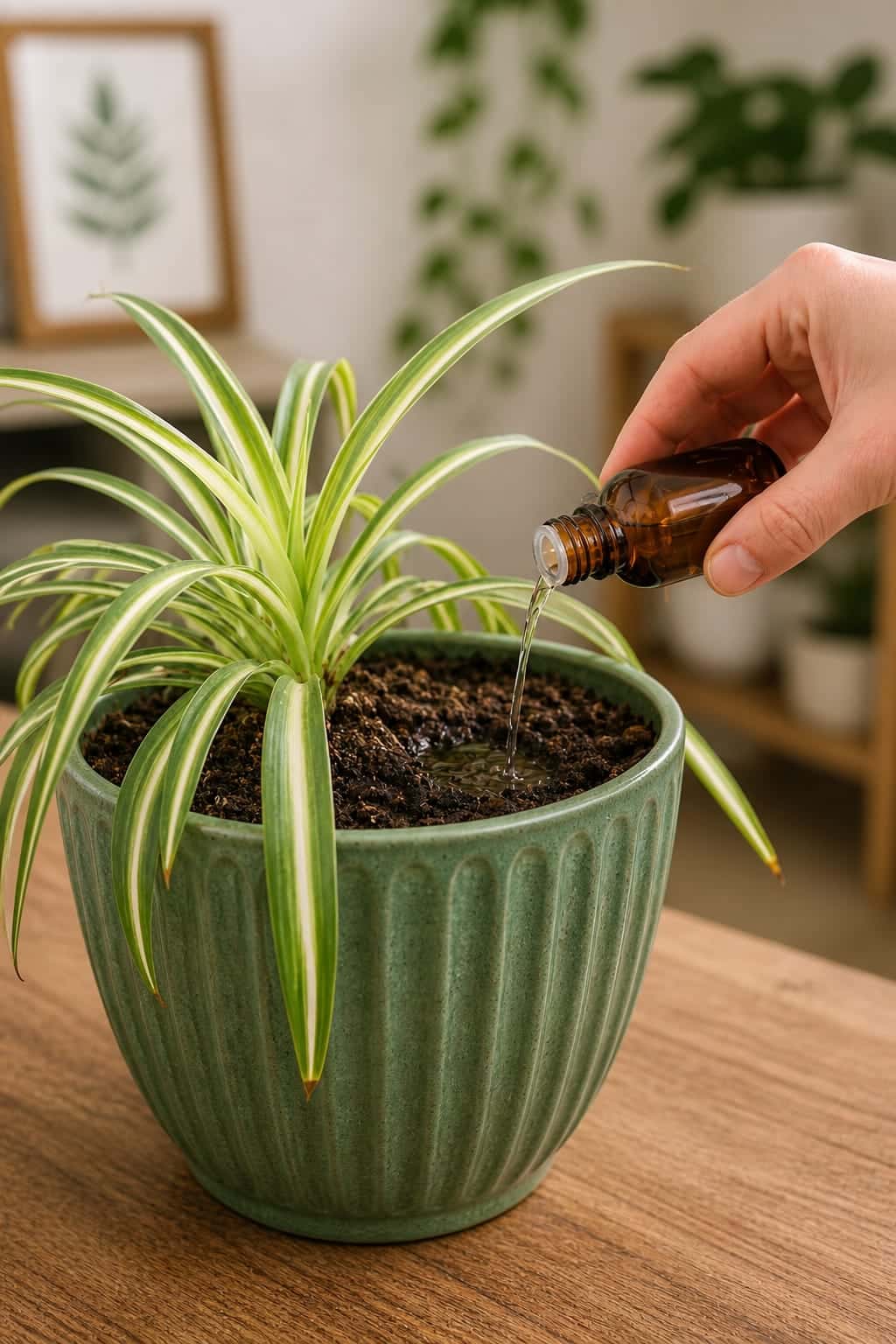
The small bottle spider plant trick looks simple and appealing. A clear liquid poured near the roots suggests a quick boost, a hidden tonic, or a secret nutrient that can make the plant fuller and healthier. But the success of this method depends completely on what is inside the bottle.
If the bottle contains plain water, filtered water, rainwater, or a properly diluted houseplant fertilizer, it can be useful. If it contains concentrated fertilizer, vinegar, alcohol, essential oil, sugar water, milk, or an unknown homemade mixture, it can harm the plant.
Spider plants grow best with bright indirect light, a pot with drainage, light well-draining soil, steady watering, and mild feeding during active growth. They do not need strong or mysterious treatments. In fact, they often look better when care is simple and consistent.
Use the bottle trick only as a controlled feeding or watering method. Dilute nutrients, apply them evenly, keep liquid away from the crown, and let the pot drain completely. If brown tips, yellowing, mold, gnats, or sour soil appear, stop using the liquid and return to basic care.
A healthy spider plant does not need a dramatic secret. It needs the right balance of light, water, air, and gentle nutrition. Give it those basics, and it can reward you with bright striped leaves, strong roots, and plenty of baby plants to grow or share.