Snake plants are among the easiest houseplants to keep alive, but that does not stop plant lovers from looking for simple ways to make them grow stronger, fuller, and more vibrant. Their upright sword-like leaves, bold green patterns, and yellow edges make them look almost sculptural. They can survive missed waterings, tolerate lower light, and stay attractive even when many other houseplants would struggle.
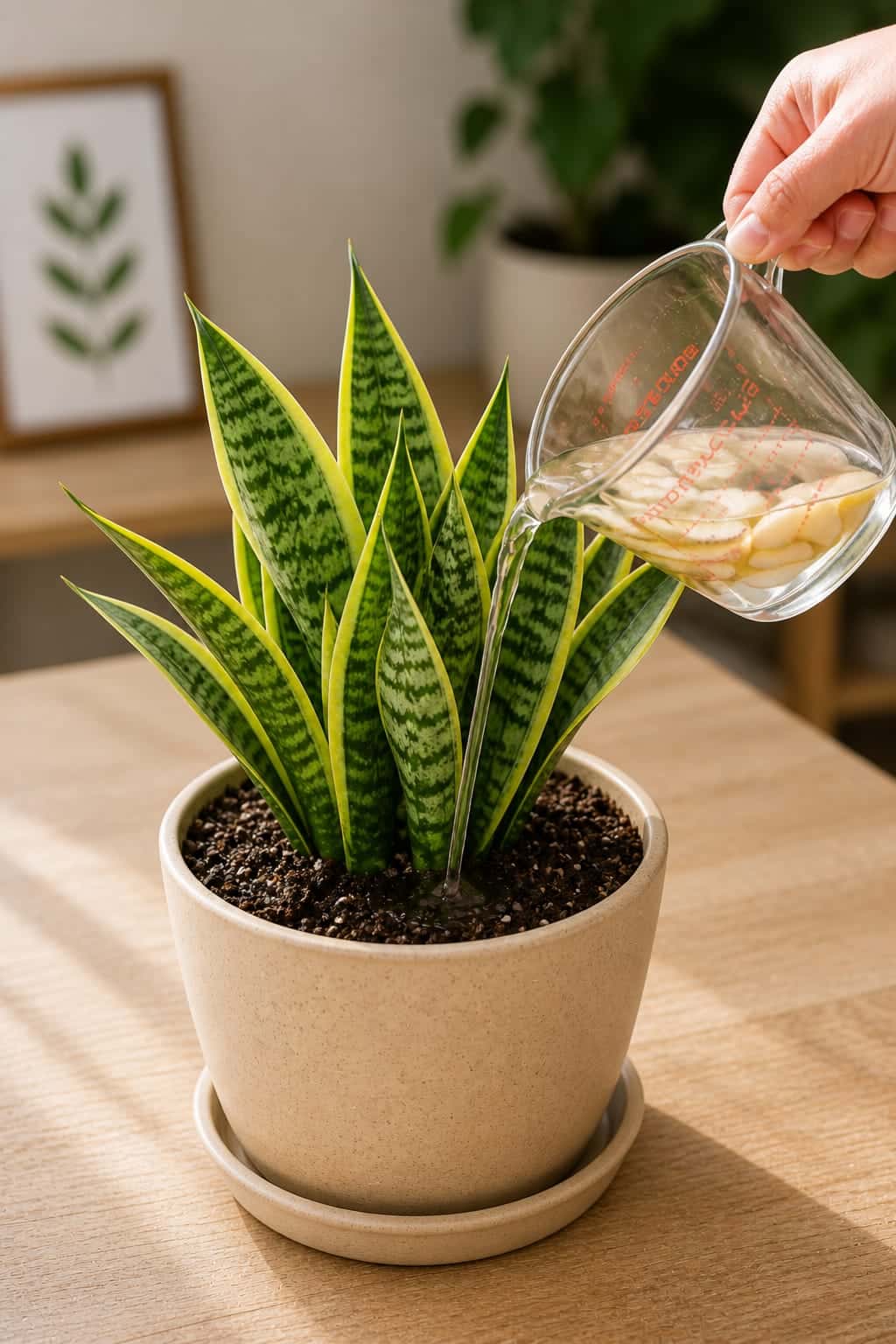
The image shows a healthy variegated snake plant in a beige ceramic pot. A hand is pouring a pale, cloudy liquid from a measuring cup into the soil. Inside the cup, there appear to be rice grains soaking in water. This suggests the popular rice water trick: soaking or rinsing rice, then using that cloudy water on houseplants as a mild homemade plant tonic.
Rice water is one of the most common homemade plant-care hacks online. It is often promoted as a natural fertilizer, root booster, leaf-strengthener, and growth stimulant. The idea sounds appealing because rice water is easy to make, inexpensive, and uses something many people already have in the kitchen. Instead of throwing away water from rinsing rice, you pour it on your plants.
But snake plants are not ordinary moisture-loving houseplants. They are drought-tolerant succulents with thick leaves and rhizomes that store water. They prefer dry periods, airy soil, and careful watering. That means rice water can be helpful only if it is used very lightly and correctly. If used too often, too thick, fermented, or poured into already wet soil, it can cause mold, fungus gnats, sour soil, and root rot.
The safest way to understand this trick is this: fresh, diluted rice water can be used occasionally as a very mild supplement, but it should never replace proper snake plant care. It is not a miracle growth potion, and it cannot fix overwatering, low light, poor drainage, or root rot.
In this guide, you will learn what rice water does for snake plants, how to make it safely, how often to use it, what mistakes to avoid, and what actually helps a snake plant grow strong, upright, and healthy indoors.
What Is the Rice Water Snake Plant Trick?
The rice water snake plant trick is a homemade plant-care method where water used to rinse or soak rice is poured into the plant’s soil. The cloudy water contains small amounts of starch and trace nutrients that wash off the rice grains. Some gardeners believe this can support soil microbes and provide a gentle nutrient boost.
In the image, the rice water is being poured directly into the snake plant’s potting mix. The plant looks healthy, upright, and well established. The pour is going into the soil rather than onto the leaves, which is important. Snake plant leaves should not be soaked or coated with kitchen liquids.
This trick can be safe if the rice water is fresh, weak, unsalted, and used only occasionally. It becomes risky when people use thick starchy water, cooked rice water with salt, fermented rice water, or repeated applications that keep the soil wet.
Can Rice Water Help Snake Plants?
Rice water may provide a very mild boost, but it should not be treated like a complete fertilizer. It may contain small amounts of nutrients and starches that soil microbes can break down. However, the nutrient content is unpredictable and usually weak.
For snake plants, rice water is best thought of as an occasional homemade supplement, not a main feeding routine. It might support healthy soil life in small amounts, but it will not replace light, drainage, proper watering, and a balanced fertilizer used sparingly.
If your snake plant is already healthy, rice water may be harmless when used correctly. If your snake plant is struggling, rice water may not help and could make things worse if the real issue is overwatering or root rot.
What Rice Water Cannot Do
Rice water cannot magically revive a rotten snake plant. It cannot force new leaves overnight. It cannot make a snake plant bloom on command. It cannot fix soil that stays wet for too long. It cannot replace proper drainage or bright indirect light.
This is important because many plant hacks are shown as quick transformations. In reality, snake plants grow slowly. Improvements appear over weeks or months, not overnight.
Rice water is not a cure. It is only a mild optional addition to an already good care routine.
Why Snake Plants Need Special Caution With Homemade Liquids
Snake plants are drought-tolerant. Their thick leaves and underground rhizomes store water, which is why they can survive dry spells. This also means they are vulnerable to overwatering.
Any homemade liquid, including rice water, adds moisture to the pot. If the soil is not dry enough, or if the pot has poor drainage, adding rice water can keep roots wet too long. Wet roots may rot, especially in cool rooms or low light.
Unlike thirsty plants such as peace lilies or ferns, snake plants do not need frequent liquid treatments. Their best care is usually simple: water deeply, let the soil dry, and leave them alone.
The Safest Type of Rice Water for Snake Plants
The safest rice water is fresh rinse water from uncooked plain rice. It should be thin, lightly cloudy, and unsalted. It should not be thick, sticky, sour, or fermented.
Use water from the first or second rinse of plain white or brown rice. Strain out all rice grains before using it. Rice grains left in the pot can mold and attract pests.
Do not use rice water from cooked rice if it contains salt, oil, butter, seasoning, or spices. Those ingredients do not belong in houseplant soil.
How to Make Safe Rice Water for Snake Plants
Making rice water is simple, but it must be clean and mild.
Ingredients
- 1 tablespoon plain uncooked rice
- 2 cups room-temperature water
- A clean bowl or jar
- A strainer
Instructions
- Place the rice in a clean bowl.
- Add the water.
- Swirl the rice gently for 20 to 30 seconds.
- Let it sit for 10 to 20 minutes if you want a slightly stronger rinse.
- Strain out every rice grain.
- Use the cloudy water fresh.
- Discard any leftover rice water after the same day.
The water should look lightly cloudy, not thick like milk. If it feels sticky, dilute it with more plain water before using.
How to Apply Rice Water to a Snake Plant
Use rice water only when the snake plant actually needs watering. Do not pour it on a wet pot just because you made some.
- Check the soil first.
- Make sure the potting mix is dry at least several inches down.
- Use only fresh, strained, unsalted rice water.
- Pour it onto the soil, not the leaves.
- Apply it evenly around the pot instead of one spot.
- Use only enough to lightly water the plant.
- Let excess drain completely.
- Empty the saucer afterward.
If the pot has no drainage hole, do not use rice water. In fact, a snake plant should not be grown directly in a pot without drainage.
How Often Should You Use Rice Water?
For snake plants, rice water should be used rarely. Once every one to two months during spring and summer is enough. Some growers may use it even less often, and many snake plants do not need it at all.
Do not use rice water every week. Do not use it every time you water. Repeated starch additions can encourage mold, fungus gnats, and sour soil.
In fall and winter, skip rice water unless the plant is actively growing in bright conditions. Snake plants use less water and fewer nutrients during slower seasons.
Should Rice Water Replace Fertilizer?
No. Rice water is not a balanced fertilizer. It does not reliably provide the full range of nutrients a plant needs. It may contain small amounts of nutrients, but the levels are inconsistent and mild.
If you want to fertilize a snake plant, use a balanced houseplant fertilizer or cactus fertilizer diluted to half strength or weaker. Feed only during active growth, usually once every two to three months.
Rice water can be an occasional supplement, but it should not be your main fertilizer plan.
Can Rice Water Make Snake Plants Grow Faster?
It may support growth slightly if the plant is already healthy and growing in good conditions. But snake plants are naturally slow growers indoors. Light, temperature, pot size, soil quality, and watering habits affect growth far more than rice water.
If your snake plant is barely growing, it may need more bright indirect light. It may also need fresh well-draining soil, a better pot, or a warmer location.
Rice water will not make a snake plant grow fast if it is sitting in a dark corner or soggy soil.
Can Rice Water Help Snake Plants Produce Pups?
Rice water may mildly support plant health, but it cannot force pups. Snake plant pups grow from underground rhizomes. A mature plant with healthy roots, bright indirect light, and a slightly snug pot is more likely to produce pups.
To encourage pups, focus on these basics:
- Give bright indirect light.
- Use fast-draining soil.
- Keep the plant in a pot that is not too large.
- Water only when dry.
- Feed lightly during active growth.
- Keep the rhizomes healthy.
Rice water can be added occasionally, but it is not the main trigger.
Can Rice Water Make Snake Plants Bloom?
No, rice water cannot guarantee flowers. Snake plants can bloom indoors, but it is uncommon. Flowering usually happens on mature plants under the right conditions, often when the plant is slightly root-bound, receiving enough light, and experiencing a dry-wet rhythm over time.
A rice water pour will not make a young plant produce flowers. If your snake plant does bloom, it is more likely because it has reached maturity and has been growing in favorable conditions for a long time.
Why Fresh Rice Water Is Better Than Fermented Rice Water
Some plant hacks recommend fermenting rice water. This may work in some garden contexts, but it is risky for indoor snake plants. Fermented rice water can smell sour, encourage microbial activity, attract gnats, and make indoor pots unpleasant.
Snake plants do not like wet, biologically active, sour soil. Their root zone should stay airy and dry between waterings.
For indoor snake plants, fresh diluted rice water is much safer than fermented rice water.
Why You Must Strain Out the Rice Grains
Rice grains should never be left in the pot. They can mold, rot, attract insects, and create a sour smell. The image shows rice grains in the measuring cup, which is visually clear, but in real use, the grains should be strained out before watering.
Only the water should go into the pot. No rice pieces, no cooked grains, no starchy clumps.
If rice grains accidentally fall into the soil, remove them immediately.
Can Cooked Rice Water Be Used?
Cooked rice water should be used only if it is completely plain, unsalted, unseasoned, and heavily diluted. Even then, it can be starchier than rinse water, so it may be more likely to encourage mold.
Do not use water from rice cooked with salt, oil, butter, spices, broth, garlic, onion, or seasoning. Those ingredients can harm roots and attract pests.
For snake plants, uncooked rice rinse water is the safer option.
Can Rice Water Cause Mold?
Yes. Rice water can encourage mold if it is too thick, used too often, or poured into soil that stays wet. Starch can feed microorganisms in the soil. In small amounts, this may not be a problem. In excess, it can create fuzzy mold or sour-smelling soil.
If mold appears after using rice water, stop using it. Scrape off the top layer if needed, let the soil dry, improve airflow, and water less often.
If the soil smells bad or the plant becomes soft, inspect the roots.
Can Rice Water Attract Fungus Gnats?
Yes, especially if the soil stays moist. Fungus gnats love damp organic conditions. Rice water used too frequently can make the soil surface more attractive to them.
To prevent gnats, let the soil dry between waterings, avoid leaving grains or residue in the pot, and use rice water rarely. A dry mineral top dressing can also help discourage gnats by keeping the surface less inviting.
If gnats appear, stop using rice water immediately.
Can Rice Water Cause Root Rot?
Rice water itself is not the only cause of root rot, but it can contribute if it keeps the soil wet or encourages sour conditions. Snake plant roots need air and dry periods. Too much moisture around the rhizomes can cause soft, mushy rot.
Root rot signs include yellowing leaves, mushy leaf bases, collapsed leaves, foul smell, and soil that remains wet for too long.
If you suspect root rot, do not add rice water. Remove the plant from the pot and check the roots.
Why the Pot Must Have Drainage
The beige pot in the image sits on a saucer, which suggests it may have drainage. This is good. Snake plants should always be grown in pots with drainage holes.
If rice water or any other liquid is poured into a pot without drainage, it can collect at the bottom. The top may look dry while the lower roots sit in wet soil. This is one of the easiest ways to rot a snake plant.
Always use a draining pot. After watering, empty the saucer so the plant does not sit in runoff.
Best Soil for Snake Plants
Snake plants need fast-draining soil. Standard potting mix alone may hold too much water, especially in large ceramic pots. A better mix includes gritty materials that create air pockets and improve drainage.
A good snake plant soil blend can include:
- 2 parts cactus or succulent mix
- 1 part perlite or pumice
- 1 part orchid bark or coarse coco chips
This mix allows water to move through quickly while still holding enough moisture for the roots to drink. Rice water should never be used to compensate for poor soil. If the soil is dense, repot first.
When Not to Use Rice Water
Do not use rice water if:
- The soil is already wet.
- The pot has no drainage hole.
- The plant has mushy leaves.
- The soil smells sour.
- You see fungus gnats.
- The plant is in low light.
- The room is cold.
- The rice water is fermented.
- The rice water contains salt or seasoning.
- The plant was recently repotted or divided.
In these situations, rice water is more likely to harm than help.
Should You Use Rice Water on Newly Repotted Snake Plants?
No. A newly repotted snake plant needs time to settle. If roots were disturbed or cut, extra moisture and organic liquids can increase the chance of rot.
After repotting, wait before watering if the soil is slightly moist or roots were trimmed. When watering resumes, use plain water first. Wait several weeks before using any supplement.
Should You Use Rice Water on Snake Plant Cuttings?
It is better to avoid rice water for fresh cuttings. Snake plant cuttings are vulnerable to rot. They should be placed in water or soil using clean methods, not starchy liquids.
If propagating in water, use clean plain water and change it regularly. If propagating in soil, let the cutting callus first and use a dry, well-draining mix.
Rice water is not needed for propagation.
Should You Use Rice Water on Pups?
Use caution. Young pups have smaller root systems and can rot if kept too wet. Plain water is safer. Once the pup is established and actively growing, you can use a very weak rice water rinse occasionally, but it is not necessary.
For pups, light, warmth, and careful watering matter more than homemade tonics.
Can Rice Water Be Mixed With Fertilizer?
It is better not to mix rice water with fertilizer. Combining treatments can make the solution too rich or unpredictable. If you want to fertilize, use diluted fertilizer with plain water. If you want to use rice water, use it separately and rarely.
Never add rice water, fertilizer, and other homemade ingredients all at once. Too many additives can overwhelm the soil and stress the plant.
Can Rice Water Be Used With Coffee Grounds?
No. This combination is not ideal for snake plants. Rice water adds starch and moisture. Coffee grounds can hold moisture and compact the soil surface. Together, they can encourage mold, gnats, and slow drying.
Snake plants prefer lean, dry, airy soil. Food-based combinations are usually a bad match.
Can Rice Water Be Used With Eggshell Powder?
It is better not to use multiple homemade amendments together. Eggshell powder breaks down slowly and can add calcium over time, but it can also create residue if overused. Rice water adds moisture and starch.
If you use either, use one at a time and very sparingly. For most snake plants, neither is necessary if the soil and light are good.
Can Rice Water Be Sprayed on Leaves?
No. Do not spray rice water on snake plant leaves. It can leave a sticky film, attract dust, and encourage fungal issues. Snake plant leaves should stay clean and dry.
If the leaves are dusty, wipe them with a damp cloth using plain water. Do not use rice water as a leaf shine.
How to Clean Snake Plant Leaves
Snake plant leaves collect dust over time. Dust can dull their appearance and reduce light absorption. Wipe each leaf gently with a soft damp cloth. Support the leaf with one hand while cleaning with the other.
Avoid oils, milk, mayonnaise, or leaf shine products. These can clog the leaf surface and attract dust.
Clean leaves make a snake plant look healthier instantly.
What If Rice Water Gets on the Leaves?
If rice water splashes onto the leaves, wipe it off with a clean damp cloth. Do not let cloudy residue dry on the leaf surface. It may leave spots or attract dust.
Pay special attention to the areas between leaves. Moisture trapped near the base can contribute to rot.
How Much Rice Water Should You Use?
Use only as much as you would normally water the plant, and only when the soil is dry. For a small to medium pot, a small amount may be enough. For a larger pot, water evenly until a little drains from the bottom.
Do not flood the pot with rice water. Do not keep pouring until the saucer fills heavily. Snake plants need controlled watering.
Should You Dilute Rice Water?
Yes. If the rice water is very cloudy, dilute it with plain water. A weak solution is safer for indoor snake plants.
A good ratio is one part rice water to two or three parts plain water. This reduces starch concentration and lowers the risk of mold or sour soil.
Thin and occasional is safer than thick and frequent.
How Long Can You Store Rice Water?
For snake plants, do not store rice water. Use it fresh the same day and discard the rest. Stored rice water can ferment, smell sour, and grow microbes that may not be ideal for indoor pots.
If rice water smells unpleasant, do not use it. Fresh rice water should have little to no smell.
What If the Soil Smells Bad After Rice Water?
A bad smell means the soil may be staying too wet or the rice water may have encouraged fermentation in the pot. Stop using rice water immediately.
Let the soil dry. Improve airflow. If the smell remains or the plant shows yellowing or soft leaves, remove the plant from the pot and inspect the roots. Repot into fresh dry succulent mix if needed.
What If Mold Appears on the Soil?
If you see white fuzzy mold, scrape off the affected top layer of soil. Stop using rice water. Let the pot dry more between waterings and increase airflow around the plant.
Make sure no rice grains were left behind. Mold often appears when organic residue remains on the soil surface.
If mold keeps returning, repot into fresh well-draining mix.
What If Fungus Gnats Appear?
Fungus gnats are a sign that the soil is staying too damp or contains decaying organic material. Stop using rice water and allow the soil to dry. Remove any residue from the surface.
Use yellow sticky traps to catch adults. For larvae, some growers use mosquito-bit water according to product instructions. The most important long-term solution is better watering and faster-drying soil.
What If the Leaves Turn Yellow?
Yellowing after rice water may indicate overwatering, root stress, or soil problems. Check the moisture level first. If the soil is wet, do not water again. Let it dry and inspect the base of the leaves.
If leaves are soft or mushy near the soil, root or rhizome rot may be starting. Remove the plant from the pot and cut away rotten sections with clean tools.
Do not add more rice water to a yellowing snake plant.
Continue to Page 2
Continue to page 2 for more details about this article and the key points many readers miss on the first page.