What If Leaf Tips Turn Brown?
Brown tips can come from inconsistent watering, fertilizer salts, dry air, root stress, or water quality. Rice water is less likely than fertilizer to cause salt burn, but if it leads to sour soil or microbial buildup, it can still contribute to stress.
Trim brown tips if desired, but fix the cause first. Keep watering simple and avoid repeated homemade treatments.
Rice Water vs. Plain Water
Plain water is safer and more predictable. Rice water may offer a tiny nutrient boost, but it also carries more risk if misused. If you are unsure, choose plain water.
A snake plant can thrive for years with plain water, bright indirect light, fast-draining soil, and rare fertilizer. Rice water is optional, not essential.
Rice Water vs. Liquid Fertilizer
Diluted liquid fertilizer is more complete and predictable than rice water. It provides known nutrients in measured amounts. Rice water varies depending on the rice type, amount, soaking time, and dilution.
If your plant truly needs nutrients, a diluted cactus or houseplant fertilizer is usually better. If you simply want to reuse rice rinse water occasionally, keep it weak and fresh.
Rice Water vs. Banana Peel Water
Banana peel water is another popular homemade plant trick, but it can ferment and attract pests. Like rice water, it is unpredictable and can become problematic indoors.
For snake plants, both should be used rarely if at all. Plain water and occasional diluted fertilizer are simpler and safer.
Rice Water vs. Coffee Water
Coffee water is not recommended for snake plants. It can alter soil conditions, add organic residue, and encourage problems if used often. Snake plants do not need coffee.
Rice water is gentler than coffee in many cases, but it still must be diluted and used sparingly.
Best Care Routine for Snake Plants
If you want your snake plant to stay strong, focus on the basics:
- Place it in bright indirect light.
- Use a pot with drainage holes.
- Plant it in cactus or succulent mix with extra grit.
- Water only when the soil is dry.
- Let excess water drain completely.
- Keep the leaf bases dry and uncovered.
- Feed lightly during spring and summer.
- Avoid heavy homemade amendments.
- Keep leaves clean and dust-free.
- Repot only when needed.
This routine is far more important than any single kitchen trick.
How to Encourage Stronger Leaves
Strong leaves come from good light and healthy roots. If a snake plant is floppy, stretched, or pale, it may need brighter indirect light. Move it closer to a window gradually. Avoid sudden harsh sun, which can burn the leaves.
Do not overwater in an attempt to make leaves stronger. Too much water makes snake plants weaker, not stronger.
How to Encourage More Pups
To encourage pups, keep the plant in bright indirect light and a slightly snug pot. Use well-draining soil and water correctly. Feed lightly during the growing season.
Do not constantly disturb the roots. Snake plants often produce pups when they are settled and healthy.
How to Encourage Flowering
Snake plant flowers are uncommon indoors, but mature plants may bloom under the right conditions. Give the plant bright indirect light, avoid overwatering, keep it slightly root-bound, and allow dry periods between waterings.
Do not try to force flowering with heavy fertilizer or rice water. A stressed plant may decline instead of bloom.
When to Repot a Snake Plant
Repot when the plant is extremely root-bound, the pot is cracking, the soil has compacted, or water no longer drains properly. Snake plants do not need frequent repotting. Every few years is often enough.
Choose a pot only one size larger. A pot that is too large holds too much moisture and increases rot risk.
How to Save a Snake Plant From Overwatering
If your snake plant has been overwatered, stop watering immediately. Remove it from the pot and inspect the roots. Cut away mushy roots or rhizomes with clean scissors. Let healthy sections dry briefly, then repot into fresh dry succulent mix.
Wait before watering again. Give the plant bright indirect light and warmth while it recovers.
Do not use rice water on a recovering overwatered snake plant.
A Safe Rice Water Routine for Snake Plants
If you want to try the rice water trick, use this simple safe routine:
- Use only plain uncooked rice rinse water.
- Strain out all rice grains.
- Dilute the cloudy water with plain water.
- Use it fresh the same day.
- Apply only when the soil is dry.
- Pour onto the soil, not the leaves.
- Use it no more than once every one to two months.
- Skip it in winter or low light.
- Stop if mold, gnats, smell, or yellowing appears.
- Return to plain water if unsure.
This keeps the trick gentle enough for a drought-tolerant plant.
Common Mistakes With the Rice Water Snake Plant Trick
Using Rice Water Too Often
Weekly rice water is too much for most snake plants. It can create mold and keep the soil too wet.
Using Thick Starchy Water
Thick rice water can sour quickly. Dilute it until it is only lightly cloudy.
Leaving Rice Grains in the Pot
Rice grains can rot and attract pests. Always strain them out.
Using Salted Rice Water
Salt can damage roots. Only use unsalted rice water.
Using Fermented Rice Water Indoors
Fermented rice water can smell and encourage gnats. Fresh is safer.
Pouring It Into Wet Soil
Snake plants need dry periods. Never add rice water to already wet soil.
Using It as a Cure for Root Rot
Rice water cannot fix rot. Rotten roots need pruning, drying, and fresh soil.
Frequently Asked Questions
Is rice water good for snake plants?
Rice water can be used occasionally if it is fresh, diluted, unsalted, and strained. It is not essential and should not be used too often.
How often should I give rice water to a snake plant?
Once every one to two months during spring and summer is enough. Skip it during winter or if the plant is in low light.
Can rice water make snake plants grow faster?
Not dramatically. It may provide a mild boost, but bright indirect light, good soil, and proper watering matter much more.
Can rice water cause root rot?
It can contribute to root rot if used too often, used on wet soil, or used in a pot without drainage.
Should I use fermented rice water?
For indoor snake plants, fresh diluted rice water is safer than fermented rice water.
Can I leave rice grains in the soil?
No. Rice grains can mold, rot, and attract pests. Strain them out before using the water.
Can I use cooked rice water?
Only if it is completely plain, unsalted, unseasoned, and diluted. Uncooked rice rinse water is safer.
Can rice water replace fertilizer?
No. Rice water is not a balanced fertilizer. Use diluted cactus or houseplant fertilizer if nutrients are needed.
Can I spray rice water on snake plant leaves?
No. It can leave residue and attract dust. Apply only to the soil.
What should I do if mold appears after rice water?
Stop using rice water, remove the moldy top layer, let the soil dry, improve airflow, and repot if the smell or mold persists.
Final Thoughts
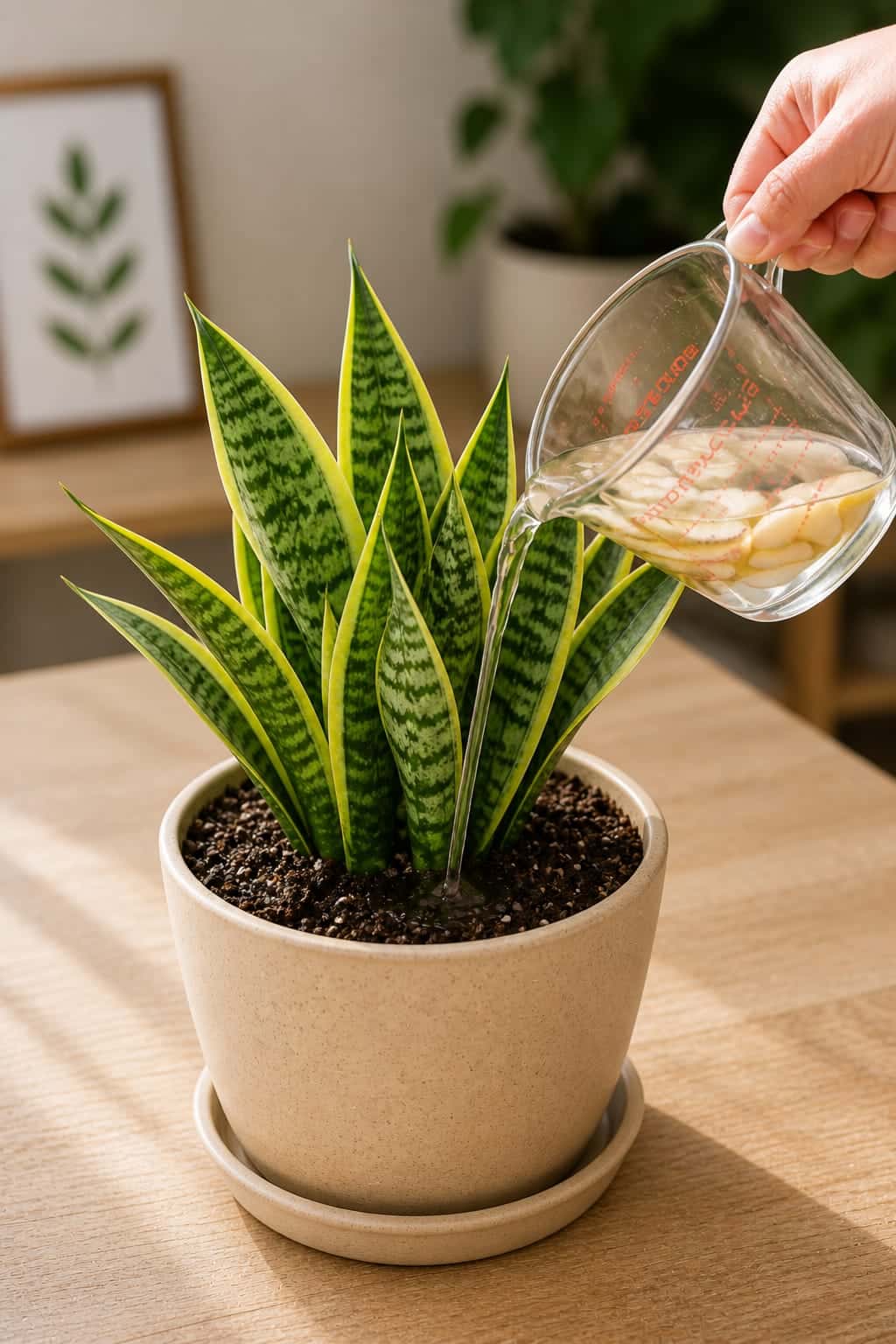
The rice water snake plant trick looks simple and natural. A measuring cup of cloudy rice water poured into the soil suggests an easy homemade boost that can help the plant grow stronger. Used carefully, fresh diluted rice water is unlikely to harm a healthy snake plant. It may offer a tiny amount of nutrition and support soil activity.
But rice water is not a miracle treatment. Snake plants are drought-tolerant plants that need dry periods, drainage, and airy soil. Too much rice water can cause mold, gnats, sour soil, and root rot. The same homemade ingredient that seems helpful in small amounts can become a problem when used too often.
The safest method is to use plain uncooked rice rinse water, strain it well, dilute it, and apply it only when the soil is dry. Use it rarely, no more than once every month or two during active growth. Skip it in winter, low light, wet soil, or any plant showing signs of stress.
For real snake plant success, rely on the basics: bright indirect light, a pot with drainage, fast-draining succulent soil, careful watering, clean leaves, and occasional mild fertilizer. Rice water can be a small optional supplement, but it should never replace good care.
If your snake plant is already healthy, keep the routine simple. If it is struggling, diagnose the real problem before adding anything homemade. A firm, upright, slow-growing snake plant is often happier with less attention, not more. Give it the right conditions, and it can stay beautiful for years with very little help from kitchen tricks.