Thanksgiving cactus is one of those houseplants that feels almost magical when it is happy. For most of the year, it sits quietly with its green segmented leaves, but when the season changes, tiny pink, red, white, orange, or purple buds begin to appear at the tips. Then, almost suddenly, the plant becomes covered in bright holiday flowers.
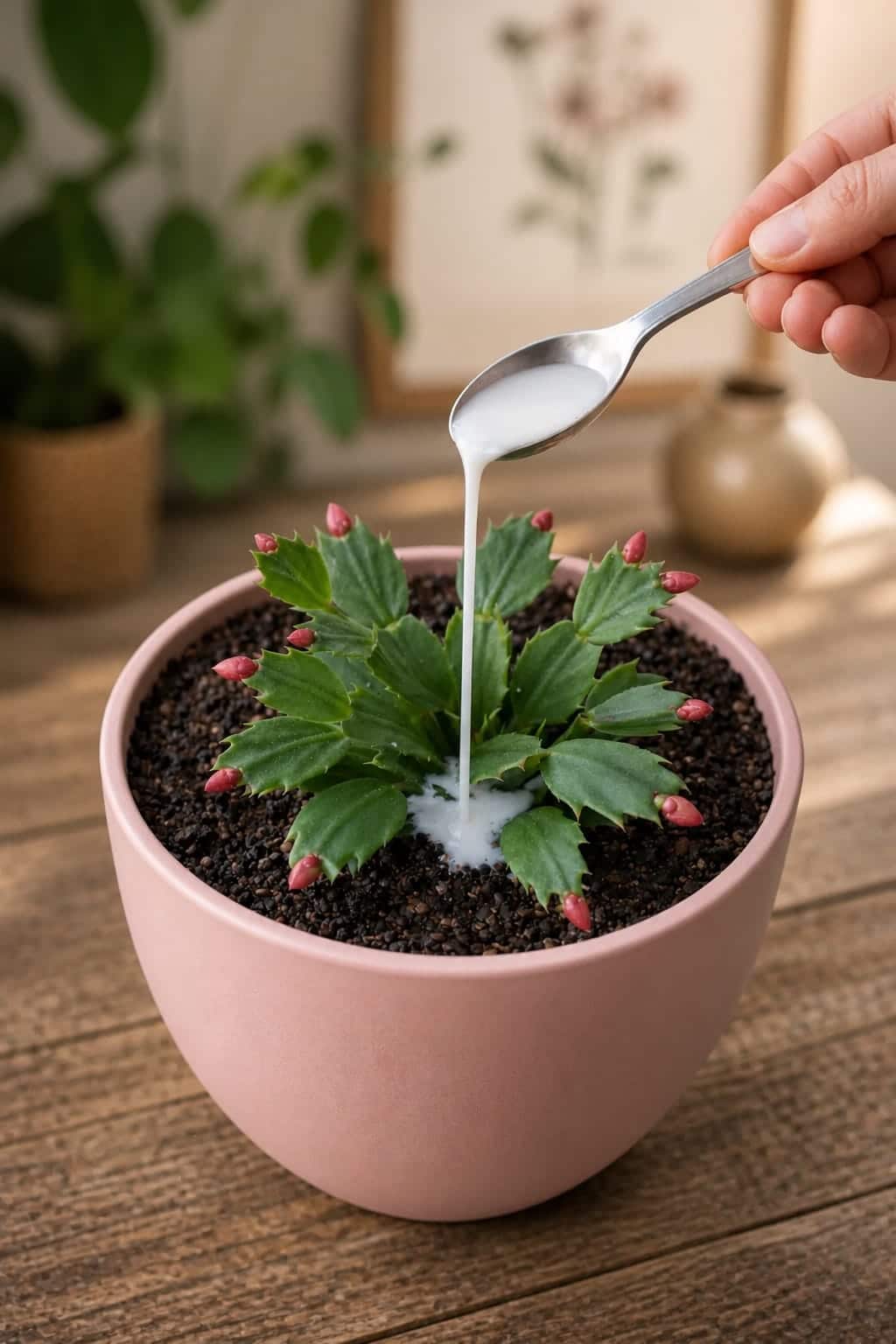
The image shows a young Thanksgiving cactus in a soft pink pot. It has healthy green segmented leaves and small pink buds forming at the ends. A hand is pouring a white liquid from a spoon directly around the base of the plant. This creates the perfect visual for a gentle plant trick: using a mild white liquid tonic to support growth and blooming.
For this trick, the safest version of the white liquid is diluted rice water. Rice water is the cloudy white liquid left after rinsing or soaking plain rice. When used carefully and diluted, it can act as a mild homemade plant tonic. It is not a miracle fertilizer, and it should not replace proper light, watering, soil, and seasonal care. But for a Thanksgiving cactus that is actively growing or preparing to bloom, a small amount of diluted rice water can be used as a gentle boost.
What Is a Thanksgiving Cactus?
Thanksgiving cactus is often confused with Christmas cactus, but they are not exactly the same. Thanksgiving cactus usually has pointed, claw-like edges on its leaf segments, while Christmas cactus has rounder scalloped edges. Thanksgiving cactus often blooms earlier, around late fall, which is why it gets its name.
Unlike desert cacti, Thanksgiving cactus is a tropical forest cactus. In nature, it grows in humid forest environments, often attached to trees or growing in loose organic matter. That means it does not want the same care as a dry desert cactus. It likes bright indirect light, airy soil, moderate moisture, and good drainage.
This is important because many people accidentally treat Thanksgiving cactus like a desert cactus and keep it too dry for too long. Others treat it like a leafy tropical plant and keep it too wet. The secret is balance.
What Is the White Liquid in the Image?
The white liquid in this trick can be explained as diluted rice water. Rice water looks milky because it contains starches washed from the rice. It may also contain tiny amounts of minerals and nutrients, depending on the rice and how it is prepared.
For Thanksgiving cactus, rice water should always be used weak and diluted. A thick, starchy liquid can sour in the soil, attract fungus gnats, and create unpleasant buildup. The goal is a light tonic, not a heavy paste.
The liquid should look faintly cloudy, not thick like milk or cream.
Why Rice Water Can Help Thanksgiving Cactus
Diluted rice water can be useful because it provides a mild organic boost to the soil. It may support beneficial microbes and add a small amount of nutrients. For a plant that is actively growing or forming buds, this can be a gentle support.
But rice water is not a complete fertilizer. Thanksgiving cactus still needs good soil, correct watering, enough light, and proper seasonal temperature changes to bloom well.
Think of rice water as a small helper, not the main reason the plant grows.
The Most Important Rule: Dilute It
Never pour thick rice water straight onto a Thanksgiving cactus. The image shows a white liquid being poured dramatically from a spoon, but in real care, the mixture should be very light.
A safe recipe is:
- 1 tablespoon plain rice water
- 1 cup clean room-temperature water
This creates a gentle diluted tonic that is safer for indoor pots. Use only a small amount around the soil, not directly on the leaves or buds.
How to Make the White Rice-Water Tonic
Use plain uncooked rice. Do not use salted rice water, oily rice water, seasoned rice water, or water from cooked rice that contains butter, spices, or salt. Salt and seasoning can harm houseplants.
Simple Rice-Water Method
- Add a small amount of plain rice to a bowl.
- Pour clean water over it.
- Swirl the rice for 20 to 30 seconds.
- Pour off the cloudy water.
- Dilute one tablespoon of that cloudy water into one cup of fresh water.
- Use a few spoonfuls around the plant’s soil.
This is the easiest and safest method. It creates a mild white liquid without making the mixture too strong.
How to Apply It to Thanksgiving Cactus
Apply the diluted rice water only when the soil is slightly dry. Thanksgiving cactus does not like sitting in wet soil. If the potting mix is already damp, wait a few days.
Use a spoon or small cup and pour the liquid around the base of the plant. Avoid pouring directly into the crown where the stems meet, because trapped moisture can lead to rot.
For a small pot like the one in the image, two to four tablespoons of diluted rice water is enough. You do not need to soak the whole pot with it.
How Often Should You Use Rice Water?
Use diluted rice water only once every three to four weeks during active growth or bud formation. Do not use it every day. Do not use it every time you water.
Too much rice water can create starch buildup, sour smell, mold, or fungus gnats. Thanksgiving cactus prefers clean, balanced care.
Use it as an occasional tonic, not a constant drink.
When Is the Best Time to Use It?
The best time to use the white rice-water tonic is when the Thanksgiving cactus is actively growing or beginning to form buds. In the image, the plant has small pink buds, which means it is preparing to flower. This is a good time for gentle support.
However, once many buds are formed, avoid changing the care routine too much. Thanksgiving cactus can drop buds if it experiences sudden changes in light, temperature, moisture, or location.
Use the tonic lightly and keep everything else stable.
Do Not Use Milk as the White Liquid
Some people may look at the image and think the white liquid is milk. Do not pour milk into a Thanksgiving cactus pot. Milk can sour, smell bad, attract pests, and encourage mold in indoor soil.
Milk is not a safe routine plant tonic for Thanksgiving cactus. It may look pretty in a photo, but it is not the right choice for real plant care.
Use diluted rice water instead.
Do Not Use Coconut Milk
Coconut milk is also not recommended. It is rich, fatty, and can spoil in soil. It may attract insects and create a sticky layer around the roots.
Thanksgiving cactus roots need air. Thick, rich liquids can suffocate the soil and cause problems.
Keep the white liquid thin, clean, and mild.
Do Not Use Cream, Yogurt, or Sweet Drinks
Never use cream, yogurt, sweetened drinks, or sugary liquids on Thanksgiving cactus. These ingredients can rot, smell, and attract pests.
Plants do not need dairy products. They need light, water, air, and balanced nutrients.
The safest white liquid for this trick is diluted plain rice water.
The Right Soil for Thanksgiving Cactus
Thanksgiving cactus needs a loose, airy mix. Heavy soil can hold too much water and cause root rot. A good mix should hold some moisture but drain quickly.
A simple mix can include:
- 2 parts indoor potting mix
- 1 part orchid bark
- 1 part perlite
This gives the roots moisture and airflow. Thanksgiving cactus roots are not deep, heavy roots. They like a light, breathable environment.
Best Pot for Thanksgiving Cactus
Use a pot with drainage holes. This is very important. A decorative pot without drainage can trap water and damage the roots.
Thanksgiving cactus also likes to be slightly snug in its pot. Do not move it into a huge container. A pot that is too large holds excess wet soil, which can lead to root rot.
The pink pot in the image looks beautiful, but the most important detail is drainage.
How to Water Thanksgiving Cactus Correctly
Water when the top inch of soil feels dry. Do not let the plant stay bone dry for too long while it is budding, but also do not keep it soggy.
When you water, water thoroughly enough that moisture reaches the roots, then let excess drain away. Never let the pot sit in standing water.
If using the rice-water tonic, count it as part of your watering routine. Do not add it on top of already wet soil.
Light Requirements for Strong Growth
Thanksgiving cactus grows best in bright indirect light. It can tolerate some gentle morning sun, but harsh afternoon sun can burn the segments.
If the plant does not get enough light, it may grow weak and produce fewer flowers. If it gets too much direct sun, the leaves may turn reddish, pale, or scorched.
A bright window with filtered light is ideal.
How to Encourage More Buds
Thanksgiving cactus needs a seasonal signal to bloom. Shorter days and cooler nights help trigger buds. In fall, place the plant where it gets natural shorter daylight and cooler evening temperatures.
A good blooming routine includes:
- Bright indirect light during the day
- Cooler nights around fall
- No sudden moving once buds appear
- Even moisture, not soggy soil
- No heavy fertilizer during bud formation
The rice-water tonic can support the plant gently, but the bloom trigger comes from light and temperature changes.
Why Buds Fall Off
Thanksgiving cactus buds may fall off if the plant is moved suddenly, watered too much, allowed to dry completely, exposed to drafts, or placed near heat vents.
Once buds appear, keep the plant in the same place. Avoid rotating it too often. Keep moisture steady and avoid strong treatments.
A small spoonful of diluted rice water is fine, but do not flood the plant or change everything at once.
Continue to Page 2
Continue to page 2 for more details about this article and the key points many readers miss on the first page.