Orchids can look mysterious when they struggle. One day they are full of thick green leaves and elegant flowers. Later, the blooms fall, the leaves soften, the roots look tired, and the plant sits there looking half-alive. Many people panic at this stage and start pouring random fertilizers, kitchen liquids, or strong treatments into the pot. But orchids do not like panic care. They like calm, clean, gentle recovery.
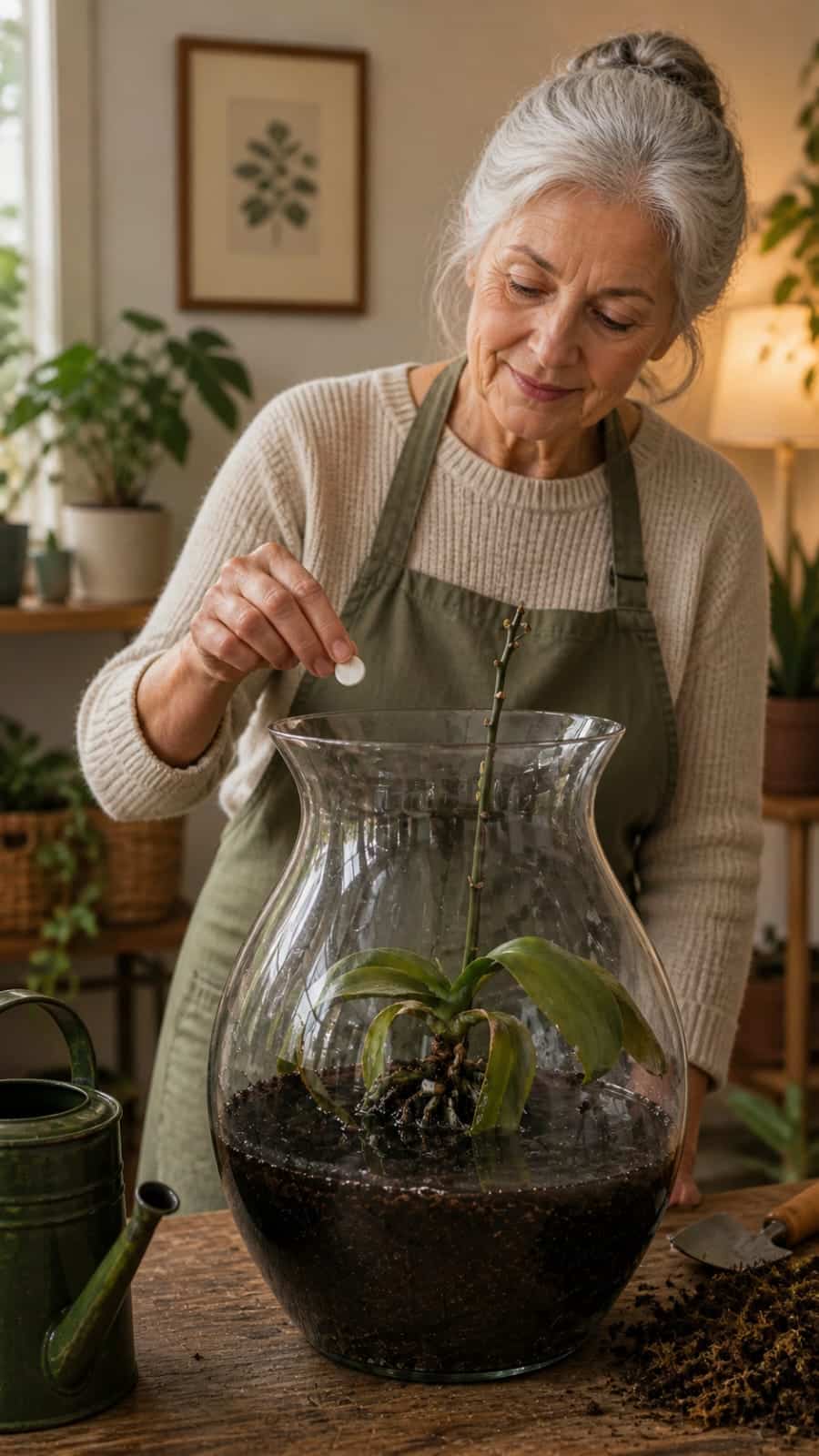
The image shows a woman caring for a weak orchid inside a large clear glass vase. The orchid has a small cluster of leaves, exposed roots, dark moist potting material, and one tall flower spike. She is holding a small white tablet above the container, as if she is about to drop it into the water or soil. This creates a strong “orchid rescue” visual: one small tablet used to wake up a tired plant.
For this trick, the safest plant-care version of the white tablet is a Vitamin B1 rooting tablet or a very mild orchid recovery tablet made for transplant shock. Vitamin B1 is often used by gardeners as a gentle support after repotting, root trimming, or stress. It is not magic, and it does not replace proper orchid care, but it fits the image perfectly as a clean, simple rescue idea.
The key is dilution. You do not drop random pills into the orchid pot. You dissolve the correct type of tablet in water, use a weak solution, soak the roots briefly, then let the orchid drain and breathe. Orchids need oxygen around their roots. A glass vase full of wet, dense material can quickly become dangerous if water sits too long.
What Plant Is in the Image?
The plant looks like a phalaenopsis orchid, one of the most common indoor orchids. It has broad green leaves and a flower spike rising from the center. The plant appears stressed because the leaves are not very full and the roots look dark and tired. The potting setup is unusual because the orchid is inside a large clear glass vase.
Phalaenopsis orchids are epiphytes. In nature, they often grow attached to trees, where their roots receive air, rainwater, and quick drying. They are not plants that enjoy heavy, soggy soil. Their roots need moisture, but they also need oxygen.
This is why any tablet or tonic trick must be used carefully. The goal is not to keep the orchid sitting in a wet glass container. The goal is to give the roots a short, gentle recovery soak and then return them to airy conditions.
What Is the White Tablet?
The white tablet in this trick is best explained as a Vitamin B1 orchid recovery tablet. Some plant-care products come in tablet form and are dissolved in water before use. They are often marketed for transplant shock, root recovery, or stressed plants.
Vitamin B1 is not a complete fertilizer. It does not contain everything an orchid needs to bloom. But it can be used as a mild recovery support after repotting, root trimming, dehydration, or stress.
Do not use random medicine tablets, painkillers, cleaning tablets, dishwasher tablets, bleach tablets, or human supplements with added sugar, flavoring, or other ingredients. Only use a plant-safe rooting or recovery tablet, and always dilute it.
The Safe Orchid Tablet Trick
The trick is simple: dissolve one small plant-safe Vitamin B1 tablet in plenty of clean water, use it as a brief root soak, then drain the orchid completely.
This method is much safer than dropping a tablet directly into the potting medium. A tablet sitting in the pot can create a concentrated spot that may irritate roots or leave residue. Dissolving first gives you control.
You will need:
- 1 plant-safe Vitamin B1 rooting tablet
- 1 liter of room-temperature water
- A clean bowl or container
- Clean scissors if roots need trimming
- Fresh orchid bark if repotting is needed
Basic method:
- Dissolve the tablet fully in 1 liter of water.
- Remove the orchid from soggy or old medium if needed.
- Trim only dead, mushy, or hollow roots.
- Soak healthy roots in the diluted solution for 10 to 15 minutes.
- Remove the orchid and let the roots drain completely.
- Repot into fresh airy orchid bark.
- Keep the plant in bright indirect light.
This gives the orchid a gentle recovery moment without drowning the roots.
Do Not Drop the Tablet Directly Into the Vase
The image shows the tablet above the glass vase, but in real care, it is better not to drop it directly into the orchid container. If the tablet dissolves in one area, it may create a concentrated patch. Orchid roots are sensitive, especially if they are already weak.
Always dissolve the tablet separately in water first. Stir until it is fully dissolved. Then use only the diluted solution.
This small step makes the trick safer and cleaner.
Why Orchids Struggle in Glass Vases
Glass containers look beautiful because you can see the roots and layers of soil or bark. But they can be risky for orchids if they do not have drainage holes. Water can collect at the bottom, keeping the roots too wet. The clear walls may also trap humidity without enough airflow.
Orchid roots need to dry slightly between waterings. If they stay wet all the time, they can rot. A vase can work only if you are very careful with water, use chunky airy medium, and never leave standing water around the roots.
If your orchid is declining inside a vase, the container may be part of the problem.
Check the Roots First
Before using the tablet trick, check the roots. Healthy orchid roots are firm. They may look green when wet and silvery when dry. Some may be pale, white, or light tan depending on the medium.
Bad roots are mushy, black, brown, hollow, or slimy. If the roots smell rotten, the plant needs root cleaning more than any tablet.
The tablet can support recovery only if there are still living roots. It cannot revive roots that are already dead.
How to Clean Weak Orchid Roots
Remove the orchid gently from the container. Shake away old soggy medium. Rinse the roots with room-temperature water. Use clean scissors to trim roots that are mushy, hollow, or rotten.
Do not cut firm roots just because they are not bright green. Some healthy roots naturally look pale or tan. Cut only roots that are clearly dead or soft.
After trimming, the Vitamin B1 soak can be used as a gentle recovery step.
How Long Should the Orchid Soak?
Soak the roots for only 10 to 15 minutes. That is enough. Do not leave the orchid soaking for hours, and do not leave it overnight in the solution.
Orchids are not water plants. Long soaking can reduce oxygen around the roots and make weak roots worse.
A short soak gives support. A long soak creates stress.
What Water Should You Use?
Use room-temperature water. If possible, use rainwater, filtered water, or water that has sat out for a while. Avoid very cold water because it can shock the roots.
If your tap water is very hard or salty, use filtered water. Mineral buildup can damage orchid roots over time.
The tablet solution should be mild and clean.
How Often Should You Use the Tablet Trick?
Use it only after stress events, such as repotting, root trimming, dehydration, or transport shock. Do not use it every week. Do not use it every time you water.
For a weak orchid, one treatment every 4 to 6 weeks is enough, and only if the plant needs support. Healthy orchids do not need constant rescue treatments.
Too much treatment can create buildup and confusion in the care routine.
Can This Make an Orchid Bloom?
The tablet itself will not force flowers. Orchids bloom when they have healthy roots, enough light, proper watering, and the right seasonal cues. For phalaenopsis orchids, a slight drop in night temperature can help trigger flower spikes.
The tablet trick supports root recovery. Better roots can eventually support better leaves and future blooms. But the bloom still depends on the whole care routine.
Think of this trick as root support, not a flower button.
The Real Secret: Airy Orchid Bark
If the orchid in the image is sitting in dense, wet material, the best rescue is repotting into fresh orchid bark. Most phalaenopsis orchids do best in a chunky mix that allows air to move around the roots.
A good orchid mix can include:
- Medium orchid bark
- Perlite
- Charcoal
- A small amount of sphagnum moss if your home is very dry
Do not pack the medium tightly. Orchids like a loose, breathable root zone.
Should You Keep the Orchid in the Glass Vase?
You can keep an orchid in a glass vase only if you are extremely careful with drainage and airflow. The safest option is often to place the orchid in a clear plastic orchid pot with drainage holes, then set that pot inside the decorative glass vase.
That way, you can remove the inner pot for watering, let it drain completely, and then place it back into the vase.
This gives you the beauty of glass without trapping water around the roots.
How to Water After the Tablet Trick
After soaking and repotting, do not water again immediately if the bark is already moist. Let the orchid settle. In the future, water when the bark is nearly dry and roots look silvery.
When watering, soak the bark thoroughly, then drain completely. Never let water sit at the bottom of a closed vase.
Good watering is more important than any tablet.
Where to Place the Orchid After Treatment
Place the orchid in bright indirect light. A spot near an east-facing window or behind a sheer curtain works well. Avoid harsh direct afternoon sun, which can burn the leaves.
Do not place the orchid in a dark corner after rescue. Weak plants need enough light to rebuild energy.
Bright, soft light helps roots and leaves recover.
Should You Fertilize After the Tablet Trick?
Wait. If the orchid has just been trimmed or repotted, give it time to adjust. After a few weeks, when the roots look stable, you can use a proper orchid fertilizer at a weak strength.
A simple rule is “weakly, weekly” during active growth, meaning very diluted fertilizer used regularly, with plain water flushes in between. But for a recovering orchid, start even lighter.
Do not combine strong fertilizer with a recovery tablet on the same day.
What If the Orchid Has a Flower Spike?
The orchid in the image has a tall spike. If the plant is weak but still carrying a spike, decide whether the spike is helping or draining the plant. If the spike is green and forming buds, you may keep it. If the plant has very few roots, it may be better to cut the spike so the orchid can focus on survival.
This can feel difficult, but roots matter more than flowers. A strong orchid can bloom again later. A rootless orchid may not survive if forced to support a spike.
If the plant is extremely weak, choose roots over blooms.
Can You Use Aspirin Instead?
Some people use aspirin water for plants, but it is easy to overdo and is not the safest choice for orchids. Aspirin is acidic and can irritate roots if used incorrectly.
For this image, a plant-safe Vitamin B1 recovery tablet is a better explanation. It is gentler and more appropriate for root support.
Do not use random human medicine on orchids unless you know exactly what you are doing.
Continue to Page 2
Continue to page 2 for more details about this article and the key points many readers miss on the first page.