Anthuriums are among the most beautiful flowering indoor plants you can grow at home. Their glossy heart-shaped leaves and bright red, pink, white, or burgundy spathes make them look like luxury tropical plants, even when they are sitting in a simple ceramic pot on a wooden table. When an anthurium is healthy, it can bloom for weeks and bring a fresh, elegant look to any indoor garden.
But anthuriums can also be sensitive. Their roots do not like heavy soil, their leaves dislike harsh direct sun, and their blooms may slow down when the plant is stressed. Many plant owners try strong fertilizers when they see fewer flowers, but sometimes the plant does not need more fertilizer. Sometimes it needs a cleaner, healthier root zone.
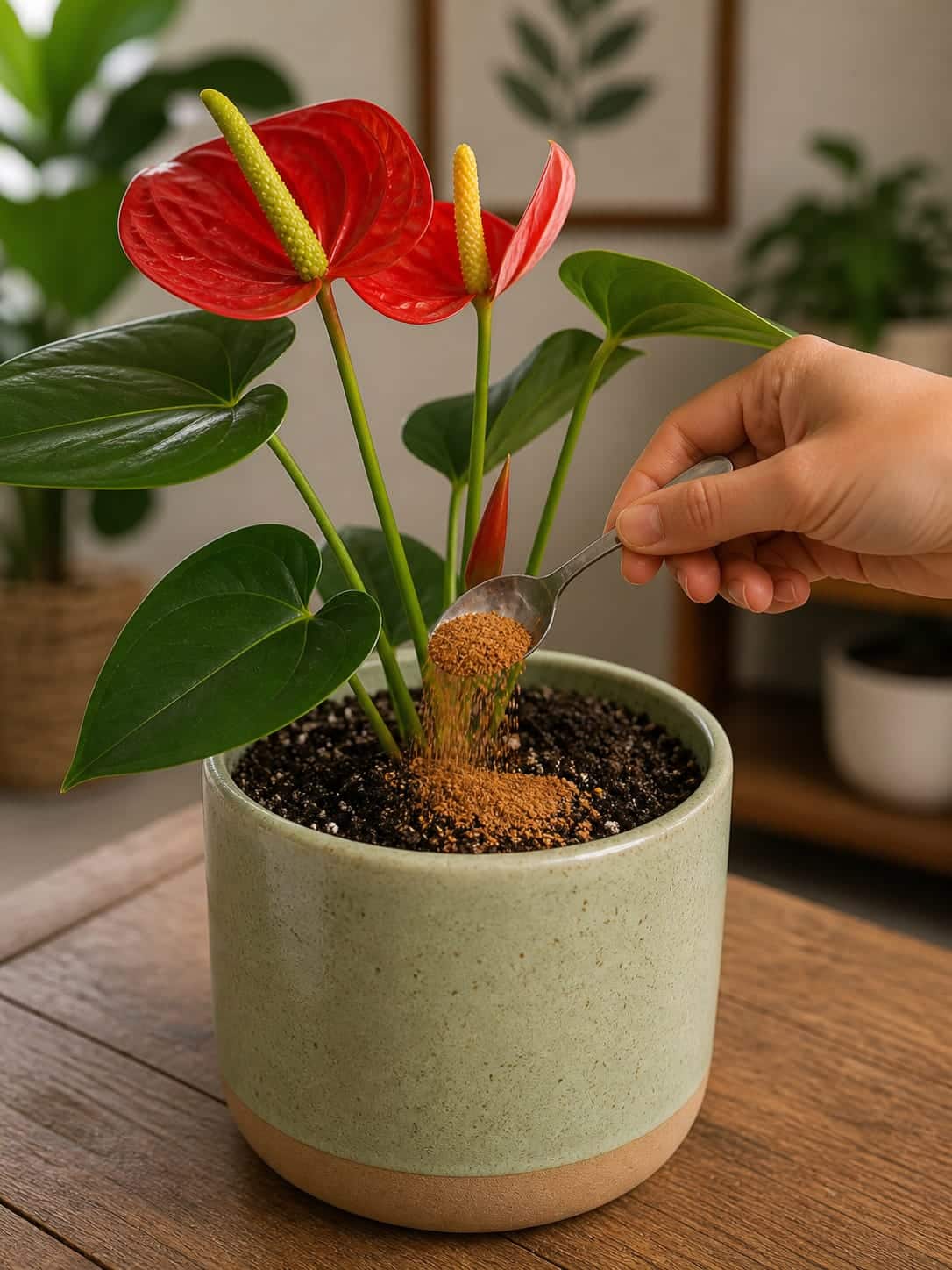
The image shows a blooming red anthurium in a pale green ceramic pot. A hand is sprinkling a fine golden-brown powder around the base of the plant. This powder is best explained as homemade cinnamon powder, a simple natural houseplant care trick often used around the soil surface to help keep the base of the plant clean, dry, and less inviting to fungal problems.
This is not a magic fertilizer. Cinnamon powder does not replace proper plant food, bright indirect light, or good watering habits. But when used lightly and correctly, it can be a helpful part of anthurium care, especially after pruning, repotting, or noticing mild surface mold around the soil.
What Plant Is in the Image?
The plant in the image is an anthurium, also known as flamingo flower, laceleaf, or painter’s palette. Anthuriums are tropical houseplants famous for their shiny green leaves and long-lasting colorful spathes. The red “flowers” are actually waxy spathes, while the yellow upright part is called the spadix.
Anthuriums are popular indoor flowering plants because they look elegant, modern, and expensive. They are often used in home decor, office plant styling, indoor gardening, and tropical houseplant collections. With the right care, they can bloom repeatedly throughout the year.
The plant in the image looks healthy, with glossy leaves and bright red blooms. That means the cinnamon powder trick should be used as a light protective soil treatment, not as an emergency rescue method.
What Is the Brown Powder?
The brown powder in this trick is cinnamon powder. Cinnamon is a common kitchen spice made from the dried inner bark of cinnamon trees. In plant care, it is often used in small amounts as a dry surface powder around cuttings, pruning cuts, and soil areas where mild fungal growth may appear.
For anthuriums, cinnamon powder should be used carefully. A tiny amount can help keep the surface around the stems dry and clean. Too much powder can cake on the soil, block airflow, or irritate sensitive roots if mixed deeply into the potting mix.
The right method is a light dusting on the soil surface only.
Why Gardeners Use Cinnamon Powder on Anthuriums
Anthuriums grow best when their roots are healthy and their potting mix stays airy. Because they like moisture but dislike soggy soil, their root zone can sometimes become vulnerable to mold, fungus gnats, and stem-base problems if the pot stays too wet.
A light cinnamon dusting may help with:
- Keeping the soil surface drier
- Discouraging mild surface mold
- Protecting small pruning cuts
- Supporting a cleaner pot surface
- Reducing musty smells from damp topsoil
- Helping freshly divided plants settle
- Keeping the crown area less wet
This trick works best as a support step. It should always be combined with proper watering, a pot with drainage holes, bright indirect light, and a chunky anthurium soil mix.
Important: Cinnamon Is Not a Complete Fertilizer
Cinnamon powder is not a complete anthurium fertilizer. It does not provide the balanced nitrogen, phosphorus, and potassium that flowering houseplants need for long-term growth. It may support a cleaner soil surface, but it will not feed the plant the way a balanced liquid houseplant fertilizer or mild organic plant food can.
If your anthurium has pale leaves, weak growth, or no blooms for months, the real issue may be low light, poor soil, lack of nutrients, overwatering, or root stress. Cinnamon can help with surface cleanliness, but it cannot replace a full indoor plant care routine.
Think of this trick as a soil shield, not a bloom booster by itself.
How to Make Homemade Cinnamon Powder
You can buy cinnamon powder from the store, but homemade cinnamon powder can be fresher and more aromatic. For plant care, the most important thing is that the powder is plain, dry, and free from sugar, additives, oils, or artificial flavoring.
What You Need
- Plain cinnamon sticks
- A clean dry spice grinder, coffee grinder, or high-speed blender
- A fine sieve
- A dry glass jar with a lid
- A small spoon
Step-by-Step Method
- Choose plain cinnamon sticks with no sugar coating or added flavor.
- Break the sticks into smaller pieces so they fit easily into the grinder.
- Make sure the grinder is completely dry.
- Grind the cinnamon pieces in short pulses until they become powder.
- Let the powder settle for a few seconds before opening the grinder.
- Pour the powder through a fine sieve.
- Grind any larger pieces again.
- Store the fine powder in a dry glass jar.
- Label the jar for plant use if you do not want to mix it with kitchen spices.
The finished cinnamon powder should be fine, dry, and easy to sprinkle. If it becomes clumpy, it has absorbed moisture and should not be used on houseplant soil.
How to Make Cinnamon Powder Without a Grinder
If you do not have a spice grinder, you can still make a small amount by hand, but it takes more effort.
- Break a cinnamon stick into small pieces.
- Place the pieces in a mortar.
- Crush them with a pestle until they become coarse powder.
- Pass the powder through a fine sieve.
- Crush the remaining coarse pieces again.
This method will not always create a very fine powder, but it is enough for a light soil dusting. Avoid large sharp cinnamon pieces near anthurium roots or stems.
Can You Use Store-Bought Cinnamon Powder?
Yes. Store-bought cinnamon powder is fine if it is plain cinnamon. Check the label carefully. It should not contain sugar, cocoa, milk powder, anti-caking blends with unknown ingredients, artificial flavoring, or dessert spice mixes.
Do not use cinnamon sugar. Do not use pumpkin spice mix. Do not use any cinnamon blend made for sweet drinks or baking toppings.
For plant care, plain cinnamon powder is the only safe choice.
How to Apply Cinnamon Powder to Anthurium Soil
The image shows a spoonful of cinnamon being sprinkled near the base of the anthurium. This is close to the right idea, but the amount should be very light. Anthurium roots are sensitive, and the crown area should not be buried under powder.
Safe Application Steps
- Check that the top of the soil is slightly dry.
- Remove any dead leaves, old flowers, or visible mold from the surface.
- Take a very small pinch of cinnamon powder.
- Sprinkle a thin dusting around the soil surface.
- Keep it away from direct contact with wet stems if possible.
- Do not pile powder against the crown.
- Do not mix large amounts deep into the soil.
- Wait a few days before watering again if the soil is already moist.
Use less than you think you need. A light dusting is enough.
How Much Cinnamon Should You Use?
For a medium anthurium pot, use about ¼ teaspoon or less. For a small pot, use only a pinch. The powder should look like a fine dusting, not a thick layer.
Too much cinnamon can form a crust on the soil surface, especially when it gets wet. This can reduce airflow and make the potting mix less breathable.
Anthurium care is all about balance. A small amount can be helpful. A heavy layer can become a problem.
When Should You Use This Trick?
The cinnamon powder trick is best used in specific situations, not every week.
Use it:
- After removing a yellow or damaged leaf
- After pruning an old flower stem
- After dividing or repotting an anthurium
- When mild surface mold appears
- When the topsoil smells slightly musty
- When the crown area needs to stay drier
- After removing dead organic debris from the pot
Do not use cinnamon daily. Do not add it every time you water. It is an occasional plant care trick.
When Not to Use Cinnamon Powder
Do not use this trick if the plant has serious root rot, soggy soil, black mushy stems, or a sour smell from deep inside the pot. Cinnamon powder on the surface will not fix a rotting root system.
Do not use cinnamon if the soil is already covered in thick mold. Remove the moldy layer first and improve airflow. If the problem keeps returning, repot the plant into fresh airy soil.
Do not use cinnamon as a replacement for proper drainage.
Best Soil for Anthuriums
Anthuriums need a chunky, airy soil mix. They naturally grow with roots that enjoy oxygen. Regular indoor potting soil alone can become too dense and wet for them.
A good anthurium potting mix can include:
- 2 parts orchid bark
- 1 part indoor potting soil
- 1 part perlite or pumice
- 1 part coco chips or coco coir
- A small amount of worm castings
This type of mix holds light moisture while still allowing airflow. It helps prevent root rot, supports healthy roots, and creates better conditions for flowering.
Why Drainage Matters More Than Cinnamon
If an anthurium pot has no drainage holes, cinnamon will not save it. Water needs a way to escape. Without drainage, moisture collects at the bottom of the pot and suffocates the roots.
Use a pot with drainage holes. If you love a decorative ceramic pot, keep the anthurium in a plastic nursery pot inside it. Remove the nursery pot when watering, let it drain fully, then place it back.
Healthy anthurium roots need moisture and air at the same time.
How to Water Anthuriums Correctly
Anthuriums like lightly moist soil, but they do not want to stay soaked. Water when the top inch of the potting mix begins to feel dry. Pour water evenly around the soil until it drains from the bottom, then empty the saucer.
Do not water just because the surface looks dry if the deeper soil is still wet. Use your finger, a wooden skewer, or a moisture meter to check the root zone.
If you recently applied cinnamon powder, water carefully so you do not wash a thick pile into the crown. A thin dusting is fine.
Can Cinnamon Help With Fungus Gnats?
Cinnamon may help make the soil surface less inviting, but it is not a complete fungus gnat solution. Fungus gnats usually appear when soil stays too wet and contains decaying organic matter.
To control fungus gnats:
- Let the topsoil dry slightly between waterings
- Remove dead leaves from the pot
- Use yellow sticky traps
- Improve airflow
- Avoid overwatering
- Repot if the soil is old and sour
A light cinnamon dusting can be part of the routine, but moisture control is the real solution.
Can Cinnamon Stop Root Rot?
No. Cinnamon cannot stop serious root rot once the roots are already mushy. Root rot must be handled by removing the plant from the pot, trimming rotten roots, and repotting into fresh well-draining soil.
Cinnamon may be useful after trimming small cuts, but it is not a cure for a severely damaged plant.
If your anthurium smells rotten or the stems are soft at the base, inspect the roots immediately.
How to Use Cinnamon After Pruning Anthuriums
When you remove an old flower stem or yellow leaf, the cut area can sometimes stay moist. A tiny touch of cinnamon powder can help keep the cut area dry.
Pruning Method
- Use clean sharp scissors.
- Cut the old stem close to the base.
- Remove the dead stem from the pot.
- Wait a few minutes for the cut to dry slightly.
- Touch a tiny amount of cinnamon powder near the cut area.
- Avoid covering healthy stems with too much powder.
This works best when the plant is already in good condition and the soil is not wet.
Can You Use Cinnamon on Anthurium Cuttings?
Yes, but only lightly. If you divide an anthurium or take a cutting with roots, a tiny amount of cinnamon can be placed on the cut rhizome area before repotting. Let the cut dry slightly first.
Do not coat the entire root system in cinnamon. Do not dip wet roots into a thick powder layer. Sensitive roots need air and moisture, not a heavy spice coating.
Use cinnamon only on cut areas, not as a root bath.
Best Light for Anthurium Blooms
Anthuriums bloom best in bright indirect light. If the plant receives too little light, it may grow leaves but stop producing flowers. If it receives harsh direct sun, the leaves and spathes can burn.
Place the plant near an east-facing window or behind a sheer curtain near a brighter window. Bright filtered light helps the plant produce energy for new leaves and blooms.
Cinnamon powder will not make an anthurium bloom in a dark corner. Light is essential.
Continue to Page 2
Continue to page 2 for more details about this article and the key points many readers miss on the first page.