Spider plants are usually known as some of the easiest indoor plants to grow. Their long arching leaves, bright green and white variegation, and baby plantlets make them favorites for hanging baskets, windowsills, shelves, offices, bedrooms, and low-maintenance indoor gardens. A healthy spider plant can grow fast, fill a pot beautifully, and produce trailing baby shoots that make the whole plant look full and fresh.
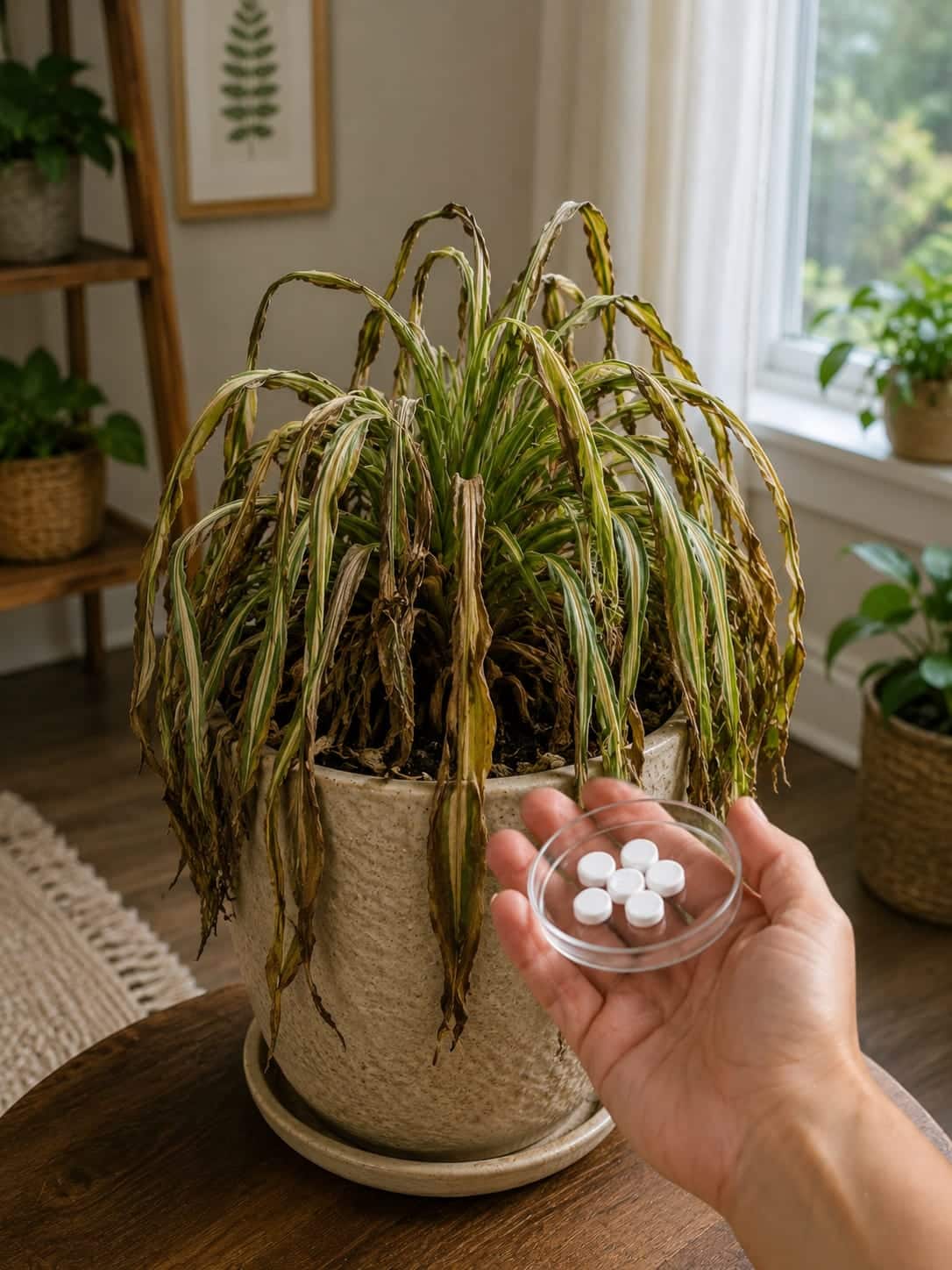
But when a spider plant begins to collapse, it can look dramatic. The leaves bend downward, the tips turn brown, the green color fades, and the plant can suddenly look dry, tired, and almost dead. In the image, the spider plant is badly stressed: many leaves are wilted, brown, and curled, while a hand holds several small white tablets in a dish. This suggests a popular homemade plant care method often called the aspirin water rescue trick.
Aspirin water is sometimes used by gardeners as a mild stress-support tonic because aspirin contains acetylsalicylic acid, which is related to salicylic acid, a natural compound involved in plant stress responses. Some gardeners believe a very weak aspirin solution may help stressed plants recover after shock, pruning, transplanting, or mild decline.
However, this trick must be handled carefully. A dying spider plant does not need a strong dose of tablets. It needs root inspection, correct watering, fresh airflow, proper light, drainage, and only a very diluted tonic if the roots are still alive. Too much aspirin can stress roots, disturb soil balance, and make a weak plant worse.
This guide explains how to identify what is wrong with a dying spider plant, how to make aspirin water safely, how often to use it, when to avoid it completely, and what real steps help a spider plant recover.
What Plant Is in the Image?
The plant appears to be a spider plant, also known as Chlorophytum comosum. Spider plants are popular houseplants with long, narrow, arching leaves. Many varieties have green leaves with white or cream stripes, while others have white centers and green edges.
Spider plants are loved because they are:
- Easy indoor plants for beginners
- Fast-growing houseplants
- Good hanging basket plants
- Great for bright indirect light
- Easy to propagate from baby plantlets
- Adaptable to normal home humidity
- Beautiful air-purifying houseplants
The spider plant in the image is severely stressed. The leaves are limp, yellow-brown, crispy, and collapsing. This means the plant needs diagnosis before any homemade treatment is applied.
What Are the White Tablets?
The white tablets in the image are best understood as aspirin tablets. Many gardeners use aspirin water as a plant rescue tonic, especially for stressed plants. The common idea is to dissolve a small amount of aspirin in water and apply it to the soil or sometimes spray it on leaves.
For indoor spider plants, the safest method is a weak soil drench, not a strong spray and not whole tablets pushed into the pot.
Never place aspirin tablets directly on the soil. They can dissolve unevenly and create a strong chemical spot that may burn roots. Always dissolve and dilute first.
What Is Aspirin Water for Plants?
Aspirin water is a diluted solution made by dissolving a small amount of plain aspirin in water. The reason gardeners use it is that aspirin is related to salicylic acid, a compound associated with plant defense and stress signaling.
In simple gardening language, aspirin water is used as a gentle stress-support tonic. It is not a fertilizer. It does not feed the plant with nitrogen, phosphorus, potassium, or minerals. It does not replace proper watering, light, or soil care.
Aspirin water may be used occasionally to support plants dealing with:
- Transplant shock
- Pruning stress
- Mild wilt
- Environmental stress
- Slow recovery after neglect
- Root-zone stress when roots are still alive
But it cannot revive a completely dead spider plant. It cannot fix rotten roots. It cannot repair a plant kept in soggy soil. It cannot replace repotting when the soil is compacted or sour.
Important Warning Before Using Aspirin Water
Aspirin water should be used as a very weak, occasional treatment only. More is not better. A spider plant with damaged roots is already vulnerable, and a strong tablet solution may make the situation worse.
Do not use aspirin water if:
- The soil is soaking wet
- The pot has no drainage holes
- The plant smells rotten
- The roots are black and mushy
- The crown is soft
- The plant is completely dry and dead
- You are already using fertilizer or other treatments
- The tablets contain caffeine, flavoring, coating, or extra medicine
Use only plain uncoated aspirin. Do not use painkiller blends, cold medicine, effervescent tablets, flavored tablets, or tablets with added ingredients.
First Diagnose the Spider Plant
Before making the tonic, look carefully at the plant. A dying spider plant can decline from several different causes, and each cause needs a different rescue step.
Possible Causes of Collapse
- Overwatering
- Underwatering
- Root rot
- Old compacted soil
- Too much fertilizer
- Tap water mineral buildup
- Direct hot sun
- Low light
- Cold drafts
- Heat stress
- Pests
- Pot too small or rootbound roots
The leaves alone do not tell the whole story. A spider plant can look dry and crispy from underwatering, but it can also look wilted and yellow from root rot. The soil and roots reveal the real problem.
Check the Soil First
Touch the soil before using any treatment.
If the Soil Is Wet
Do not use aspirin water yet. Wet soil with wilting leaves may mean root rot or poor drainage. Adding more liquid can suffocate the roots even more.
If the Soil Is Bone Dry
The plant may be dehydrated. Plain water may help more than aspirin water. Rehydrate gently before adding any tonic.
If the Soil Smells Sour
The roots may be rotting. Do not use aspirin water. Remove the plant from the pot and inspect the roots.
If the Soil Is Hard and Compact
The plant may not be absorbing water properly. Repotting into fresh well-draining soil may be necessary.
Check the Roots Before Using the Trick
A spider plant can recover only if it still has living roots or a living crown. Gently slide the plant out of its pot and inspect the root system.
Healthy Spider Plant Roots
- Firm
- White, cream, or light tan
- Thick and tuber-like
- Fresh-smelling
- Not slimy
Rotten Spider Plant Roots
- Black
- Mushy
- Slimy
- Bad-smelling
- Collapsing when touched
If most roots are rotten, aspirin water is not the first solution. The plant needs trimming and repotting.
How to Make Safe Aspirin Water for Spider Plants
The key is dilution. Use a weak solution, especially for a plant that is already stressed.
Ingredients
- 1 plain uncoated aspirin tablet, 325 mg
- 1 gallon water, or about 4 liters
- Clean jar or watering can
- Spoon for stirring
Steps
- Crush one plain aspirin tablet into powder.
- Add it to 1 gallon of room-temperature water.
- Stir until dissolved.
- Let any undissolved particles settle.
- Use only a small portion for the plant.
- Store no longer than 24 hours.
This is a weak rescue solution. Do not make it stronger for a dying plant.
Extra-Gentle Version for Severe Stress
If the spider plant is badly damaged like the one in the image, use an even weaker solution:
- ½ plain aspirin tablet
- 1 gallon water
Or:
- 1 plain aspirin tablet
- 2 gallons water
A weak plant needs gentle support, not a strong chemical shock.
How to Apply Aspirin Water Correctly
Apply aspirin water only after you know the soil is not wet and the roots are not badly rotten.
Application Steps
- Remove dead leaves first.
- Check that the pot has drainage holes.
- Make sure the soil is slightly dry, not soaked.
- Pour a small amount around the outer soil edge.
- Avoid pouring directly into the crown.
- Let extra liquid drain completely.
- Empty the saucer after drainage.
- Place the plant in bright indirect light.
For a medium pot, use only enough to lightly moisten the root zone. Do not flood the pot.
How Often Should You Use Aspirin Water?
Use aspirin water only once during rescue, then wait. Do not repeat every day. Do not use it weekly as a regular fertilizer.
A safe schedule:
- Use once after diagnosis
- Wait 3 to 4 weeks
- Repeat only if the plant is improving
- Stop completely if leaves worsen
For normal healthy spider plants, aspirin water is usually unnecessary.
Do Not Put Tablets Directly in the Pot
The image shows tablets in a dish, but they should not be placed directly on the soil. Whole tablets dissolve unevenly and may create concentrated spots. This can harm sensitive roots.
Always dissolve tablets in plenty of water first. Then apply only the diluted liquid.
Should You Spray Aspirin Water on Spider Plant Leaves?
Some gardeners use aspirin water as a foliar spray, but for a badly stressed spider plant, soil application is usually safer. Damaged leaves are already weak and may not tolerate residue well.
If you spray, use an extremely weak solution and spray only healthy green leaves in the morning. Avoid spraying brown crispy leaves, the crown, or any plant kept in low airflow.
For this plant, focus on root rescue first.
Step-by-Step Spider Plant Rescue Routine
The aspirin trick works best when combined with proper rescue care.
Step 1: Remove Dead Leaves
Use clean scissors to trim leaves that are fully brown, mushy, or crispy. Do not remove every partially green leaf at once. Any green tissue can still help the plant photosynthesize.
Step 2: Check Soil Moisture
If soil is wet, stop watering. If soil is dry and hard, rehydrate carefully. If soil smells bad, inspect roots.
Step 3: Inspect Roots
Remove the plant from the pot if decline is severe. Cut away rotten roots with clean scissors.
Step 4: Repot if Needed
If the soil is sour, compacted, or root rot is present, repot into fresh soil. Use a pot with drainage holes.
Step 5: Apply Weak Aspirin Water Only if Appropriate
Use aspirin water only after the plant has drainage and living roots.
Step 6: Stabilize the Environment
Place the plant in bright indirect light, away from direct hot sun, heaters, cold drafts, and air conditioner vents.
How to Repot a Dying Spider Plant
If the roots are crowded, rotten, or sitting in bad soil, repotting may save the plant more effectively than any tonic.
Repotting Steps
- Remove the spider plant from the pot.
- Shake away old soil gently.
- Trim black or mushy roots.
- Keep firm white tuber roots.
- Choose a pot with drainage holes.
- Use fresh well-draining potting mix.
- Place the crown at the same soil level.
- Water lightly after repotting.
- Keep in bright indirect light.
After repotting, wait at least 2 to 3 weeks before using aspirin water unless the plant is still stable and not overwatered.
Best Soil Mix for Spider Plant Recovery
Spider plants like soil that holds some moisture but does not stay soggy. A heavy compact mix can damage roots, especially after overwatering.
Good Recovery Mix
- 2 parts indoor potting soil
- 1 part perlite
- 1 part orchid bark or coco chips
This mix keeps moisture available while improving oxygen around the roots.
Best Light for a Recovering Spider Plant
A recovering spider plant needs bright indirect light. Too much direct sun can burn weakened leaves. Too little light slows recovery and keeps the soil wet longer.
Ideal light:
- Near an east-facing window
- Bright room with filtered sunlight
- A few feet from a south or west window
- Under a grow light if the room is dark
Avoid placing the plant in a dark corner while it is recovering.
Watering a Dying Spider Plant Correctly
Spider plants like evenly moist soil during active growth, but they do not like soggy roots. The top inch of soil should dry slightly before watering again.
Water when:
- The top inch feels dry
- The pot feels lighter
- The leaves begin to lose firmness but soil is not wet
Do not water if the soil is still damp. A dying plant often gets worse because people keep adding more water and treatments.
Continue to Page 2
Continue to page 2 for more details about this article and the key points many readers miss on the first page.