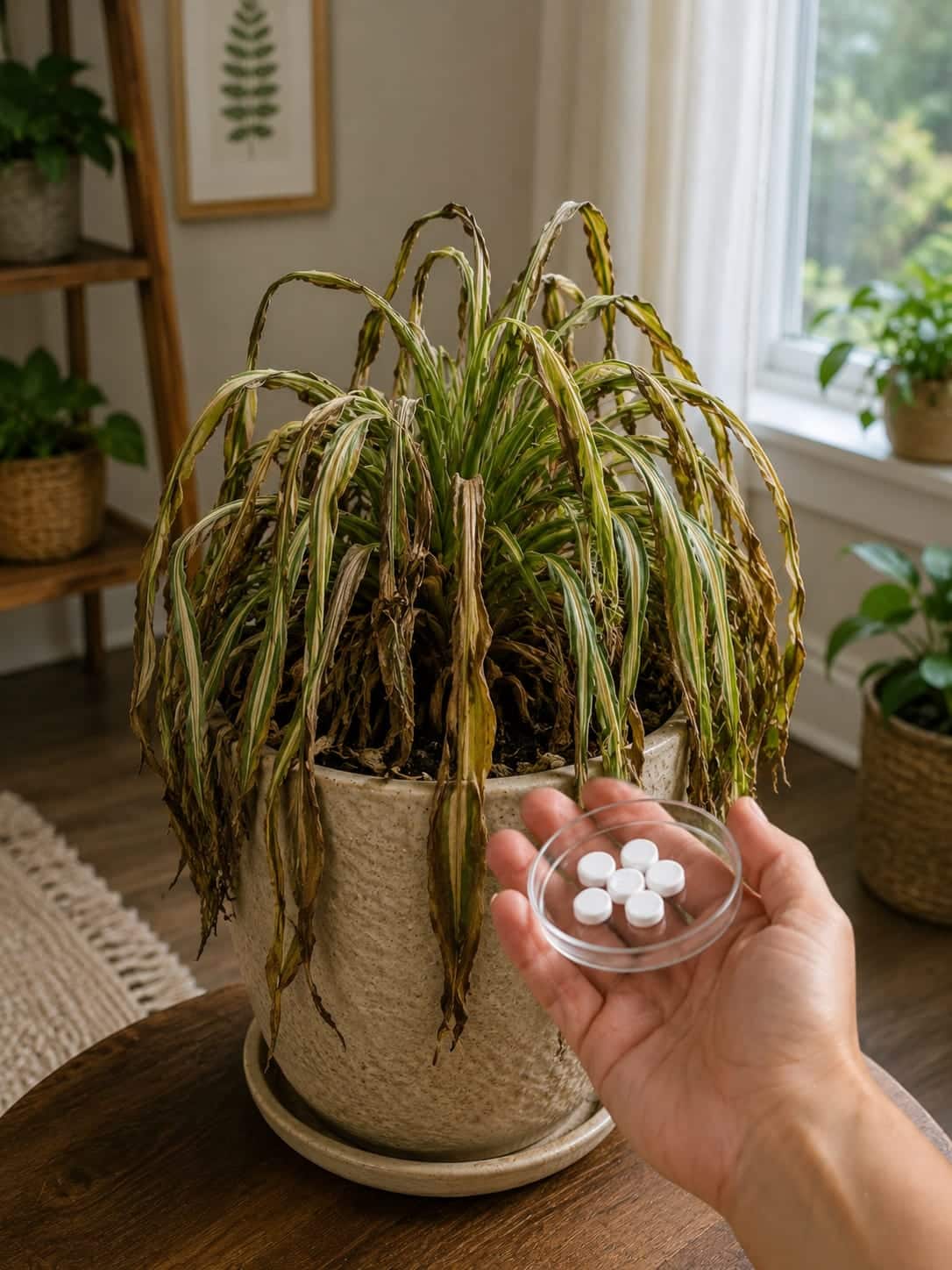
Why Spider Plant Leaves Turn Brown
Brown spider plant leaves can happen for several reasons. Aspirin water is not always the answer.
Common Causes
- Tap water minerals
- Fluoride sensitivity
- Underwatering
- Overwatering
- Low humidity
- Too much fertilizer
- Direct sun burn
- Old leaves naturally dying
- Root stress
If the tips are brown but the plant is otherwise healthy, the issue may be water quality rather than disease.
Use Better Water for Spider Plants
Spider plants can be sensitive to chemicals and minerals in tap water. Brown tips are often linked to water quality. If your spider plant often develops crispy tips, try using filtered water, rainwater, distilled water, or tap water left out overnight.
Better water can improve long-term leaf quality more than repeated homemade tonics.
Can Aspirin Water Replace Fertilizer?
No. Aspirin water is not fertilizer. It does not provide balanced nutrients. It is better described as a stress-support tonic.
Once the spider plant recovers and starts producing new green growth, you can feed it with a balanced houseplant fertilizer at half or quarter strength during spring and summer.
Do not fertilize a spider plant while it is actively collapsing. Wait for recovery signs first.
When to Fertilize After Rescue
Wait until the spider plant shows clear improvement before fertilizing.
Signs it is ready:
- New green leaves appear
- The crown is firm
- Roots are healthy
- Soil dries normally
- No sour smell
- The plant is no longer declining
Then use a weak balanced liquid fertilizer once a month during active growth.
Can Aspirin Water Harm Spider Plants?
Yes, if used too strong or too often. Spider plants are resilient, but stressed roots can be sensitive. Aspirin water should never be used as a daily watering method.
Possible problems from overuse include:
- Root stress
- Leaf burn
- Soil imbalance
- Slower recovery
- Brown leaf tips
- Mineral buildup from tablet fillers
Use it once, then let the plant rest.
What If the Spider Plant Gets Worse After Aspirin Water?
If the plant declines after treatment, stop using aspirin water immediately. The main issue may be root rot, compacted soil, or environmental stress.
Emergency Steps
- Stop all treatments.
- Check the soil moisture.
- Remove the plant from the pot.
- Inspect the roots.
- Trim rotten roots.
- Repot into fresh draining soil.
- Water lightly with plain water.
- Keep in bright indirect light.
A plant that worsens after treatment usually needs root care, not more tonic.
Can You Save Spider Plant Babies Instead?
If the mother plant is badly damaged but still has spider plant babies, saving the babies may be easier. Spider plant plantlets root quickly in water or soil.
How to Root Spider Plant Babies
- Cut healthy plantlets from the mother plant.
- Place the base in water or moist soil.
- Keep in bright indirect light.
- Wait for roots to develop.
- Pot into fresh soil once roots are strong.
If the main plant is too far gone, propagation gives you a fresh start.
Spider Plant Rescue Table
| Problem | Likely Cause | Best Fix |
|---|---|---|
| Wet soil and wilted leaves | Overwatering or root rot | Inspect roots and repot |
| Dry crispy leaves | Underwatering or heat stress | Rehydrate slowly |
| Brown tips only | Tap water minerals or fertilizer salts | Use filtered water and flush soil |
| Yellow leaves | Watering imbalance or low light | Adjust watering and light |
| Collapsed crown | Severe rot | Remove damaged parts and propagate |
| No new growth | Low light or root stress | Improve light and check roots |
Simple Aspirin Water Recipe for Spider Plants
Ingredients
- 1 plain uncoated aspirin tablet, 325 mg
- 1 gallon clean water
Instructions
- Crush the aspirin tablet.
- Dissolve it in 1 gallon water.
- Stir well.
- Use only when the plant has living roots and the soil is not wet.
- Pour a small amount around the soil edge.
- Let the pot drain fully.
- Use once, then wait 3 to 4 weeks.
Extra-Safe Rescue Recipe
For a severely stressed spider plant:
- ½ aspirin tablet
- 1 gallon water
Apply only a small amount. The rest should be discarded or used on other appropriate plants within 24 hours.
Common Mistakes to Avoid
- Putting tablets directly in the pot
- Using multiple tablets in a small glass of water
- Applying aspirin water to wet soil
- Using coated or flavored tablets
- Using painkiller blends instead of plain aspirin
- Repeating the treatment every few days
- Ignoring root rot
- Keeping the plant in low light
- Leaving water in the saucer
- Fertilizing while the plant is collapsing
Best Recovery Routine After Aspirin Water
After applying aspirin water, the plant needs rest and stable care.
First Week
- Keep in bright indirect light
- Do not fertilize
- Do not water again unless soil dries
- Remove fully dead leaves
- Keep away from drafts
Second Week
- Check soil moisture
- Look for crown firmness
- Watch for new green growth
- Avoid moving the plant repeatedly
Third to Fourth Week
- Inspect recovery progress
- Repot if decline continues
- Resume plain water only
- Wait before fertilizing
Signs the Trick Is Helping
Spider plants recover from the center. Do not expect old brown leaves to turn green again. Look for new growth instead.
Good signs include:
- New green leaves emerging
- Crown feels firm
- Leaves stop collapsing
- Soil dries normally
- No rotten smell
- Roots remain firm
- Plantlets begin growing again
Old damaged leaves can be trimmed gradually once new growth appears.
Signs the Plant Is Too Far Gone
Sometimes a spider plant cannot be saved. If the crown is rotten and no healthy roots remain, propagation may be the only option.
Bad signs include:
- All roots are mushy
- The crown is soft and rotten
- No green tissue remains
- The plant smells bad
- Leaves detach easily from the base
- No improvement after repotting
If healthy baby plantlets remain, save those and start again.
Short Caption for This Trick
“For a dying spider plant, use aspirin water only as a weak rescue tonic: dissolve 1 plain uncoated aspirin tablet in 1 gallon of water, then pour a small amount around the soil edge only if the roots are alive and the soil is not wet. Do not put tablets directly in the pot, and do not repeat more than once every 3 to 4 weeks.”
Frequently Asked Questions
Is aspirin good for spider plants?
A very weak aspirin solution may support a stressed spider plant, but it is not a fertilizer or miracle cure. It should be used rarely and only after checking the roots and soil.
How much aspirin should I use for plants?
Use 1 plain 325 mg aspirin tablet per 1 gallon of water. For weak plants, use half that strength.
Can I put aspirin tablets directly in the soil?
No. Tablets can dissolve unevenly and damage roots. Always dissolve aspirin in plenty of water first.
Can aspirin water fix root rot?
No. Root rot requires trimming rotten roots, repotting into fresh soil, and improving drainage. Aspirin water will not repair mushy roots.
How often should I use aspirin water?
Use it once, then wait 3 to 4 weeks. Do not use it weekly or daily.
Can I spray aspirin water on spider plant leaves?
It is better to apply it to the soil for a stressed plant. Damaged leaves may not tolerate spray residue well.
Why is my spider plant dying?
Common causes include overwatering, underwatering, root rot, poor drainage, low light, direct sun, fertilizer buildup, or tap water minerals.
Should I fertilize a dying spider plant?
No. Wait until new healthy growth appears. Fertilizer can burn stressed roots.
Can brown spider plant leaves turn green again?
No. Brown leaves will not recover. Trim them gradually and focus on new growth from the crown.
Can I save spider plant babies if the mother plant dies?
Yes. Healthy plantlets can be rooted in water or soil and grown into new spider plants.
Final Thoughts
The aspirin water rescue trick can be useful for a stressed spider plant, but only when used carefully. The image shows a badly wilted spider plant and several white tablets, suggesting a tablet-based rescue method. The safe version is not to push tablets into the soil or make a strong solution. The safe version is to dissolve one plain aspirin tablet in a full gallon of water and use only a small amount after checking that the plant still has living roots.
For real spider plant recovery, the most important steps are diagnosis and correction. Check the soil. Inspect the roots. Remove dead leaves. Repot if the soil is sour or compacted. Give bright indirect light. Use clean water. Keep the saucer empty. Avoid fertilizer until new growth appears.
Aspirin water may support a plant under stress, but it cannot replace proper indoor plant care. If root rot is the problem, repotting is more important. If underwatering is the problem, plain water and stable moisture matter more. If poor light is the issue, the plant needs a better location.
Used wisely, this gentle aspirin water tonic can be one small part of a spider plant rescue routine, helping a weak plant recover without overwhelming its roots. The real secret is not the tablet alone — it is combining the trick with smart watering, healthy soil, drainage, and patience.