Snake plants are one of the easiest indoor plants to grow, and once you own one healthy plant, you can multiply it into many more. Their tall upright leaves, bold green patterns, yellow edges, and strong architectural shape make them perfect for bedrooms, offices, living rooms, plant shelves, apartment decor, and low-maintenance indoor gardens. If you are looking for the best way to propagate snake plants at home, this simple method will give you unlimited new plants for free.
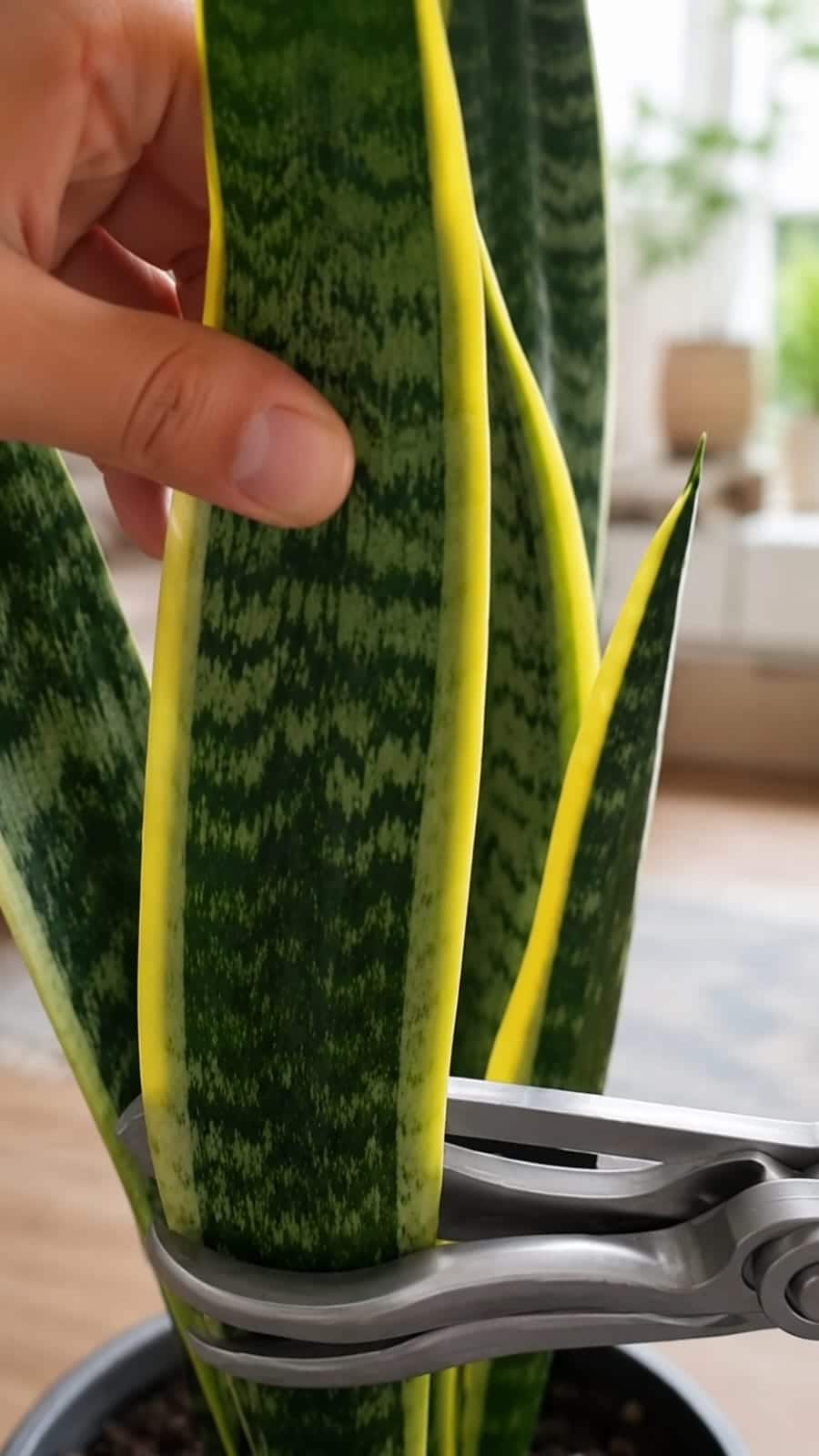
The image shows a healthy variegated snake plant leaf being cut near the base with pruning shears. This is the first step in one of the most popular snake plant propagation methods: multiplying snake plant from leaf cuttings. This easy snake plant propagation technique is perfect for beginners and experienced plant lovers alike.
This method is simple, affordable, and beginner-friendly. You cut a healthy leaf, divide it into sections, let the cut ends dry, then place the sections in soil or water until roots and new pups begin to grow. With patience, one single leaf can become several new snake plants. This step-by-step snake plant cutting guide will walk you through everything you need to know.
But there is one very important detail many people miss:
If your snake plant has yellow edges, leaf cuttings may grow new plants without the yellow border.
That means the new baby plants may come out mostly green. If you want to keep the exact yellow-edged variegation, division is usually the better method. Still, leaf cutting propagation is an excellent way to multiply snake plants, especially if you want more plants from one large mother plant. This snake plant propagation for yellow-edged varieties tip will save you from disappointment.
What Plant Is in the Image? – Understanding Snake Plant Basics
The plant in the image is a snake plant, commonly known as Sansevieria or Dracaena trifasciata. The yellow-edged type is often called Dracaena trifasciata ‘Laurentii’. This popular indoor succulent is a top choice for low-light houseplants and modern home decor with plants.
Snake plants are loved because they are:
- Low-maintenance indoor plants
- Drought-tolerant houseplants
- Great for beginners
- Excellent for modern home decor
- Easy to propagate
- Slow-growing but long-lasting
- Suitable for bright indirect light and lower-light rooms
A mature snake plant grows from underground rhizomes. These rhizomes send up new shoots, also called pups. Propagation works by encouraging either leaf cuttings or divided rhizomes to produce new roots and new growth. This snake plant propagation from leaf cuttings method is the most accessible for home gardeners.
Can You Really Multiply Snake Plant From One Leaf? – Yes, Here’s How
Yes, you can multiply a snake plant from one healthy leaf. A single leaf can be cut into several pieces, and each piece can grow roots. Eventually, new shoots can form from the base of the cutting. This free snake plant propagation method saves money and expands your plant collection.
This process is slow, but it works well when done correctly.
Snake plant propagation is popular because it allows you to:
- Create new plants for free
- Save a damaged plant
- Fill more pots indoors
- Share cuttings with friends
- Grow new plants from pruning
- Refresh an old crowded snake plant
The key is patience. Snake plant cuttings can take weeks to root and months to produce new pups. This best time to propagate snake plant is during the active growing season.
The Important Warning About Yellow Edges – Variegation and Propagation
The snake plant in the image has beautiful yellow edges. This is a variegated type. If you propagate this plant by leaf cuttings, the baby plant may lose the yellow border and grow as a plain green snake plant. This snake plant variegation loss in propagation is a common but important consideration.
This happens because leaf cuttings from variegated snake plants often do not reproduce the same variegation pattern. The new pups may revert to the non-variegated form.
If your goal is to keep the yellow edges, use division instead of leaf cuttings.
Best Method for Keeping Yellow Edges
- Use rhizome division
- Separate pups from the mother plant
- Keep roots attached
- Repot each division separately
Best Method for Making Many New Plants
- Use leaf cuttings
- Accept that new plants may be green
- Start several cuttings at once
- Be patient with rooting
Understanding snake plant propagation for variegated varieties helps you choose the right method for your goals.
Two Main Ways to Multiply Snake Plant – Leaf Cuttings vs Division
There are two reliable ways to multiply snake plants at home. This comparison of snake plant propagation methods will help you decide.
1. Leaf Cutting Propagation
This is the method shown in the image. You cut a leaf, divide it into sections, and root the sections in soil or water.
Best for:
- Making many new plants
- Using a damaged or extra leaf
- Beginner propagation projects
- Growing green snake plants from cuttings
2. Division Propagation
This method separates the mother plant into smaller plants with roots and rhizomes attached.
Best for:
- Keeping yellow-edged variegation
- Getting faster results
- Repotting crowded plants
- Creating stronger new plants immediately
Both methods work, but they serve different goals. This step-by-step snake plant division guide is perfect for preserving variegation.
Best Time to Propagate Snake Plant – Seasonal Timing for Success
The best time to multiply snake plant is during the active growing season. Choosing the optimal snake plant propagation season increases your success rate.
Best seasons:
- Spring
- Early summer
- Warm growing months
Avoid propagation during cold winter months unless your home is warm and bright. Snake plants root faster when temperatures are stable and warm.
What You Need to Multiply Snake Plant From Leaf Cuttings – Supplies Checklist
Before cutting, prepare everything. Clean tools reduce the risk of rot and infection. This snake plant propagation supplies list will help you gather what you need.
Supplies
- Healthy snake plant leaf
- Clean sharp scissors or pruning shears
- Small pots with drainage holes
- Cactus or succulent soil mix
- Perlite or pumice
- Optional rooting hormone
- Plant labels
- Clean water if using water propagation
Drainage is essential. Snake plant cuttings rot easily if placed in heavy wet soil. Using best soil for snake plant cuttings is crucial for success.
How to Choose the Best Leaf for Propagation – Selecting Healthy Material
Choose a mature, healthy leaf. Do not use a leaf that is mushy, yellowing, rotting, or badly diseased. This snake plant leaf selection guide ensures you start with the best material.
A good propagation leaf should be:
- Firm
- Thick
- Mostly green
- Free from rot
- Free from pests
- Long enough to divide into sections
If the leaf has a dry brown tip but the rest is firm, it can still be used. Cut away damaged parts before propagating.
How to Cut Snake Plant Leaves Correctly – Proper Cutting Technique
The image shows the leaf being cut close to the base. This is a common method. Cut carefully so you do not damage nearby leaves. This proper snake plant leaf cutting technique prevents damage to the mother plant.
Steps
- Clean your scissors or pruning shears.
- Select a healthy outer leaf.
- Hold the leaf firmly with one hand.
- Cut the leaf near the soil line.
- Remove the whole leaf cleanly.
- Place the leaf on a clean surface.
Do not tear the leaf by hand. A clean cut heals better and reduces the risk of rot.
How to Divide the Leaf Into Cuttings – Sizing and Orientation
Once the leaf is removed, cut it into smaller sections. Each section can become a new cutting. This snake plant cutting size guide ensures each piece has enough energy to root.
Cutting Size
Each cutting should be about 3 to 5 inches long.
Very Important: Keep the Direction Correct
Snake plant cuttings must be planted in the same direction they were growing. The bottom end must go into the soil or water. If you plant the cutting upside down, it usually will not root properly. This snake plant cutting orientation tip is often overlooked but critical.
Simple Direction Trick
Cut the bottom end into a V shape or mark it with a tiny notch. This helps you remember which end goes down.
Steps
- Lay the leaf flat.
- Cut it into 3 to 5 inch sections.
- Mark the bottom end of each piece.
- Keep all pieces facing the same direction.
- Let the cuttings dry before planting.
Why You Must Let Snake Plant Cuttings Dry – The Callusing Process
This is one of the most important steps. Fresh snake plant cuttings are juicy. If you place them directly into wet soil, they can rot. This snake plant cutting callusing guide prevents root rot.
Letting the cut end dry creates a callus. This helps protect the cutting.
How Long to Dry Cuttings
- Small cuttings: 24 hours
- Thick cuttings: 2 to 3 days
- Very humid rooms: up to 4 days
Place the cuttings in a dry, shaded spot with good airflow. Do not place them in direct sun.
Method 1: Propagating Snake Plant Cuttings in Soil – Step-by-Step
Soil propagation is usually the safest and most natural method for snake plants. It reduces transplant shock because roots grow directly in soil. This soil propagation for snake plant cuttings method is beginner-friendly.
Best Soil Mix for Cuttings
- 2 parts cactus or succulent mix
- 1 part perlite or pumice
- Optional small amount of coarse sand
The mix should drain quickly and feel loose, not heavy and muddy.
Soil Propagation Steps
- Let the cuttings callus first.
- Fill a small pot with dry or barely moist cactus mix.
- Insert the bottom end of each cutting about 1 inch into the soil.
- Press soil gently around the cutting so it stands upright.
- Place the pot in bright indirect light.
- Wait several days before watering lightly.
- Water only when the soil is completely dry.
Do not keep the soil wet. Snake plant cuttings need moisture to root, but too much moisture causes rot.
Continue to Page 2
Continue to page 2 for more details about this article and the key points many readers miss on the first page.