Orchids are among the most beautiful indoor plants, but they can also be some of the most misunderstood. When they are healthy, they look elegant and expensive, with glossy green leaves, firm roots, and long flower spikes covered in delicate blooms. But when they become weak, they can look heartbreaking. Leaves turn yellow. Roots dry, rot, or shrivel. Flowers collapse. Buds fall before opening. The plant that once looked like a luxury decoration suddenly looks tired, fragile, and almost beyond saving.
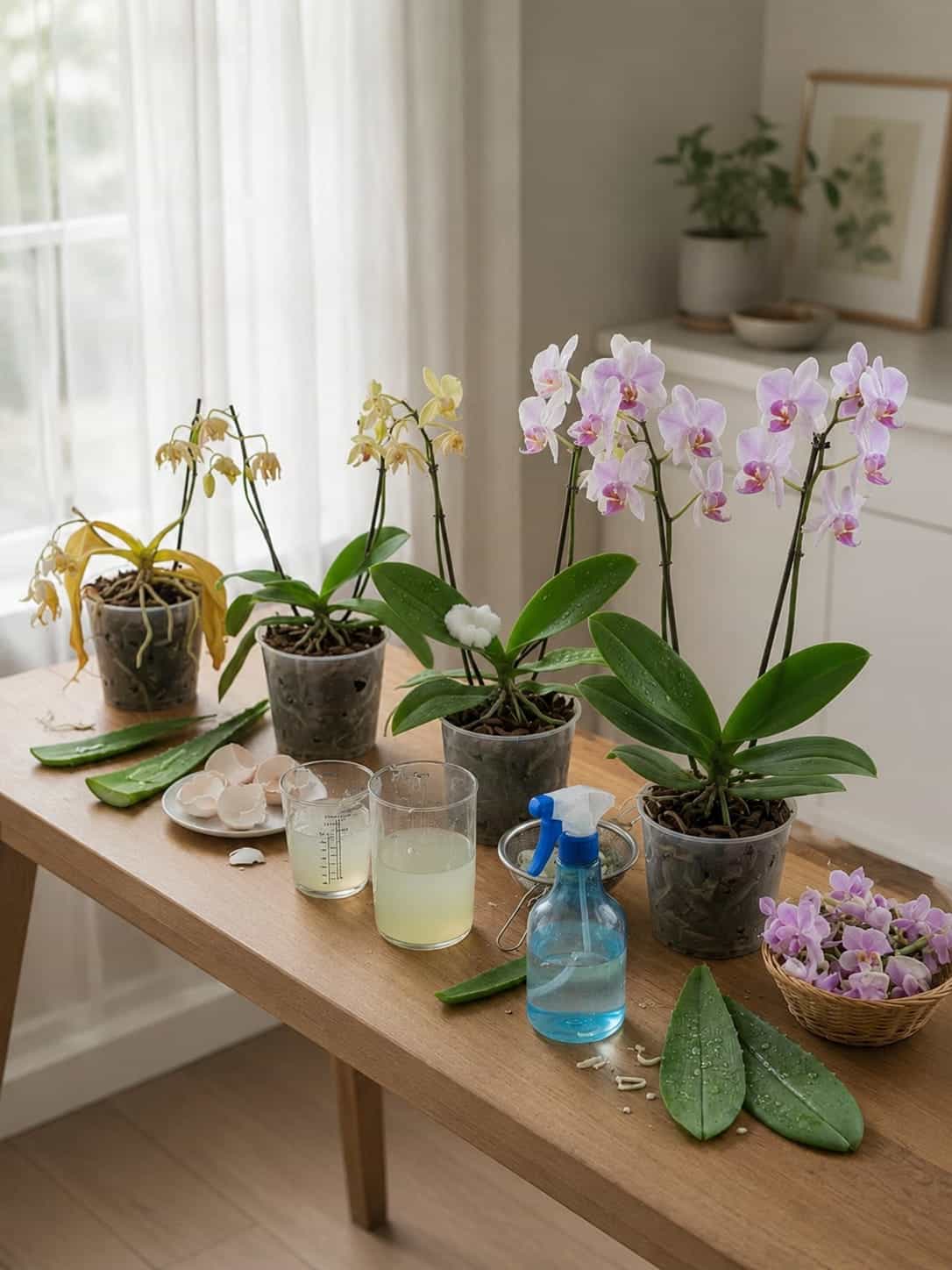
In the image, several orchids are arranged on a wooden table near soft window light. Some orchids are still blooming beautifully, while others look weak, yellowing, or exhausted after flowering. Around them are simple household ingredients: aloe vera leaves, eggshells, pale homemade liquid in measuring cups, a spray bottle, loose orchid leaves, and fallen flowers. This scene suggests a natural orchid recovery routine using aloe vera water and eggshell water, two gentle kitchen-and-plant-based ingredients many homeowners use to support stressed orchids.
This trick is popular because it feels natural, simple, and affordable. Aloe vera is known for its soothing gel, and many plant lovers use diluted aloe water as a gentle rooting support for cuttings and stressed plants. Eggshells are often used in gardening because they contain calcium, which can help support strong plant structure over time when prepared correctly. Together, they create the idea of a mild recovery tonic for orchids that need extra care after stress, poor watering, weak roots, or a long blooming period.
But there is one important truth: no homemade tonic can magically save an orchid if the basic care is wrong. Aloe water and eggshell water can support recovery, but they cannot replace clean roots, fresh orchid bark, proper drainage, bright indirect light, and careful watering. If the orchid is sitting in soggy old medium, if the roots are rotten, or if water is trapped in the crown, pouring more liquid into the pot may make the problem worse.
Smart homeowners use this trick gently. They do not pour thick aloe gel directly into orchid bark. They do not bury eggshell chunks in the pot. They do not spray the crown every day. They do not use strong, sour, or fermented liquids. Instead, they prepare a mild strained solution, apply it carefully, and use it only as part of a full orchid recovery routine.
This guide explains how to make aloe and eggshell water safely for orchids, how to use it, when not to use it, how to inspect weak orchid roots, how to refresh the potting medium, and how to help orchids recover without overwhelming them.
What Is the Orchid Recovery Trick in the Image?
The image shows a natural orchid-care station. There are orchids in clear pots, aloe vera leaves, eggshells, pale liquid in cups, a spray bottle, and orchid leaves laid on the table. This suggests a homemade plant tonic made from aloe vera and eggshells.
The likely idea is simple:
- Aloe vera gel is diluted in water to create a gentle plant-support liquid.
- Eggshells are soaked or prepared separately to make a mild calcium water.
- The liquid is strained well.
- The solution is used lightly on orchid roots or leaves.
- The weak orchids are cleaned, inspected, and supported during recovery.
This kind of trick is often promoted as a way to help orchids grow stronger roots, recover from stress, and prepare for future blooms. It can be useful if done carefully, but it should always be mild and occasional.
Why Aloe Vera Is Used for Orchids
Aloe vera is a popular ingredient in natural plant care because its gel is soothing, moisture-rich, and commonly used by gardeners as a gentle support for cuttings. Some plant owners use diluted aloe water when propagating plants or helping stressed roots recover.
For orchids, aloe water is usually used in very diluted form. It may help keep exposed roots lightly hydrated during handling, and it may provide a gentle organic support when the plant is recovering from stress. However, aloe gel is thick. If used too heavily, it can coat orchid bark, trap moisture, and create residue.
That is why aloe must be diluted and strained. Orchids need air around their roots. They should never be packed with sticky gel.
Why Eggshell Water Is Used for Orchids
Eggshells are mostly calcium carbonate. In gardening, calcium is associated with strong cell walls and healthy plant structure. Some homeowners soak crushed eggshells in water to make a mild calcium-style tonic. Others dry and grind eggshells into a fine powder for outdoor garden soil.
For orchids, eggshell use must be gentle. Whole shell pieces placed in orchid bark do not break down quickly indoors. They can look messy, attract attention from pests if not cleaned well, and may not provide immediate benefit. A cleaner option is to use washed, dried, crushed eggshells to make a mild strained water, then discard the solids.
Eggshell water is not a fast fertilizer. It does not instantly green yellow leaves or create blooms overnight. It is best viewed as a mild mineral support used occasionally.
What Aloe and Eggshell Water Can Actually Do
Aloe and eggshell water can support orchid care, but it is important to be realistic.
It May Help:
- Support weak orchids after repotting
- Provide a gentle rinse for roots
- Encourage a more careful plant-care routine
- Refresh orchids that have been neglected
- Support mild recovery when roots are still alive
- Provide occasional mineral support from eggshell water
- Lightly hydrate roots during handling
It Cannot:
- Reverse dead roots
- Fix severe root rot
- Turn yellow leaves green again
- Make dead flowers bloom again
- Replace orchid fertilizer completely
- Save an orchid in soggy old bark
- Repair crown rot
- Force instant flower spikes
The tonic is a support tool, not a miracle cure. Real orchid recovery starts with root health.
Why Weak Orchids Need Root Care First
Most orchid problems begin in the roots. Orchids are often grown in bark, moss, charcoal, or a loose orchid mix because their roots need oxygen. If the medium becomes old, compacted, or constantly wet, roots can rot. If the plant is watered too little for too long, roots can shrivel and stop absorbing moisture.
A weak orchid may look like it needs feeding, but what it really needs is root correction. If roots are damaged, the plant cannot properly absorb any tonic, fertilizer, or water. Pouring homemade liquid into a pot full of dead roots will not help much.
Before applying aloe or eggshell water, always check the root condition.
Signs Your Orchid Is Weak
Look closely at the orchids in the image. Some have flowers, but others show yellowing leaves and drooping flower spikes. These are common signs of stress.
A weak orchid may show:
- Yellow lower leaves
- Wrinkled leaves
- Limp leaves
- Drooping flowers
- Bud drop
- Dry flower spikes
- Brown or mushy roots
- Hollow roots
- No new roots for months
- Old bark that smells sour
- Water sitting inside the pot
Some yellowing is natural, especially after blooming or when an old lower leaf ages. But several yellow leaves at once may indicate root stress, poor watering, or old medium.
When This Trick Is Helpful
Aloe and eggshell water may be helpful when the orchid is tired but not severely rotten. It is best used as a gentle support after basic care has been corrected.
This trick may be suitable if:
- The orchid has some firm roots left
- The plant has recently finished blooming
- The leaves are slightly tired but not collapsing
- The orchid has been repotted into fresh bark
- You want a mild support rinse after cleaning roots
- The plant is under bright indirect light
- The pot drains properly
It is not suitable for every orchid. If the plant is rotting, treat the rot first.
When Not to Use Aloe and Eggshell Water
Do not use this tonic if the orchid is already in a risky condition where more moisture could make things worse.
Avoid it if:
- The orchid crown is soft or mushy
- Most roots are black and rotten
- The bark smells sour
- The pot has no drainage
- The medium is already wet
- The plant has just been heavily fertilized
- The aloe mixture is thick or slimy
- The eggshell water smells bad
- The mixture has been fermenting for days
- The orchid is dropping buds from environmental shock
When an orchid is severely stressed, simplicity is safer. Use plain water, fresh bark, and good light before trying tonics.
How to Make Safe Aloe Water for Orchids
Aloe water should be very diluted. Thick aloe gel should not be poured directly into orchid bark.
Ingredients
- 1 small piece of fresh aloe vera gel
- 2 cups room-temperature water
- Clean blender or jar
- Fine strainer or cheesecloth
Steps
- Cut a small piece from a clean aloe vera leaf.
- Remove the green outer skin.
- Use only the clear inner gel.
- Add a pea-sized to teaspoon-sized amount of gel to 2 cups of water.
- Blend or shake very well.
- Strain through cheesecloth or a fine strainer.
- Use immediately.
The final liquid should be watery, not thick. If it feels sticky, dilute it more.
How to Make Eggshell Water for Orchids
Eggshell water must be clean. Never use dirty eggshells with egg residue still attached.
Ingredients
- Shells from 2 clean eggs
- 2 cups water
- Small jar
- Fine strainer
Steps
- Rinse the eggshells well.
- Remove any remaining egg white.
- Let the shells dry completely.
- Crush them into small pieces.
- Place them in a jar with 2 cups water.
- Let them soak overnight.
- Strain completely.
- Use only the liquid.
For orchids, do not leave eggshell pieces in the bark. They do not break down quickly and can make the pot messy.
Continue to Page 2
Continue to page 2 for more details about this article and the key points many readers miss on the first page.