Spider plants are some of the easiest and most charming houseplants to grow indoors. Their long striped leaves spill beautifully over the edge of a pot, their baby plantlets hang like little green stars, and their bright variegation can make a room feel cleaner, fresher, and more alive. A healthy spider plant looks effortless. It softens shelves, side tables, windowsills, and living room corners without needing complicated care.
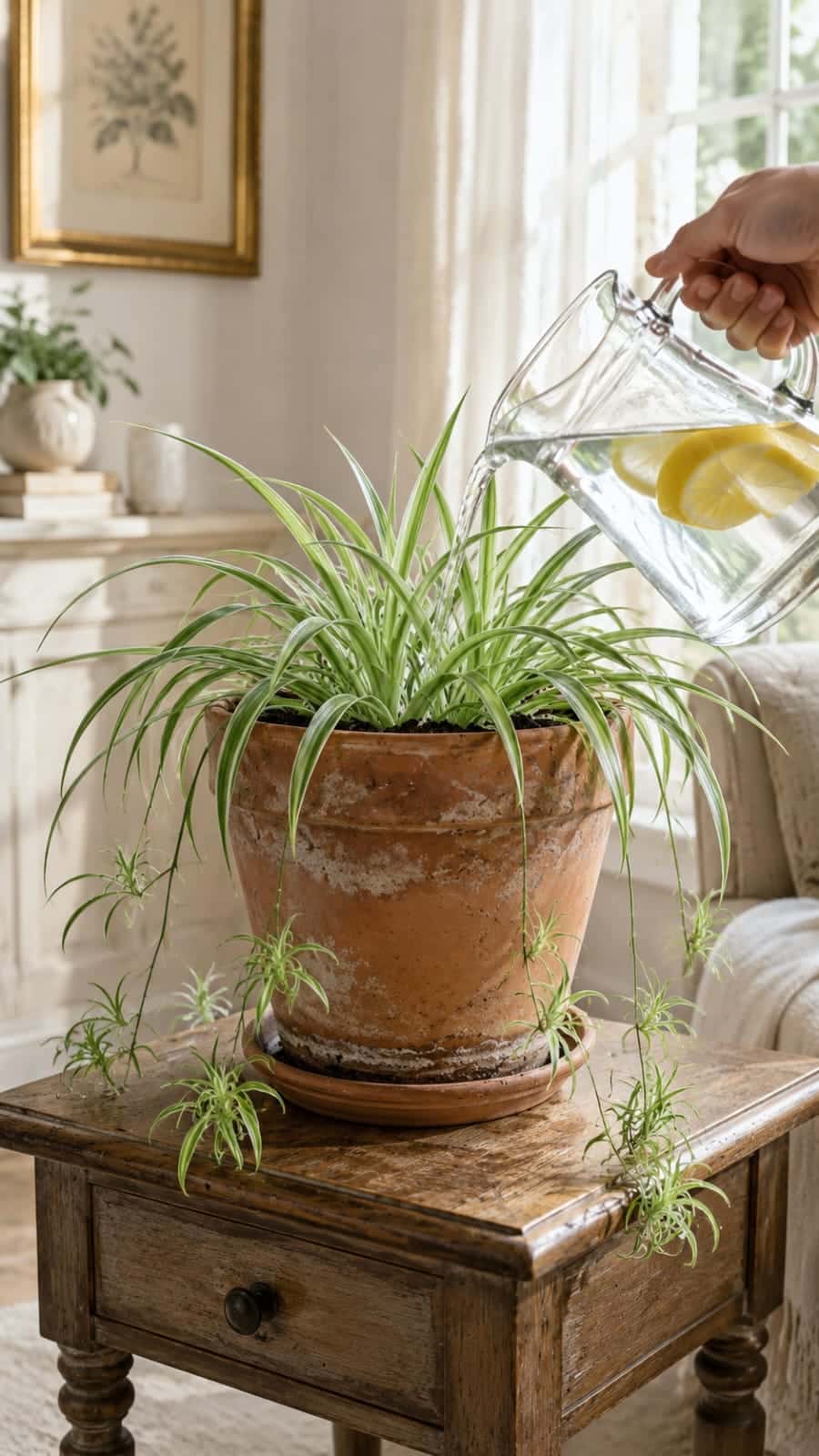
In the image, a large spider plant sits in an aged terracotta pot on a wooden side table. A hand is pouring clear water from a glass pitcher containing lemon slices. The plant looks full, fresh, and decorative, with many trailing spiderettes hanging around the pot. The scene suggests a popular indoor plant-care trick: using a mild lemon water rinse to freshen the pot, reduce stale odors, and give spider plants a cleaner-looking care routine.
But before using this trick, it is very important to understand it correctly. Lemon water is not a miracle fertilizer. It is not something spider plants need every week. It will not magically double growth overnight. It will not fix root rot, poor lighting, compacted soil, or overwatering. Lemon is acidic, and too much acidity can stress houseplants. The safe version of this trick is extremely mild, occasional, and used mainly as a freshening rinse rather than a strong feeding treatment.
Smart homeowners do not squeeze a whole lemon into the pot. They do not leave lemon slices on the soil. They do not pour strong citrus juice into a stressed plant. They use only a faint lemon-infused water, heavily diluted, and only when the plant is already due for watering. Even then, many spider plants do perfectly well with plain water. Lemon water should be treated as an optional decorative-care trick, not a required plant treatment.
This guide explains how to use lemon water safely on spider plants, when to avoid it, how to keep spider plants fuller and fresher indoors, how to prevent brown tips, how to encourage more baby plantlets, and how to make a spider plant look lush without damaging its roots.
What Is the Lemon Water Spider Plant Trick?
The lemon water trick is a simple plant-care idea where a small amount of lemon is infused into water and then used very lightly on the soil of a houseplant. In the image, lemon slices are floating in a pitcher of water, which suggests a mild infusion rather than concentrated lemon juice.
For spider plants, the safest version is not strong lemon juice. It is a very weak lemon-scented water made by briefly soaking one or two thin lemon slices in a large amount of water, then removing the slices before watering. The goal is to freshen the routine, not acidify the soil aggressively.
Some homeowners like this trick because lemon water smells clean, looks beautiful in a glass pitcher, and feels like a natural way to refresh houseplants. It may also help dissolve a little surface mineral residue when used rarely, especially around old terracotta pots. However, lemon water must be used carefully because spider plants do not need acidic soil treatments often.
Why Spider Plants Are So Popular Indoors
Spider plants are loved because they are attractive, forgiving, and easy to propagate. Their arching leaves create movement and softness, and their trailing babies make them look generous and lively. They are especially good for people who want a plant that looks decorative without being overly demanding.
Spider plants are popular because they:
- Grow well in bright indirect light
- Tolerate normal indoor humidity
- Recover from occasional missed watering
- Produce baby plantlets easily
- Look good in hanging baskets, shelves, and terracotta pots
- Fit many decor styles, from cottage to modern
- Are easy to divide and share
A mature spider plant can become a living decoration. The plant in the image is a good example: full leaves at the top, trailing plantlets around the pot, and a rustic terracotta container that makes the whole scene feel warm and natural.
What Lemon Water Can and Cannot Do
It is easy to exaggerate homemade plant tricks, so let’s be honest about what lemon water can realistically do for a spider plant.
Lemon Water May Help With:
- Freshening the plant-care routine
- Reducing a stale smell from the soil surface when used lightly
- Making watering feel cleaner and more intentional
- Possibly helping with slight mineral residue on the soil surface when used rarely
- Encouraging the grower to water more carefully
Lemon Water Cannot:
- Replace fertilizer
- Fix root rot
- Repair brown leaf tips instantly
- Make a weak plant full overnight
- Save a plant in soggy soil
- Force spiderettes to appear
- Correct poor lighting
- Undo salt buildup from years of hard water
The biggest benefit may actually be the attention it creates. When homeowners prepare a gentle lemon water rinse, they often slow down and check the plant: Is the soil dry? Are the leaves browning? Is the pot draining? Does the plant need repotting? That careful attention helps more than the lemon itself.
Important Warning: Lemon Water Must Be Very Weak
Lemon juice is acidic. Strong lemon water can lower soil pH temporarily and may irritate roots if used too often. Spider plants are adaptable, but they do not need repeated acidic treatments. Too much lemon can create stress, especially in a pot where acidity and salts have nowhere to go except through the root zone.
Never pour straight lemon juice on a spider plant. Never squeeze half a lemon into a small watering cup. Never leave lemon slices sitting on the soil. Do not use lemon water every week.
The safe approach is:
- Use only one or two thin lemon slices
- Infuse them briefly in plenty of water
- Remove the slices before watering
- Apply only to the soil
- Use rarely
- Flush with plain water between applications
Safe Lemon Water Recipe for Spider Plants
This recipe is intentionally mild. It is designed for occasional use only.
Ingredients
- 1 quart or 1 liter of room-temperature water
- 1 thin lemon slice
- Optional: 1 extra thin lemon slice for a larger pitcher
- Glass pitcher or jar
Steps
- Fill a pitcher with room-temperature water.
- Add one thin lemon slice.
- Let it sit for 10 to 20 minutes only.
- Remove the lemon slice.
- Use the water only if the spider plant is due for watering.
- Pour onto the soil, not over the leaves.
- Let excess water drain completely.
This should taste and smell only faintly lemony. If the water smells strong or looks very yellow, dilute it more before using.
How Often Should You Use Lemon Water?
Use lemon water rarely. Once every 6 to 8 weeks is more than enough for a spider plant, and many plants do not need it at all. Plain water should remain the normal routine.
A safe schedule looks like this:
- Plain water for regular watering
- Very mild lemon water only once every 6 to 8 weeks
- Skip lemon water completely if the plant looks stressed
- Use fertilizer separately, not at the same time
If your spider plant is already healthy, you can treat lemon water as a decorative occasional refresh rather than a serious plant treatment.
When Not to Use Lemon Water
There are situations where lemon water can do more harm than good. Avoid it if the plant is already struggling from root or moisture problems.
Do not use lemon water if:
- The soil is wet or soggy
- The pot has no drainage hole
- The plant has root rot
- The leaves are collapsing
- The plant was recently repotted
- The spider plant has severe brown tips
- You recently fertilized the plant
- The water is strongly lemony
- The plant is in direct hot sun
- The soil already smells sour
If the soil smells sour, do not add lemon. Sour soil usually means poor drainage, overwatering, or decaying organic matter. The fix is drying, repotting, or improving drainage, not adding more acidity.
How to Apply Lemon Water Correctly
Step 1: Check the Soil First
Before watering, touch the top inch or two of soil. Spider plants prefer to dry slightly between waterings. If the soil is still damp, wait.
Step 2: Remove Lemon Slices
Never pour lemon slices into the pot. Remove them from the pitcher before watering. Lemon slices left on soil can decay, attract pests, and create mold.
Step 3: Pour Around the Soil
Pour the mild lemon water around the soil surface, not into the center crown and not over the leaves. Spider plants are not as crown-sensitive as orchids, but it is still better to water the soil directly.
Step 4: Let the Pot Drain
Drainage is essential. If the pot sits in a saucer, empty the saucer after watering. Terracotta pots often breathe well, but water can still collect underneath.
Step 5: Watch the Plant
Observe the plant for the next week. If the leaves look normal and growth continues, the plant tolerated the mild rinse. If leaf tips worsen or the plant droops, return to plain water only.
Why the Terracotta Pot Matters
The spider plant in the image is growing in a terracotta pot. Terracotta is excellent for spider plants because it allows moisture to evaporate through the sides. This helps reduce the risk of soggy soil. It also gives the plant a rustic, natural look that fits beautifully with trailing spiderettes.
However, terracotta can also develop white mineral crust on the outside. This often comes from hard water or fertilizer salts moving through the clay. The pot in the image has aged white markings, which are common on terracotta. Some people find this charming. Others prefer to clean it.
A very mild lemon rinse may help freshen the watering routine, but it should not be used as the main way to manage mineral buildup. If mineral buildup is heavy, flush the soil with plain water occasionally and wipe the pot exterior separately.
How to Keep Spider Plants Fuller Indoors
Lemon water alone will not make a spider plant full. Fullness comes from light, watering, pot size, pruning, and healthy roots.
1. Give Bright Indirect Light
Spider plants grow best in bright indirect light. They can tolerate lower light, but they may become thinner, slower, and less likely to produce babies. A bright window with filtered light, like the one in the image, is ideal.
2. Avoid Harsh Direct Sun
Too much direct sun can scorch the leaves, especially variegated leaves. Morning sun is usually safer than strong afternoon sun.
3. Water Correctly
Water when the top layer of soil begins to dry. Do not keep the soil constantly wet. Spider plants like moisture, but they do not like soggy roots.
4. Use a Well-Draining Potting Mix
A quality indoor potting mix with extra perlite works well. Heavy soil can suffocate roots.
5. Remove Dead Leaves
Trim brown, dead, or damaged leaves at the base. This keeps the plant looking fresh.
6. Rotate the Pot
Rotate the plant every week or two so all sides get light. This helps the plant stay balanced and full.
7. Feed Lightly During Growth
Use a balanced houseplant fertilizer at a weak dose during spring and summer. Do not overfeed.
Why Spider Plants Get Brown Tips
Brown tips are one of the most common spider plant problems. They can happen even on otherwise healthy plants. Lemon water will not instantly remove brown tips, and strong lemon water may make the problem worse.
Common causes of brown tips include:
- Hard water minerals
- Fluoride sensitivity
- Underwatering
- Low humidity
- Too much fertilizer
- Salt buildup in soil
- Too much direct sun
- Dry indoor air
If your spider plant has brown tips, use filtered water, rainwater, or water left out overnight if your tap water is harsh. Flush the soil occasionally with plain water and reduce fertilizer strength.
Should You Trim Brown Tips?
Yes, you can trim brown tips for appearance. Use clean scissors and cut along the natural shape of the leaf. Do not cut deeply into healthy green tissue. Leave a tiny edge of brown if needed rather than cutting too far into the leaf.
Trimming does not solve the cause, but it makes the plant look neater.
How to Encourage Spider Plant Babies
The plant in the image has many baby spider plants hanging from long stems. These babies, called spiderettes or plantlets, are one of the best features of spider plants.
To encourage more babies:
- Provide bright indirect light
- Let the plant become slightly snug in its pot
- Avoid overfertilizing
- Keep watering consistent
- Allow mature stems to develop
- Do not constantly cut off runners too early
A very young spider plant may not produce babies yet. Mature plants are more likely to produce runners.
Continue to Page 2
Continue to page 2 for more details about this article and the key points many readers miss on the first page.