Jade plants are some of the most beloved indoor succulents because they look calm, sculptural, and long-lasting. Their thick oval leaves store water, their woody stems become stronger with age, and their rounded shape can make a sunny windowsill or side table feel instantly more elegant. A healthy jade plant looks almost like a miniature tree: glossy green leaves, firm stems, and a compact form that suggests patience, prosperity, and careful indoor living.
But jade plants can also show problems very clearly. When something is wrong, their leaves may yellow, wrinkle, develop brown spots, drop suddenly, or become soft and mushy. The soil may stay damp for too long. Tiny fungus gnats may appear around the pot. Mealybugs may hide in leaf joints. Old organic material on the soil surface may create a stale look. Because jade plants grow slowly, even small problems can feel frustrating. That is why many smart homeowners look for simple, dry, natural ways to keep the plant cleaner and less inviting to pests.
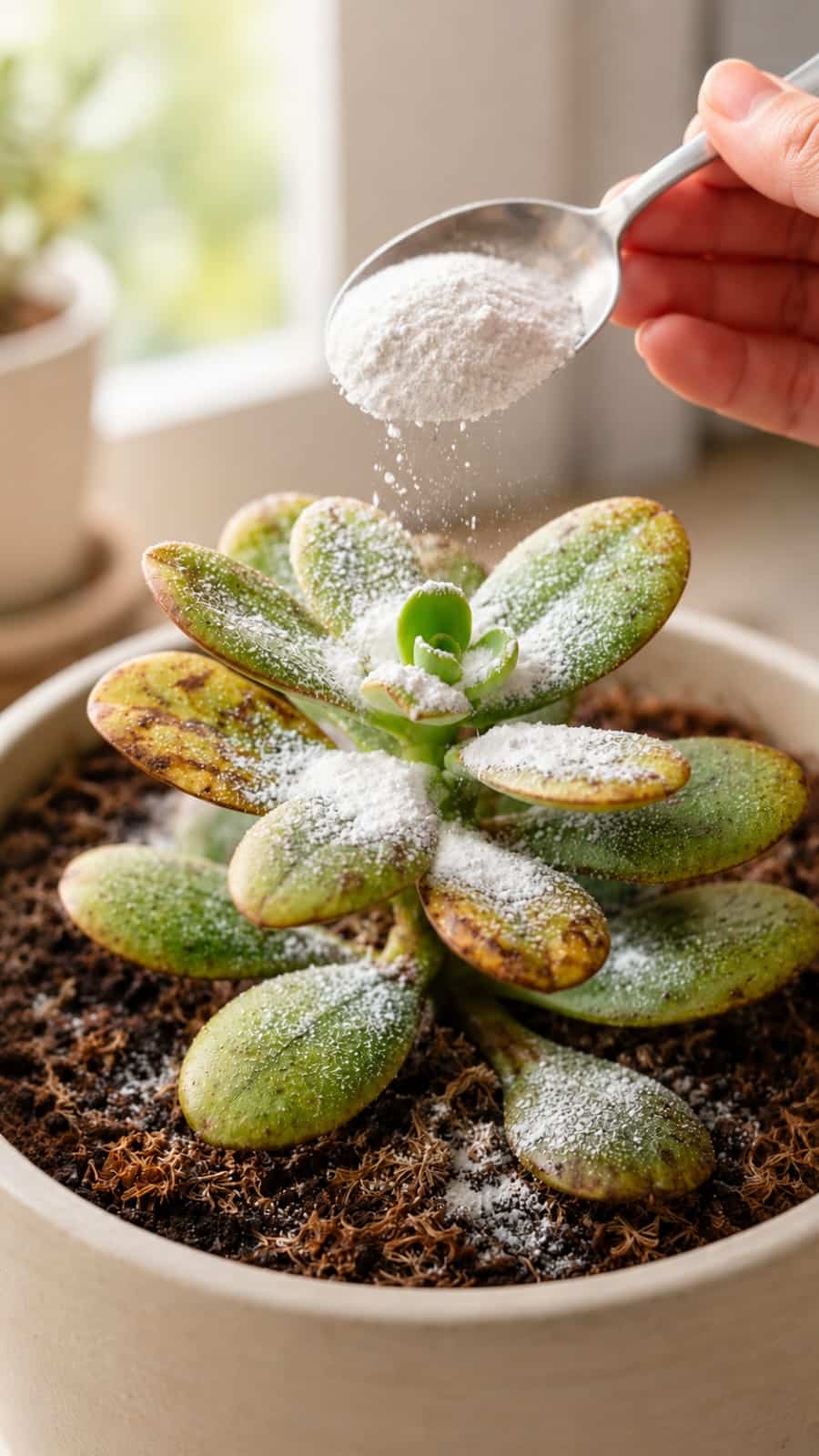
In the image, a person is sprinkling a fine white powder over a jade plant and the soil surface. The plant has thick succulent leaves with some yellowing and brown spotting, which suggests stress. The powder looks like a dry garden dusting material. For safe houseplant care, the best interpretation of this white powder is food-grade diatomaceous earth, often called DE. It is a fine, white, mineral-based powder that many indoor gardeners use in small amounts to help manage crawling pests and dry out the top layer of soil where fungus gnats can breed.
However, this trick must be used with care. The white powder should not be baking soda, salt, flour, powdered sugar, or random kitchen powder. Some of those can harm the plant, attract pests, damage soil balance, or leave harmful residue. Food-grade diatomaceous earth is the safer option when the goal is pest control and surface drying, but even that should be used lightly. A jade plant should never be buried under a thick layer of powder. The leaves should not be coated heavily. The soil should not be turned into a white crust. A small, careful dusting is enough.
This guide explains how smart homeowners use fine white powder safely on jade plants, why it may help, what it cannot fix, how to apply it correctly, when to avoid it, and how to combine this trick with the real jade plant care habits that keep succulents strong, compact, and beautiful indoors.
What Is the Fine White Powder on the Jade Plant?
The safest and most useful white powder for this kind of jade plant trick is food-grade diatomaceous earth. Diatomaceous earth is a natural powder made from fossilized microscopic aquatic organisms called diatoms. It has a dry, chalky texture. Many gardeners use it around plants because it can help deter and control certain soft-bodied or crawling pests when it stays dry.
For indoor jade plants, diatomaceous earth is usually used on the soil surface, not as a fertilizer. It does not feed the plant. It does not make leaves grow faster. It does not magically heal brown spots. Its main purpose is to help create a dry, less comfortable surface for pests such as fungus gnats, ants, and some crawling insects. It may also be used carefully around leaf joints when mealybugs are present, though direct pest cleaning is often needed too.
The important phrase is food-grade. Do not use pool-grade diatomaceous earth on houseplants. Pool-grade DE is processed differently and is not appropriate for indoor plant use. If using DE indoors, choose food-grade or garden-labeled diatomaceous earth and handle it carefully to avoid breathing in dust.
Why Jade Plants Need a Different Kind of Care
Jade plants are succulents. Their leaves and stems store moisture, which means they do not need frequent watering like many leafy tropical houseplants. In fact, the most common way people harm jade plants is by giving them too much water.
A jade plant prefers:
- Bright light
- Fast-draining soil
- A pot with drainage holes
- Deep but infrequent watering
- Drying time between waterings
- Good airflow around the leaves
- Minimal fussing
When jade plants are kept too wet, their roots may suffer. Leaves can yellow, soften, or fall. Brown spots may appear. Fungus gnats may breed in the damp soil. The plant may look tired even though the owner is trying hard to care for it.
This is why a dry powder trick appeals to many homeowners. It fits the jade plant’s preference for dryness. But it only helps if the basic care is correct. A powder cannot save a jade plant from constant overwatering, poor drainage, or rotting roots.
What This White Powder Trick May Help With
When used correctly, a light dusting of food-grade diatomaceous earth may help with several surface-level issues around a jade plant.
It may help:
- Dry the top layer of soil slightly
- Discourage fungus gnats from breeding in damp soil
- Create a less comfortable surface for crawling pests
- Freshen the appearance of old soil temporarily
- Support a pest-management routine
- Encourage the homeowner to water less frequently
For jade plants, this is useful because many problems begin when the soil surface stays wet. Fungus gnats, for example, love moist potting mix. If the top layer dries between waterings, the gnat problem often improves.
What This Trick Cannot Do
It is important to be realistic. White powder is not a miracle cure. It cannot fix every jade plant problem.
This trick cannot:
- Heal already damaged leaves
- Reverse root rot
- Replace proper watering
- Replace sunlight
- Feed the plant like fertilizer
- Fix compacted soil
- Save a plant in a pot without drainage
- Remove pests hiding deep in leaf joints instantly
- Make a weak jade plant bushy overnight
If your jade plant is already severely yellow, mushy, or dropping leaves, the first step is not powder. The first step is checking the roots and the soil.
Important Warning: Do Not Use the Wrong White Powder
Many white powders look similar in a photo, but they behave very differently in a plant pot. Using the wrong one can damage your jade plant.
Do Not Use Salt
Salt can burn roots, damage soil, and dehydrate plants. Never sprinkle salt on a jade plant.
Do Not Use Powdered Sugar
Sugar can attract ants, gnats, mold, and other pests. It can make the soil sticky and unhealthy.
Do Not Use Flour
Flour can become pasty when wet and may encourage mold. It is not a plant treatment.
Do Not Use Baking Soda Heavily
Baking soda is sometimes used in very diluted sprays for specific fungal issues, but sprinkling it heavily on succulent soil or leaves is risky. It contains sodium and can affect soil balance. It is not a safe general jade plant powder.
Do Not Use Laundry Powder or Cleaning Powder
Household cleaning powders can be toxic to plants and unsafe indoors. Never use them in plant pots.
For this trick, use only food-grade diatomaceous earth or a plant-safe product specifically labeled for garden or indoor plant pest use.
How Food-Grade Diatomaceous Earth Works
Diatomaceous earth works physically, not chemically. Under a microscope, the powder has tiny sharp edges. These edges can damage the protective outer layer of small insects that crawl through it. As a result, pests may dry out. This effect works best when the powder is dry.
That is why DE should not be soaked immediately after application. If it gets wet, it becomes less effective until it dries again. This does not mean wet DE is poisonous or useless forever, but the dry texture is what makes it work best for pest control.
For jade plants, this matters because you should apply it when the soil surface is dry and avoid watering right away.
How to Use White Powder on Jade Plants Safely
Step 1: Identify the Problem First
Before sprinkling powder, inspect the plant. Are there fungus gnats flying around? Are there white cottony mealybugs in the leaf joints? Are the leaves yellow because of overwatering? Are the brown spots from sunburn, pests, or edema? The powder is useful only for certain problems.
If the plant has yellow, mushy leaves and wet soil, you may be dealing with overwatering or root stress. In that case, powder alone will not fix the problem.
Step 2: Let the Soil Surface Dry
Do not apply diatomaceous earth to wet soil. Wait until the top layer of soil is dry. This helps the powder remain effective and prevents clumping.
Step 3: Remove Dead Leaves and Debris
Clean the pot before applying anything. Remove fallen leaves, old dried moss, dead stems, or decaying material from the soil surface. This reduces hiding places for pests and improves airflow.
Step 4: Use a Very Small Amount
Use a tiny spoon or dry brush. Sprinkle a thin dusting on the soil surface. You do not need a thick white blanket. A light, even layer is enough.
Step 5: Keep It Away From Your Face
Fine powder can irritate your lungs if inhaled. Apply slowly, avoid creating a cloud, and do not breathe in the dust. If you are sensitive, wear a mask.
Step 6: Avoid Heavy Leaf Coating
It is better to focus on the soil surface. If pests are on the leaves, use a cotton swab, water rinse, or alcohol spot treatment for mealybugs rather than coating the entire plant in powder. Jade leaves need light and airflow.
Step 7: Do Not Water Immediately
Let the powder stay dry for a few days if pest control is the goal. Water only when the jade plant truly needs watering.
Step 8: Reapply Only If Needed
If the powder washes into the soil after watering, you can reapply a small amount once the surface dries again. Do not keep piling layers on top of layers.
Continue to Page 2
Continue to page 2 for more details about this article and the key points many readers miss on the first page.