Peace lilies are among the most elegant indoor plants you can grow. Their deep green leaves have a natural shine, their upright shape looks graceful in almost any room, and their white spathes bring a calm, clean feeling to the home. A healthy peace lily can make a living room, bedroom, office, or bright corner feel instantly softer and more luxurious. It is not a loud plant, but it has presence. It looks peaceful, fresh, and expensive without needing complicated styling.
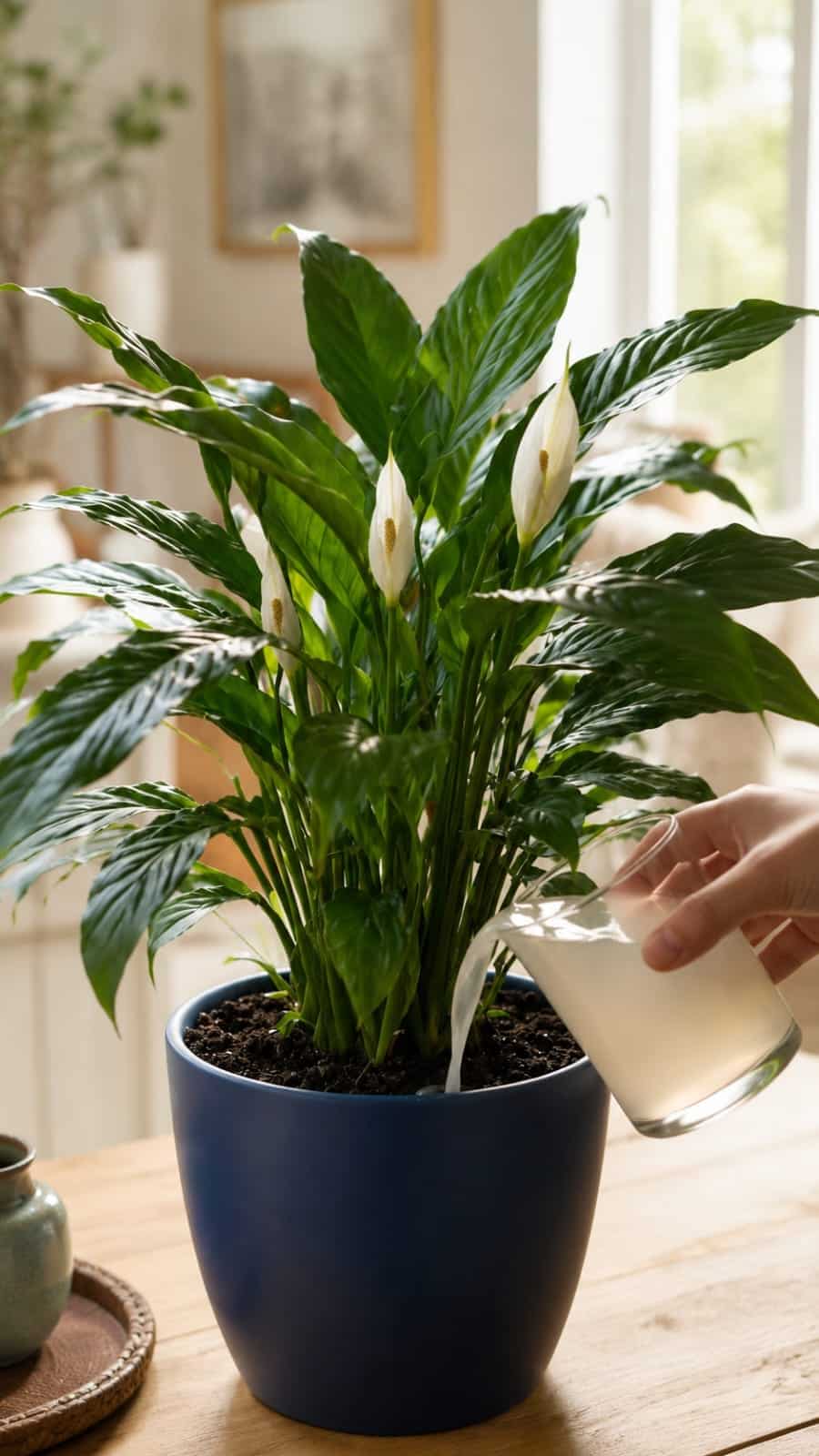
In the image, a lush peace lily is growing in a dark blue pot near a bright window. A hand is pouring a pale milky liquid into the soil. The plant looks full, glossy, and blooming, with several white flowers rising above the leaves. This kind of image suggests a popular indoor plant trick: using a gentle homemade milky tonic to support greener leaves, fresher soil, and stronger growth.
But peace lilies are sensitive plants. They love moisture more than succulents do, but they still do not like soggy soil. Their roots need oxygen. Their leaves can droop quickly when thirsty, but they can also suffer if overwatered. That means any milky liquid must be used carefully. A thick milk mixture, undiluted dairy, sugary liquid, or spoiled homemade tonic can create odor, mold, fungus gnats, and root stress.
The safest way to understand this trick is this: the white liquid should be a very diluted rice-water tonic or an extremely weak milk-water solution, used rarely and only as part of a good peace lily care routine. It is not a miracle cure. It is not a replacement for proper watering, bright indirect light, drainage, and occasional balanced fertilizer. Used correctly, it can be a gentle plant-care ritual. Used too heavily, it can harm the plant.
This guide explains how smart homeowners can use a mild milky tonic safely on peace lilies, what it may help with, when to avoid it, how to make it, how often to apply it, and what actually keeps peace lilies glossy, blooming, and beautiful indoors.
What Is the Milky Liquid Being Poured on the Peace Lily?
The pale liquid in the image looks like a homemade milky plant tonic. In indoor gardening content, this kind of liquid often represents diluted milk water, rice water, or a soft kitchen-based plant drink. For peace lilies, the safest interpretation is diluted rice water, because it is lighter than milk and less likely to sour in the soil when used fresh and weak.
Rice water is the cloudy liquid left after rinsing uncooked rice. Some plant lovers use it as a mild occasional tonic because it may contain small amounts of starches and trace nutrients. Milk water is sometimes used because milk contains calcium, but milk can spoil quickly in indoor pots. That is why milk must be heavily diluted, used rarely, and never poured straight into the soil.
The safest version of this trick is not a glass of thick milk. It is a weak cloudy water that looks only slightly milky. If the liquid looks rich, creamy, or smells like dairy, it is too strong for a peace lily.
Why Peace Lilies Respond So Clearly to Care
Peace lilies are expressive plants. They show you very quickly when something is wrong. If they are thirsty, their leaves droop. If they are overwatered, their leaves may yellow and the soil may smell stale. If they are in harsh sun, leaves can scorch. If they are in deep shade, they may stop flowering. If they are happy, they produce glossy leaves and white blooms.
This makes peace lilies rewarding, but it also means small mistakes become visible. A homeowner may think the plant needs more fertilizer when it actually needs better watering. They may think a homemade tonic will create blooms when the plant actually needs brighter indirect light. They may think drooping always means thirst when sometimes the roots are suffocating in wet soil.
That is why this milky tonic should be used as a small support, not as the main care method.
What This Gentle Tonic May Help With
A very diluted rice-water tonic may help refresh the soil lightly during active growth. It may encourage a careful watering routine and provide a mild supplement between normal feedings. It can also make plant care feel more intentional and natural.
This trick may help:
- Refresh the soil lightly during active growth
- Support a peace lily that is already healthy
- Encourage greener-looking leaves when used with proper light
- Provide a mild occasional supplement
- Make watering feel more consistent and careful
- Support a fuller decorative display when combined with pruning and correct care
But the most important word is support. This tonic supports good care. It does not replace it.
What This Tonic Cannot Do
A homemade milky tonic cannot fix every peace lily problem. It cannot save rotten roots. It cannot make a dark corner bright. It cannot turn brown leaf tips green again. It cannot force flowers overnight. It cannot replace a proper potting mix or drainage hole.
This tonic cannot:
- Reverse root rot
- Fix a pot with no drainage
- Repair brown leaf tips
- Remove pests instantly
- Make a peace lily bloom in deep shade
- Replace balanced fertilizer forever
- Stop yellowing caused by overwatering
- Save a plant sitting in sour soil
If your peace lily is weak, always diagnose the cause first. Do not pour more liquids onto a stressed plant without checking the soil and roots.
Why Straight Milk Is Risky for Peace Lilies
Milk may sound gentle, but straight milk is not ideal for potted plants. It contains fats, proteins, and sugars that can spoil in soil. Indoors, where airflow is lower and pots dry more slowly, milk can create odor, mold, and fungus gnats.
Problems from using too much milk include:
- Sour smell from the pot
- White or gray mold on soil
- Fungus gnats
- Sticky residue
- Root stress
- Soil staying damp too long
For this reason, never pour straight milk into a peace lily pot. If you use milk at all, use only a few drops diluted into a full cup of water. Rice water is usually the safer option.
The Safest Milky Tonic Recipe for Peace Lilies
This recipe creates a very weak cloudy liquid. It is gentle enough for occasional use and much safer than pouring dairy directly into the pot.
Ingredients
- 1 tablespoon fresh rice rinse water
- 1 cup room-temperature water
- Optional: 3 drops of milk, only if desired
Step 1: Rinse the Rice
Place a small spoonful of uncooked rice in a bowl. Add water, swirl gently, and discard the first rinse if it looks dirty. Add fresh water and swirl again. This second cloudy rinse is the part you can use.
Step 2: Dilute It
Mix 1 tablespoon of rice water into 1 cup of plain water. This is enough for a light tonic. Do not use thick rice water straight from the bowl.
Step 3: Add Milk Only If You Want
If you want a milk-style tonic, add only 2 to 3 drops of milk to the diluted rice water. This is optional. The safer method is rice water only.
Step 4: Use It Fresh
Use the mixture the same day. Do not store it for several days. Homemade plant liquids can ferment, sour, and become unsafe for indoor pots.
How to Apply the Tonic Step by Step
Step 1: Check the Soil First
Touch the top inch of soil. If it is still wet, wait. Peace lilies like evenly moist soil, but they do not like being constantly soaked. The tonic should be used when the plant is due for watering, not when the pot is already damp.
Step 2: Use a Small Amount
For a medium peace lily, use about 1/4 to 1/2 cup of diluted tonic. A large plant may use more, but do not flood the pot. The goal is gentle watering, not soaking the soil with kitchen liquid.
Step 3: Pour Around the Soil
Pour the liquid onto the soil around the plant, not directly into the tight center of stems. Avoid splashing leaves and flowers.
Step 4: Let the Pot Drain
If your pot has drainage holes, let extra liquid drain out. Empty the saucer afterward. Never let a peace lily sit in standing tonic or water.
Step 5: Watch the Plant
Over the next few days, check for any sour smell, mold, gnats, or yellowing. If everything stays normal, the plant tolerated the tonic. If problems appear, stop using homemade liquids and return to plain water.
How Often Should You Use This Trick?
Use it rarely. Once every 4 to 6 weeks during spring and summer is enough. In winter, skip it unless the plant is actively growing in a warm, bright room.
Peace lilies do not need constant homemade tonics. Too much organic liquid can make the soil stale. Most of the time, plain water is better.
What Really Keeps Peace Lily Leaves Glossy?
Glossy leaves come from good health, not from pouring a special liquid once. A peace lily’s shine depends on hydration, humidity, light, clean leaves, and root health.
To keep leaves glossy:
- Give bright indirect light
- Water before the plant severely droops
- Do not let the roots sit in water
- Wipe dust from leaves
- Keep humidity moderate
- Remove yellow leaves
- Use balanced fertilizer lightly during growth
If leaves are dusty, wipe them with a soft damp cloth. Do not use oily leaf shine products. Peace lily leaves look best when they are naturally clean.
What Really Encourages Peace Lily Blooms?
Peace lilies bloom best when they receive enough bright indirect light. Many people keep peace lilies in low light because they tolerate it, but tolerance is not the same as flowering. A peace lily in a dim corner may survive for years but produce few flowers.
To encourage blooms:
- Place the plant near a bright window with filtered light
- Avoid harsh direct sun
- Keep soil evenly moist but not soggy
- Feed lightly during active growth
- Remove old flowers
- Keep temperatures stable
- Avoid cold drafts
The milky tonic can support a healthy routine, but light is the main bloom trigger indoors.
Best Light for Peace Lilies Indoors
The image shows the peace lily near a bright window. This is a good placement if the sunlight is filtered or indirect. Peace lilies like bright, soft light. They can tolerate lower light, but they bloom better when they are not kept in darkness.
Good light signs include:
- Deep green leaves
- Strong upright growth
- New leaves forming
- White flowers appearing
- Less stretching toward the window
Too much direct sun can cause:
- Brown scorched patches
- Faded leaves
- Dry leaf edges
- Wilting even when soil is moist
If sun is too strong, use a sheer curtain or move the plant a little farther from the glass.
Continue to Page 2
Continue to page 2 for more details about this article and the key points many readers miss on the first page.