Anthuriums are some of the most striking indoor plants you can grow. Their glossy heart-shaped leaves, upright stems, and bright red, pink, white, or burgundy spathes make them look like living decor. A healthy anthurium can make a room feel warmer, more elegant, and more tropical without needing a large plant stand or complicated display. Even one well-grown anthurium on a table, windowsill, shelf, or bright corner can become the centerpiece of the space.
But anthuriums can also become frustrating when they stop blooming, grow pale leaves, produce weak stems, or sit in the same pot for months without looking fresh. Many homeowners buy an anthurium when it is full of color, then notice that the flowers fade and new ones do not appear quickly. The leaves may remain green, but the plant loses that luxurious look. Other times, the leaves turn dull, the soil becomes compacted, or the plant simply stops growing with energy.
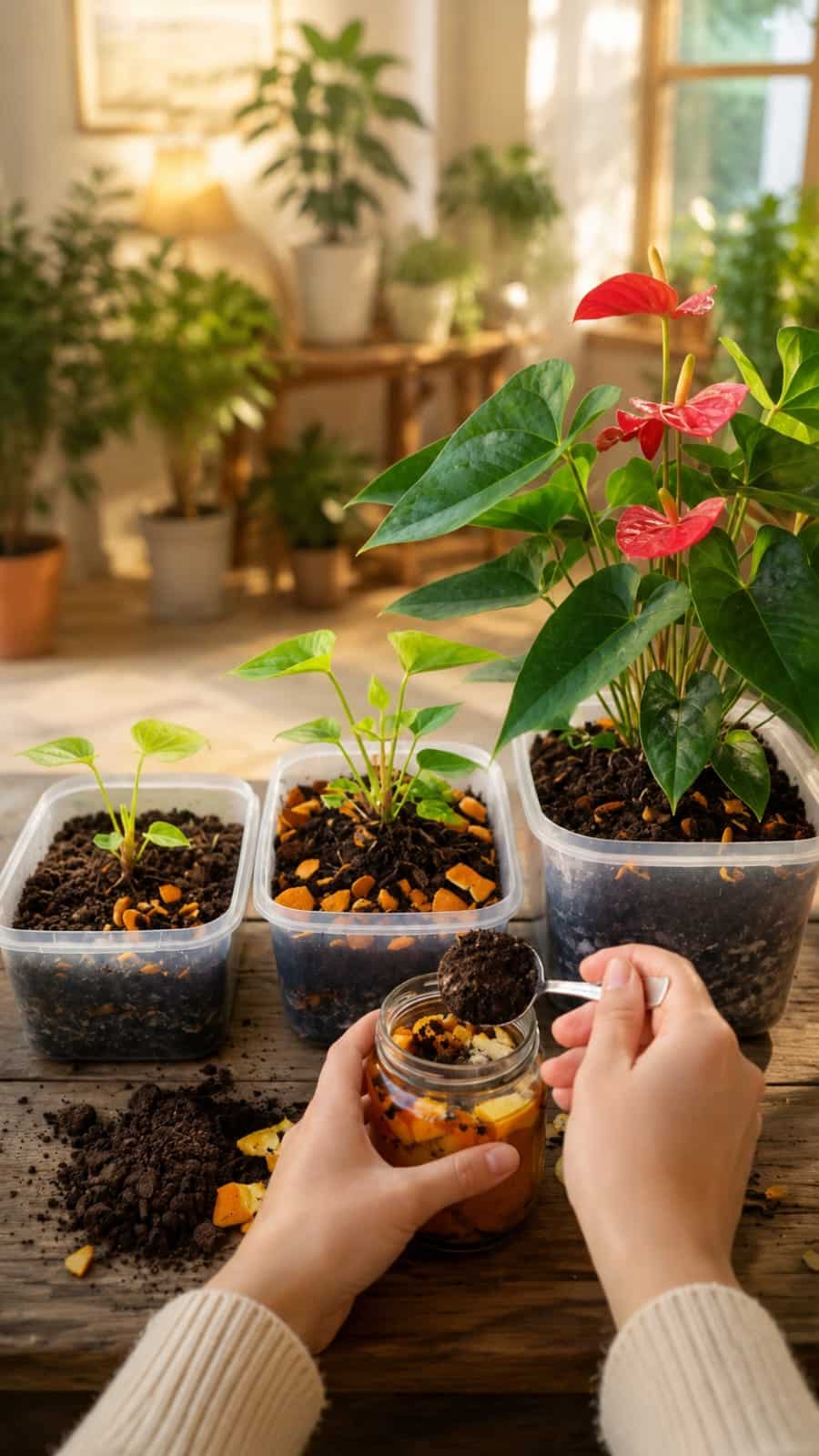
That is why natural plant treatments are so appealing. In the image, several anthurium plants are growing in clear containers while orange peel pieces are mixed into the potting medium. A hand is holding a small jar containing orange peel and coffee grounds, suggesting a homemade tonic made from citrus peel and used coffee grounds. The idea is simple: soak small pieces of orange peel and a spoonful of coffee grounds in hot water, let the mixture cool, strain it, dilute it well, then apply it lightly to the roots or leaves.
This orange peel and coffee treatment can be a useful occasional tonic when used correctly. Orange peel can provide a mild citrus infusion and a small amount of organic matter. Coffee grounds can contribute tiny amounts of nutrients and may slightly support soil life when used in moderation. Together, they create a gentle homemade liquid that may help refresh the soil and support healthier-looking growth.
However, this treatment must be used carefully. Anthuriums are tropical plants with sensitive roots. They like moisture, but they hate soggy soil. They enjoy light feeding, but they do not like strong, sour, sticky, or overly acidic mixtures. Coffee grounds can be too heavy if placed directly into the pot in large amounts. Citrus peel can mold if left on the soil. A strong homemade brew can attract fungus gnats, create odor, and stress roots.
The safe version is not to bury orange peels and coffee grounds in the pot. The safe version is to make a weak, strained, diluted tonic and use it occasionally. This article explains how to make it, how to apply it, when to avoid it, and what really helps anthuriums grow fuller leaves and more beautiful blooms indoors.
What Is the Orange Peel and Coffee Anthurium Treatment?
The orange peel and coffee treatment is a homemade plant tonic made by steeping small orange peel pieces and a small amount of coffee grounds in hot water. After cooling, the mixture is strained and diluted with clean water before being applied to the plant.
The purpose is not to create a strong fertilizer. The purpose is to make a mild soil refresh that can be used occasionally during active growth. The orange peel gives a light citrus-based infusion, while the coffee grounds add a small amount of organic compounds. When heavily diluted, the final liquid becomes gentle enough for occasional use on anthuriums.
The important part is dilution. Anthuriums do not need concentrated coffee water or strong citrus liquid. A little goes a long way. The finished treatment should look weak and watery, not dark like coffee and not strongly scented like orange juice.
Why Anthuriums Need Gentle Feeding
Anthuriums are tropical plants, but they are not heavy feeders. In nature, many anthuriums grow in loose organic material where water drains quickly and roots receive air. Indoors, they often struggle when planted in dense soil that stays wet for too long. Their roots need both moisture and oxygen.
A strong homemade fertilizer may seem helpful, but it can quickly become too much. If the liquid is too rich, the roots may become stressed. If the mixture contains bits of food, the pot can smell sour or attract pests. If the soil is already wet, adding more liquid can increase the risk of root rot.
That is why this treatment should be used like a light tonic, not a regular fertilizer replacement. Most of the time, anthuriums need simple care: bright indirect light, airy potting mix, careful watering, humidity, warmth, and occasional balanced fertilizer.
What Orange Peel May Do for Anthuriums
Orange peel contains natural aromatic oils and small amounts of nutrients. When steeped briefly and diluted, it can create a mild plant tonic that feels fresh and natural. Some gardeners like citrus peel water because it may help refresh stale-smelling soil and add a gentle organic touch to watering.
For anthuriums, orange peel water may help as a light occasional soil refresh. It may also make the plant-care routine feel more intentional, which often leads to better watering habits and closer inspection of the plant.
But orange peel should not be overused. Citrus peels can be acidic. They can also mold if left in the pot. A small amount in a strained tonic is safer than placing peel pieces directly on the soil.
What Coffee Grounds May Do for Anthuriums
Coffee grounds are often used in gardening because they contain small amounts of nitrogen and organic matter. But indoor potted plants are different from outdoor garden beds. In a pot, coffee grounds can become compacted, hold too much moisture, and encourage fungus if used heavily.
For anthuriums, coffee grounds should not be dumped directly into the pot in large amounts. A small spoon steeped in water and strained out is much safer. This gives a weak coffee-based infusion without leaving dense grounds around the roots.
Used carefully, coffee water may act as a mild occasional supplement. Used too strongly, it can make the soil sour, damp, and uncomfortable for roots.
What This Treatment May Help With
A properly diluted orange peel and coffee tonic may support anthurium care in several ways. It can lightly refresh the soil, provide a tiny nutrient boost, and encourage greener-looking leaves when combined with proper light and watering.
This treatment may help:
- Refresh tired potting mix lightly
- Support greener foliage during active growth
- Encourage stronger root-zone activity when used occasionally
- Provide a mild natural supplement between normal feedings
- Support better bloom production when the plant already receives enough light
- Make indoor plant care feel more consistent and attentive
It is important to remember that results depend on the whole care routine. A tonic will not help much if the anthurium is in a dark corner, sitting in soggy soil, or planted in a pot without drainage.
What This Treatment Cannot Do
This orange peel and coffee tonic is not magic. It cannot solve every anthurium problem.
It cannot:
- Force instant blooms
- Repair rotten roots
- Reverse yellow leaves overnight
- Replace proper fertilizer forever
- Fix a pot with no drainage
- Save a plant in dense, soggy soil
- Correct low light
- Remove pests instantly
- Make an unhealthy plant bloom continuously
If your anthurium is weak, diagnose the real issue first. Homemade tonics work best on plants that are already mostly healthy.
Important Safety Rules Before You Start
Before making the tonic, follow a few safety rules. These will protect your anthurium from the most common mistakes.
- Use only a small amount of orange peel
- Use only one spoon of coffee grounds
- Do not use sweetened coffee
- Do not use flavored coffee
- Do not add sugar
- Do not add milk
- Do not leave peel or grounds in the pot
- Always strain the mixture
- Always dilute the mixture
- Use only when the plant needs watering
The final liquid should be weak, clean, and free of particles. If it smells sour, rotten, or fermented, throw it away.
How to Make the Orange Peel and Coffee Tonic
Ingredients
- Small pieces of orange peel from about 1/4 of an orange
- 1 teaspoon to 1 tablespoon used coffee grounds
- 300 ml hot water
- Clean jar or heat-safe cup
- Fine strainer or cloth
- Clean water for dilution
Step 1: Wash the Orange Peel
Wash the orange peel before using it. This helps remove dirt, wax, and residue from the outer skin. Since the peel will be steeped in hot water, it should be clean.
Step 2: Cut the Peel Into Small Pieces
Cut the peel into small pieces. Small pieces release their mild infusion more easily. Avoid using too much. A few pieces are enough.
Step 3: Add One Spoon of Coffee Grounds
Add one small spoon of used coffee grounds to the jar. Used coffee grounds are usually milder than fresh grounds. Do not add a large handful. Too much coffee can make the tonic too strong.
Step 4: Pour in 300 ml of Hot Water
Pour hot water over the orange peel and coffee grounds. The water should be hot but not necessarily boiling. Let the mixture steep gently.
Step 5: Let It Cool Completely
Allow the mixture to cool to room temperature. Never pour hot liquid on anthurium roots. Hot water can damage roots instantly.
Step 6: Filter the Mixture Well
Strain the liquid through a fine strainer, coffee filter, or cloth. Remove all orange peel and coffee particles. This step is essential. Do not skip it.
Step 7: Dilute to Around 3 Liters
Add the strained liquid to clean water until you have about 3 liters total. This creates a weak tonic. The liquid should look light, not dark.
Step 8: Use It Fresh
Use the diluted tonic the same day. Do not store it for many days. Homemade organic liquids can ferment and become unsafe for indoor plants.
How to Apply the Treatment to Anthurium Roots
The root application is usually safer than spraying the leaves, especially for beginners. Anthuriums absorb water and nutrients through their roots, and the soil can benefit from a gentle refresh.
Step 1: Check Soil Moisture
Touch the soil before applying. If it is still wet, wait. Anthuriums like lightly moist soil, but they should not sit in soggy conditions.
Step 2: Use a Small Amount
For a small anthurium, use about 1/4 cup. For a medium plant, use about 1/2 cup. For a large plant, use up to 1 cup. Do not flood the pot.
Step 3: Pour Around the Outer Soil
Pour the tonic around the outer soil area rather than directly into the crown of the plant. This helps protect the base of the stems from excess moisture.
Step 4: Let the Pot Drain
If excess liquid drains out, empty the saucer. Never let an anthurium sit in standing water or tonic.
Step 5: Wait Before Watering Again
After using the tonic, wait until the top layer of soil begins to dry again before watering. Do not add more liquid too soon.
Continue to Page 2
Continue to page 2 for more details about this article and the key points many readers miss on the first page.