Peace lilies are one of the most graceful indoor plants you can grow. Their white blooms look soft and elegant, their tall green stems bring height to a room, and their broad leaves can make any corner feel calm, fresh, and cared for. A healthy peace lily has a luxurious look without needing complicated styling. Place it near a bright window, inside a decorative pot, and it can instantly make a living room, hallway, bedroom, or office feel more peaceful.
But peace lilies are also very expressive plants. When something is wrong, they show it quickly. Their leaves may droop dramatically when thirsty. Their tips may turn brown when the air is dry or when minerals build up. Their older leaves may yellow naturally, but widespread yellowing can mean stress. A peace lily that once looked deep green and glossy can suddenly look pale, tired, and weak.
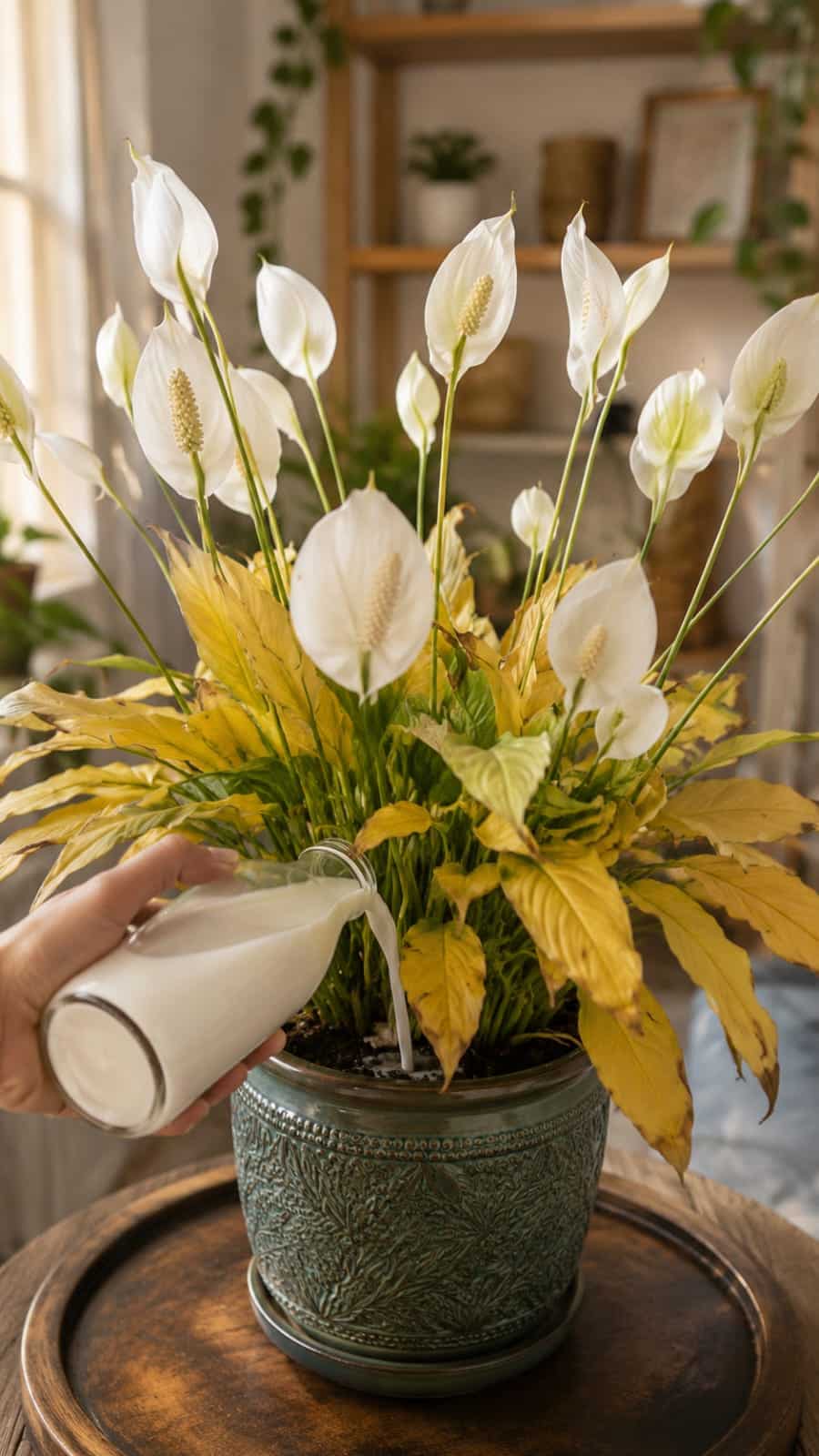
In the image, a peace lily is full of white blooms, but many of its leaves are yellowing. Someone is pouring a milky white liquid into the soil. This suggests a popular homemade plant-care trick: using a gentle milky tonic to refresh the soil and support recovery. It looks simple, natural, and comforting, almost like giving the plant a nourishing drink.
However, this trick needs to be handled carefully. A peace lily is not a plant that should receive straight milk, thick dairy mixtures, sweetened drinks, or heavy homemade liquids. Too much milk can sour in the soil, attract fungus gnats, create mold, and stress the roots. If the plant is already yellow because of overwatering, pouring more liquid into the pot can make the problem worse.
The safe version of this trick is a very diluted rice-water or milk-water tonic, used rarely and only when the plant is actually ready for watering. The mixture should be weak, fresh, and watery, not thick and creamy. It should be used as a small support step, not as a miracle cure.
This guide explains what the milky peace lily tonic is, how to make it safely, how to apply it, why yellow leaves happen, when this trick may help, when it can hurt, and what really keeps peace lilies green, full, glossy, and blooming indoors.
What Is the Milky Liquid Being Poured on the Peace Lily?
The white liquid in the image looks like milk, but pouring straight milk into a peace lily pot is not a good idea. The safer interpretation is a heavily diluted milk-water tonic or a cloudy rice-water tonic. Both can look pale and milky when poured, but they behave differently in the soil.
Rice water is the cloudy liquid created when uncooked rice is rinsed in water. Some plant owners use it occasionally because it may contain small amounts of starches and trace minerals. When diluted well, it is usually gentler than milk.
Milk water is made by mixing a tiny amount of milk into a much larger amount of water. Some people use it because milk contains calcium and small amounts of other nutrients. But milk can spoil quickly in indoor potting soil, especially if used too strongly. That is why it must be diluted heavily and used only rarely.
For peace lilies, the safest milky tonic is usually:
- Mostly clean water
- A small amount of fresh rice water
- Optional: only a few drops of milk
If the liquid looks like thick milk, it is too strong. If it smells sour, do not use it. If it has sugar, flavoring, cream, or additives, never pour it into your plant pot.
Why Peace Lily Leaves Turn Yellow
Before using any homemade tonic, it is important to understand why the peace lily is yellowing. Yellow leaves are a symptom, not a diagnosis. A plant may yellow because it is thirsty, overwatered, underfed, root-bound, kept in low light, exposed to cold, or simply shedding old leaves.
In the image, the plant has many white blooms, which means it has had enough energy to flower. But the yellowing foliage suggests stress. The most common reasons include overwatering, nutrient imbalance, old leaves aging, low light, or roots that need attention.
1. Overwatering
Overwatering is one of the biggest causes of yellow leaves on peace lilies. These plants like moisture, but they do not like soggy soil. If the roots sit in wet soil for too long, they cannot breathe. The leaves may turn yellow, the plant may droop even though the soil is wet, and the pot may develop a stale smell.
If your peace lily has yellow leaves and wet soil, do not add a milky tonic yet. Let the soil dry slightly and check drainage first.
2. Underwatering
Peace lilies droop dramatically when thirsty. If the soil becomes bone dry for too long, leaves can yellow or develop crispy edges. A thirsty plant may recover after watering, but repeated severe drying can weaken it over time.
3. Old Leaves Aging Naturally
Some yellow leaves are normal. Older leaves near the base may turn yellow and die as the plant produces new growth. If only a few lower leaves are yellow, the plant may simply be renewing itself.
4. Low Light
Peace lilies tolerate lower light, but they bloom and grow better in bright indirect light. In a dim room, leaves may become weak, growth may slow, and flowering may decrease. Yellowing can happen when the plant does not have enough energy.
5. Too Much Fertilizer
Fertilizer buildup can burn roots and cause yellow or brown leaf edges. If you fertilize often, the plant may need a plain-water flush rather than another tonic.
6. Poor Drainage
A beautiful pot without drainage can quietly damage a peace lily. Water collects at the bottom, roots suffocate, and leaves yellow. Always make sure excess water can escape.
7. Root Crowding
A root-bound peace lily may dry out too fast, wilt often, and produce yellow leaves. If roots circle tightly around the pot, repotting may help more than any homemade liquid.
Can a Milky Tonic Help a Yellowing Peace Lily?
A gentle milky tonic may help only in certain situations. It can support a peace lily that is slightly tired, actively growing, and due for watering. It may provide a small refresh to the soil and encourage a more consistent care routine.
It may help if:
- The soil is not soggy
- The pot has drainage holes
- The plant is in bright indirect light
- The yellowing is mild
- The plant is actively growing or blooming
- The mixture is very diluted
- You use it only occasionally
It will not help if the plant has root rot, poor drainage, thick wet soil, or severe stress. In those cases, adding more liquid can make things worse.
What This Trick Cannot Do
Homemade plant tricks often sound magical, but peace lily recovery depends on fixing the real problem. A milky tonic cannot do everything.
This trick cannot:
- Turn yellow leaves green again
- Repair rotten roots
- Fix a pot with no drainage
- Reverse severe overwatering
- Force blooms in a dark room
- Replace proper fertilizer forever
- Remove pests instantly
- Fix compacted soil
- Save a plant with a sour-smelling root ball
Once a peace lily leaf turns yellow, it usually will not become green again. The goal is to stop more leaves from yellowing and support healthier new growth.
The Safest Milky Tonic Recipe for Peace Lilies
This recipe is designed to be gentle. It should look lightly cloudy, not thick. It should be used fresh and diluted.
Ingredients
- 1 tablespoon fresh rice rinse water
- 1 cup clean room-temperature water
- Optional: 3 to 5 drops of plain milk
Step 1: Make Fresh Rice Water
Add a spoonful of uncooked rice to a small bowl. Pour in clean water and swirl it gently. Discard the first rinse if it looks dirty. Add fresh water again, swirl, and save a tablespoon of the cloudy water.
Step 2: Dilute It Well
Mix 1 tablespoon of rice water into 1 cup of plain water. This creates a very mild cloudy tonic.
Step 3: Add Milk Only If Desired
If you want the “milky” version, add only a few drops of plain milk. Do not add cream, sweetened milk, condensed milk, flavored milk, or powdered milk drinks.
Step 4: Use It Fresh
Use the tonic the same day. Do not store it for several days. Homemade liquids can ferment, sour, and become unsafe for indoor plants.
How to Apply the Milky Tonic Step by Step
Step 1: Check the Soil Moisture
Before pouring anything, touch the top inch of soil. If it is still wet, wait. If it is slightly dry and the plant is due for watering, you can apply a small amount.
Step 2: Remove Yellow and Dead Leaves
Trim fully yellow leaves at the base with clean scissors. Yellow leaves do not recover, and removing them helps the plant look cleaner. Do not remove every leaf with a tiny yellow mark, but remove leaves that are mostly yellow, limp, or damaged.
Step 3: Use a Small Amount
For a medium peace lily, use about 1/4 to 1/2 cup of the diluted tonic. Do not flood the pot. The goal is light watering, not soaking the root ball with a rich mixture.
Step 4: Pour Around the Soil, Not Into the Crown
Pour the tonic around the outer soil surface. Avoid pouring directly into the tight center where stems emerge. Keeping the crown area cleaner and less wet helps reduce rot risk.
Step 5: Let the Pot Drain Completely
If liquid drains into the saucer, empty it. Peace lilies should never sit in standing water or tonic.
Step 6: Watch for Problems
Over the next few days, check for sour smell, mold, fungus gnats, or more yellowing. If anything seems wrong, stop using homemade liquids and return to plain water.
How Often Should You Use This Trick?
Use the milky tonic no more than once every 4 to 6 weeks during active growth. Spring and summer are the best times. If your peace lily grows year-round in a warm bright room, you can still keep the schedule light.
Do not use it every week. Do not use it every time you water. Too much organic liquid can make indoor soil stale.
Continue to Page 2
Continue to page 2 for more details about this article and the key points many readers miss on the first page.