Orchids are some of the most elegant houseplants you can grow indoors. Their glossy leaves, arching flower spikes, and long-lasting blooms make them look delicate and luxurious at the same time. But many orchid owners know the frustrating side of these plants too. An orchid may bloom beautifully once, then sit for months without flowers. It may grow slowly, lose root strength, or look healthy but refuse to produce a new spike.
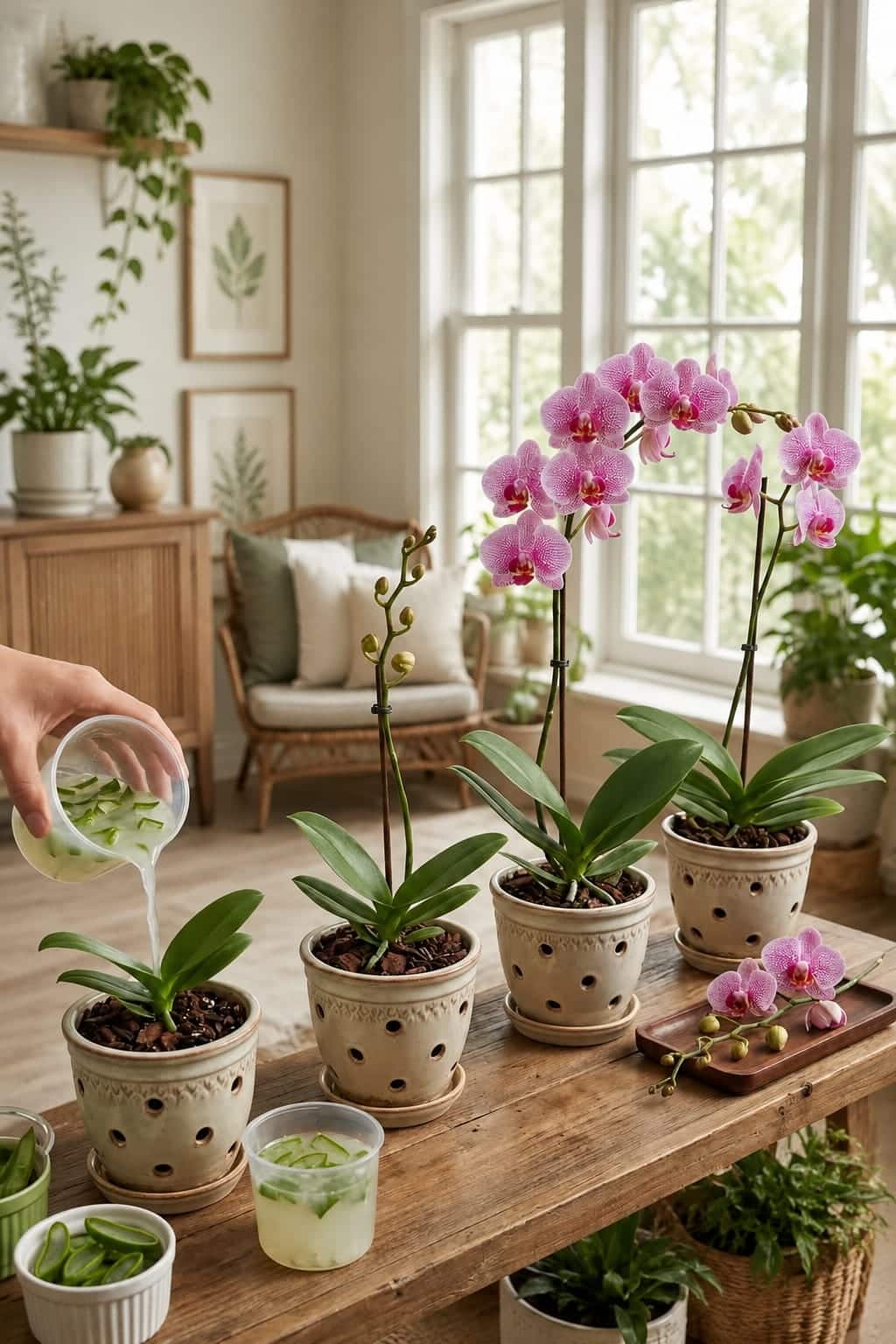
This is why natural orchid-care routines have become so popular. Many people look for gentle homemade treatments that can support roots, encourage growth, and help the plant prepare for future blooming. One of the most interesting natural ingredients for orchids is aloe vera. In the image, a diluted aloe vera mixture is being poured around a young orchid growing in bark, while other orchids nearby show different stages of blooming and bud development. This creates a useful and realistic care idea: aloe vera water as a gentle root-support tonic, not as a miracle cure.
Aloe vera water can be helpful when used correctly. It may support root hydration, reduce stress after repotting, and provide a mild natural boost for orchids that still have healthy roots. However, it should be used carefully. Aloe vera water will not bring a dead orchid back to life overnight. It will not fix completely rotten roots, crown rot, poor light, old bark, or overwatering. Like any homemade plant treatment, it works best when the orchid’s basic care is already correct.
The safest way to use aloe vera for orchids is to make a thin, strained, diluted mixture and apply it only occasionally to the potting medium. The goal is not to soak the plant in thick aloe gel. The goal is to give the roots a mild, clean, natural support while keeping the orchid’s crown dry and the bark airy.
This guide explains how to use aloe vera water for orchids safely, when it may help, when to avoid it, and how to combine it with proper orchid care for healthier roots and better long-term bloom potential.
Why Aloe Vera Is Popular in Natural Plant Care
Aloe vera is well known for its soothing gel. In plant care, many growers use aloe because it contains moisture, natural compounds, and a gel-like texture that feels gentle and protective. Aloe is often used in homemade rooting routines, plant recovery methods, and natural garden mixtures.
For orchids, aloe vera water is usually used as a mild root tonic. The idea is to dilute the aloe gel in water so it becomes light enough to pass through orchid bark without clogging the pot. A properly diluted mixture may help support root moisture and reduce stress, especially when a plant is recovering from repotting or trying to grow new roots.
But aloe vera should not be treated as a complete fertilizer. It does not replace orchid fertilizer. It does not provide all the nutrients orchids need in balanced amounts. It is better understood as a supportive natural supplement, used occasionally and carefully.
The most important rule is dilution. Thick aloe gel can stick to bark, trap moisture, and create residue. Orchids need airflow around their roots. A mixture that is too thick can work against the orchid’s natural needs.
Understanding Orchid Roots Before Using Aloe Water
Most common indoor orchids, especially Phalaenopsis orchids, are epiphytic plants. In nature, they often grow attached to trees rather than buried in soil. Their roots are exposed to air, rain, humidity, and small amounts of organic material. This is very different from ordinary houseplants that grow in dense potting soil.
Orchid roots have a special outer layer called velamen. This spongy layer helps absorb water quickly and protects the inner root. When orchid roots are dry, they often look silver-gray. When they are wet, they turn green. This color change is a useful guide for watering.
Because orchid roots are designed to breathe, they can rot if they stay wet for too long. They can also suffer if thick mixtures coat them and block airflow. This is why aloe vera water must be thin and diluted. The goal is to moisten the bark and roots gently, not cover them in gel.
Healthy orchid roots are usually firm, plump, and green or silvery. Rotten roots are often brown, black, mushy, hollow, or foul-smelling. Aloe vera water should only be used when the plant still has enough living roots to benefit from it.
Can Aloe Vera Water Make Orchids Bloom?
Aloe vera water may support orchids indirectly, but it does not force blooming by itself. Orchid blooming depends on healthy roots, enough light, proper watering, temperature cues, plant maturity, and time. If an orchid is not blooming, aloe water alone will not solve the problem.
Many orchids fail to rebloom because they are not receiving enough bright indirect light. They may look alive and green, but they do not have enough energy to produce flowers. In that case, the solution is better light, not more homemade tonic.
Other orchids fail to bloom because the roots are damaged. If the root system is weak, the plant may focus on survival instead of flowering. Aloe vera water may support root care if the roots are still alive, but it cannot replace repotting when the bark is old or the roots are rotten.
Aloe water can be part of a bloom-support routine because strong roots help the orchid build energy. But it should be presented realistically. It supports root health and recovery; it does not magically create flowers in a few days.
When Aloe Vera Water May Help an Orchid
Aloe vera water may be helpful when an orchid is healthy but slightly stressed. For example, if the orchid was recently moved, repotted, or has finished blooming and is now growing roots, a mild aloe routine may support the plant during its next growth phase.
It may also help when an orchid has a few healthy roots and needs gentle encouragement to produce new ones. If you see fresh green root tips, that is a good sign. A plant with active root growth is usually more ready to benefit from mild natural support.
Aloe vera water can also be useful after trimming a flower spike or after repotting into fresh bark, but it is better to wait until the plant has settled. If many roots were cut, give the orchid time before applying any homemade mixture.
This method is best for orchids that still look alive and stable: firm leaves, some healthy roots, and no signs of serious rot. It is not meant for plants that are collapsing, rotting, or sitting in old sour bark.
When You Should Avoid Aloe Vera Water
Do not use aloe vera water if the orchid has crown rot. Crown rot happens when water sits in the center of the plant where the leaves meet. If this area becomes dark, soft, or wet-looking, avoid pouring any liquid near it. The crown must stay dry.
Do not use aloe vera water if most roots are rotten. A plant with mushy, black, or hollow roots needs root trimming and fresh bark first. Aloe water cannot revive dead roots. It may even make the pot stay wetter if used at the wrong time.
Avoid aloe water if the potting medium smells sour or rotten. This usually means the bark has broken down or the roots are decaying. Repotting is more important than adding a tonic.
Do not use thick aloe gel directly on orchid roots or bark. Thick gel can stick, hold moisture, and reduce airflow. If you want to use aloe, always dilute it until it becomes watery.
Avoid using aloe water too often. Orchids do not need constant homemade treatments. Too many organic liquids can leave residue in the bark and disturb the root environment.
How to Make Aloe Vera Water for Orchids
To make aloe vera water, start with a clean aloe vera leaf. If you have a fresh aloe plant, cut a small piece from a healthy leaf. Rinse it to remove dust or dirt. If using store-bought aloe gel, choose plain aloe with no fragrance, alcohol, dyes, or additives. Many cosmetic aloe products are not suitable for plants, so fresh aloe is usually safer.
Scoop out a small amount of clear gel. You do not need much. A small teaspoon of gel is enough for a beginner mixture. Blend the gel with one to two cups of clean water until it becomes thin and cloudy. Then strain the mixture through a fine sieve or cloth to remove thick pieces.
After straining, dilute again with more water. A safe beginner ratio is one part aloe mixture to three or four parts plain water. The final liquid should be thin enough to pour through orchid bark easily. It should not feel sticky or thick.
Use the mixture fresh. Do not store aloe water for many days. Homemade organic mixtures can spoil, especially in warm rooms. If it smells sour, fermented, or unpleasant, do not use it.
Why Straining and Diluting Matter
Straining and diluting are not optional steps. They are what make aloe vera water safer for orchids. Orchid bark contains air spaces, and those spaces keep the roots alive. If thick aloe pieces settle into the bark, they can hold moisture and create residue.
Undiluted aloe gel can also coat the roots. While aloe is gentle in many situations, orchids need oxygen around their roots. Anything that blocks airflow can create problems over time.
A thin diluted liquid is much safer because it moves through the potting medium like water. It gives the roots brief contact with the aloe mixture without smothering them.
Think of aloe water as a light rinse, not a heavy treatment. The more delicate the orchid, the weaker the mixture should be.
Continue to Page 2
Continue to page 2 for more details about this article and the key points many readers miss on the first page.