Christmas cactus is one of the most rewarding flowering houseplants you can grow. When it is happy, it can cover itself in bright pink, red, white, orange, or purple blooms that look almost too beautiful to be real. A mature Christmas cactus in full flower can become the star of a windowsill, a holiday table, or a cozy indoor plant corner.
But not every Christmas cactus performs the same way. Some plants bloom heavily every year, with dozens of fat buds and long-lasting flowers. Others stay weak, produce only a few small buds, drop their flowers before opening, or grow thin, tired stems without much color.
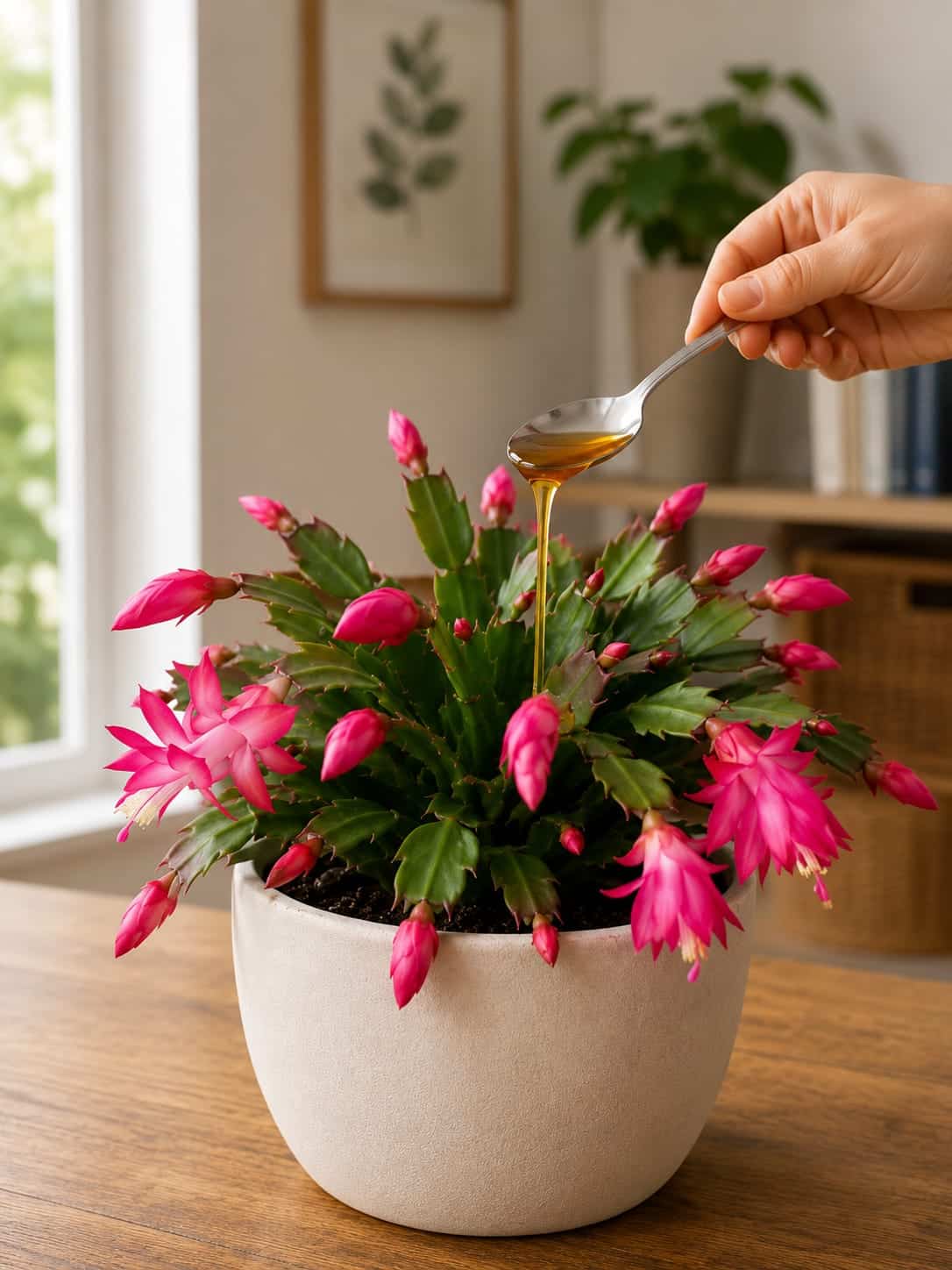
The image shows a healthy Christmas cactus covered in bright pink buds and blooms, with a golden liquid being poured gently over the plant. This kind of “golden liquid” idea is often used in natural plant care to suggest a homemade bloom-support tonic. It may represent honey water, diluted compost tea, banana peel water, or another gentle kitchen-based treatment. But before using any homemade liquid, it is important to understand the truth: big Christmas cactus blooms do not come from one magic ingredient alone.
The real difference between a strong blooming Christmas cactus and a weak one usually comes down to four things: watering, light, root health, and seasonal timing. A natural golden tonic may support a healthy plant occasionally, but it cannot replace the conditions that make the plant bloom.
This guide explains why some Christmas cactus plants bloom big while others stay weak, how wrong watering damages the plant, how poor light reduces buds, how to recognize root stress, and how to use a gentle golden liquid idea safely without harming your cactus.
Understanding Christmas Cactus: It Is Not a Desert Cactus
One of the biggest mistakes people make is treating Christmas cactus like a desert cactus. Despite the name, Christmas cactus is not the same as a cactus that grows in dry desert sand. It is a tropical forest cactus. In its natural environment, it grows in humid forests, often attached to trees or nestled in organic debris where water drains quickly but humidity remains high.
This means Christmas cactus likes a different routine from plants such as snake plant, jade plant, or traditional desert cactus. It does not want bone-dry soil for long periods, but it also does not want soggy roots. It likes moisture with air. It likes bright light without harsh burning sun. It likes a loose, well-draining mix rather than heavy compact soil.
When people misunderstand this, the plant often becomes weak. To get big blooms, you must care for Christmas cactus as a tropical epiphytic cactus: moist but never swampy, bright but not scorched, fed gently, and allowed to experience the seasonal cues that trigger buds.
Why Some Christmas Cactus Plants Bloom Big
A Christmas cactus blooms big when it has stored enough energy and receives the right signals. The plant needs healthy green stem segments, strong roots, and enough light during the growing season. It also needs the correct seasonal rhythm before flowering.
In many homes, Christmas cactus sets buds when nights become longer and temperatures become slightly cooler. The plant responds to shorter days and cooler nights by producing flower buds. A plant that has been growing well all year will have more energy stored in its stems.
The strongest blooming plants usually have several things in common: bright indirect light, correct watering, healthy roots, and no disturbance during bud formation. A golden liquid tonic may help only after these basics are already in place.
Why Some Christmas Cactus Plants Stay Weak
A weak Christmas cactus often has hidden problems: too little light, improper watering, old compacted soil, a pot without drainage, exposure to heat vents or cold drafts, or sudden changes while buds are forming.
Weak plants often show signs before they fail to bloom: stem segments become thin, limp, wrinkled, reddish, pale, or dull. Buds may appear and then drop. Flowers may open small and fade quickly.
If your plant stays weak year after year, do not begin with a strong homemade treatment. Begin by checking the care routine. A plant that is already stressed needs correction, not extra liquid poured into the pot.
Continue to Page 2
Continue to page 2 for more details about this article and the key points many readers miss on the first page.