Pothos is one of the most loved indoor plants because it grows easily, trails beautifully, and brings a fresh green look to any room. Its heart-shaped leaves can brighten shelves, desks, windowsills, plant stands, and hanging baskets. A healthy pothos can grow long vines, thick stems, and new leaves so quickly that it feels almost impossible to stop.
But sometimes pothos growth slows down. The vines become thin. The leaves come out smaller. The soil looks tired. The plant stays green, but it no longer looks full and lush. This is when many plant owners start looking for a simple natural way to refresh the soil and support stronger roots.
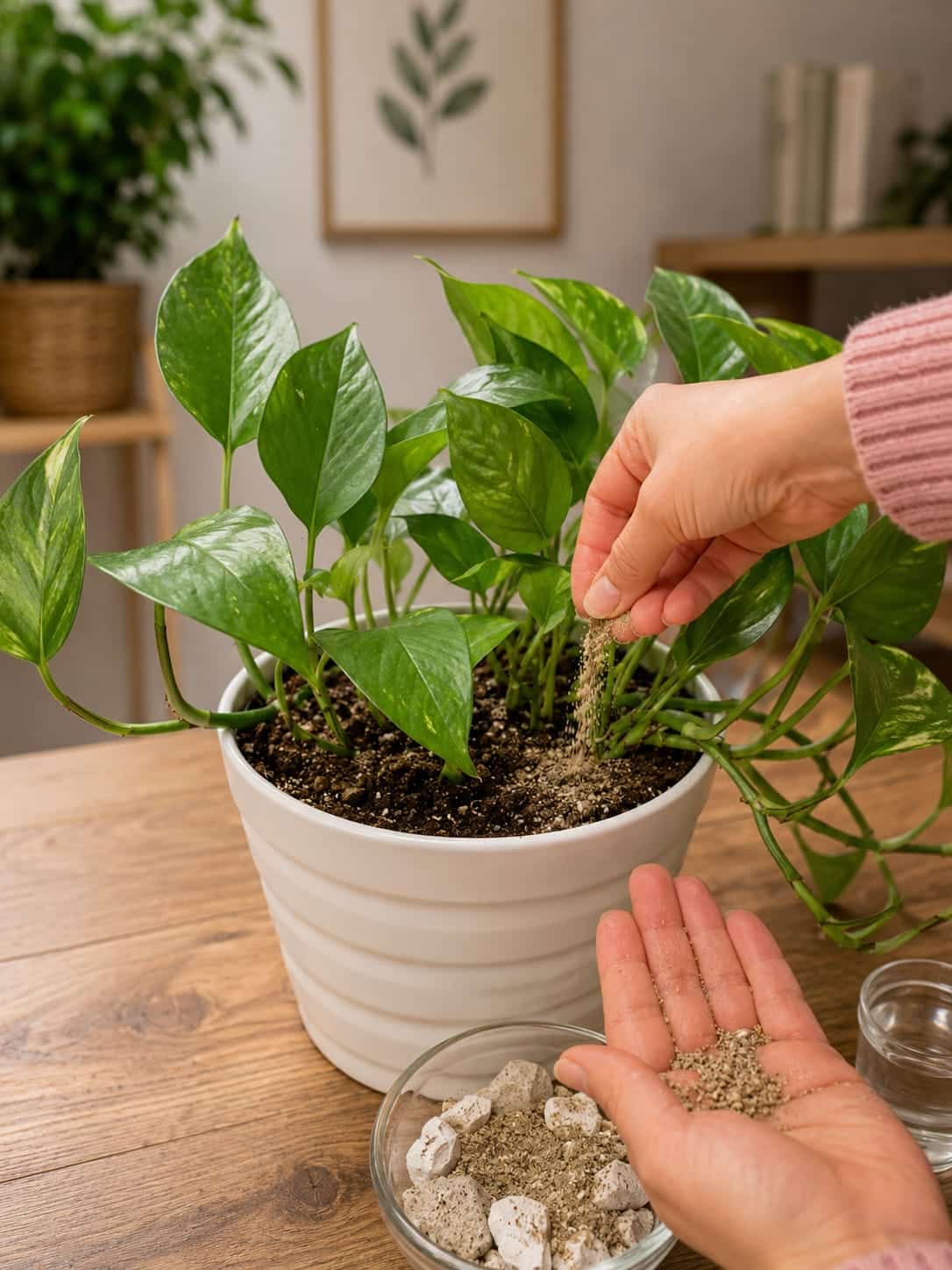
The image shows a pothos plant in a white pot while a person sprinkles a dry, grainy mixture onto the soil. In the bowl, there appear to be pale mineral-like pieces mixed with a fine beige powder. This looks like a homemade soil booster made from crushed eggshells, mineral grit, or a mild natural amendment. This type of dry top-dressing is popular because it looks simple, clean, and easy to apply.
A gentle mineral mix can be useful for pothos, but it must be used correctly. Pothos is forgiving, but it does not like compacted soil, soggy roots, or heavy layers of homemade ingredients. Too much powder on the soil can create crusting, slow drainage, attract gnats if organic material is included, or make watering uneven. The safest method is to use a tiny amount, mix it lightly into the top layer, and treat it as a support step—not a miracle fertilizer.
This guide explains how a natural dry soil booster may help pothos, what ingredients are safest, how to apply it, when to avoid it, and what truly makes pothos grow fuller, greener, and stronger indoors.
Why Pothos Plants Lose Their Full Look
Pothos often starts out looking full and bright, then slowly becomes thinner over time. This can happen for several reasons. The most common reason is low light. Pothos can survive in lower light, but it grows faster and fuller in bright indirect light. When light is weak, the plant may stretch, produce smaller leaves, and develop long empty vines with fewer leaves.
Another reason is old or tired soil. Over time, potting mix breaks down. It can become compacted, stale, or less airy. When the soil loses structure, roots receive less oxygen. Water may sit too long in the pot, or it may run through without properly soaking the root ball.
Wrong watering also weakens pothos. Too much water can cause yellow leaves, soft stems, and root rot. Too little water can cause drooping, crispy edges, and stalled growth. Pothos likes soil that becomes partly dry between waterings, but it should not stay bone-dry for too long.
A lack of nutrients can also slow growth. Pothos is not a heavy feeder, but it still needs some nutrition during active growth. If it has been in the same pot for a long time with no feeding, the plant may become less vigorous.
A dry mineral soil booster may help in some situations, but it cannot replace the basics: light, watering, fresh soil, drainage, and occasional balanced feeding.
What the Dry Soil Booster Might Be
The mixture in the image looks like a dry natural amendment. It may include crushed eggshells, mineral grit, ground rice hulls, diatomaceous earth, crushed clay, or a homemade blend of fine organic and mineral particles. Many indoor gardeners use these ingredients to refresh the soil surface and support root health.
Crushed eggshells are often used because they contain calcium carbonate. Calcium is important for plant structure, but eggshells break down slowly in potting soil. They are not a fast fertilizer. They are more of a slow, gentle mineral addition.
Mineral grit, pumice, perlite, or small clay pieces can help improve aeration if mixed into the soil. However, sprinkling large chunks only on top does not improve the entire root zone. It may help keep the surface more open, but it will not fix compacted soil deep in the pot.
Diatomaceous earth is sometimes used as a dry top-dressing to help with fungus gnats, but it only works when dry. Once wet, its effect is reduced. It should also be used carefully and not inhaled as dust.
Because the exact ingredient is not always clear from an image, the safest approach is to use a simple, gentle, clean mix: finely crushed eggshells plus a small amount of pumice, perlite, or coarse mineral grit. This gives a light soil support without adding too much food-like organic matter.
Can a Mineral Mix Make Pothos Grow Fuller?
A mineral mix may support fuller growth indirectly, but it cannot make pothos grow full by itself. Fuller growth comes from healthy roots, enough light, regular pruning, and proper watering.
Pothos grows from nodes along the vine. When you prune a vine above a node, the plant may branch and produce new growth. This is one of the best ways to make pothos look fuller. If you never prune, the plant may grow long trailing vines but become sparse near the pot.
Light also matters. A pothos in bright indirect light has more energy to produce new leaves and stronger vines. A plant in a dark room may remain alive but grow slowly and thinly.
A mineral mix may help if the soil surface is tired or compacted. It may provide small mineral support and improve the top layer slightly. But it will not create fullness without good care.
Think of the soil booster as a small helper. The real growth engine is light, pruning, healthy roots, and consistent care.
Can It Make Leaves Greener?
Fresh green pothos leaves come from good light, healthy roots, and balanced nutrition. If leaves are pale, dull, or yellowing, a soil booster may not be the right first step.
Yellow leaves can happen from overwatering, underwatering, low light, cold stress, root rot, or natural aging. A dry powder on the soil will not turn yellow leaves green again. Once a pothos leaf has turned yellow, it usually stays yellow and should eventually be removed.
If leaves are small and pale, the plant may need more light or a gentle balanced fertilizer during the growing season. If leaves are dusty, simply wiping them with a damp cloth can make them look fresher and help them absorb light better.
A mineral mix containing eggshell powder may provide slow calcium support, but it will not act quickly. For greener growth, make sure the plant has bright indirect light and a complete fertilizer when needed.
The best leaf color comes from overall plant health, not one ingredient.
Can It Strengthen Roots?
Roots become stronger when the potting mix has the right balance of moisture and oxygen. Pothos roots like a light, airy mix that drains well but does not dry instantly. If the soil is compacted or soggy, roots suffer.
A dry mineral booster may help the surface slightly, especially if it contains pumice, perlite, or grit. These ingredients create air pockets and reduce surface compaction. However, if the lower soil is dense and wet, top-dressing will not solve the problem.
If your pothos has weak roots, the best solution may be repotting into a fresh airy mix. A good pothos mix can include indoor potting soil, perlite, orchid bark, coco coir, and a little compost. This gives roots moisture, oxygen, and structure.
Strong roots also need correct watering. Overwatering is one of the fastest ways to damage pothos roots. Always check the soil before watering.
The mineral mix can support roots only when the root environment is already healthy.
The Safest Homemade Soil Booster Recipe
A safe pothos soil booster should be dry, clean, mild, and used in a small amount. A simple recipe is crushed eggshell powder mixed with a small amount of pumice or perlite.
To prepare eggshells, rinse them well and let them dry completely. Bake them briefly at low heat if you want to make sure they are dry and clean. Then crush them into a fine powder using a mortar, blender, or grinder.
Mix one part eggshell powder with two parts fine pumice, perlite, or coarse sand. This creates a lighter blend that is less likely to form a dense crust on the soil surface.
Do not add sugar, flour, cooked rice, coffee grounds, milk powder, or food scraps. These can mold, smell, or attract pests indoors.
Keep the mixture dry in a sealed container and use only a small pinch when needed.
How Much Should You Use?
Use much less than you think. For a small pothos pot, use only half a teaspoon of the dry mix. For a medium pot, use one teaspoon. For a large pot, one to two teaspoons is enough.
Do not cover the entire soil surface with a thick layer. A thick layer can interfere with watering and may crust over.
Sprinkle the mix around the soil surface, keeping it away from the stems. Then gently scratch it into the top half inch of soil. This helps the material blend naturally and prevents it from sitting as a dusty layer.
After applying, do not water if the soil is already moist. Wait until the plant actually needs water.
More is not better. A small amount used occasionally is safer than a heavy layer.
How Often Should You Apply It?
Use this kind of soil booster rarely. Once every two to three months during spring and summer is enough. During fall and winter, skip it unless the plant is actively growing in bright light.
Pothos does not need constant soil amendments. Too many additions can make the potting mix unbalanced. If you keep adding powders, peels, grounds, and homemade ingredients, the soil can become messy and unhealthy.
A simple routine is best: good light, correct watering, occasional pruning, and gentle feeding during active growth.
The dry soil booster should be a small seasonal support, not a weekly habit.
When You Should Avoid This Trick
Do not use a dry soil booster if the soil is wet or sour-smelling. Wet soil already indicates a moisture problem, and adding powder may worsen the surface conditions.
Do not use it if fungus gnats are present. Some soil amendments can make the surface more attractive to pests if moisture is not controlled.
Do not use it if there is mold on the soil. First remove the moldy top layer, improve airflow, and correct watering.
Do not use it if the plant is yellowing badly, wilting in wet soil, or showing signs of root rot. Check the roots instead.
Do not use it on newly rooted cuttings with delicate roots. Let young cuttings establish first.
Do not use thick, dusty, or unknown powders if you are not sure what they contain.
Why Drainage Matters More Than Any Powder
A pothos plant must have drainage. A pot without drainage holes can trap water at the bottom, causing root rot even if the top of the soil looks dry. This is one of the most common reasons indoor pothos plants decline.
If your decorative pot has no drainage, keep the pothos in a plastic nursery pot with holes and place that inside the decorative pot. Remove it for watering, let it drain fully, then put it back.
Adding a soil booster to a pot with poor drainage does not fix the problem. In fact, it may make the soil more complicated.
Healthy roots need water and oxygen. Drainage allows excess water to leave and fresh air to return to the root zone.
Before using any homemade amendment, make sure the pot drains properly.
Best Soil Mix for Pothos
Pothos grows best in a light, airy potting mix. Regular indoor potting soil can work, but it is even better when amended with perlite or orchid bark.
A simple pothos mix can be two parts indoor potting soil, one part perlite, and one part orchid bark. This keeps the mix loose and prevents it from becoming too dense.
If your home is very dry and the plant dries too quickly, add a little coco coir to help hold moisture. If your home is humid or you tend to overwater, add more perlite or bark.
The soil should hold enough moisture for the plant to drink but should not stay soggy for many days.
If the soil is old, compacted, or smells bad, repotting is better than top-dressing.
How to Water Pothos Correctly
Pothos likes the soil to dry partly between waterings. Water when the top inch or two of soil feels dry. In bright light, this may happen faster. In lower light, the plant uses water more slowly.
When watering, water thoroughly until excess drains from the bottom. Then empty the saucer. Do not leave the plant sitting in standing water.
Avoid tiny daily sips. Small sips can keep the top layer damp while the deeper roots do not receive even moisture.
If the leaves droop and the soil is dry, the plant may need water. If the leaves yellow and the soil is wet, the plant may be overwatered.
Always check the soil before watering, especially after applying any dry amendment.
Bright Indirect Light for Fuller Growth
Pothos is famous for tolerating low light, but it grows much better in bright indirect light. A bright window with filtered sunlight can make a major difference in leaf size, vine thickness, and growth speed.
If your pothos is losing variegation, producing small leaves, or growing long bare vines, it may need more light. Move it gradually to a brighter place.
Avoid harsh direct afternoon sun, which can scorch leaves. Morning sun is usually gentle. Bright filtered light throughout the day is ideal.
If your room is dark, a grow light can help. More light means more energy, and more energy means stronger vines and fuller growth.
No soil booster can replace light.
Continue to Page 2
Continue to page 2 for more details about this article and the key points many readers miss on the first page.