Pothos is one of the most loved indoor plants because it is beautiful, forgiving, and easy to grow. With its heart-shaped leaves, trailing vines, and bright green color, pothos can make any room feel fresher and more alive. It looks good on shelves, tables, plant stands, hanging baskets, kitchen counters, and bright corners. Whether you grow golden pothos, marble queen, neon pothos, jade pothos, or another variety, this plant has a way of making indoor spaces feel softer and more natural.
But even though pothos is easy, it can still slow down. The leaves may become smaller. The vines may stop growing. The plant may look dull instead of glossy. Sometimes the soil feels tired, and the plant looks alive but not as full as before. This is when many plant lovers start looking for a gentle natural plant food that can refresh the roots and encourage healthier growth.
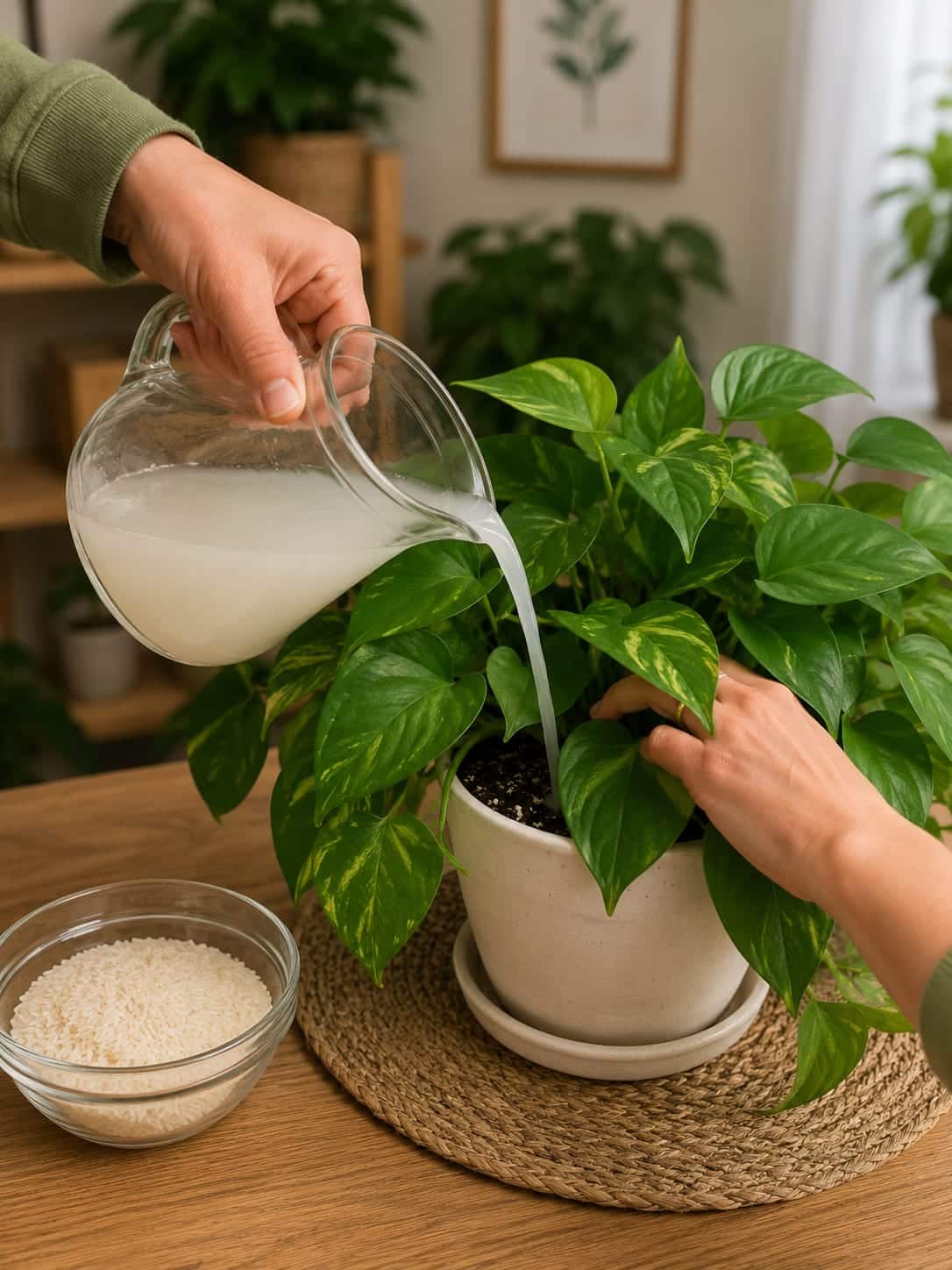
The image shows a lush pothos being watered with cloudy rice water while a bowl of white rice sits nearby. This is a popular indoor plant-care idea: using rice water as a natural food for plants. Rice water is the milky liquid left after rinsing or soaking uncooked rice. Many gardeners use it because it contains small amounts of starch, minerals, and nutrients that may support plant growth when used correctly.
Rice water can be useful for pothos, but it must be used carefully. It is not a magic fertilizer. It will not instantly double the size of your plant. It will not fix root rot, yellow leaves, poor light, or compacted soil. If used too often or too thick, rice water can attract fungus gnats, create sour soil, feed mold, and stress the roots.
The safest way to use rice water for pothos is to make it fresh, dilute it well, apply it only when the plant needs watering, and use it occasionally during active growth. When combined with bright indirect light, healthy soil, pruning, and proper watering, rice water can become a gentle support step for fuller vines and fresh green leaves.
Why Rice Water Became Popular for Houseplants
Rice water became popular because it is simple, affordable, and already available in many kitchens. Instead of throwing away the water used to rinse rice, plant owners began using it as a natural watering tonic. The cloudy water looks rich and nourishing, which makes it feel like a homemade plant food.
The idea is appealing because it turns a kitchen leftover into something useful. Many people like natural plant-care methods because they feel gentle, sustainable, and easy to repeat. Rice water also fits perfectly into short gardening videos because it is visual: white rice, cloudy water, pouring, and then a healthy green plant.
For pothos, rice water can be interesting because pothos is a fast-growing leafy plant when conditions are right. It responds well to moisture, light, and gentle feeding. A mild rice water treatment may support the soil environment and provide a small nutrient boost.
However, rice water is not the same as balanced fertilizer. It does not provide a complete measured nutrient profile. Its strength can vary depending on how much rice is used, how long it is soaked, and whether it is fresh or fermented. This is why careful preparation matters.
Rice water should be treated as an occasional natural supplement, not as the main reason your pothos grows well.
What Rice Water Contains
Rice water contains starch from the rice grains. It may also contain tiny amounts of minerals and nutrients such as potassium, phosphorus, magnesium, and trace elements, depending on the rice and how it was prepared. These elements can support plant growth in small ways.
The starch in rice water may also feed beneficial microorganisms in the soil. A healthy soil microbe population can help organic material break down and may support root activity. This is one reason some gardeners like using rice water as a natural soil tonic.
But starch is also the reason rice water can become risky. If too much starch is poured into a pot, especially in a warm indoor room, it can feed unwanted microbes, mold, and fungus gnats. The soil can begin to smell sour, and the root zone can become unhealthy.
For this reason, rice water should never be thick like rice soup. It should be thin, diluted, and fresh. A light cloudy liquid is safer than a heavy white liquid full of starch.
The goal is gentle support, not heavy feeding.
Is Rice Water Good for Pothos?
Rice water can be good for pothos when used correctly. Pothos is a leafy tropical plant that appreciates steady moisture, bright indirect light, and gentle nutrition during active growth. A diluted rice water rinse can be used occasionally as part of that routine.
It may help support the soil and encourage a healthier root environment. It may also give a small natural boost during the growing season when the plant is producing new leaves and vines.
But rice water is not necessary for every pothos. A pothos can grow beautifully with plain water, good light, airy soil, and occasional balanced fertilizer. If your plant is already thriving, rice water is optional.
If your pothos is struggling, rice water should not be the first solution. First check the basics: Is the plant getting enough light? Is the pot draining well? Is the soil too wet? Are roots healthy? Is the plant root-bound? Are you pruning it to encourage fullness?
Rice water can support a good routine, but it cannot replace correct care.
Can Rice Water Make Pothos Grow Faster?
Rice water may help pothos grow better indirectly, but it does not guarantee faster growth. Pothos growth depends mostly on light, temperature, root health, soil quality, water balance, and pruning.
If a pothos is in a dark corner, rice water will not make it grow fast. Low light means low energy. The plant may survive, but it will not produce lush new vines quickly.
If the roots are sitting in soggy soil, rice water can make the problem worse. A struggling root system cannot use nutrients properly. It needs air and drainage first.
If the plant is healthy, warm, and receiving bright indirect light, a mild rice water treatment may support active growth. It may be most useful in spring and summer, when pothos naturally grows more strongly.
So the answer is yes, rice water may support growth, but only when the plant already has the conditions it needs to grow.
Can Rice Water Make Leaves Greener?
Rice water may support fresh green growth, but it will not turn damaged yellow leaves green again. Once a pothos leaf turns yellow, it usually does not recover. Yellow leaves should be removed when they become unattractive or weak.
Fresh green leaves come from healthy roots, good light, and balanced care. If leaves are dull, first wipe them with a damp cloth. Dust can make pothos leaves look tired and can reduce the amount of light they absorb.
If new leaves are pale or small, the plant may need more light. If many leaves are yellowing, the plant may be overwatered, underwatered, root-bound, cold-stressed, or in poor soil.
Rice water can be a small support for new growth, but it cannot repair old damage. The best goal is to help the plant produce healthier future leaves.
For fresh green pothos leaves, focus on bright indirect light, clean leaves, healthy roots, and careful watering.
Can Rice Water Make Pothos Fuller?
Rice water alone will not make pothos fuller. Fuller growth comes mainly from pruning and propagation. Pothos naturally grows long vines. If you never trim it, the plant may become long and trailing but sparse near the top of the pot.
To make a pothos fuller, cut long vines just above a node. A node is the small bump on the stem where leaves and roots can grow. After pruning, the plant may branch and produce new growth. You can also root the cuttings in water and plant them back into the same pot to create a fuller look.
This method is much more effective than simply feeding the plant. Rice water may support the roots after pruning, but pruning creates the shape.
If your pothos looks thin, do not rely only on rice water. Trim long vines, root cuttings, replant them, and give the plant brighter light.
Rice water is a support step. Pruning is the fullness step.
The Best Type of Rice to Use
Use plain uncooked rice. White rice, jasmine rice, basmati rice, or brown rice can be used. The rice should not contain salt, oil, spices, flavoring, or seasoning.
Do not use cooked rice water from rice that was boiled with salt. Salt can damage plant roots. Do not use rice water from rice cooked with butter, broth, spices, or oil. These ingredients are not safe for indoor plant soil.
Do not use rice pudding water, sweet rice water, or anything with sugar. Sugar can feed bacteria and fungus gnats.
The safest choice is the water from rinsing plain uncooked rice before cooking. It should be fresh, clean, and diluted.
Simple is safer.
How to Make Safe Rice Water for Pothos
To make safe rice water, place one tablespoon of uncooked plain rice in a bowl. Add two cups of clean water. Swirl the rice with your fingers or a spoon for about one minute. The water will turn slightly cloudy.
Strain out all rice grains. Do not leave grains in the water. Then dilute the cloudy rice water with two more cups of plain water. This makes the mixture weaker and safer for indoor pots.
The final liquid should be lightly cloudy, not thick and milky like cream. If it looks very white and heavy, dilute it more.
Use the rice water fresh the same day. Do not let it sit for days. Fresh rice water is much safer than old rice water.
This simple rinse-water method is better for indoor pothos than thick soaked or fermented rice water.
Should You Ferment Rice Water?
Fermented rice water is sometimes recommended online, but it is riskier for indoor pothos. Fermentation changes the smell and microbial activity of the liquid. Some outdoor gardeners use fermented plant tonics, but indoor pots are smaller and more sensitive.
Fermented rice water can smell sour, attract pests, and disturb the potting mix if used too strong. It may also encourage fungus gnats if the soil remains damp.
For indoor pothos, fresh diluted rice water is safer. It is mild, simple, and less likely to cause odor or pest problems.
If you are growing plants outdoors in large soil beds, fermented preparations may behave differently. But for a pothos in a decorative indoor pot, avoid unnecessary risk.
Use fresh rice rinse water instead of fermented rice water.
How to Apply Rice Water to Pothos
Apply rice water only when your pothos is already due for watering. Do not pour it onto wet soil. If the soil is still damp, wait.
Check the top inch or two of soil with your finger. If it feels dry, the plant may be ready. If it feels moist, do not water yet.
Pour the diluted rice water slowly onto the soil, not onto the leaves. Water evenly around the pot so the root zone receives moisture. Let excess drain out from the bottom.
Empty the saucer after watering. Pothos should not sit in standing rice water. Standing water can suffocate roots and cause rot.
Rice water counts as watering. Do not use rice water and then water again immediately with plain water unless you are intentionally flushing the pot because the mixture was too strong.
How Often Should You Use Rice Water?
Use rice water occasionally. Once every four to six weeks during spring and summer is enough. If your pothos is growing very actively in bright light, this occasional use may be fine.
Do not use rice water every week. Do not use it every time you water. Too much starch can create soil problems.
During fall and winter, use rice water less often or skip it completely. Pothos growth slows in lower light and cooler conditions. The plant uses less water, and the soil may stay damp longer.
If you notice mold, gnats, sour smell, or yellowing after rice water, stop using it.
With rice water, moderation is the secret.
When Rice Water May Help Most
Rice water may be most useful during active growth, when the plant is producing new vines and leaves. This is usually spring and summer, or any time the plant is in warm conditions with strong bright indirect light.
It may also be helpful after light pruning, when you want to support healthy regrowth. Use it only if the soil is dry and the plant is ready for watering.
Rice water can also be useful for a healthy pothos that has been in the same soil for a while but is not showing signs of root rot or pest problems.
The best candidate is a stable, healthy plant—not a sick one.
If the plant is already weak, diagnose the problem first.
When You Should Avoid Rice Water
Do not use rice water if the soil is wet. Wet soil plus starchy water can encourage sour conditions.
Do not use rice water if fungus gnats are present. Rice water may feed the problem.
Do not use rice water if mold is growing on the soil. Correct the moisture issue first.
Do not use rice water if the pot has no drainage holes. Drainage is essential.
Do not use rice water if the plant has many yellow leaves and the soil is damp. That may indicate overwatering or root rot.
Do not use rice water on newly potted cuttings with delicate roots until they are established.
Do not use thick, old, fermented, salted, or cooked rice water.
Continue to Page 2
Continue to page 2 for more details about this article and the key points many readers miss on the first page.