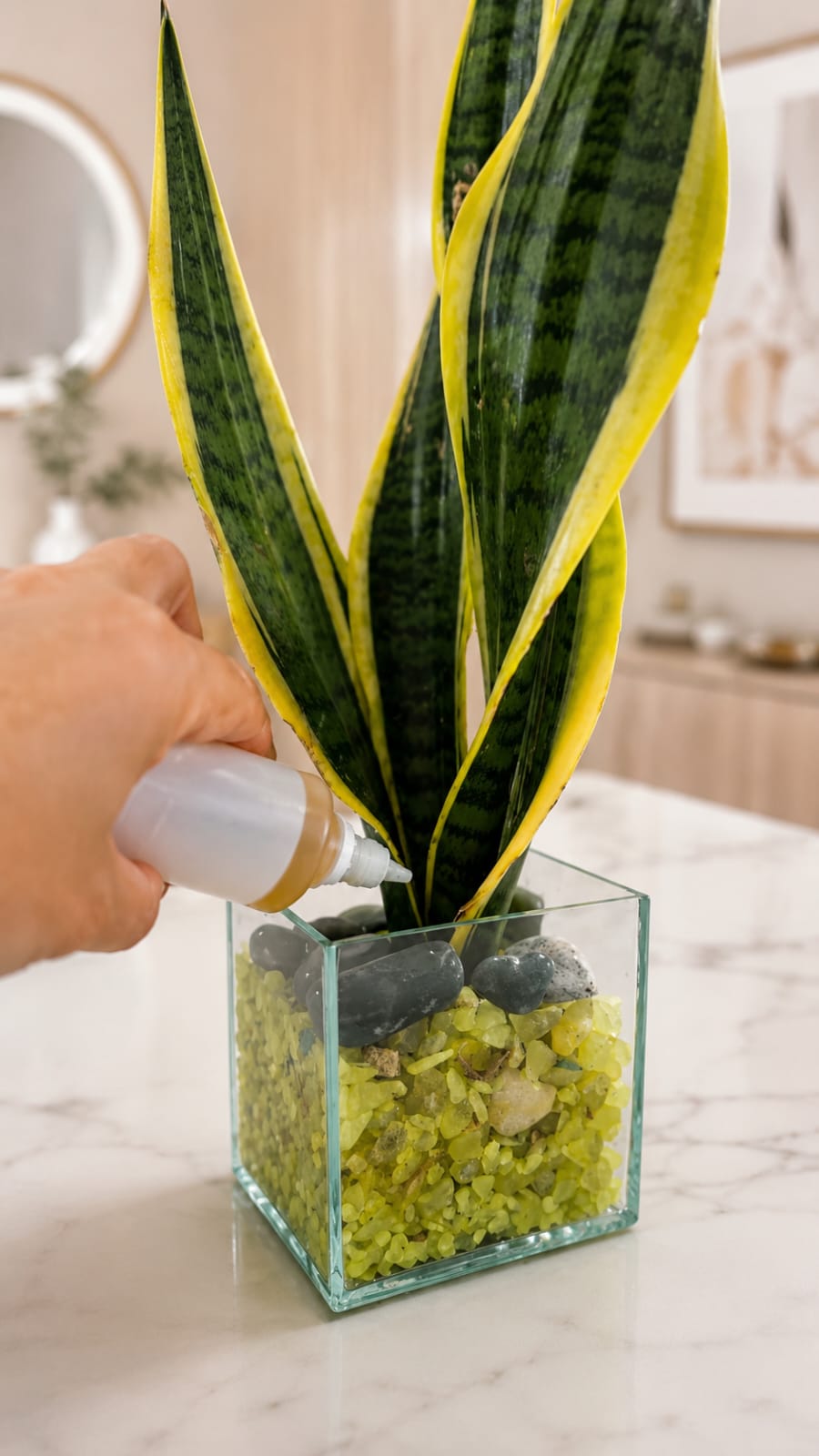
A healthy snake plant can make an indoor space feel cleaner, calmer, and more carefully styled without needing a complicated care routine. Its upright leaves bring structure, its green and yellow variegation adds strong natural contrast, and its low-maintenance habit makes it one of the most practical houseplants for apartments, bedrooms, home offices, entryways, bright bathrooms, and modern living rooms. When a snake plant is arranged in a clear glass container with decorative stones and a clean root-zone support routine, the whole plant can feel more like a designed indoor feature than a simple houseplant.
That is why the yellow stone and Bokashi-style snake plant trick is so interesting for homeowners who want a cleaner and more decorative plant setup. The idea is simple: a snake plant is placed inside a glass container, yellow decorative stones are added around the base, smooth accent stones are used on the surface, and a small amount of Bokashi-style plant tonic is applied carefully near the root zone. The goal is not to force instant growth or create a miracle result. The goal is to support the plant from the base while creating a brighter, cleaner, more refined indoor arrangement.
This trick needs to be explained carefully because a glass container and decorative stones can look beautiful, but they also require smart care. Snake plants are tough, but they do not like sitting in wet, stagnant conditions. If the container has no drainage, if water collects at the bottom, or if too much liquid tonic is added, the root area can become stressed. The yellow stones may improve the look of the arrangement, and the Bokashi-style tonic may support the soil or root area when used carefully, but the full result still depends on drainage planning, light, watering control, and healthy roots.
The safest way to understand this method is to treat it as a decorative root-zone support trick, not as a guaranteed plant cure. The yellow decorative stones help create a clean surface and support the plant’s upright shape. The Bokashi-style plant tonic may help as a mild support step when used sparingly. But the most important part is still the full care system around the plant: a well-draining cactus mix or houseplant drainage mix, controlled moisture, bright indirect light, a container setup that does not trap water around the roots, and occasional support from a gentle indoor plant fertilizer when the plant is actively growing.
What the Yellow Stone and Bokashi Snake Plant Trick Is
The yellow stone and Bokashi snake plant trick is a combined styling and root-zone support method. It uses decorative yellow stones or crystal-like gravel inside a clear container to create a bright, polished base around a snake plant. Smooth accent stones may be added near the top to make the arrangement look more finished. A Bokashi-style plant tonic is then applied carefully around the base as a support step for the root area.
The purpose of the yellow stones is mostly decorative and structural. They help hold the plant upright, cover the lower planting area, and make the container look clean and intentional. They do not replace a complete soil mix, indoor plant fertilizer, or a real drainage plan. Their value is in presentation, stability, and a cleaner-looking surface.
The purpose of the Bokashi-style tonic is different. It appears to be used as a mild root-zone support liquid. Bokashi products are commonly associated with fermented organic matter and soil-support routines, but the exact product strength, formula, and intended dilution should always be respected. A small amount may support the routine when the plant is healthy, but it should not be poured heavily into a closed glass container or used as a solution for root rot.
Why Yellow Decorative Stones Make the Snake Plant Look More Premium
Yellow decorative stones create a strong design contrast with snake plant leaves. The green and yellow leaf edges already have a bold pattern, and the warm yellow stone layer can make that color story feel more intentional. Instead of a plain soil surface, the plant gets a bright decorative base that looks clean, modern, and styled.
This kind of setup works especially well for homeowners who want a plant arrangement that feels polished enough for a console table, bathroom counter, bedroom dresser, home office shelf, or living room side table. The stones help turn the snake plant into a decor piece, not just a plant sitting in a pot.
However, the stones should not be used only for appearance. They should also be placed in a way that does not suffocate the base of the plant or trap too much moisture. A decorative layer should support the arrangement without creating hidden problems around the roots or crown.
Why a Glass Container Needs More Care Than a Normal Pot
A clear glass container can make a snake plant look elegant, but it does not behave like a normal plant pot. Many glass containers do not have drainage holes. That means extra water or tonic cannot escape easily. If too much liquid is added, moisture can collect at the bottom and increase the risk of root rot.
This is the most important caution with this trick. The arrangement may look clean and high-end, but the root zone still needs oxygen and moisture control. Snake plants store water in their leaves and rhizomes, so they usually prefer a drier root environment than many other indoor plants. A closed glass setup should be watered much more carefully than a pot with drainage holes.
For a safer long-term version, the glass container can be used as a decorative outer vessel while the snake plant remains in a smaller draining nursery pot inside. Yellow stones can hide the inner pot and create the same styled effect. This gives the homeowner the beauty of a glass display while keeping the plant’s roots safer.
Why the Bokashi-Style Tonic Should Be Used Lightly
A Bokashi-style plant tonic can sound powerful because it is often connected with soil support, organic matter, and plant nutrition. But with snake plants, more is not always better. These plants are slow, steady growers and do not need heavy feeding or frequent liquid treatments. A small amount of support may help as part of a routine, but too much liquid can create moisture stress.
If a Bokashi product is used, it should be diluted and applied according to the product directions. It should not be poured in a thick amount around the base, especially inside a container without drainage. A controlled application is safer than a heavy pour. The goal is to lightly support the root area, not to soak the plant.
This tonic should also not replace proper indoor plant fertilizer if the plant truly needs nutrients. A Bokashi-style liquid may support the soil environment, but it may not provide the complete nutrient balance that a carefully chosen indoor plant fertilizer or succulent fertilizer can provide. It should be treated as one support step inside a broader routine.
How to Build the Yellow Stone Snake Plant Setup More Safely
The safer version of this trick starts with a healthy snake plant. The leaves should be firm, upright, and free from soft or mushy areas. If the plant is already yellowing badly, leaning from root weakness, or ushowing signs of rot, the root system should be checked before the plant is placed into a decorative glass setup.
The stones should be rinsed before use. Decorative gravel can carry dust that clouds the container and settles around the root area. Clean stones create a brighter look and reduce unnecessary debris. The glass container should also be clean before the plant is arranged.
The plant should be positioned upright, and the stones should be added carefully around the base. They should hold the plant steady without being packed tightly against the crown. If the setup includes soil beneath the stones, the soil should be a loose, well-draining cactus mix or houseplant drainage mix. If the setup is mainly decorative, the watering routine should be even more cautious.
Snake Plant Glass Container and Stone Setup Table
| Setup Element | Why It Matters | Best Use for Snake Plants |
|---|---|---|
| Clear glass container | Creates a clean, modern, premium display | Best when drainage and watering are carefully controlled |
| Yellow decorative stones | Add warmth, contrast, and a polished surface | Useful as a styling layer around the base |
| Smooth accent stones | Make the top layer feel more finished | Best used lightly without crowding the plant crown |
| Well-draining cactus mix | Supports root airflow and reduces soggy conditions | Best as the main growing medium when soil is used |
| Bokashi-style tonic | May support the soil or root zone when used carefully | Use lightly and avoid heavy application in closed containers |
| Bright indirect light | Helps the plant use water and maintain leaf strength | Important for both plant health and decorative value |
Why Decorative Stones Should Not Replace Drainage
Decorative stones can make a plant arrangement look clean, but they do not automatically solve drainage. This is a common mistake. A layer of stones at the bottom of a closed glass container may create a space where water collects, but it does not remove that water from the container. If moisture sits there too long, the roots can still become stressed.
For snake plants, this matters because root rot often begins when the lower root area stays wet. A stone layer can support the plant and improve the look, but it should not be treated like a true drainage hole. A real drainage plan usually means a pot with drainage holes, a removable inner pot, or a very careful watering routine.
The safest approach is to use the stones as decoration and support, while still making sure the plant is not sitting in excess water. If the container has no drainage, every watering and tonic application should be small, controlled, and spaced out properly.
Why Soil Quality Still Matters in a Decorative Setup
The best soil for snake plants is usually a loose, fast-draining mix that does not stay soggy around the roots. Snake plants store water in their leaves and underground rhizomes, which means they can suffer when the soil stays wet too long. A dense potting mix inside a glass container can create a high-risk environment.
A well-draining cactus mix, succulent mix, or houseplant drainage mix is usually a better foundation. Many homeowners improve drainage with perlite, pumice, coarse sand, orchid bark, or other aerating materials. These ingredients help water move through the root area and allow air to reach the roots.
Yellow stones and Bokashi tonic may make the arrangement more interesting, but they cannot fix poor soil. If the mix below is heavy, wet, and compacted, the plant may struggle even if the top layer looks beautiful. The hidden root environment matters more than the surface decoration.
Snake Plant Soil and Drainage Support Table
| Soil or Drainage Choice | Why It Matters | Best Use for Snake Plants |
|---|---|---|
| Well-draining cactus mix | Helps water move through the root area instead of staying soggy | Useful as a base mix for most indoor snake plants |
| Houseplant drainage mix | Improves airflow and reduces heavy soil compaction | Helpful when regular potting soil stays wet too long |
| Perlite or pumice | Adds air pockets and helps reduce root rot risk | Good for improving drainage in decorative containers |
| Coarse sand or bark | Creates a chunkier texture and supports faster drying | Useful in small amounts for a looser snake plant blend |
| Decorative stone layer | Improves the surface look and helps stabilize the plant | Best as a top layer, not as the only drainage solution |
| Removable inner pot | Allows drainage while keeping a polished outer display | Often the safest way to combine plant care with glass styling |
How to Apply a Bokashi-Style Plant Tonic More Safely
A Bokashi-style tonic should be used carefully with snake plants. The plant should already be healthy, the soil should not be wet, and the container should not be holding water at the bottom. If the arrangement is in a glass container with no drainage, the amount should be very small.
The tonic should be diluted according to product instructions. A narrow-tip bottle or small applicator can help place it near the soil or root zone without soaking the entire arrangement. The liquid should not be poured over the leaves or allowed to sit in the crown. Snake plant leaves look strong, but trapped moisture around the base can cause problems.
After applying any liquid support, the plant should be watched carefully. If the lower container looks wet for too long, if the roots darken, or if the base softens, the routine should be stopped and the root zone should be checked. Support should never become stress.
When This Trick Makes the Most Sense
The yellow stone and Bokashi-style snake plant trick makes the most sense when the plant is already stable and the homeowner wants to improve the display while adding a light support step. It works best when the leaves are firm, the root area is healthy, the container is clean, and the plant receives bright indirect light.
It is less suitable when the plant is already struggling with soft leaves, soggy soil, yellowing caused by overwatering, or suspected root rot. In those cases, adding a tonic or covering the surface with stones may hide the problem instead of solving it. The better first step is to inspect the roots and improve the growing conditions.
This trick also works better when the homeowner is willing to monitor moisture. A glass container setup should not be treated like a regular draining pot. It needs more careful watering and a lighter hand with any liquid support product.
How Indoor Plant Fertilizer Fits Into the Routine
A snake plant does not need heavy feeding, but a gentle indoor plant fertilizer can support stronger growth when used correctly. During active growth, a diluted fertilizer may help the plant maintain firm leaves, better color, and a fuller upright shape. However, feeding should stay light because snake plants are slow, steady growers and do not usually need aggressive nutrition.
A succulent fertilizer or balanced indoor plant fertilizer may be useful when the plant is healthy, growing in good light, and planted in a proper drainage mix. It should not be used heavily on a stressed plant. If the leaves are soft, yellow, or collapsing, the first step is to check the roots and watering routine, not to add fertilizer.
A Bokashi-style tonic should not automatically replace fertilizer. It may support the soil environment, but it may not provide a complete plant-food profile. If the plant needs nutrients, a gentle fertilizer used correctly during active growth is usually more reliable than relying on one tonic alone.
Snake Plant Fertilizer and Root Support Table
| Support Option | What It May Help With | Important Caution |
|---|---|---|
| Gentle indoor plant fertilizer | May support active growth, stronger leaves, and better color | Use lightly and avoid feeding a stressed or waterlogged plant |
| Succulent or cactus fertilizer | Can fit the lower-feeding needs of many snake plants | Follow label directions and avoid overuse |
| Bokashi-style plant tonic | May support the soil or root zone when used carefully | Use sparingly and avoid heavy liquid application in closed containers |
| Slow-release plant food | Can provide gradual nutrient support over time | Use only when the plant is healthy and the soil drains well |
| Fresh potting mix | Improves the root environment and helps reduce stale soil problems | Choose a loose mix and avoid overwatering after repotting |
| Clean watering routine | Supports steady root moisture without flooding | Do not water on a fixed schedule if the soil is still wet |
Why Root Rot Prevention Is Important With Glass Containers
Root rot is one of the biggest risks with snake plants in closed or decorative containers. It usually happens when the roots stay wet too long, the potting mix has poor drainage, or water collects at the bottom. A glass container can make the display look clean, but it can also trap moisture if the setup is not managed carefully.
Root rot treatment begins by correcting the root environment. The plant may need to be removed from the container, the roots inspected, damaged or mushy roots trimmed with clean tools, and the plant repotted into a fresh well-draining cactus mix or houseplant drainage mix. Watering should be reduced until the plant stabilizes.
Yellow stones and Bokashi tonic do not cure root rot. If the plant is already soft, unstable, or yellowing from moisture stress, the priority should be drainage, fresh soil, and root inspection. Styling and tonic support should come after the foundation is healthy.
Common Snake Plant Problems and Better Support Options
| Problem | Possible Cause | Better Support Choice |
|---|---|---|
| Soft or mushy leaves | Overwatering, poor drainage, cold stress, or root rot | Check the roots and repot into a well-draining cactus mix if needed |
| Yellowing leaves | Soggy soil, weak light, old soil, or watering stress | Improve drainage, move to brighter indirect light, and avoid heavy tonic use |
| Brown leaf tips | Dry air, inconsistent watering, mineral buildup, or stress | Use clean watering habits and avoid overfeeding |
| Slow growth | Low light, compact soil, lack of nutrients, or cool temperatures | Improve light, refresh the soil mix, and consider gentle indoor plant fertilizer |
| Root rot | No drainage holes, dense soil, or trapped water in a glass container | Remove damaged roots and repot in fresh houseplant drainage mix |
| Messy container surface | Loose soil, uneven gravel, dust, or old top layer | Use rinsed decorative stones and keep the base lightly arranged |
Continue to Page 2
Continue to page 2 for more details about this article and the key points many readers miss on the first page.